Why should you attend this important hui about sexual harassment & disclosure?
This practical workshop will help you to learn how to identify and most importantly deal with uncomfortable situations.
Everyone deserves to feel safe in their workspace or know how to respond when they don’t!
This presentation by Debbi Tohill, Executive Director of RPE (Rape Prevention Education) is a precursor to future workshops SWAG (Screen Women’s Action Group) will be organising. This will be a two-hour intensive covering the basics:
Exactly what is sexual harassment? The continuum to sexual violence Keeping yourself safe Creating a safe environment Knowing your rights Reporting Making your own decisions
WHEN Wed 5 September, 6PM for a 6:30 start – 8:30PM WHERE St Columba Centre, 40 Vermont Street, Ponsonby, Auckland – carpark around the back
New Zealand On Air’s Where Are the Audiences? 2018 Report makes for interesting reading.
If you haven’t already seen it, the key findings for the screen industry are:
Weekly audiences for traditional broadcast media are stable, and continue to deliver the biggest audiences. – But the gap to online video and SVOD is closing.
The weekly reach of SVOD has nearly doubled since 2016 – now reaching more than 6 in 10 people.
On a daily basis, linear TV has declined – driven by a fall in Sky TV penetration (Free-to-air actually grew 9%.)
Daily more people view videos on sites like YouTube and Facebook than read a newspaper.
On Demand viewing is stable but there’s a growing use of this as a content source, as opposed to catch up viewing.
New Zealanders still spend the most time each day on traditional broadcast media – 2.5 hrs watching linear TV, 1.5 hrs listening to radio, compared to 62 minutes on SVOD.
There’s significant behaviour difference between under 40s and over 45s, but the generation gap is closing as older New Zealanders adopt new tech.
So what does this mean for public broadcasting, particularly as it relates to TVNZ and Radio New Zealand?
As Sky subscriptions fall there has been a positive effect on free-to-air TV, particularly the daily reach of TV One. Conversely, the daily reach of TV2 and TV3 is declining dramatically, while Prime remains steady and Maori TV shows slight growth.
TV One is definitely the strongest TV brand and will, therefore, be the biggest revenue earner in the free-to-air space. Their On Demand offering is working, as attested to by the growth it’s achieving. Two though is languishing and looks to be going the way of Four, which is over and out, as does TV3.
TV One is the dominant free-to-air player as a commercial entity, much to the chagrin of Mediaworks CEO Michael Anderson who is doing his best to convince anyone who will listen that TV One should be turned into a public broadcaster. He knows the writing’s on the wall if he doesn’t get the changes he wants. But should One become the public broadcaster? Or would it be better to be flicked while its star is at least glimmering. There again is the elephant-in-the-room question of what to do about a public screen broadcaster.
Radio NZ is holding its own as a radio station. While Radio NZ’s daily reach is dropping, its audience share remains strong and it’s the single most popular radio station. RNZ is also increasing its online video content offering, which has been strengthened by the extra funding for commissioned programming recently announced.
Does TVNZ’s On Demand success hold the answer? As would be expected, SVOD’s weekly reach is up dramatically according to the report, and TVNZ On Demand is showing growth, not just for Catch Up but also as a content source.
If Radio NZ had a digital On Demand platform that offered a significant content source for ‘free-to-air’ programming and built its eyeball numbers to rival or surpass TVNZ’s On Demand, then we’d be in a place where quality programming could access NZ On Air funding without the commercial imperative that controls what does and doesn’t get made currently.
I’m clearly better on the questions than the answers, but I’m certainly not the only one trying to figure out how to take advantage of the global changes sweeping the TV industry that still haven’t really arrived here.
/wp-content/uploads/2021/10/DEGANZ_logo_home.png00Tui/wp-content/uploads/2021/10/DEGANZ_logo_home.pngTui2018-08-10 16:41:172018-08-10 17:12:27Carving Out a Public Broadcasting Audience
Call for Applications. DEGNZ invites directors to apply now for Rehearsal Dynamics, taught by New Zealand actor Jennifer Ward-Lealand. This 1-day workshop will be held in Auckland on Saturday 22 September.
Deepening and Enriching the Actor’s Performance
At Rehearsal Dynamics, five participants will direct actors in short scenes under the guidance of Jennifer Ward-Lealand. There will be a strong emphasis on identifying craft to aid the rehearsal process and developing a language to confidently engage with actors.
Five directors will be selected to participate. In addition, DEGNZ will offer up to seven directors a place in the workshop as an active observer. Observers will also have the opportunity to learn practical knowledge and a vocabulary for working with actors.
Participating directors will be sent the script at least two weeks ahead of the workshop.
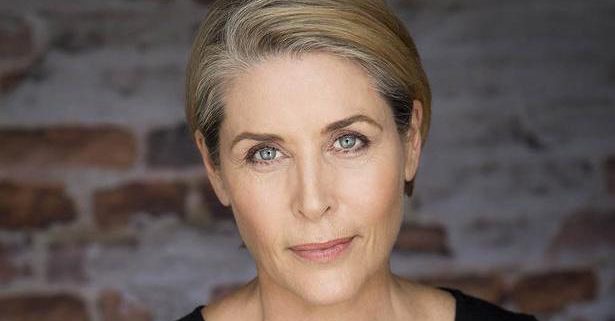
About Jennifer Ward-Lealand
Since training at Auckland’s influential Theatre Corporate, Jennifer has worked extensively in theatre, film, television, musical and radio for over 35 years. Jennifer is one of New Zealand’s most recognisable acting talents and a respected theatre director. She has taught for The Actors’ Program, Toi Whakaari and NASDA.
Jennifer is currently President of Equity New Zealand, Patron of Q Theatre, and serves as a trust board member of Arts Regional Trust and Actors Benevolent Fund. In the 2007 New Years Honours List, she was named an Officer of the New Zealand Order of Merit for services to theatre and the community.
http://degnz.sensedesign.co.nz/wp-content/uploads/2018/08/JWL-crop.jpeg329615admin/wp-content/uploads/2021/10/DEGANZ_logo_home.pngadmin2018-08-08 15:03:462018-08-08 15:03:46Rehearsal Dynamics with Jennifer Ward-Lealand