The A Kōrero with… blog series is back for 2026! This time, DEGANZ’s Izzi spoke with Music Supervisor Aminé Ramer to hear all the ways music plays its part in screen productions.

An award-winning music supervisor and consultant, Aminé has helped define the sound and emotional tone of feature films, documentaries, and television series. Her work is driven by a strong sensibility for connecting sight and sound to create a visceral audience experience, along with deep expertise in music rights and the complexities of the clearance process. Her credits span numerous international productions, including the Academy Award–nominated and Peabody Award–winning documentary Crip Camp, and the Apple TV+ drama series Shantaram. She has also contributed to a range of Aotearoa screen projects, including recent features Tinā; The Rule of Jenny Pen; Big Girls Don’t Cry; Red, White & Brass; and Baby Done.

In this kōrero, Aimné shares how she has one foot in the screen world and one in the music world, her secret to keeping track of thousands of songs, and her favourite part of her job.


Izzi: What is a music supervisor’s role on a project? 

Aminé: The music supervisor is the head of the music department. We oversee everything music-related on a project and work creatively with the director to help facilitate the project’s musical vision. 

Ideally, we’re brought in before shooting begins, so we help shape the tone, present musical options, find the right composer, and make sure the music budget aligns with the project’s creative expectations.

Izzi: In fairly simple terms, what does your workflow look like?

Aminé: The workflow starts with reading the script and creating a document to track anytime music is mentioned. I also add ideas if the script doesn’t specifically mention anything. Like if a scene is set in a shop, I’d add a note that the shop could have music playing in the background. So I make sure to account for all the music possibilities based on the script.

Then I’ll talk with the director about their creative vision and with the producer about the budget to make sure that the creative expectations and budget are aligned. After that, I start gathering ideas for songs and potential composers. If there are specific songs in the script, I’ll get quotes to see whether we can get approval and how much it’ll cost.

There may also be some practical stuff. Like if the script says, ‘Michael sings to his beloved as they’re sitting on the farm,’ I need to figure out what the song is, if the actor can sing, if they need a vocal coach, if there will be a backing track, and how the song will be recorded. So, I’m coordinating with the sound person, the first AD, and the director about all of that.

Once filming wraps, I’ll have conversations with the editor and hopefully prevent any random temp tracks from being used. Ideally, the composer can send through temp music options.

I’ll also present music options that fit creatively and the budget. That way, the editor isn’t spending hours cutting to the perfect song that we can’t afford or clear. Even if I only send five options through, I may have gone through 500 tracks to get there.

A large part of my job is making sure communication channels are open, especially in post-production when things move much faster. I’m seeing footage, working with the composer, looking through hundreds of songs, sending emails, checking prices, and discussing whether scenes work better with a pre-existing song or something original. The director ultimately calls the shot, but everyone’s talking through the options.

There are a lot of moving parts, but it keeps me on my toes.
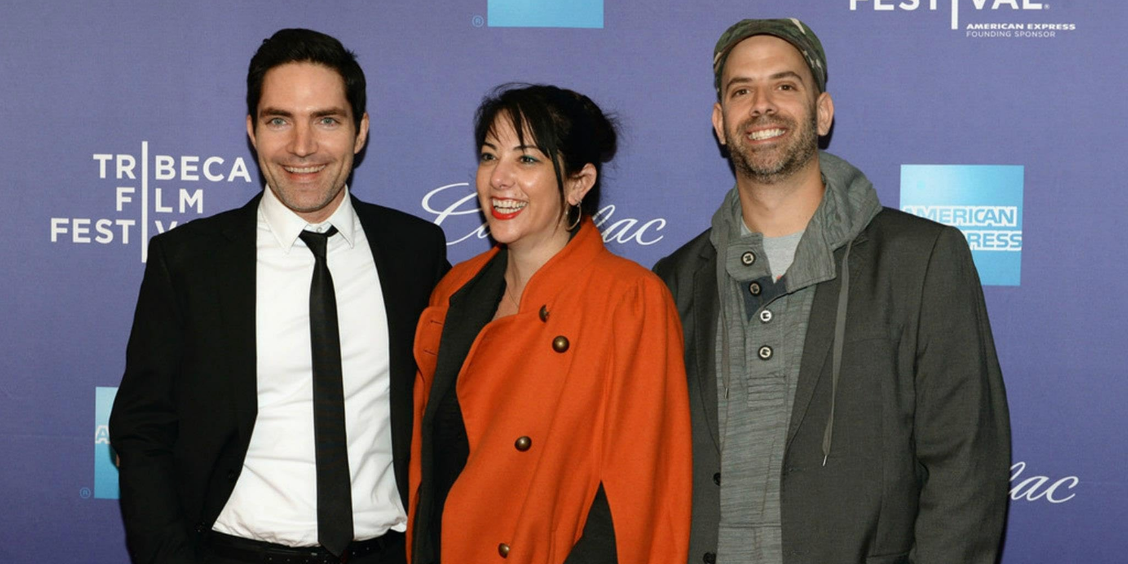
Aminé with Christopher Peterson and Adam Dorn (aka Mocean Worker) at the Tribeca Film Festival in New York / Photo provided

Izzi: How do you go about getting the costs and rights for songs?

Aminé: I use a platform called Disco, which means I’m regularly sent music from major labels, publishers, and managers, complete with metadata attached to each track. So a lot of the information I need is already there.

If I don’t have that information, or if there’s something very specific written into the script, then I’ll go to APRA or Recorded Music NZ to find out who owns the master rights.

Every good music supervisor has strong contacts across labels, publishers, and independent managers. I spend a lot of time listening to music, going to shows, and building relationships within the music community. That means I sometimes hear music before it’s released, or I can call a manager directly and inquire about a song for a project.

Izzi: What’s your creative process in the role?

Aminé: The creative process is the whole reason I do the job. It’s my favourite part.

My creative process begins after reading the script and discussing tone with the director and producers. We’ll talk about whether they’re open to counterpoint. For example, instead of playing a scene straight with a love song, maybe there’s something more unexpected that works better emotionally.

From there, I start figuring out what options I want to present. Sometimes that means getting the exact song they’ve written into the script, but I’ll also prepare alternatives in case it doesn’t fit the budget, or even suggestions that might work better creatively than the original reference.

That’s the part I really love — matching music to visuals. I often have access to unreleased music, emerging artists, or older tracks that aren’t as widely known, and it’s exciting to find the perfect fit for a scene. It’s quite an intuitive process.

Izzi: How do you keep track of all of your music knowledge? Is it like a massive Rolodex in your brain?

Aminé: I start with instinct, thinking about what might feel right for the scene. I’ll make playlists of songs that immediately come to mind, but I also keep a huge library of playlists organised by emotion or tone, like happy, sad, driving, or counterpoint.

I’ll go through those first, and if nothing feels right, then I’ll reach out to labels, publishers, or managers with specific requests. They’ll send back options they think fit the brief, and often listening through those will send me down another creative rabbit hole.

I also keep a long-running wish list of songs I love that could work for certain types of scenes. Because I’m constantly listening to music, I’ll often hear something and save it for later.

But sometimes things change when you actually see the footage. The pace or edit can completely shift what the music needs to do. A song that worked on the page suddenly feels wrong, or the scene needs a totally different energy. Sometimes I’ll play a scene back and immediately know the perfect track. Other times, I’ll go through hundreds of songs against the picture before finding the right one. But finding out what doesn’t work is just as valuable as finding out what does.

And honestly, I love that process too.

The best feeling is watching a finished scene and knowing the music helped elevate it emotionally. That’s why working closely with the editor and director is so important. Music supervision isn’t just about finding a song or getting a clearance quote; it’s about shaping how the music actually functions emotionally within the scene.

Clearances are also part of the job, but they’re only one part of it.
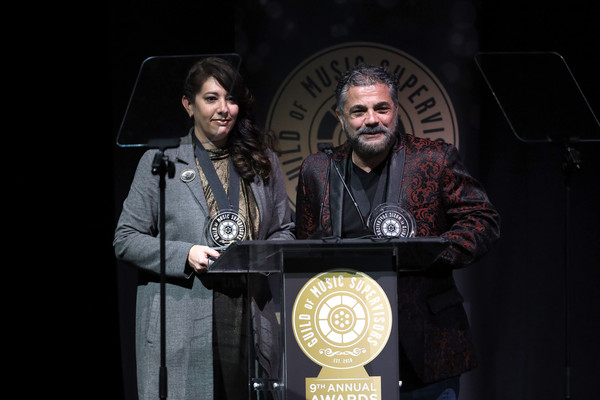
Aminé with fellow music supervisor Evyen Klean at the 9th annual Guild of Music Supervisors Awards / Photo provided

Izzi: Can you speak more to how you balance the creative and admin aspects of music supervision?

Aminé: The difference between being a music supervisor and just doing clearances is huge. If the role were only clearances, I don’t think I’d do it as a job, because what I really love is the creative side and the music itself.

That said, to be good creatively, you also have to be excellent at clearances. There’s no point pitching what you think is the perfect song to a director, only to later discover there’s an uncleared sample in it or that it’s completely out of budget. At that point, you’ve wasted everyone’s time.

So you really need to be strong at both sides of the job. 

I tend to separate them mentally. Some days are creative — listening, searching, matching music to scenes — and other days are admin-focused — dealing with quote requests, negotiations, pricing, and rights clearances.

It genuinely feels like using two different parts of your brain.

Izzi: You’ve mentioned that you work closely with the director and editor, as well as keeping the producer in the loop. I’m curious about the specific working relationship with the composer.

Aminé: It’s really important that everyone is closely aligned. 

You don’t want the composer going off and writing something that ends up competing with a song or vice versa. I’ve spent hours looking for the perfect track only to find out the composer is already covering that moment. Or the composer has spent days on a cue only to find out the director wanted a song. So communication is key between all the key creatives.

A big part of the process is deciding whether a scene should use a pre-existing track or an original score. That’s what happens in spotting sessions.

Once there’s a rough cut, the director, composer, and music supervisor should all sit down together and watch the film to make notes. I’ll be noting where I think music can come in, the composer is marking where the score should come on, and the director is shaping the overall vision. Then we compare notes, discuss ideas, and map out who is doing what.

At that stage, anything from the script or early temp work might still be in the cut, and that can be really useful. Sometimes it confirms what’s working and we move forward with it, and other times it becomes clear we need to change direction completely.

Spotting sessions are really about making sure everyone is on the same page before post-production moves forward. The director ultimately makes the final decisions, but the composer and music supervisor are working closely together throughout the process, so the creative and practical sides stay aligned.
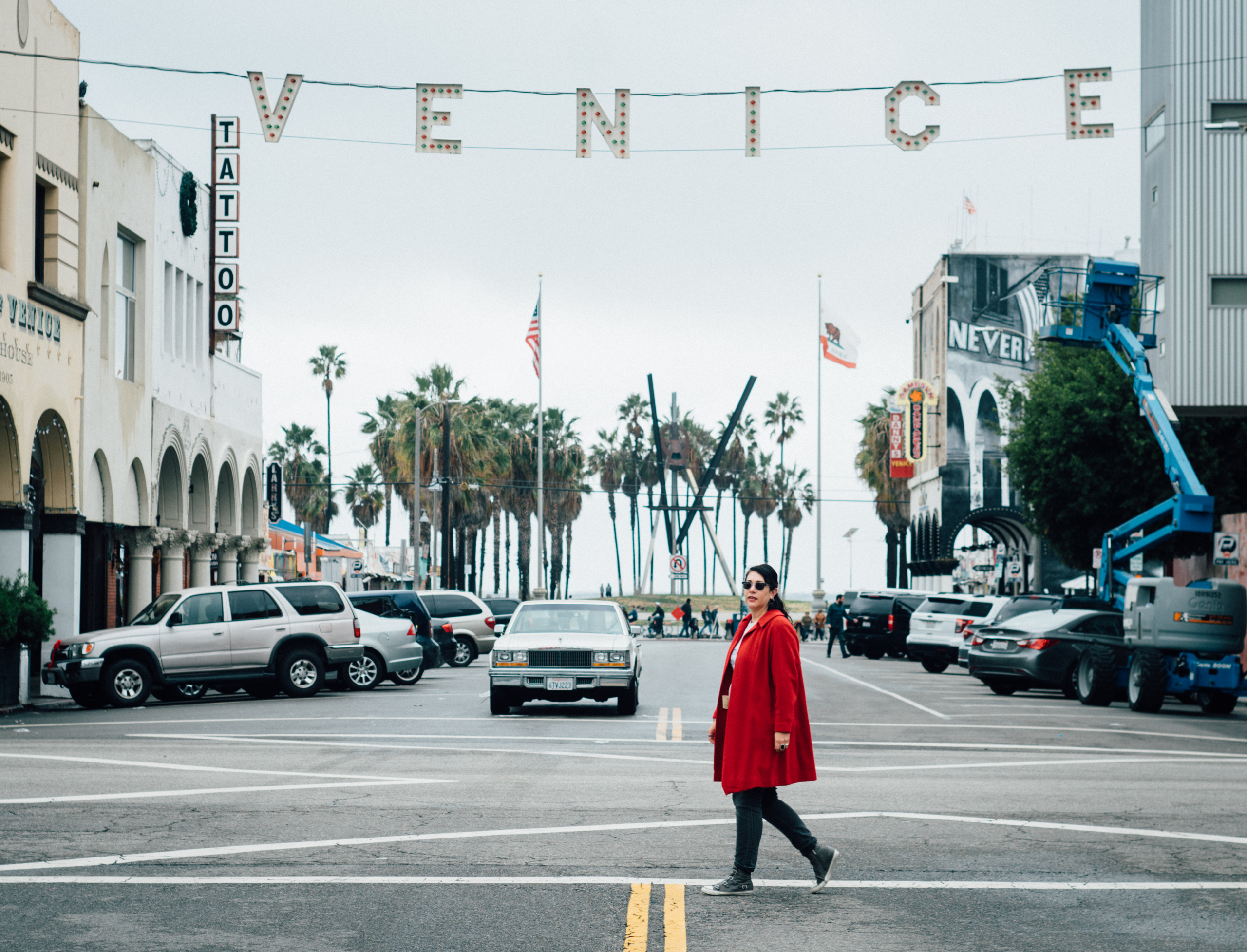
Aminé in Venice, where she lives for part of the year / Photo provided

Izzi: What’s something you wish collaborators knew when working with a Music Supervisor?

Aminé: A lot of it comes down to seeing the music supervisor as an integral part of the creative team.

With collaborators I’ve worked with for a long time, that understanding is already there, and things run smoothly. But when starting with someone new, they may not realise how different my role is compared to someone who just handles clearances.

Also, people often don’t see the amount of work involved. It’s long days, multiple conversations with rights holders, and the fact that only one song will ultimately be chosen while several others are cleared and then not used. I sometimes wish I could fully communicate the scale of that work, but part of my job is to manage it quietly and keep the process moving so the production isn’t overwhelmed by it.

The role is all-encompassing. As a key part of the music department, we’re involved in the creative process, not just getting prices. We have a wealth of musical knowledge and experience that we bring to the table to help facilitate the filmmaker’s vision. Ultimately, we’re there to make the work the best it can be.


This interview has been edited for brevity and clarity.
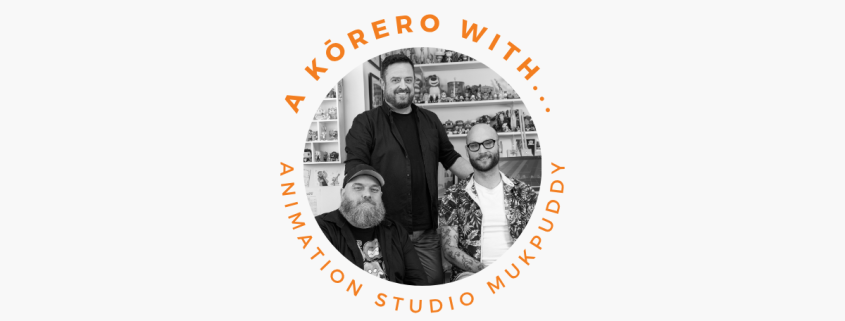
As a follow-up to this year’s Animation Matchmaking series, DEGANZ’s Izzi Hoskyn sat down with Ryan Cooper and Alex Leighton, two-thirds of the team leading Mukpuddy Ltd.

Mukpuddy originated from humble beginnings in 2002, starting in a basement before evolving into Aotearoa’s leading 2D animation studio. The team has created original shows, such as The Barefoot Bandits, Jandal Burn, and Night Eyes, as well as adapted Spike Milligan’s iconic Badjelly the Witch to the screen. Mukpuddy has solidified itself as a cornerstone of local animation, crafting worlds with a distinct style and humour appealing to audiences both locally and internationally.

In this kōrero, Ryan and Alex discuss the animation process, the secret actor living inside every animator, and some tips for local creatives to step into the world of animation themselves.


Izzi: So the first question is a biggie, but in fairly simple terms, what does the animation workflow look like?

Ryan: It all starts with us coming up with an idea we want to make. From the script, it goes into a combination of the voice recordings and storyboarding. Our storyboarders will jump into dissecting the script and start asking us for direction on how we see things. Then, background artists can start to get a sense of what environments we’ll need. The riggers can also start seeing what characters we need to begin building.

Alex: Character design also usually starts around the brainstorming and writing stage, depending on the project.

Ryan: And that’s quite nice for writing because you can picture the character in your head. Sometimes, we also know the voice actor you want, so you can write the character based on that as well.

Once we have the storyboards and the voices recorded, they are then sent to an animatic editor. They’ll compile all the storyboards and voices into a rough assembly so that we can see whether the episode is working before we begin animating. That’s where we’ll sometimes throw in temporary music, sound effects, and play with the vocal performances.

That’s the upside to animation: we can see whether the finished thing is going to be successful from early on.

Alex: Animation is very heavily loaded at the front end of production before animators even touch anything, especially if you’re building a new concept from scratch.

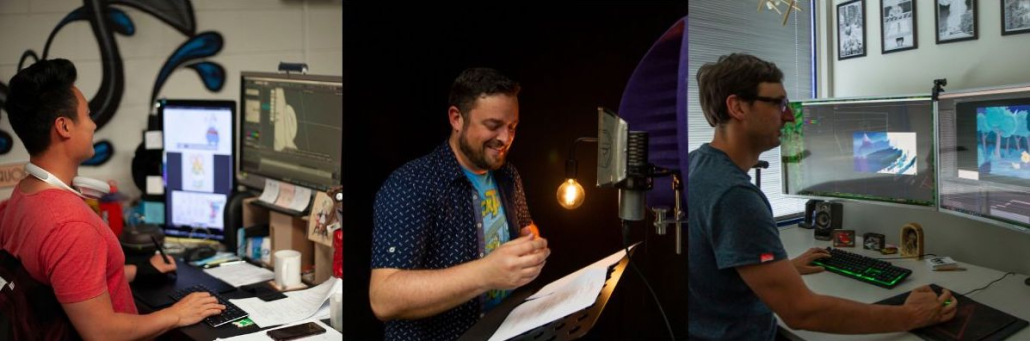
Stages of the animation workflow from character rigging, to voice recording, to compositing / Photos provided

Ryan: From there, it’s basically divvied out. An episode gets chopped up into its scenes and handed out to the animators. An animator can animate anywhere between 5 to 15 seconds a day, depending on the complexity of a shot.

Once the animation’s done, it goes to compositing. Compositors take the backgrounds, character animation, and any effects animation and put them all together to make it look extra pretty. You can add far more cinematic depth to something with techniques like focus pulls, lighting, or particle effects, which make it stand out from the average animated cartoon.

At that stage, we start looking at the final music, whether it’s production library music or a custom score. Then it’s all mixed, and that’s it.

Izzi: It’s interesting that you’re basically doing the edit before the project is even made.

Alex: That’s so important because then you’re not wasting an animator’s time and energy on something that might end up getting cut. We’ve probably cut one or two scenes from any of our projects after it’s been animated, but the hope is to avoid that.

Because our entire career hinges on storyboarding and animatics, it’s wild to think that live action doesn’t always do that. It’s a crucial part of the process for us.

Izzi: It’s a very different medium, and I think it’s reflective of the pace at which live action can be made versus animation.

Alex: Exactly, a film shoot can be six weeks, but Badjelly was over 70 weeks of work in total. Different departments were on for various lengths, but it’s a long production. That’s why we advocate for support in the animation sector because it creates jobs for longer.

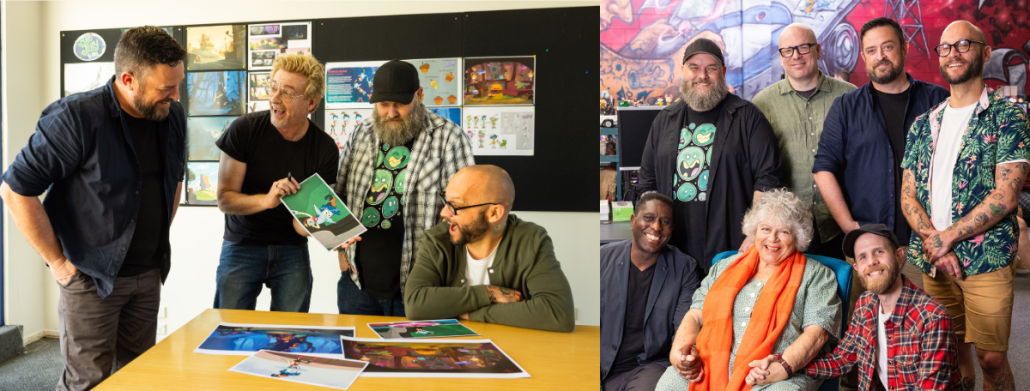
From the making of ‘Badjelly’ / Photos provided

Izzi: Could you also talk a bit more about how an individual animator will step into the process?

Ryan: We’re really big on animators bringing a piece of themselves to their scenes and taking creative liberties. Sometimes, we get a different vocal performance than we expected, so the storyboards don’t quite match. For instance, if we have a comedian in and they’re ad-libbing, we want the animators to match that.

Animators are actors in a way. They have to know how a person is going to react, how they look with certain emotions, comedic timing, and all that. It’s always exciting to see what can come out of a really talented animator who has a secret actor living inside them.

Alex: For Badjelly, we suggested that the animators film themselves acting out scenes. It gives them the chance to embody the character. That’s the moment the show comes to life in a lot of ways. You know, the characters are moving, blinking, and talking. We have a big emphasis on acting and reminding people that you don’t just act with your whole body. Sometimes it’s a subtle eye dart or a little hand gesture.

We also keep an open-door policy if animators want to come and talk to us as the directors. They have their team leaders whom they report to on a day-to-day basis, but if they want to speak to us as directors, we’re always open to a chat because we love getting into the nitty-gritty of it. Often, animators will come to us and ask, “What’s the emotion?”

Ryan: Or “What do you think the character is really meaning when they’re saying this?” It’s fun to talk about, you know, it’s a silly cartoon, but there’s real depth there.

Izzi: I was going to ask about where creativity comes into the technical aspects of animation, but it sounds like it’s just acting through drawing?

Alex: It is very technical, but the performance art of it all is what so many animators love about it.

Izzi: How do you maintain consistency in a character’s ‘performance’ if you have multiple animators working on them across various scenes or episodes?

Ryan: As the directors, we’ll try to set those boundaries up front. We might say, “This is a cartoon, but the physics are real.”

For a show like The Barefoot Bandits, the idea was that fantastical things are happening in this world, but the three main kids are grounded in reality. They can’t stretch and do things that SpongeBob could do, or magically pull things from behind their back. It’s quite fun when you set those rules because the boundaries can make for really interesting animation choices.

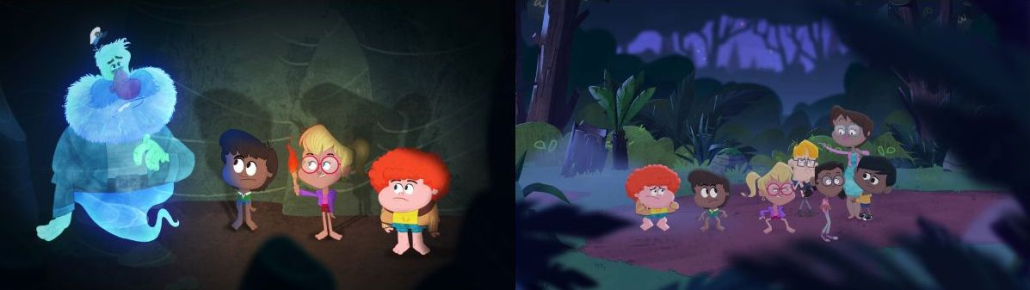
The Barefoot Bandits / Stills provided

But it’s also just a matter of all the animators being able to see what the others are doing. Sometimes one person sets the tone, and everyone agrees that’s what it should be. It may require a bit of looking back and forth, but people often check to see who has tackled a character first. It happens naturally, and vocal performance also helps.

Alex: If an actor’s performance is very low-key, then there’s no need to go big with their animation.

Izzi: Who else in the production does an animator work closely with?

Ryan: They often work closely with background designers because if a character is interacting with the background, the animator will need to have the final version of it before animating the actions. They also work closely with compositors. They may have a set of expectations of what needs to be delivered, whether it’s just a technical file or if they have some other ideas of what could make it look extra good in the final product. And riggers, who make the characters. They can get feedback from the animators, asking for tweaks to the way a character is built.

Izzi: Mukpuddy is both creating your own IP and working with other studios or companies. Is there something that you wish collaborators knew before approaching you for a project?

Alex: If it’s a service gig where someone comes to us with an idea and we animate it, it’s important to know what your budget is, be honest about it, and have some kind of knowledge of what we do and what our studio makes. Also, having an understanding of how a budget dictates the scope of an animated project. We don’t just point and shoot a camera. Everything on screen is designed, drawn, rigged, and then integrated into the animation pipeline. It’s time-consuming and a tricky medium to come into naively.

Also, having as many reference materials and resources as possible is really helpful, so we’re not taking a stab in the dark when we come on board.

Ryan: I think a good thing for people to know before they get into this stuff is to put ego aside. The thing you’re making is important, but it’s always nice to take the path of least resistance. Obviously, you want to stand your ground on things you believe in, but it’s good to check whether that’s just pride getting in the way.

Alex: It’s a collaboration all the way through. Which is true for the entire screen industry, but in animation, it just feels like there’s an extra layer. Everybody needs to communicate in a healthy way to get the job done.

Ryan: Consideration for people next in line is a big one. So, when I’m writing, I ask myself, “Do I need to include this prop in this scene? Is this important?” And if the answer is no, I just get rid of it straight away because someone will be spending a lot of time on that one prop.

Alex: Or you’ll ask, “Have we seen this prop in a previous series? Was there a mug or a cup, or a pen?” I’ll check, and if yes, then sweet, we can reuse it.

Ryan: Or if not, is there something else I could use for this gag that would have the same impact? Knowing that someone is next in line to do their part of the job and trying to hand it off as kindly as possible is great.

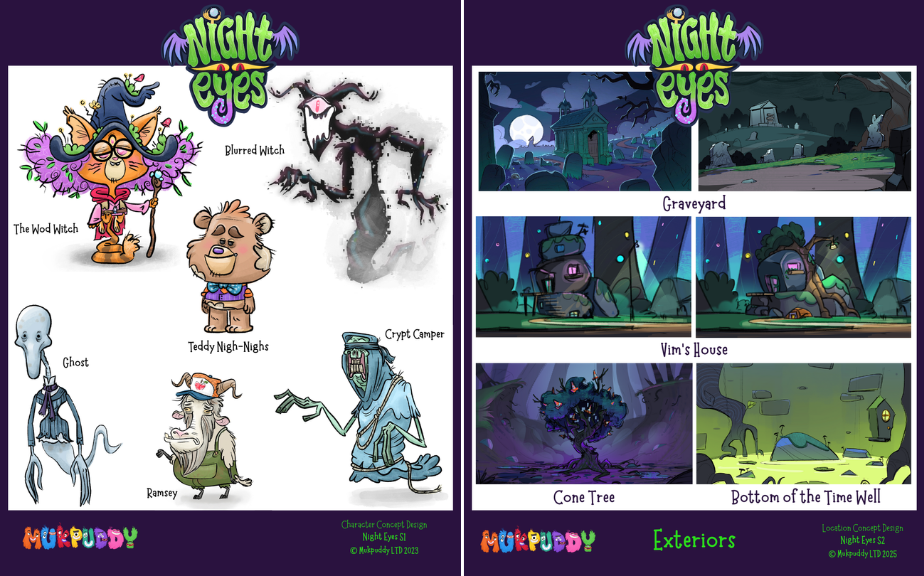
Character and Location Concept Designs for ‘Night Eyes’ / Photos provided

Izzi: What would you recommend to people who want to get into animation in Aotearoa, whether they are animators or those who want to write or direct for animation?

Ryan: Keep absorbing what’s out there. Have your finger on the pulse because inspiration can come from anywhere. The people who do best are those who know what’s happening in the industry. They know what cartoons kids are watching these days, who’s making those shows, who’s directing them, and who’s designing the characters.

Alex: The people who have longevity in the industry are the people with the ambition and the love of it. You know, meet with your peers and make a little animation gang to create stuff together.

Also, upskill where you can. If you know how to animate in Flash, maybe you can get some work animating in Toon Boom. So learn a few different softwares.

Ryan: As Ross Geller famously said: pivot. The road can get a little bit windy, but as long as you’re related to the thing you want to do, I think that’s pretty good.

We’ve had crew members who have jumped from animation to rigging and from storyboarding to background art and vice versa. Being a jack of all trades is useful. At the very least, having an understanding of who the other roles are in the industry is great because you might find yourself being in one of those roles from time to time.

And the last thing is just talk to the studios that are out there. The more you pick the brains of the people who’ve been in it for a long time, the more skills you’re going to pick up. So here in New Zealand, talk to us, Flux, Yuk Fu, speak to any of these people.


This interview has been edited for brevity and clarity.
 

For this iteration of DEGANZ’s new blog series, A Kōrero With…, Izzi Hoskyn spoke with Director of Photography Simon Raby NZCS.

Simon is a freelance Director/Cinematographer with 45 years of industry experience. He works largely in feature films, both local and international, with credits such as The Lord of the Rings, District 9, Elysium, Deathgasm, No Exit and The Heart Dances. His latest project is as Cinematographer on Rebecca Tansley’s feature opera documentary Tenor. In 2018, he was awarded official accreditation from the New Zealand Cinematographers Society (NZCS).

In this kōrero, Simon shares his technical and creative processes, shedding light on the unique skills that a DOP brings to a project to interpret the director’s vision and help serve the story.


Izzi: What does a Director of Photography do?

Simon: At its most basic level, a DOP is responsible for how the images look on screen. My job when working with the director is as an interpreter. I’m interpreting the script, the director’s vision, and the film’s emotions and themes. For example, we may have decided to incorporate a colour theme that appears at specific points in a film to remind the audience of something or to make them feel a certain way. So, it’s not spoken, and it’s not necessarily part of the script, but you might find ways of associating certain things with a subconscious subtext, if you like. It’s all to help the narrative. I’m a storyteller, just like the director, and I have tools in my skill set that help me tell the story.

That’s why I’m called a director, because I will direct the photography in a way that interprets the director’s vision.

I’m also a translator. Once the director and I have a clear vision of what we want to do, I then translate that into technical instructions for the crew.

Izzi: I like how you described it as being a translator where you’re essentially translating the director’s vision into tech speak.

Simon: It depends on the director because every director has different strengths. Someone like Nikki Caro, who is an incredibly strong actor’s director, can very succinctly convey what she’s trying to do, but won’t necessarily say, ‘Throw on a 40 mil or throw an 85 for this.’ It’s up to me to interpret the director’s vision and go, ‘This is going to be the right lens for this kind of field of view and how much we want the background to be in or out of focus.’ But some directors, like James Cameron, will say, ‘I want a 135 on that camera,’ and he’ll know all the depth of the fields. In that instance, as a DOP, you are more in charge of making sure it all happens.

So, it really depends on what the director wants and how much they’re looking for. Most DOPs are more than happy to support the director in any way that works for that particular dynamic.

Simon working with director Rob Sarkies / Images: Provided

Izzi: The relationship between the DOP and the director is at the core of your job, but who else in the production do you work with?

Simon: The departments that the DOP is directly responsible for are the camera, lighting, and grip departments. That’s the sphere of influence that I have in terms of who I’m directing as the Director of Photography. Outside of those three teams, I also liaise with the Art, Makeup and Costume, Locations, SFX, and VFX Departments over a multitude of onscreen details.

Izzi: What does your workflow look like?

Simon: The first thing I do is read the script, and I’ll usually read it with just the story in mind at first. I’ll make notes at the end about my thoughts, how it might feel, and what sort of things came to mind as I read. Then I’ll reread it and start thinking about potential technical things.

Then I’ll usually have a series of meetings with the director, where we’ll review the director’s resources, like the mood board, and discuss them at length. From that, I will gain a clear understanding of some of the technical challenges. It’ll help me start to break down the sorts of equipment I’ll be asking for because all this is tied to budget.

Then there are a series of pre-production meetings with all the department heads, where you’ll do script breakdowns and discuss how we’ll approach certain things. Then, you’re off to do technical recess and tests. You might be doing tests with visual effects as well. You’re working with all these different departments because you’re all interested in what ends up in the frame.

After that prep process, you go into shooting and watching daily rushes with the director.

At the end of the shoot, it’s all kind of over for the DOP until the edit’s done, unless there are pick-ups. You don’t come back until the colour grade when you’re in a suite making the colours and the contrast and the look of the film as sweet as you can, often with the director.

Simon on set / Image: Provided

Izzi: The last blog we did was with Damian McDonnell, who discussed how his job as a colourist involves working closely with the director and DOP to bring their images to life. Do you have any insights on the DOP-Colourist dynamic?

Simon: Those relationships are quite personal. A colourist is both highly skilled and has strong creative ideas about how the film should look.

I’ve worked with Damien before; we did Mortal Engines together. He was the on-set colourist, and it was great because we got to set up a look on the shoot day, and then eight or nine months later, we got together again to finalise it all. So we got to know each other reasonably well. He’s such a skilled colourist and has strong ideas about how things could look, so sometimes we had to consider who had the better idea for how something should look in the grade. But it’s always about what’s best for the film and the story.

Izzi: So, we’ve discussed the technical workflow. What’s your creative process?

Simon: Personally, I rely quite a lot on instinct. I have instinctual feelings about the way I’d like to cover things. But if I had to really break it down, I know that maybe some of that is habit and some of it is cultural influences. There’s no right or wrong way, but there are more effective ways than others at telling a story. For instance, when I break down a script, I always look for important beats.

Where you put the camera is vital because it tells the viewer where they are in the room. Being in someone’s face on a wide lens is much more intimidating than watching the person from the back of the room on an 85mm. Their face is the same size in the frame, but you know you’re closer or further away because you can feel it through the lens choice.

Izzi: What sort of conversations do you have with the director around finding the beats in the scene?

Simon: That’s again a really personal thing, depending on the director. I have to feel out the director when I first meet them.

But I think it’s important to be aware that the director is responsible for how that film turns out. You’re job isn’t to say, ‘Well, my idea is better.’ Your job is to help the director make the film great. And if the director hasn’t got a vision, then often the DOP will step in and fill the vacuum, because someone will need to. So it’s really good when a director can make those calls.

Izzi: Is that something you wish collaborators, specifically directors, knew when working with you as a DOP?

Simon: Yeah, I like it when the director has a clear decision-making process, and they know what they want to do. That’s not to say that I want them to be closed to ideas, because on a good shoot, everyone is giving good ideas.

The other thing I would like to say to collaborators is that the sooner you can address something in pre-production, the smoother shooting will go. If a director suddenly says 30 minutes before shooting that they want a shot to start from above the roofline, come down the chimney, go down the pipeline, then finish on the grass, I may not have the equipment I need to make that happen. So if the director has a clear idea of the sort of shots they want to get before the shoot, it helps both the DOP and First AD.

Izzi: Do you have any thoughts on the DOP-First AD-Director dynamic?

Simon: There’s a huge amount of work that a DOP does with the First AD prior to the shoot starting. It’s an essential communication process because the First AD is working directly with the director, and they’re in the middle of the director’s quest for creative brilliance, and the production’s need to finish things on time.

Inexperienced directors will often be steered quite heavily by both the First AD and the DOP, who are working together to make sure that the schedule is honoured alongside the creative vision of the director. There’s a three-way responsibility there.

Photos from across Simon’s Career / Images: Provided

Izzi: My last question is more specifically focused on your career. What has been a career high for you?

Simon: District 9 was really great because I was directing and shooting the second unit. I would go to Neil, who was the Director, and ask what he was looking for in a scene, and he would look at me and say, ‘Just make it cool.’ 

And I didn’t have to spend a lot of time discussing or debating with my DOP because I was the DOP, so I could just get on with it. It was very freeing from my point of view. There were big days, but the crew was really accommodating. I had fun on that show.

Izzi: It’s interesting that you’re able to cross between being a director and DOP, or even hold them at the same time.

Simon: It depends on the intensity of the project, really. District 9 was moderately easy for me because it was mostly on-the-shoulder handheld. It was all rough and mockumentary style.

Directing and DPing use different parts of your brain as well. I like directing because I enjoy working with actors. It’s the same when operating the camera, which I love to do. I much prefer being in front of the actors with the camera than in a tent far away. It’s that closeness to what it’s all about, which is the story and the performance.

Izzi: That seems to be the common theme from these kōrero. It always boils down to the importance of the story.

Simon: Absolutely!


This interview has been edited for brevity and clarity.
 

DEGANZ’s Izzi Hoskyn sat down with award-winning Colourist Damian McDonnell to take a peek behind the curtain of the craft of colour grading.

Damian has over twenty years’ experience as a colourist and editor in both Hollywood and Aotearoa. He began his career as an assistant colourist on The Lord of the Rings: The Two Towers and The Return of the King. From there, he worked as a colourist at Laser Pacific and Technicolour Hollywood in LA for six years, working on blockbusters such as Life of Pi, TRON Legacy, and multiple Avengers films. When he returned to Aotearoa, he worked at Park Road Post for eight years, having a hand in various projects and taking on the role of on-set colourist and supervising colourist for Mortal Engines. His recent work includes Ti West’s X and Pearl and Taika Waititi’s Our Flag Means Death and Time Bandits. In 2024, Damian won the prestigious Hollywood Professional Association (HPA) award for ‘Outstanding Colour Grading – Live Action Episode or Non-Theatrical Feature’ for his work on Time Bandits.

In this first iteration of our new blog series, A Kōrero With…, Izzi and Damian discuss a colourist’s role and how the colour grade is the final piece of the puzzle on a project, taking it to the next level.


Izzi: In fairly simple terms, what does a colourist do? 

Damian: A colourist’s intent, at its most simple, is to put the filmmaker’s vision on screen. So whatever the director’s or cinematographer’s intent is, I help them achieve that look.

Izzi: Who else in the production do you work closely with?

Damian: When working with clients, the most important relationship is with whoever makes the creative calls in the room. Sometimes there are a lot of people in the suite, sometimes there’s just a director or a cinematographer. Whoever it is, that relationship is paramount. When a client gets to know you and how you work, then it becomes a fun environment and one where they can just trust you to work.

Izzi: And on the more technical side, you’re working closely with an online editor?

Damian: Yeah, the technical relationship with an online editor is also very important. Their main function is to translate the timeline into the grading system. There’s crossover with what they and a colourist do, so it’s important to work out what areas you each cover. That can be things like stabilisation or basic effects like paint-outs.

The online editor that I work with at the moment is a guy called Antonis who lives in Greece. He onlines for me overnight, and then I wake up in the morning, have a chat with him, and get underway. He’s a creative editor, but he’s also technically very, very good. And so we’ve got a great working relationship; it’s very efficient. And we use the time difference to our advantage.

Some of the productions Damian has colour graded.

Izzi: What’s your creative process in the role, and what do you bring to each project? 

Damian: Every film is different when you grade it. I don’t like to say I’m a certain type of colourist, because I’m responding to the demands of the client. I believe you can grade creatively for any genre or any type of film. I’ve worked on everything from tiny budget films to some of the biggest blockbusters in the world. But I approach them all roughly the same.

Firstly, you watch the film, do a continuity pass, and spot any issues. Then you do a creative pass. And then I do what I call a windows pass or a secondary pass where you start isolating various parts of the image. But at that stage, you’re improving the film bit by bit. I like to work on the whole film rather than get bogged down in tiny details at the start and leave that towards the end.

Left: Damian at work / Right: Damian’s suite while working on Kirsty Cameron’s ‘The Garden Room’

Izzi: Do you feel that you can bring your expertise in colour into the conversation from the get-go or do you leave it up to the director or DOP to first bring their thoughts forward?

Damian: It depends on the relationship with the clients. But I always think that people are hiring me for my artistic ability, not just my technical ability.

I like to put my point of view forward, but ultimately, I always understand that these aren’t my images. These are the director’s or cinematographer’s images and I’m there to help them achieve their look. But it’s best when it’s collaborative. 

And I like to make it an enjoyable experience. You’re at the end of a very long road when you get to the colour grading suite, and it’s the last stage before your film is distributed for everyone to see. I like to try and take that stress away from the final delivery and so people can finally see their film in its completion.

Izzi: It’s like the last piece of the puzzle. You can finally step back and see it all as one cohesive work.

Damian: I’m gonna steal that. It’s a really great stage of the process; it’s really fun.

Izzi: What has been a career high for you?

Damian: There have been a few!

My very first film was The Two Towers, and that’s how I learnt to colour grade. Digital intermediate (DI) was a new process, so there was no manual for the software and initially no one to teach me. I literally sat down, pushed buttons, and wrote down what it did. It was such an exciting time being part of something that you knew was going to be an important film.

More recently, I worked with Ti West on X and Pearl, which were shot in Wanganui. They were shot on the same camera three weeks apart, same main actress, same location, but they looked wildly different. Which mostly comes down to the grade. Ti wanted X to look like the Texas Chainsaw Massacre, and Pearl was meant to emulate the Technicolour 3-strip look, and our reference was The Wizard of Oz. So our starting point was similar, but the end products were very different. I’m very proud of those two films. And I think it’s a good example of what you can do as a colourist. You can really bring a strong creative look to a film.

Side-by-side comparison of the colour grade of ‘X’ (left) and ‘Pearl’ (right).

Last year, I won an HPA award for colour grading the TV series Time Bandits. There aren’t many colour grading awards around. It’s an overlooked profession, so it was really nice to be there. I was sitting next to Dave Cole, who taught me to colour grade, and he won for his film. So that was a particular highlight, both of us being in LA and both winning awards.

Izzi: Congrats! That’s a massive achievement.

Damian: It was neat working on Time Bandits. Every time the characters went through a portal, it had to look quite different from the previous world that they’d been in. And so creatively, I was always being pushed to create more and more looks. As a colourist, it was kind of a dream job in that way. It was difficult because we were working on ten episodes at the same time, but it was an exceptionally fun show to work on.

Damian accepting his HPA Award for Outstanding Colour Grading for ‘Time Bandits’

Izzi: What’s something you wish collaborators knew when working with a colourist? 

Damian: One of the most important things a collaborator should know is the importance of being decisive. Colourists can develop and put forward looks, but if you change your mind a lot, you waste a lot of time redoing work.

By that, I mean, you never really finish a film, you just run out of time. So using your time wisely, even though that sounds boring, is really important. I always work out a schedule of targets for my passes so I know how long to spend on each one. Being able to make decisions upfront helps a lot.

The other thing is allowing me time to do something. It’s not a magic button. So, knowing that if I say it’s going to take a certain amount of time to do something, it’s going to take that amount of time.

Izzi: In terms of being decisive from the beginning, what can directors do to prepare for that?

Damian: It helps when people come along with a preconceived idea of what they want. I will often ask people to bring in their lookbooks if they want and try to use their ideas as a starting point. But being open to other ideas is great and fun. And they might be surprised by what I can do and what I bring to it.

Izzi: There’s that artistic touch to it. The colour grade is one of the parts of the film where it can elevate your film and take it to the next level. 

Damian: I think that you touched on something important.

It probably took me like three or four years before I felt comfortable being a colourist. It’s not just a technical skill; it’s a creative skill. And that’s what draws me to it. It’s sort of a merging of the two, but it is a discipline that you really have to learn, and it takes practice. There’s a lot more to it than just knowing how to use the software.

A good colourist can really add an amazing amount of value to a project, especially on low-budget films. It can take it from looking like a sitcom to looking like a piece of cinema.

Izzi: Thank you so much for taking the time to share your knowledge of colour grading. It was super insightful and can hopefully prompt our members to seek out a strong colour grade in their own projects.


This interview has been edited for brevity and clarity.