I didn’t always want to be an editor. I loved film and the moving image, but I was put off by the big crews and the “art by committee” feel of it all. Like many artsy teens, I thought I was a revolutionary artist with something profound to say, so I did a fine art degree.

Three years later, I graduated broke, back at my parents’ house in a small town in rural England, with no idea what to do next. The art world looked like a terrible way to make a living. I’d made short films during my degree and realised I enjoyed editing, mostly because it let me muck about on computers for hours, but also because it was a way to combine everything I liked: music, images and storytelling.

As luck would have it, someone in my small town ran a tiny corporate video company out of a barn. They needed an editor and, as probably the only person in the area who knew how to use Final Cut, I got the job. It taught me a lot, not just about how to cut, but about how to take a note. After a year editing corporate videos, I thought I was ready for the big league and set off to conquer London. Six months later, the only thing conquered was my overdraft. I had to accept that if I wanted in, I’d have to start at the bottom.

So I became a runner in Soho post houses, palaces of post filled with offline suites, audio rooms, VFX teams and finishing bays that looked like spaceships. I was serving teas, fetching lunches and sprinting DigiBeta tapes across London, but it was exciting to be involved. I worked my way up from tea boy to tape op in the machine room, where I learned the technical side of the craft: all the cables, codecs and late-night error messages. Outside work, I grabbed whatever scraps I could: no-budget music videos and unpaid short films, eventually stitching them into a reel good enough to land me my first real editing job.

It was cutting news for an experimental network called Current TV. Owned by Al Gore, it aimed to give young people a platform through short documentaries mixed with an early social media-style website. It was at the dawn of the social network: Myspace was king, Facebook and Instagram were just arriving, and everyone was wondering how the internet and TV could mix.

My job was turning whatever was trending online into TV news. Every hour, a new story had to be cut and exported straight to the server. It felt less like editing and more like playing Tetris at speed, with the added thrill of knowing that if I dropped the wrong block, it would air live. It was chaotic but groundbreaking; we were one of the first to put tweets onscreen in news packages. Inventiveness, creativity and taking risks were championed. 

Eventually, the channel realised it needed longer programmes to be able to get ratings, so I joined a tiny internal team making longer documentaries. It was like a filmmaking youth club: we pitched ideas, got a few greenlit each quarter, and got on and made them. We were terrible at scheduling and would never set ourselves realistic targets in the edit, so finishing often meant working until 2 a.m. for weeks on end. But it was fun and made me fall in love with long-form documentary.

Some of the long-form documentaries Jesse has gone on to work on.

I stayed at Current for five years, until it shut down, and I bounced around various projects in a similar space. Vice and BBC3 all tried to capture that young online audience on television with varying degrees of success. It had been a great place to start out. I had cut hours upon hours of television, learned how to make something from nothing, and how to make something cheap look expensive.

Since then, I’ve moved into bigger, more grown-up documentaries, but I’ve tried to keep some of the playful irreverence from those early youth films in my editing. Over the years, I’ve realised editing is about half technical skill, half managing relationships. You need to know how to cut, of course, but you also need to work with directors, execs and producers while keeping your sense of humour intact. Nobody wants to work with a grumpy ideologue, no matter how talented. If you want a career in editing, be the person people actually want to spend months locked in a tiny room with. Taking notes on the chin, even the bad ones, and trying to answer them with a smile and creative energy is what gets you asked back.


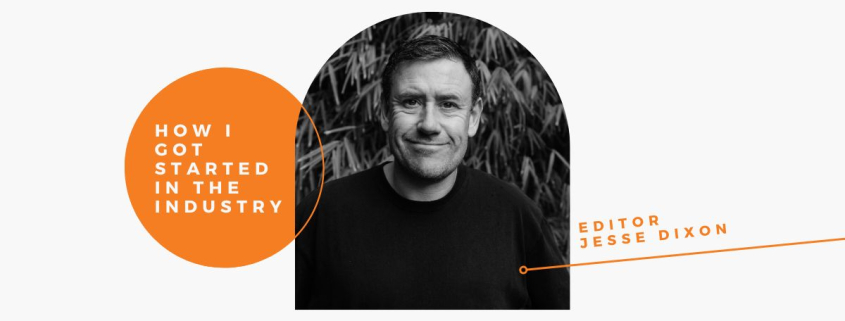
About Jesse Dixon

Jesse Dixon is a documentary editor with many years of experience crafting bold, cinematic, and character-driven stories. He began his career making innovative documentaries for a youth audience across Al Gore’s pioneering TV network Current TV, online platform VICE and youth channel BBC Three. Since then, he’s worked with some of the UK’s top production companies, editing a wide range of projects including archive-based documentaries, big-budget adventure series, observational documentaries, specialist factual and current affairs. Jesse’s films have featured on most of the UK’s broadcasters, including the BBC, Channel 4, and ITV, as well as major international streamers including Netflix, Disney+, and Apple TV+.


How I Got Started in the Industry is a guest blog series from the Directors and Editors Guild of Aotearoa New Zealand (DEGANZ). Our members reflect on how they made their way into assistant editing, editing, and directing—with no two stories the same. They offer advice for those starting out. Get in touch with admin@deganz.co.nz if you’re a member and would like to share your story.
 

I made my first film when I was about 8. I hijacked my dad’s chonky Hi-8 home video camera, hit record, stopped, then hit record again. I could make people vanish!

In my first year of high school, I made a Star Wars parody about the ozone hole for a social studies project. The ozone molecules did a trench run and blew up the chlorine Death Star and the universe rejoiced. My teacher screened it in the school’s little theatre where I got a standing ovation. 25 years later, I’m still idiotically chasing that rush.

My addiction followed me to university where I formed a film club with the dream of making a feature film. After about a year and a half of begging people for favours (what I believed the role of a director truly was), abusing student loan funds for late-night shoots in between lectures, and editing in my bedroom, we put up posters and sold tickets like drug dealers around campus. (Incidentally, one foolish stranger who handed me cash on the street was Hweiling from a few blog posts earlier). We managed two full houses at the Academy Cinema.

Rocking the Aaton Super 16mm camera for the short film ‘Venture’ / Photo: Supplied

That cheesy Bollywood-inspired musical rom-com was the turning point for me. Word got out that this kid could finish what he started. I met some of my dearest friends and mentors because of that reputation. One of them was Steven Chow, who gave me my first paid gig, assisting him on Kōrero Mai. Not long after that, my name got put forward for an Online Editor job. I didn’t tell anyone that I’d never worked as an Offline Editor before. It turned out just fine – I had already suffered through years of Avid clunkiness and had even begun to love it.

Left: Timeline for NHNZ doco, Right: Jack’s Edit Suit at NHNZ / Photos: Supplied

After each gig, I faced unemployment and contemplated changing careers. But at the last moment, there would be a call or email, buying a lifeline of another few weeks or months. I’m constantly amazed that I’m still even in this industry.

I went from editing at TVNZ on FRESH, to NHNZ Dunedin where I worked not only as an editor but also writing and directing factual programmes at an international scale. I had stints in China and India, as well as time in Samoa with my ‘film family,’ Stallone and Abba-Rose Vaiaoga-Ioasa. As their editor and camera assist on Three Wise Cousins and Take Home Pay, I got a front-row view of how they make feature films #forthepeople. Covid hit and I directed live streams for Tourism New Zealand’s Chinese market, directed/edited TVNZ food show Sik Fan Lah! and became a drone pilot. That lifeline continues even now, as I start my next job editing season 7 of Ahikāroa.

Shooting ‘Sik Fan Lah!’ (Left: rugged shoot in Wellington, Right: shooting Sam Low’s meal) / Photos: Supplied

Yes, I edit – it’s how I get fed. But I never saw myself as an editor. I also love writing and directing – it’s just hard to make a living that way. Good editors are forever in demand (we fix things), while directors just cause problems (half joking). The latest problem I’ve caused is an NZFC kung fu short film, Let’s Settle This!, which may just top my Ozone Depletion Trilogy. I can’t wait to share it with you all.

I reckon this blog should be called ‘How I’m Always Starting In This Industry.’ Everyday feels like step one, not knowing if there will be a step two, but at least I’m buff as because of all the treading water I’ve been doing. But I guess if I look back, there are plenty of mountains that I’ve crossed.

If there’s something to take away from my rambling journey, it’s that starting is the easiest part. What’s hard is finishing.


About Jack Woon

Jack Woon is a Kiwi-Malaysian filmmaker with two decades of experience in escaping boxes and labels. He enjoys practising his diverse skills as a director, writer, editor, cinematographer, drone pilot, engineer and coffee maker – anything to do with sharing his love for unique visual stories. As a cross-cultural nerd, he has worked on Samoan comedy feature films (Three Wise Cousins, Take Home Pay), Kiwi shows (Teine Sā: The Ancient Ones, SIS, Ahikaroa) and directed factual TV in China and India for National Geographic, Discovery and Tencent Video. He wrote, directed and edited Sik Fan Lah!, a Chinese food series, which rated in the top 10 of locally funded shows. He has put his love for food and kung fu together into an NZFC short film, Let’s Settle This!, now beginning its festival run.


How I Got Started in the Industry is a guest blog series from the Directors and Editors Guild of Aotearoa New Zealand (DEGANZ). Our members reflect on how they made their way into assistant editing, editing, and directing—with no two stories the same. They offer advice for those starting out. Get in touch with admin@deganz.co.nz if you’re a member and would like to share your story.


I remember being asked in university what I wanted my career to be. Many of my peers were saying Director, Producer or DOP- my answer was Production Assistant (I think I was a bit realistic about what opportunities were available to me leaving university and I’m glad to say I have exceeded my goal!). Deep down I knew I wanted to be a Director and Producer but I knew that goal was going to take time and hard work- and boy did it. 

At the time I was very lucky to be an unpaid intern for Luke Nola of Let’s Get Inventin fame. I would go into his office and scrub, clean and make coffee. Luke still mentions my window-washing skills and I always credit Luke for my start in this industry, as it’s a hard nutshell to crack without someone taking a chance on you.

Thanks to my credit on Luke’s show, I got my first offer as a proper Production Assistant (killing it) working for another Children’s television show Sticky TV for Pickled Possum Production. I will be upfront, it was rough work. 

There were presenters, children, a large farm as a set, farm animals, mud, “poop” and 256 episodes to complete and very little time to do it in.

Justin showing off his flecki skills / Photo: provided

It was a gauntlet run of prop making, people wrangling, unpaid OT, camera logging and all other forms of production shenanigans which I shared with two amazing humans Sheldene Seth and Elizabeth Koroivulaono. Elizabeth has just released an amazing documentary The Forgotten Pacific and Sheldene now does amazing work in the commercial space as a Producer. The three of us still cackle in horror about some of the tasks we had to do and the immense pressure we were under to deliver.

I remember feeling like it was all too much and I would often feel like giving up. The Props Department, which we all referred to as the “backroom”, was a place we would often go to vent, hide or cry. We all believed in and supported each other and I credit this little team as a key to persevering through it all. I think we all credit the large expectations to deliver to our own work ethics now and perhaps to our tenacity and the success we have all achieved.

Behind the scene of a photoshoot / Photo: provided

I do think times have changed–there isn’t this immense expectation of life or death to deliver but also there is a much more positive kaupapa around content creation, how we look after our younger crew members and advocacy for safer sets and conditions. These days in my current roles I always make sure I’m sharing knowledge with younger crew members and building them up. I wish I had people like this when I started and I like to think those I have helped up will do the same to others. If there is anything I can pass on to emerging creatives, it’s that it’s a lot of hard work to achieve the career you want but it’s important to advocate for yourself and know what safe working conditions are.


About Justin Scott

Justin Scott (Ngāpuhi) is a Director and Producer who prides himself in sharing stories from underrepresented communities. As a Queer, Māori, Neurodiverse man living with ADHD, his practice often touches upon stories from these communities and explores intersectionality. Most recently, Justin worked as a director and associate producer for the TVNZ series Four Go Flatting – following four young men with intellectual disabilities tackling flatting and independence for the first time. He has been working as a director for the Sunday morning series Attitude for the past four years, also directing on the company’s children’s show George and Me for HEIHEI, and intersectional series What’s the Disabili-tea for RNZ. Alongside his directing work, Justin has produced numerous short films with a Te Ao Māori focus including He Hekenga Tūhura and HAKA HAHA. Both of these films have had successful international festival runs, with both premiering internationally at the world’s largest Indigenous film festival ImagineNATIVE in Toronto.

How I Got Started in the Industry is a guest blog series from the Directors and Editors Guild of Aotearoa New Zealand (DEGANZ). Our members reflect on how they made their way into assistant editing, editing, and directing—with no two stories the same. They offer advice for those starting out. Get in touch with admin@deganz.co.nz if you’re a member and would like to share your story.

My earliest, real childhood memory is being about 3 years old. I’m sitting in front of an electric heater, one of the old fireplace-mounted ones. It has two bright orange electric resistors. In my left hand, I have a toy; a silver metal cowboy gun with white plastic handgrips. And I can remember thinking very clearly “What if I put the barrel of my gun between those two glowing bars?” As I am thinking this I am slowly inching the end of the gun barrel forward, forward toward the point of contact….. 

When I was older my mother told me that the heater basically exploded and I was thrown back across the room. What the hell was I thinking? Well, maybe it wasn’t formulated this clearly, but it was something pivotal to my creative process: What happens if I put THIS between THOSE? And to me, that’s editing; creating a story by putting things together and watching sparks fly.

As a kid, I was forever making forays into the world of narrative. I spent weekends watching countless old movies with my grandmother, I’d while away endless hours drawing and was obsessed with making comic books. In the mid 80’s my father bought an old computer and taught himself how to program in machine code. He showed me how we could reprogram letters on the keyboard into custom art, and then write programs to animate them. I was making my comic book characters move. 

By the mid 90’s I was enrolled in a painting course and painfully coming to the realisation that I just wasn’t good enough to make it as an artist. But I did really enjoy the film elective I’d taken out of curiosity. The comic book stuff, the endless old movies, the knowledge of how to use a computer as a creative tool, and the sense of timing and rhythm I got from playing music in my teens all kind of clicked together in my head.

After swapping my major to film and graduating, I moved to Auckland. I knew that being able to cut student films on Avid wasn’t the same thing as knowing how to edit, so I was going to have to start at the bottom somewhere and grind my way up. At that time TVNZ seemed like a good place to start, so I pestered the head of operations and after a few weeks of almost daily phone calls they gave me a job as a tape opp. After a year though I was restless so I handed in my notice. One of the older hands told me that a small production company was looking for an editor for a new kid’s TV show and asked if I was interested.

I did that job for 4 years, first cutting Tumeke and then the follow-up show Pūkana. Every week I made hundreds of individual edits, and all those cuts added up to a tremendous bank of knowledge. And there was a huge amount of freedom too; we made music videos, comedy skits, I introduced claymation into the mix, and one torturous night with a show a minute short of duration, 2D animation.

From ‘Social Distancing,” an animated web series Francis made during lockdown from his perspective of the COVID-19 pandemic / Photo: supplied

By the time I’d left that job, I’d really learned what being an editor actually is. I was fortunate – I got to edit comedy, music videos, history and science documentaries. I set up my own suite in Auckland in 2004 and having that facility meant I also got to make things that might not happen because of budget, happen. I got to go to Singapore and cut a big documentary there. I learned a lot about editing when working with the director on that project, about how to put disparate shots together on the basis of a similar element. Like cutting a tracking shot through an ancient stone arch in rural China to a matching tracking shot in a tunnel in the science museum in Shanghai can be a perfect edit.

Through this period I also worked on my own projects and wrote and directed a short film in the mid-2000s that screened at festivals all over the world, including Clermont Ferrand.

All those thousands, probably tens of thousands, of individual cuts add up, but a push is what’s needed to take you to the next level. Tearepa Kahi, who I’d first met during my days on Pūkana asked me in 2015 to have a go at finishing off his doco Poi E. I remember after our first screening him looking at me and saying “It’s better, but it’s still not good enough.” Together we hammered at that work, and the film became something really great. Since then I’ve worked on a bunch of exciting movies; drama and documentary, including the HBOMAX original  No I in Threesome. It was just a small film when we started, but the director and I really gave it everything we had and when it went to market, it blew up. Seeing something you’ve edited reviewed in every major publication in North America is a hell of a thing, and I’m intensely proud of it.

From ‘There is No I in Threesome’ edited by Francis

The next big push for me was working on the America’s Cup, a completely different challenge to the doco or drama I’m used to. I suddenly find myself in Barcelona with a very fun mountain to climb. When racing starts and there are helicopters and chase boats with cineflexes tearing around gathering mind-blowing shots every day, it’s hard not to feel excited. And privileged. I’ve made a lot of edits throughout my career, but I still find the work exciting, visceral and fun. After 25 years of this stuff, I feel like I’m really getting the hang of it.

The biggest thing I can say about editing is this: trust your gut rather than your brain and don’t overthink it. If you find yourself in front of a metaphoric wall heater with a cap gun in your hand wondering what will happen if you put the barrel in between those two glowing bars. Go ahead and do it. Something really exciting might happen.


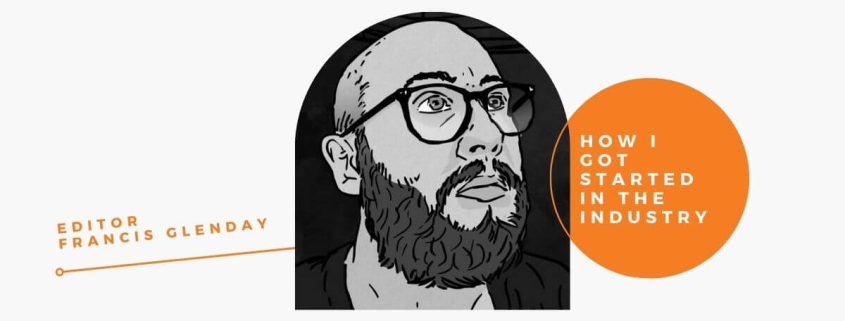
About Francis Glenday

Film Editor with 25 years of experience cutting feature films for theatrical release and streaming (including an HBOMAX original), premiere documentary for international TV & loads of New Zealand and Australian documentary & factual TV, as well as a bit of drama. On top of that, tons of TVCs for some of NZ’s biggest companies (LOTTO, Vodafone, KFC, Samsung etc etc). He was lead editor for the 36th America’s Cup and is back again in 2024 for the 37 iteration of the iconic event. Francis is also experienced in animation and VFX. He created the award-winning animated web series Social Distancing during the COVID lockdown and has created VFX, animation and motion GFX for most of the feature films and a lot of the TV he’s cut.

How I Got Started in the Industry is a guest blog series from the Directors and Editors Guild of Aotearoa New Zealand (DEGANZ). Our members reflect on how they made their way into assistant editing, editing, and directing—with no two stories the same. They offer advice for those starting out. Get in touch with admin@deganz.co.nz if you’re a member and would like to share your story.
A forty-five-second short horror film, garnering 16 million views online, propelled me into a dream I didn’t know I desired.

Life is a game of random chances. You put in the work and hope the universe aligns. For me, the creative professions were distant stars in the constellation of ‘What you could be when you grew up.’ For good reason. My parents grew up in extreme poverty. There were days when my father’s dinner consisted of just two mouthfuls of food. My mother studied under the light of a kerosene lamp. Surviving life in the thick political humidity of Malaysia, they rose above it all and won national scholarships that turned them into local beacons of hope, elevating their lives to the middle class. This was what made me resist committing to filmmaking for the longest time.

My first memory of watching a movie is time-stamped between the ages of two and five. Perched on my dad’s lap, tightly shutting my eyes and covering my ears in an attempt to shield myself from witnessing the eerie metamorphosis of a man to a werewolf.

My life was filled with any movies I could get my hands on: Hong Kong movies, Bollywood movies, Hollywood movies – I was agnostic. It didn’t matter whether it was good or bad; it was my escape from the stifling Malaysian life. I wondered about my sliding door moment if I never came to New Zealand. Because New Zealand is my enabler.

Hweiling directing on the set of ‘Vaspy’ / Photo: supplied

When Ant Timpson ran a competition for his ABCs of Death anthology. Our team, consisting of Peter Haynes, Johnathan Guest, and Nick Burridge, entered with T is for Talk, a horror concept that I came up with. This was my creative awakening. For the first time, I experienced what it was like to see something my brain cooked up translated to screen. And it was watched, ripped, re-uploaded by others. I believe the true viewership count is in the millions.

From this short film, three things happened almost simultaneously: we received Skip Ahead funding; CryptTV, a digital studio, reached out looking for short horror bites in under a minute; and I received the New Zealand Film Commission’s one-off Women’s Short Horror Film Fund.

We pitched ten ideas to CryptTV, and they selected the two I came up with. I knew nothing about directing and insisted that I needed to direct at least one of the short films we pitched to CryptTV. The Tattooist climbed to 16 million views within the first year.

Hweiling directing on the set of ‘Vaspy’ / Photo: supplied

Being a migrant in this country is challenging. Social nuances are different. I was still looking for my tribe. I had gotten so used to being on the outside. This is where I met my second enabler. A chance meeting with Mia Maramara, where she made me giggle about eyeballs floating in fish guts; we would cook up ideas and enable each other, propelling us into various places. We shared many values. Along the way, we combined forces with the amazing Morgan Leigh Stewart and created MHM Productions with a shared vision to work on genre films and collaborate with cool people.

Homebound 3.0 was another random chance encounter. When NZ On Air called for Asian Pacific web series, I rallied everyone I knew to apply. I had just come off directing Sam Wang in a play and he pitched his idea to me and I immediately saw its potential. It didn’t get into that initiative, but it won the SPADA big pitch 2019 and caught the attention of Kevin and Co. Empowered by friends, I asked to direct a couple of episodes, and thankfully, the team said yes.

Hweiling directing on ‘Vivie’, her latest short film selected to premiere at SXSW Sydney / Photo: supplied

Since then, I have been phenomenally grateful for all the opportunities that have come my way. With the support of the New Zealand Film Commission, I was able to direct and write my short films Vaspy (horror), ChengBeng (Unreal), and Vivie (Kopere Hou). I co-wrote and co-produced Albularyo with the MHM team, which was part of Beyond the Veil on TVNZ. I received the New Zealand Writers Guild Seed Grant and co-wrote the feature horror Grafted with Mia Maramara, set to release later this year. Additionally, I received another Seed Grant for a feature comedy about a nihilistic Asian grandmother.

 My advice to cut through the noise? Utilise the free online soapbox to your advantage. Popularity and external validation literally count. You will be asked what your voice is. And I challenge you to look for the uncomfortable truth within yourself, the one that makes you feel vulnerable. That is likely your authentic voice that people want to hear and see. And then ensure you are supported by a team of people (definitely do a background check no matter what their credits are – hahaha) who will care for that heart as you journey through baring your soul naked to the world.


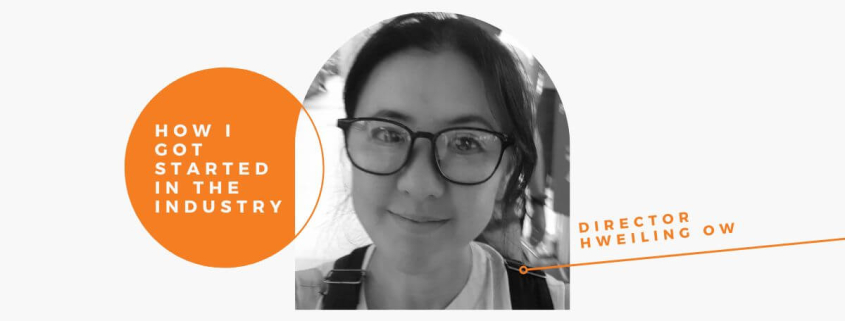
About Hweiling Ow

Upon arriving in New Zealand, Hweiling Ow was bitten by a radioactive Weta that made her fall stupendously in love with film-making. She has since developed muti-hyphenated skills in the areas of producing, writing, directing and acting, and has been taking the world by storm with her online digital series and short horror films that have garnered millions of views. She has also successfully received New Zealand funding for numerous local productions. Like a moth drawn to a flame thrower, she is attracted to telling genre stories with a migrant twist. Her quirky cheery view of the world influences the type of projects she is captivated by. She is the recipient of the 2020 WIFT Women to Watch and participated in DEGANZ’s Women’s Filmmaker Incubator in 2021. She is currently one-third of MHM, a collaborative production company between her and fellow creatives Mia Maramara and Morgan Leigh Stewart.

How I Got Started in the Industry is a guest blog series from the Directors and Editors Guild of Aotearoa New Zealand (DEGANZ). Our members reflect on how they made their way into assistant editing, editing, and directing—with no two stories the same. They offer advice for those starting out. Get in touch with admin@deganz.co.nz if you’re a member and would like to share your story.