I am a Film School dropout and my slow but steady trajectory from PA to Director/Producer is the classic example of working my way up from the bottom.

In the mid-eighties I was studying at one of the best TV/Film Schools in Toronto, Canada; an institution formally known as Ryerson. In my first year a Kiwi boy I’d met while traveling in the Middle East the year before turned up on my doorstep. He convinced me to take a year off (it was a 3-year programme) to come with him to NZ. I did, and I never went back.

In NZ I got a job as a production assistant at a company called Northern Television. Northern made TV commercials, broadcast programmes (drama/comedy/entertainment), and corporate videos. I was lucky to work across them all in a junior ‘do whatever is needed’ role. I worked with industry luminaries like Robin Scholes (producer), Andy Shaw (director/TV exec), John Cavill (DOP), and Brian Shaw (Editor). My boss was the extraordinary, smart, and slightly terrifying Linda (Tex) Milton. Sadly, Tex passed away a few years ago but she was a wonderful mentor who was generous with her knowledge and very supportive of my aspirations to learn as much as I could about production.

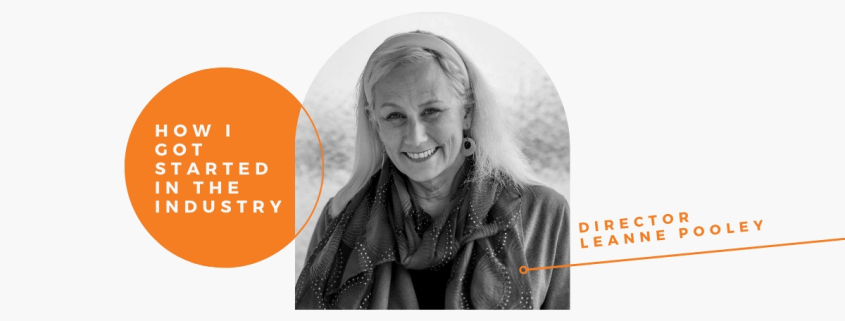
Director Leanne Pooley in Rome and Africa for BBC documentary ‘God’s Candidates’ in 1994 / Photo: Supplied

After Northern, I became a TPA (Television Producer’s Assistant) at TVNZ and spent four years there working on everything from sports to drama. I was then hired as a trainee director on a programme called First Hand; a series in which directors used new lightweight cameras (Hi-8) to make documentaries. First Hand storytellers filled all the production roles; camera, sound, editing, writing, and directing. We were the original one-person band. It was an amazing opportunity to learn under the tutelage of Richard Thomas and George Andrews; two stalwarts of the documentary genre. Doing every role meant the filmmakers came to appreciate all the components that go into a documentary. We were also faced with our own mistakes in the cutting room, a very steep learning curve indeed. First Hand was responsible for launching the careers of a number of highly successful broadcast professionals. Alan Erson went on to become Head of Documentaries at the ABC. David Ambler is a BAFTA-winning producer at the BBC, Mark McNeil runs the highly successful award-winning company Razor Films, and Peta Carey is a celebrated filmmaker and author. It was an incredible breeding ground for talent and I was very lucky to be part of the First Hand incubator.

Leanne on set for her 2013 documentary ‘Beyond the Edge’ / Photo: Supplied

In 1992 I moved to England where I was hired as a director/camera person on the acclaimed BBC series 40 Minutes helmed by the legendary documentarian Paul Watson. This was the first of many documentaries I made over the course of five years in Britain. I directed films for blue chip series including; Everyman, Omnibus, Frontline, Modern Times, and Eyewitness amongst others. My time in England solidified my position as a documentary filmmaker, I learned from the best in the business and when I returned to NZ to have my first child, I established my company SPACIFIC FILMS (25 years ago).

My trajectory has combined a little bit of study, a lot of luck, and some bloody hard work. It’s been a ride that’s for sure and I’m still with the boy who turned up in Toronto all those years ago.


About Leanne Pooley

A documentary filmmaker for over 25 years, Leanne has directed films all over the world and has won numerous awards (including Best Documentary at TIFF). Leanne is a New Zealand Arts Laureate, a member of The Academy of Motion Picture Arts and Sciences, and was named an “Officer of the New Zealand Order of Merit” for Services to Documentary Filmmaking in the 2017 New Year’s Honours List. Her work includes The Girl on the Bridge on suicide survivor and activist Jazz Thornton, We Need to Talk About A.I. for Universal Pictures and GFC, the animated feature documentary 25 April, and acclaimed local box office success Topp Twins: Untouchable Girls. Most recently, she produced Dame Valerie Adams: MORE THAN GOLD on the titular Olympic champion.

How I Got Started in the Industry is a guest blog series from the Directors and Editors Guild of Aotearoa New Zealand (DEGANZ). Our members reflect on how they made their way into assistant editing, editing, and directing—with no two stories the same. They offer advice for those starting out. Get in touch with admin@deganz.co.nz if you’re a member and would like to share your story.
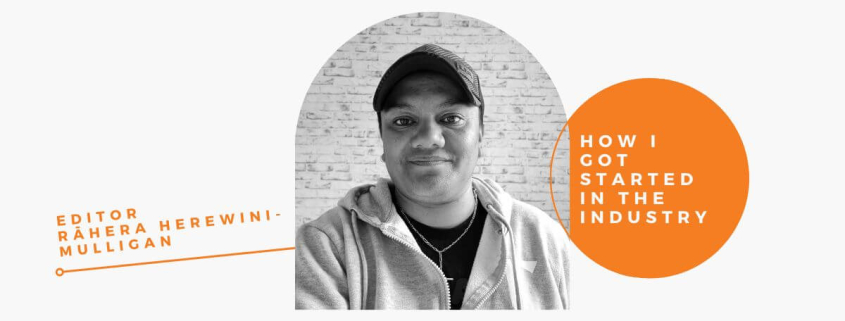
When I was in primary school, I never knew I was Māori, or should I say I never understood what being Māori was. I always thought I was a little bit darker than a lot of the other kids, but that was ok. I was introduced to te reo Māori and kapa haka at primary school, and I felt like a gap was being filled. I carried on learning te reo Māori and doing kapa haka at college.

From a young age, I always thought I would be a teacher because I had some cool teachers, and I just thought I wanted to be like them when I grew up. Then in my senior years at Kapiti College, that changed as I found a love for Māori performing arts. Nearing my final year at college, I came across a one-year course in Film and Television at Whitireia Polytechnic in Porirua. What really caught my eye was that it incorporated Māori culture, and I thought if I didn’t like Film and Television, I could always go and do the Māori performing arts course. That one-year course set me on a path that changed my life, with a job offer in Auckland.

Editor Rāhera Herewini-Mulligan / Photo: @tuhoemaiden

At just 19 years old, I made the move to the big smoke, with no immediate family residing in Auckland. It was 1999, and my editing career had begun as an assistant editor on a new te reo Māori kids show known then as Tumeke. After one season, this was renamed Pūkana and is still in production today. I was fortunate to work with and learn from Francis Glenday, who taught me processes and structure, which I added to my editing foundations and still use and live by today. 

After just five months of being on the job, Francis fell ill, and I was asked if I would step up from assistant editor to editor. I must admit I was freaking out and had major doubts that I really wasn’t ready to step up. My director at the time, Hira Henderson, pulled me aside and said, “We will do this together,” and that gave me comfort that support would be there for me. So I asked myself, “Do you want to sink or swim?” and decided to swim.

That decision threw me into the longest week of my life as I worked as the show’s, now, only editor. But with the awesome support from my colleagues, I survived to tell the story and complete my first solo episode edit ever. And I was buggered! I continued work on the show into its 3rd series before moving on to TVNZ, where I would edit shows like Waka Huia, Marae, Mai Time, and Tagata Pasifika. This extended my editing knowledge base and introduced me to more Māori within the industry. After two years at TVNZ, I ventured out into the freelance world and haven’t looked back.

Sneak peeks into the Mokomoko Media editing suite, Rāhera’s editing team with her wife, Janice / Photos: @mokomokomedia

That’s my humble beginnings as an editor. Back then, I never realised I was part of a small group of Māori editors and an even smaller group that could kōrero Māori, which today I hope to help grow even more. I have worked with and alongside some of the best Māori in the Film and Television industry and am forever grateful for their teachings. One being we are a community that does this together.

‘Ehara taku toa i te toa takatini engari he toa takatini.’
My strength is not as an individual but as a collective.


About Rāhera Herewini-Mulligan

Rāhera is a field director and editor who is a fluent speaker of te reo Māori with 20+ years of experience in the television industry. As an editor, she has a wealth of experience across documentary, reality, children, and magazine-style genres from Police Ten 7 (TVNZ) to Moving Out with Kanoa (Three) and many shows for Māori Television. She is also passionate about Kapa haka and is an event/stage manager for Primary School, Secondary School (ASB Polyfest), and Senior Kapa Haka competitions across Tāmaki Makaurau.

How I Got Started in the Industry is a guest blog series from the Directors and Editors Guild of Aotearoa New Zealand (DEGANZ). Our members reflect on how they made their way into assistant editing, editing, and directing—with no two stories the same. They offer advice for those starting out. Get in touch with admin@deganz.co.nz if you’re a member and would like to share your story.

I was born curious and enjoy figuring out how things work, which is essentially what I still do today as a director.

I drew a lot as a kid and wrote and illustrated comics at school. Art was always my focus, so it seemed like a natural progression to go to art school. I did a first-year foundation course and hated it, so I continued illustrating and started a freelance career to make money doing what I loved. I tried a few other things along the way, like animation, which seemed like another logical step (taking still images and making them move).

While looking for illustration work in advertising, I was offered a trial as a junior creative. I was curious, so I accepted and was hired after three months. I didn’t realise how lucky I was at the time. This job was a turning point for me creatively – advertising taught me to interrogate my ideas, and I started working with directors. I’d write a script and was able to observe them make it, which I found fascinating. I thought directing was something else I wanted to try, and I asked a director I connected with if I could help them out in any way to learn more. They said, “If you really want to direct – then direct”.

I wasn’t sure how to take that first step, but when a band I was playing in received an NZ on Air video grant, I put my hand up to make it. I instantly fell in love with the process of taking an idea from my head to the screen. This is what I wanted to do for the rest of my life (a fortunate realisation at the age of 22). The music video was nominated for an award, and I quit advertising (my first and last full-time job). I went back to the freelance world – this time as a director.

The next few videos I made all involved aspects of animation, but eventually, I fell in love with the immediacy of film. I was repped by Fish n’ Clips, a division of Flying Fish films. I wanted to make a living from music videos, but the NZ scene had never been sustainable. Through the music videos I’d made, my advertising connections, and the help of Flying Fish, I started making commercials to save for a trip to London.

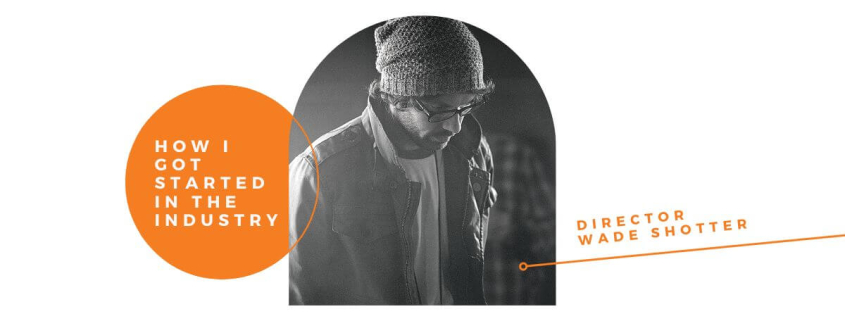
Director Wade Shotter on set for Mint Chicks music video ‘Post No Bills’ / Photos: provided

In the five years I worked in London, the bottom fell out of the industry (they blamed downloading). But due to the work I’d done there, I was lucky enough to win some great NZ commercial work, which kickstarted my commercial career worldwide.

I moved back to NZ and eventually joined FINCH, an inspiring Australian-owned film production company. Making commercials has supported me in branching out into other realms, like shorts and a tv series I’m developing. I’m still trying new things, ticking boxes, and having realisations.

Wade on set of his short film ‘I Will Not Write Unless I am Swaddled in Furs’ / Photographer: Thian Benton-Fieulaine

Being a director is a constant challenge. In an over-saturated industry, there’s a never-ending balance between being true to yourself and being relevant. I’ve sacrificed a lot, and there were several stretches of unemployment. But there have also been some amazing rewards that made it all worthwhile.

There’s no ‘right’ way to become a director. You can come at it from any angle, and you will succeed if you’re passionate enough and stick at it. I never went to film school, although when I think back – I’ve always had a deep love of film that was omnipresent throughout my life. I’d forgotten that I used to animate flip book stick men, make Lego-men films with my friend on his dad’s Betacam, and although I almost failed art school, I got an A+ in the subsidiary filmmaking course. For me, everything was pointing towards filmmaking.

Wade’s Self Portrait / Photo: provided

Everything you experience will make you the director you are. I developed an eye for composition and light through illustration, a sense of tone, emotion, pacing and energy through composing and performing music, and learned to hone my ideas and storytelling through advertising.

Nobody will make your project for you. You must take the first step and the last. But it’s also never been easier to make something and put it out there. So be a sponge, find collaborators, never get too comfortable, and stay curious.


About Wade Shotter

Wade Shotter’s origins are in illustration, where he worked on children’s books and created eight comics. From pen and paper, he moved to animation, where he worked with Disney for a stint in traditional 2D animation. Since shifting gears to film, he has directed his short film, music videos for various bands, and commercials for clients such as Fire & Emergency NZ, BNZ, Uber, Qantas, and more. He continues to play with form through his work and is drawn to deeply cinematic and visually expressive styles that engage and surprise. Currently, he is developing a pilot script for a television series.

How I Got Started in the Industry is a guest blog series from the Directors and Editors Guild of Aotearoa New Zealand (DEGANZ). Our members reflect on how they made their way into assistant editing, editing, and directing—with no two stories the same. They offer advice for those starting out. Get in touch with admin@deganz.co.nz if you’re a member and would like to share your story.
Editing – Cutting a Path

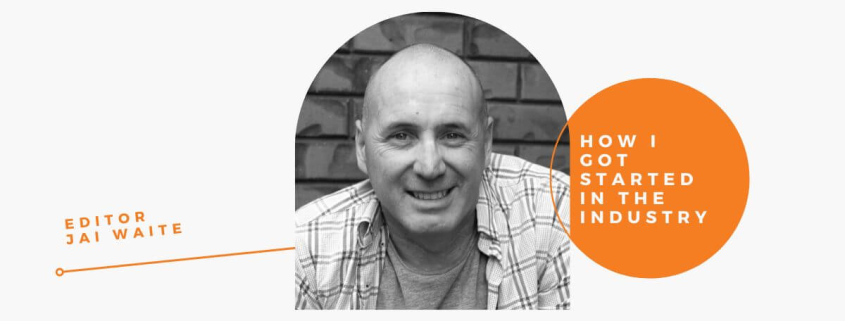
I’ve been an editor for 17 years – and the majority of that is in the documentary space. For those that don’t know me, I am also a wheelchair user – the result of an accident 22 years ago. That hasn’t burdened my career at all. In fact, as a wheelchair user, you have to become a problem solver and think outside the box – a handy skill when you’re trying to connect a scene or thought in a timeline.

Tuning Your Skills

My career began after the 2004 Athens Paralympics. I competed in Wheelchair Rugby, and after returning home with the shiny medal, I received a letter that allowed me financial help to study anything I wanted. I opted to complete a post-grad in film and television. Upon completing my course, I was lucky enough to step into an edit assist role at Attitude Pictures. Initially, my role was ingesting analogue tapes and shot listing. After about 6 months, I had started rough cutting some of the short stories that used to make up the magazine style programming – each roughly 5-6 minutes. The short length meant you had to get creative in transitioning from scenes and joining movement. Here I got to start online editing too. This really fine tunes your eye to any irregularities in shot.

Editor Jai (centre) at the 2004 Athen Paralympics / Photo: Supplied

After 3-4 years of cutting presenter led storytelling – the progression to longer form editing began. Here is where you start to think about story flow and what I like to call ‘riding the waves’ – taking the audience on a ride of emotions. This skill set isn’t something easily developed, and it takes time to know your craft and how to get the best out of the audio and vision. When doing jobs like this, it’s important to talk to your director or producer early on that you need time to work through the scenes. It gets quicker over time, but you need time to try things initially. There’s nothing wrong with kicking people out of the booth to try things on your own.

I feel you really start to trust your instincts by year 10. Again this comes back to how much leeway you’ve been given to tune your skills. It’s equally important to have snowballed all the skills from edit-assist to onlining to editing, so you understand the process and how best to do your job – and not make others’ difficult. You’ll get more work if you’re not costing producers extra $$$ after you’re finished.

Editor Jai at his editing desk / Photo: Supplied

In terms of software – I use it all. There’s no point limiting your potential work by being solely Avid or Premiere. Heck, I even edit in Davinci if I have to (great freeware, BTW).

My best advice is to be open to change and challenge yourself to do it differently.


About Jai Waite

Jai is an award-winning editor with an extensive background in documentary and factual projects, with a particular strength in storytelling. His accolades include two Apollo Awards for Best Editing in a Documentary/Factual film (2014 and 2016) and two Asian Academy Creative Awards for Best Editing (Australia/New Zealand 2018 and 2019). He currently works as a freelance editor and has a production company, Sweet Productions, with fellow member and long-term collaborator, Robyn Paterson.

How I Got Started in the Industry is a guest blog series from the Directors and Editors Guild of Aotearoa New Zealand (DEGANZ). Our members reflect on how they made their way into assistant editing, editing, and directing—with no two stories the same. They offer advice for those starting out. Get in touch with admin@deganz.co.nz if you’re a member and would like to share your story.

Growing up in Auckland in the late 80s and 90s, the idea that filmmaking was in my future seemed like an impossible dream.

On my mother’s side I come from an Afakasi German-Samoan family that migrated to NZ in 1965 and my father’s side a working-class Pākehā and Māori family from Auckland’s South-Eastern suburbs that my dad was adopted into. Neither side were creatives; my mum was a Policewoman and my dad’s lifelong love of Rugby League had led him to the Kiwis in the 70s, so whenever the question ‘what do you want to be when you grow up’ was asked my answer was usually very practical – a lawyer or doctor.

But I always remember the love of film being there. My parents split up when I was a baby, so my sister and I only saw our dad on Sundays, but I vividly remember him taking us to the movies and getting lost in another world. It wasn’t until I was a teenager seeing Jane Campion making films on the world stage that I secretly wondered if I could do that, but it felt out of reach.

I put the dream aside, went to uni to study law and ended up meandering through various courses while taking film theory papers on the side. When I finished, the flicker of that teenage dream remained, so I enrolled in an 18-week Film Production course and haven’t looked back since.

The course gave me the opportunity to write and direct my first short film Sunday’s Child, a far from perfect film that confirmed filmmaking was what I wanted to do. I then got into the MA programme in Screen Production at the University of Auckland where I was fortunate to be taught and mentored by Vanessa Alexander and Dr. Shuchi Kothari. I made more short films and mistakes, learnt many lessons, and made my thesis film Tatau which got into festivals in NZ and overseas and won a couple of awards.

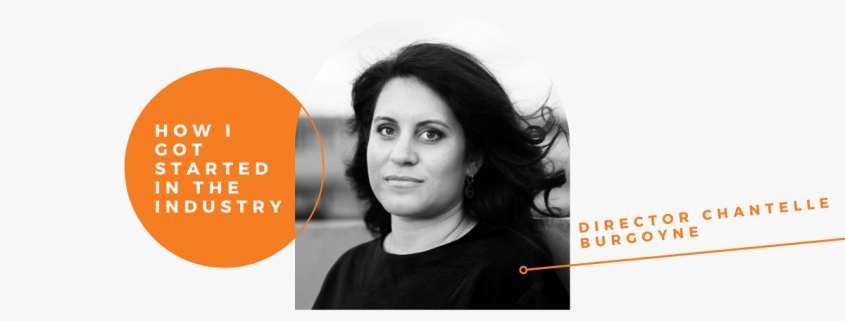
Director Chantelle on set of her short film Tatau / Photo: Supplied

After I finished, I found myself in a position of not knowing what to do next whilst figuring out how to make a living, so I worked as a freelance editor and interned at DEGANZ before getting a one-year contract at the NZFC looking after Fresh Shorts working with Lisa Chatfield. It was a role that gave me insight into the NZFC and connected me with many filmmakers in the industry. One connection, Andrew Cochrane who had produced a Fresh Short, offered me a production role on the Crouching Tiger sequel shooting in Auckland. That job led to many more working on Hollywood Film and TV productions here in NZ giving me a first-hand view of what goes into making those types of productions which is incredibly valuable for me as a filmmaker. One of the most important roles I’ve had was as the executive assistant to Barrie Osborne who I learnt so much from in terms of his wealth of experience as a Producer navigating Hollywood and as a person.

I am grateful for the opportunities I’ve had working on these productions and the people I’ve met, but my filmmaking dream has never left me. I have continued to apply for funding and opportunities and have been lucky to get accepted into the DEGANZ Woman Filmmakers Incubator and Script to Screen’s Film Up programme and was mentored by Tusi Tamasese. I also received Fresh 30 funding for Sista which I directed and co-wrote with my sister Leilani under the mentorship of Dana Rotberg. Sista was a film that had many challenges, but one of the best and invaluable experiences I had was working with the wonderful Annie Collins as an editor.

Director Chantelle on the set of short film Sista / Photo: Supplied

Most recently, I directed part of the indigenous anthology We Are Still Here, a co-production between the NZFC and Screen Australia that opened the Sydney Film Festival and had its international premiere at TIFF. It was a film that faced many obstacles (not the least of which the global pandemic) but overall, it has been an incredible film to be a part of and I have really valued working with so many other indigenous filmmakers and creatives.

Director Chantelle on We Are Still Here set / Photo: Supplied

Looking back, my journey into and through the industry is one that has oftentimes felt circuitous with many ups and downs; but truthfully, I think the biggest obstacle I often face is myself and my own sense of confidence. Yet despite that I’ve kept forging ahead as there’s nowhere else I want to be.

So, I’m still holding on to that dream which no longer feels quite as out of reach.


About Chantelle Burgoyne

Chantelle is New Zealand-born filmmaker of mixed European and Samoan descent. She has directed award-winning short films Tatau and Sista. Chantelle was also one of the directors on feature anthology film We Are Still Here, which opened the Sydney Film Festival this year.

How I Got Started in the Industry is a guest blog series from the Directors and Editors Guild of Aotearoa New Zealand (DEGANZ). Our members reflect on how they made their way into assistant editing, editing, and directing—with no two stories the same. They offer advice for those starting out. Get in touch with admin@deganz.co.nz if you’re a member and would like to share your story.