Go With The Flow

My journey in the film, television, and performing arts industries was unplanned. However, my instincts have worked towards goals and dreams with a “Go with the flow” attitude.

One day, I visited a dance academy called Darpana Academy in Ahmedabad, India. I’ve been a natural dancer since childhood and wanted to learn the Indian classical dance Bharat Natyam. It was the evening of 28th October 1982. I still remember it as it was the day I entered into the world of theatre as an “actor” instead of a dancer. From then, up until about 1989, I was crazy busy with acting jobs for theatre, television, and films. Also during that time, I got an opportunity to graduate in performing arts from the National School of Drama (NSD), in Delhi. But due to family commitments I had to say goodbye to my acting career, at least for the time being.

I did get a Government Job in 1989 in Doordarshan Kendra, India (State TV broadcaster) as a production assistant for television programmes in the Gujarati language. It was a great time to learn to edit, direct, and produce because of the staff shortages to create TV programmes for local audiences. I was lucky enough to get intense filmmaking training at the Film Institute of Pune (FTII), India, which is equivalent to the South Seas Film School in Aotearoa. I quit that job in 1993. I was missing acting and theatre due to that job, so I resigned and started my own production company named “Bermuda Telefilms” to produce films, television programmes for local tv stations, and stage plays/dramas in the Gujarati language.

From 1993 to 2003, before I migrated to NZ, I produced, directed, edited and acted in several stage plays/dramas, TV programmes, and films in India. I left India in 2003 to make Aotearoa, New Zealand, our second home to give our daughter a better life. My wife and I left all our loving jobs/work to settle in NZ with the same attitude “Go with the Flow”.

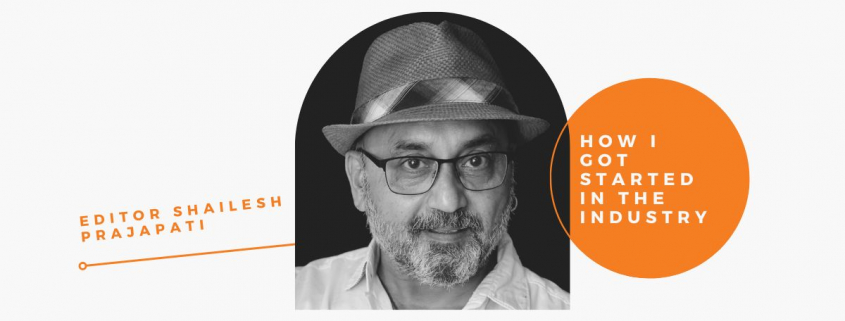
Editor Shailesh on set / Photo: IMDB

2003 to 2008, for five years, I tried hard to get work in the film and television industry and tried very hard to convince many producers and production houses so I could become a part of the NZ film and television industry. However, everything was a struggle with no money, no recognition, language difficulties, the colour of my skin, and my thick accent. I did odd jobs without losing hope and confidence.

I was lucky enough to have a good old friend in Auckland from my home town to rescue me by showing me the right path to get into the industry, DR. Shuchi Kothari (Thanks heaps, Shuchi). She asked me to do a post-graduate diploma in screen production from the University of Auckland, and I did it in 2007-2008 to develop an awareness of the NZ film and television industry. After my PG diploma, my first job in NZ was with The Walt Disney Company (New Zealand) Ltd for fantasy drama series The Legend of the Seeker season 1 & 2, as an assistant editor, recommended by Vanessa Alexander and Zane Homes (Thank you both).

I have worked as an assistant editor and editor, plus an actor (with Auckland Actors) in the NZ film and television industry, Since 2008. I have held myself back from directing and producing in New Zealand because of my lack of confidence with my english and racial biases in the film and television industry.

My love for my own Gujarati language pushed me to go back to India (after the graduation of my daughter) in February 2018, where:

  1. I acted in a Gujarati feature film Hellaro, which won the 66th National Film Award for Best Feature Film in 2018.
  2. I directed a Gujrati feature film Saheb, which was released successfully in February 2019. It’s available to stream on Amazon Prime. Saheb was critically acclaimed in regional cinema.

I returned home in August 2021, after 18 months, as I felt that Aotearoa New Zealand was my first home. Being stuck in lockdown due to the pandemic meant I couldn’t return to India in December 2021 for another feature film project. I did begin working in post-production again whilst in lockdown.

Now again, back in India due to the sad demise of my father in the last week of June 2022. I’ll start working on my next project once everything gets back to normal in my life.


About Shailesh Prajapati

Shailesh is an editor, director, and actor originally from India and now residing in Aotearoa New Zealand. He has worked on tv shows, films, and short films including award-winning short film Perianayaki, which won Best Short Film at NZIFF.

How I Got Started in the Industry is a guest blog series from the Directors and Editors Guild of Aotearoa New Zealand (DEGANZ). Our members reflect on how they made their way into assistant editing, editing, and directing—with no two stories the same. They offer advice for those starting out. Get in touch with admin@deganz.co.nz if you’re a member and would like to share your story.
My family and I fled Iran for Aotearoa in the late 1980s due to war and an oppressive regime. As a six year old I was yelled at by teachers for not understanding English, so I set about reading and writing as much as I could to learn the language. This was aided by a family love of film. I feel like the two have become intertwined and I now have the privilege of working as a writer and filmmaker.

Being a creative means constant rejection – whether it’s work opportunities, funding or criticisms of your work. Early in my career, I wanted to become an actor so this sense of persisting despite the setbacks became ingrained in me. I also became disappointed with the lack of roles for women, particularly women of colour. So I started writing those very roles that I would have wanted myself and soon I began directing them too. At one point, I dropped out of a certain film school, bought a one way ticket to London and set about working as a runner – often for free – but loving the freedom and people I met along the way. I remember literally door-knocking around all of Soho until someone finally let me in for an interview. What I wasn’t prepared for was the bullshit sexism, racism, classism and self-indulgent nonsense that the industry was awash in. It is changing, slowly, but it’s changing.

When I returned to Aotearoa, I decided to go through the University route by completing a BA in Film, TV and Media Studies at the University of Auckland then a Masters in Documentary under Annie Goldson. It was here I serendipitously met a Fulbright advisor and randomly decided to apply for the University of Southern California. The year in Los Angeles was fundamental to me learning how to write for film as we were writing constantly. It was also an introduction to the US system which is its own beast. USC was not just a film school (what we learn here is just as good) but their resources and connections make it more like a country club for Hollywood wannabes. However, I got to work in the documentary department at the Sundance Institute – a relationship I am keen to continue fostering as I thoroughly support their mantra on supporting independent filmmaking.

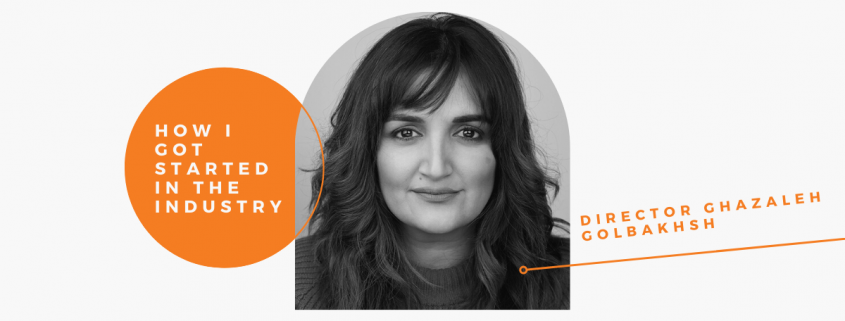
Director Ghazaleh and the all female crew of This is Us (for RNZ/NZ on Air) photographed by Ainsley Duyvestyn Smith / Photo: Supplied

For me, much of my work came through the connections I made through University, including the formidable producer and writer Shuchi Kothari, plus constantly applying for funding, workshops and programs that our hard working guilds here run such as the Women’s Incubator and filmmaker workshops through DEGANZ. These events are great to meet people. It was at an early Story Camp run by Script to Screen where over a sneaky wine, I met the incredible Ainsley Gardiner, who is now producing my first solo feature with Georgina Conder and Miss Conception Films. The best way to network is to be yourself.

I am currently directing on Shortland Street. Learning to work within a multi-camera, fast turnaround format is an invaluable experience and the perfect place to hone your directing skills as you get to direct regularly. I’m also really proud of what Oliver Driver and the team at Shorty are doing with actively supporting and encouraging more representation behind and, in front of the camera.

One of my favourite speeches comes from actor and musician Riz Ahmed. Regarding representation he notes that being represented means being a part of the story. If we are absent from that story, then we feel that we do not matter. It is not enough to just put different faces on screen (as great as that is) but it is also vital to have the right people tell those stories and make the decisions behind the screen too. In my career I’ve been lucky to have had other POC women leaders as mentors who have not only helped me with work but also helped me see myself in that leadership role one day.


About Ghazaleh Golbakhsh

Ghazaleh is an Iranian-New Zealand award-winning writer and director. She has directed award-winning short films including This is Us, Iran in Transit and The Waiting Room. Ghazaleh was also one of the writer/directors on feature anthology film Kāinga, which premiered at NZIFF and the Melbourne International Film Festival this year. She is currently working on her debut feature as well as directing on Shortland Street.

ghazalehgolbakhsh.com

How I Got Started in the Industry is a guest blog series from the Directors and Editors Guild of Aotearoa New Zealand (DEGANZ). Our members reflect on how they made their way into assistant editing, editing, and directing—with no two stories the same. They offer advice for those starting out. Get in touch with admin@deganz.co.nz if you’re a member and would like to share your story.
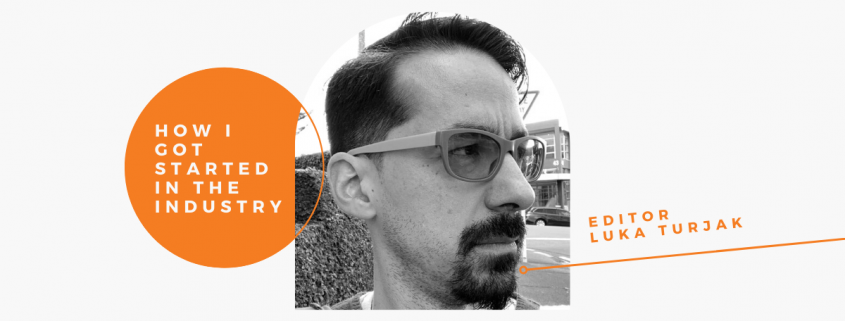
I joined a children’s choir just after my 3rd birthday. That was in Yugoslavia, Zagreb, in 1983. Choir defined me as a person. I’ve learned early on we are all individuals with different needs, wants and perception, so listening is often more important than talking. We’d rehearse twice a week and occasionally perform on Sunday morning Kid’s show on Channel 1 broadcasted live from the studio at Zagreb TV. The studio lights were insanely bright and enchanting. Built sets, colourful gels, bubble machines, giant cameras on wheels, heaps of grown ups, discipline, and us kids were all needed to create those few minutes of a TV programme. The Whole is greater than the sum of its parts. I knew I wanted to be an entertainer, and I saw the beauty in the collective, not in soloing.

By mid teens, I was in a few TVCs, had a supporting role in a feature film, acted in couple of theatre plays, but started feeling uncomfortable being recognised on the streets. Rather than escaping that world, I removed myself from the spotlight, and joined the crew “behind the scenes”. I spent my 20s mostly in theatre, making music and sound design, experimenting with 3D mapping and projections, filming and editing my friends’ gigs and creating short videos for VJing. I was lucky to own a firewire HDV camera, Final Cut Express and a laptop powerful enough to deal with the footage. VJing was a passion giving me a chance to perform my own artwork without too much exposure. I was VJing for 3 bands I liked, and realised that clip making part of the process was my favourite. I wanted to edit more. I approached the team that was producing a weekly music show about demo bands, and I got the gig. It felt like playing music and Lego at the same time, but it was an unpaid job and if I wanted to edit more, I would need to find paid work before I quit the day job.

Editor Luka Turjak in his many elements / Photos: Supplied

Same year I was introduced to Željko Senečić who needed an editor to re-cut a film about Yugoslav sculptor Dušan Džamonja. It was edited in Final Cut 6 so it was a rather easy task once I found a common tongue with a director who was larger than life and 47 years older than me. Senečić had degrees in Painting from the Zagreb Academy of Fine Arts and Scenography from the Zagreb Academy of Drama Arts and he was a production designer, film director, screenwriter, playwright and way more. I on the other hand was a choir singer, had some college in Mathematics and earned money at a telephone company.

Luckily we understood each other, became good friends and in the next 6 years we made another 8 documentaries, mostly about painters and one TV drama. He supported my idea of quitting my job and turning freelance editor and theatre video/sound designer. Not the wisest thing to do during the Great Recession, but it worked out fine. It made me a happier person. I was editing art exhibition pieces for various artists and took occasional TV jobs and had time for theatre, choirs and my bands.

Editor Luka Turjak in his editing suite / Photo: Supplied

Coming as a tourist to New Zealand in 2014 was a big change. I’ve met a woman here and we wanted to explore what would living together be like. I stayed taking my chances of starting fresh. No friends, no choirs, no theatre group to belong to. I’ve taken “the long way home” approach. I didn’t know anyone in the industry yet, so I figured I’d crew for a while. Because for me, it is the people, it is the people, it is the people…

I took on everything I felt comfortable with – running, locations and unit assisting, agency/client/talent driving, ADing, DITing… I met a bunch of extraordinary people on sets, in rental and production companies who gave me greater insight into Aotearoa. When I felt the time was right, I put my hand up as an edit assist. And without forcing it I have slowly settled back into the editing chair.

Of course, I still do theatre, sing and perform, occasionally even in the editing suite.


About Luka Turjak

Luka is an experienced editor and assistant editor originally from Yugoslavia, and now based in Auckland. In the last few years, he has edited feature films In Passing and Spring Interlude, as well as documentaries, short films and music videos.

alukat.me

How I Got Started in the Industry is a guest blog series from the Directors and Editors Guild of Aotearoa New Zealand (DEGANZ). Our members reflect on how they made their way into assistant editing, editing, and directing—with no two stories the same. They offer advice for those starting out.

The Accidental Editor

It was 2009 and I’m working at Unity Books in Auckland, my specialty – children’s picture books and classics of literature. It’s been 2 years since I quit my career as an art director in advertising with no intention to ever step back into that world. I loved selling books and I still work at Unity from time to time, but in 2009 I was hoping to find a new path.

A friend mentioned a job going at TVNZ. They were looking for creative producers with an advertising background. A ‘creative producer’ makes 30-60 second promo videos for movies and shows; you write a script, edit the footage, direct the voice over talent, select music, SFX etc.

My only film editing experience was that once, I made a joke video on iMovie to amuse a friend, but I brazenly applied all the same.

To this day I’m still not quite sure how I was hired, it was a total accident, didn’t ask for it, fell on my lap. Perhaps a mix of luck and fate. TVNZ sent me on a two-day crash course to learn Avid Media Composer. The next day I started working. It was incredibly hard, I felt like a senior citizen learning computer skills, and back then there were no YouTube tutorials. The first few months I’d work late nights, I’d work weekends and study other people’s work, frame by frame. Why does one cut on a particular frame? What makes an elegant edit?

One day, my Creative Director pulled me aside and told me that he thought I had the right sense of timing to be a good editor. This encouragement drove me to want to be the best at TVNZ and I continued working late nights and weekends. The work projects became more complex and I was trusted to cut important campaigns, brand montages. I won international awards. In 2015 I became a freelancer. I worked for Sky TV and edited commercials with the ultimate goal in mind – to edit movies!

Sometime in 2016, I bumped into an old friend – director Florian Habicht. He’d recently returned from living overseas and told me he’d noticed my work. “One day we’ll work together,” he said. That comment encouraged me enormously. I was determined to make that happen, I just didn’t know how to make the switch from TV to film.

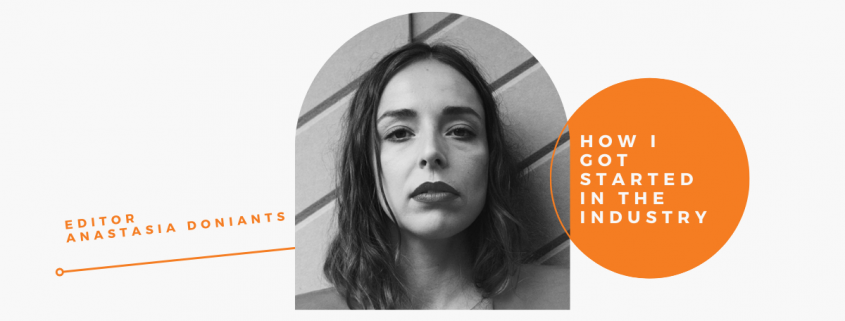
Editor Anastasia Doniants photographed by director Lula Cucchiara / Photo: Supplied

A personal connection helped. A friend of mine, director Jessica Sanderson, asked me to edit her NZFC funded short film, Ways to See. Again, luck was on my side, Annie Collins – the greatest editor in New Zealand – agreed to mentor me through this project. My fate was set there and then. Annie taught me everything about long-form: the workflow, the protocols, how to log, the assembly process. Annie also suggested that I trust my instinct, and this is something that can’t be taught, it must be in you as a person. Ways to See and my second short film, Ani by Josephine Stewart-Te Whiu, travelled the world with much success. This gave me confidence to continue to edit.

Educational institutes are not the only paths to knowledge, nowadays. I’m sure going to film school would have been of great help and, personally, I wouldn’t encourage anyone to follow my path. What helped me is that I was a movie mad kid. Movies and books took up most of my imagination growing up. My advice to young people – your hours of watching films are not wasted. Be curious. Be generous with your time as you’re investing in your future, if it means working for free – do it.

Most importantly, you have to love the magic and spectacle of film or else you’re in the wrong industry.

“Astonish me,” Sergei Diaghilev used to say to his dancers. “Astonish me,” I say to every person involved in the process of movie making.


About Anastasia Doniants

Anastasia is an award-winning editor based in Auckland. In the last few years, she has edited feature film documentary Fiona Clark: Unafraid, co-edited documentary James & Isey; as well as short films, documentaries and music videos.

How I Got Started in the Industry is a guest blog series from the Directors and Editors Guild of Aotearoa New Zealand (DEGANZ). Our members reflect on how they made their way into assistant editing, editing, and directing—with no two stories the same. They offer advice for those starting out. Get in touch with admin@deganz.co.nz if you’re a member and would like to share your story.

I’m 18, with frosted tips, earnest to a fault, about to graduate from South Seas Film & TV School. I post out my CV to every production company I can find: nobody bites. (Though, I did send it with a bar of soap wrapped in 16mm film and the opening line, “You don’t know me from a bar of soap…” *double cringe*).

Then one of my tutors puts me in touch with a graduate student who is working on The Lord of the Rings, shout out to Dan Story! Dan takes my CV to the production manager, Brigitte Yorke. While unimpressed with the soap, Brigitte, an alumnus of South Seas, appreciates my grades and hires me as a runner for two weeks. I martyr myself to the job. Changing lightbulbs, making coffee, spilling coffee, wearing my studio-issued ID like an Olympic medal. Two weeks turns into two months, and before I know it, I’m off to Wellywood, leaving behind my hometown in the Tron.

I quickly learn the magical business of show business can be a high-stakes, lawless place, and I’m sucked into the pressure, the hierarchy, the people. It’s intense, intoxicating, compulsive… a wild west of bullshit, politics, nepotism, sexism, slave drivers. And I bloody love it. Because when you finally see your name roll up in the credits, it’s suddenly all worth it. Addicted, I jumped from one film to the next… King Kong, The Water Horse, The Lovely Bones, Avatar, The Hobbit… going from runner to driver to cast PA. Watching. Learning. It wasn’t until I became James Cameron’s driver, 8 years after leaving film school, that I decided I had to tell my own stories. I quit James and made my first short film… and then the next one, and the one after that.

One day, producer Katie Millington saw my short Darryn Exists and took a punt hiring me, believing I could learn how to direct commercials. I moved to Auckland, but had nothing to show for myself, and advertising people want you to prove you can tell a story in 30 seconds or less. So I self-funded a couple of ‘spec ads’ to build a showreel for myself. This got me my first job directing a TV commercial. I guess things snowballed from there, but not without the loving mentorship I’ve received from great people and places along the way.

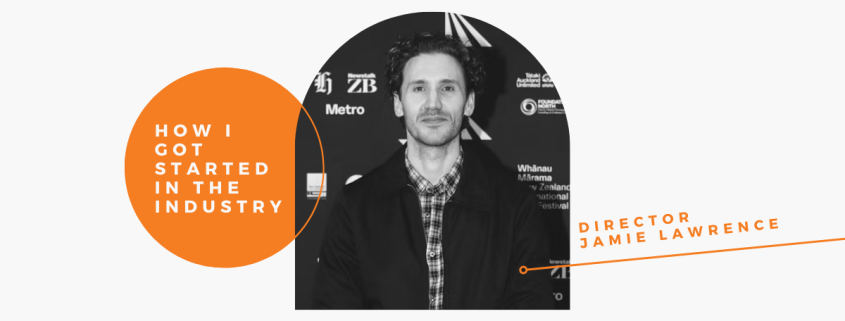
Director Jamie Lawrence on set / Photo: Supplied

Looking back, it really does feel like a collision of passion and opportunity that got me into (and keeps me in) the industry. Thank you, South Seas, thank you Dan, thank you Brigitte, thank you James, thank you Katie.

It can be a long road, so when it comes to weathering the storm, the things I tell myself:

Turn away from rejection, towards something you love. I’m quick to go on the offensive, taking shit personally. But actually, the truth is sometimes it’s them, not you. If I lose a job to another director, I reframe it in my mind like an actor who loses the role to somebody more “quirky looking” and “on brief”, while I must be too handsome for the part. Then I lock myself in my room and write my screenplay. This way, I not only ‘bounce back’ from the setback, but I also have something to ‘bounce to’.

Phone a friend. Nurture these relationships and connections because they are a wellspring to refuel from when you’re in the eye of the storm. Having a cup of tea/gin with a mate toughens/loosens me up every time.

You can say ‘no’. It’s human rights. Sometimes you can’t afford to turn down an opportunity. And sometimes you can’t afford not to. It’s okay to say ‘no’. For better or worse. It can be bad for business (ask my producer or my husband), but it also makes room for other important stuff. I’ve made a list of deal breakers that match my values – a way to measure a job and decide if it’s something I want to do. Yes… it’s idealistic, probably unsustainable, and sometimes I get a nosebleed on my high horse. But it’s not as bad as doing something I hate.

Good luck out there. Thanks for reading.


About Jamie Lawrence

Jamie Lawrence (he/him) is a queer Pākehā filmmaker based in Aotearoa New Zealand. His work has screened and won awards at NZIFF, MIFF, Festival des Antipodes, and Oscar-qualifying festivals including Show Me Shorts and Nashville. A scholarship graduate of NYFA and an alumnus of MIFF’s Accelerator Lab, Script to Screen’s FilmUp and Story Camp, Jamie’s recent short EARTHLINGS premiered at MIFF and was shortlisted for “NZ’s Best” at NZIFF. Having ranked among the country’s top commercial directors, he is now focused on his NZFC-supported feature slate: YA fantasy SKIN (Sweetshop Entertainment) and adventure biopic SOLO (Vendetta).

You can find out more about Jamie and his work on his website.

How I Got Started in the Industry is a guest blog series from the Directors and Editors Guild of Aotearoa New Zealand (DEGANZ). Our members reflect on how they made their way into assistant editing, editing, and directing—with no two stories the same. They offer advice for those starting out. Get in touch with admin@deganz.co.nz if you’re a member and would like to share your story.