The Australian Broadcasting Corporation was thrown into turmoil last week when Managing Director Michelle Guthrie was fired. Chairman at the time, Justin Milne, a political appointee and personal friend of Prime Minister Malcolm Turnbull, questioned her leadership style and her relationships with Canberra.

Milne was then ‘forced’ to resign when it became clear that he had allegedly asked Guthrie to get rid of two ABC reporters who had written negatively about the Conservative Government.

While Guthrie won few friends inside the ABC for being a distant and absent MD, it seems she was doing a good job protecting her employees from the political pressure exerted on her.

The ABC has long been under pressure, with global media disruption, funding cuts, complaints of bias from government and attacks from the commercial media sector. With five years of government with the Conservatives at the helm, it is perhaps the accusation of left-wing leanings that has most brought the ABC to its current position.

In his opinion piece in the Sydney Morning Herald, Vincent O’Donnell, honorary associate at the School of Media and Communication at RMIT University, found some fault with the ABC, but stressed that its role as a public broadcaster with bias is not a vice but a virtue. “The ABC, especially ABC radio, devotes airtime to issues that are largely ignored by other media: religion, feminism, Indigenous issues, Muslim and other minorities’ interests. In doing so it paints a picture of an Australia that is at odds with some people’s beliefs about Australia, for whom Australia is white, European, Christian and male.”

There’s an abject lesson for us in NZ from all this.

As reported in an NZ Herald story back in 2003, former magazine and Radio Liberty journalist and ACT MP Deborah Coddington accused our leading public broadcaster Radio NZ of bias in her Saving Public Radio report.

In his 2015 piece, RNZ Mediawatch presenter Colin Peacock took a look at bias in the NZ media without coming up with a conclusion, although he does cite the survey of NZ journalists that found 62 percent of them lean to the left.

With the change of government to Labour in 2017 came a focus on strengthening public broadcasting. This brought forth criticism from the commercial media sector when Fairifax CEO Sinead Butcher questioned Labour’s “… approach of piling more money into state-owned media, and their plans to turn Radio NZ into a super-media platform and broadcaster.”

In an unusual about face from the commercial sector, Mediaworks boss Michael Anderson supported public broadcasting with a call for TVNZ1 to become a public broadcaster. He was transparent with his reasoning here, being to allow Mediaworks access to the advertising revenue TVNZ takes from the declining piece of the free-to-air advertising pie.

These currently timid pokes by the NZ commercial media sector at public broadcasting pale in comparison to the Murdoch empire’s all out war against the ABC in Australia and the BBC in the UK, outlined in an opinion piece by Martin Flannagan in the Sydney Morning Herald in 2014. This railing against the ABC by Murdoch’s Newscorp continues unabated, with calls for its and SBS’s charters to be reviewed because of unfair competition.

The NZ Labour-led coalition government has a focus on enshrining public broadcasting. Former Broadcasting Minister Clare Curran said earlier this year in an address to the Public Media Trust that “I am a firm believer in the value of independent public media – both as a means of holding our institutions to account, and for its contribution to our national identity.”

Curran obviously didn’t read her own memo about political interference when it became obvious that Radio NZ’s CEO Paul Thompson and Chair Richard Griffen disagreed with her plans to turn RNZ into a TV broadcaster. She stumbled over her ‘clandestine’ meeting with RNZ’s Carol Hirschfeld, and then fell on her own sword after her discovered get-together with Derek Handley over the Chief Technology Officer job.

If the ructions across the Tassie are anything to go by, we can expect that political and commercial pressure on public broadcasting in New Zealand won’t let up, no matter who’s in power. There’s a lot at stake and we can thank the Aussies for giving us a heads up on what’s coming.

Tui Ruwhiu
Executive DIrector

Last updated on 5 October 2018

A core cast – max six actors – together with a writer+director team OR writer/director will collaborate on each script-in-development table read.

The script must have a director attached and have been through a development process.

Four Table Reads per year on Saturdays @NZWG HQ in Grey Lynn.

How to Submit a Script

DEGNZ and NZWG members are invited to apply for the script component.

Submit a full-length draft feature film script for your name to go into the draw for a day-long table read (names remain for subsequent draws).

WRITER + DIRECTOR* (OR WRITER/DIRECTOR) – Submit script via email to GuildHQ@nzwg.org.nz – Please check these details before you enter:

*Either/both must be a member(s) of NZWG/DEGNZ:

  • A solo Writer/Director must be a member of either NZWG or DEGNZ.
  • In a Writer-Director team, the Writer must be a member of NZWG, AND the Director must be a member of DEGNZ.

When you enter, please include this information:

  • name of writer, and if they belong to NZWG
  • name of director, and if they belong to DEGNZ

Actors: Call for Applicants for Table Read #4

We are looking for actors to work together with writers and directors on a script-in-development table read. Actors must be members of Equity New Zealand.

Actors, please register your interest below and the NZWG will contact you if you are cast. You will be paid a nominal fee for your participation.


Table Read #4

Open: 24 September
Close: 29 October
Table Read: 10 November

A Joint Initiative brought to you by:
NZWG, DEGNZ & EQUITY Foundation
With warm thanks to the New Zealand Film Commission

Loading…

Last updated on 3 October 2018

Come join us for networking drinks at Screenlink on October 10, hosted by Directors & Editors Guild of NZ with New Zealand Advertising Producers Group and Ngā Aho Whakaari.

Director Robin Walters will share on his career in commercials, spanning over 25 years in New Zealand and abroad, and reflect on the changing nature of the industry. 

Robin has been providing his unique approach to commercials for over a decade, having worked with brands including Ebay, NZTA, Hyundai, Nibble, McDonald’s and Spark. He joined Black Stump Films and later Curious and Robber’s Dog. Earlier this year, Robin started TUTU FILMS with wife Sam.

Known for both comedy and drama, Robins’ work has been commended throughout the industry as some of the most honest and funniest to come out of Australasia in recent years.

WHEN  Wed 10 October, 6 – 8PM. Talk kicks off at 6:30PM.
WHERE  Longroom (Short Rm), 114 Ponsonby Rd, Auckland

Cash Bar // Nibbles provided

DEGNZ, NZAPG & NAW members – Free
Non-members – $5 koha appreciated

Last updated on 5 October 2018

Womens’ roles in New Zealand society have come a long way. We were the first to give women the vote, we’ve had three female prime ministers and finally the Black Ferns have gotten professional contracts.

However, in many industries women do not receive equal pay (including the Black Ferns). There are few women sitting in governance positions in the New Zealand business world, and as we learned at the Sexual Harassment Workshop recently, the statistics on violence against women is horrific.

But in this week’s column I would like to help celebrate 125 years of women’s suffrage, by highlighting some successes in and around our industry.

Before I do, though, I want to first acknowledge the country’s most well-known suffragette Kate Sheppard and some of her colleagues, including Margaret Bullock, Meri Mangakāhia, Ākenehi Tōmoana, Anna Stout, Elizabeth Yates and Polly Plum. To honour our past, NZ On Screen has released their Pioneering Women collection that celebrates women and feminism in New Zealand.

I know that the statistics for women directors in NZ are still poor, and we are addressing this, but female directors have made great contributions to New Zealand film and television, from Ramai Heyward to Jane Campion, long-time Guild supporter Gaylene Preston to the achievements of Niki Caro.

As in suffrage there are other less well-known women who have made their mark in the screen industry. I would firstly like to acknowledge those who have contributed to the Guild (DEGNZ and its predecessor SDGNZ) as board members. Apologies if I have missed you out, but our records are incomplete. If you are not included here but should be, please let me know so that I can update our files:

Kristina Anderson

Kezia Barnett

Pietra Brettkelly

Annie Collins

Anna Cottrell

Alyx Duncan

Annie Goldson

Shirley Horrocks

Janette Howe

Louise Leitch

Roseanne Liang

Zoe McIntosh

Briar March

Kirstin Marcon

Fiona Millborn

Diane Musgrave

Aileen O’Sullivan

Leanne Pooley

Rather than go into a screed of copy about other New Zealand women who have stood out or are standing out in and around the screen industry, I am providing links to articles that are available now online. You can learn about some of the wonderful NZ women whose contributions we can all acknowledge:

I’d also like to point to a number of those who have a big influence in the screen industry and show that women are sitting at many of our top tables:

Kathleen Anderson, Head of Scripted, TVNZ

Christina Asher, Chairperson, NAW

Rachel Antony, CEO, Greenstone

Cass Avery, Chairperson, S2S

Melissa Ansell-Bridges, Industrial Organiser, Equity NZ

Karen Baleski, Head of Entertainment Content, SKY

Esther Cahill-Chiaroni, ED, S2S

Jude Callen, TV Commissioner, TVNZ

Sandy Gildea, ED, SPADA

Philly de Lacey, CEO, Screentime

Ruth Harley, Chairperson, NZ On Air

Frances Morton, Head of Content, Vice

Annie Murray, Senior Commissioner, SKY and Prime TV


Kelly Martin, CEO, SPP

Juliet Peterson, General Manager Digital Content, TVNZ

Kerry Prendergast, Chair, NZFC

Cate Slater, Content Director, TVNZ

Alice Shearman, ED, NZWG

Annabelle Sheehan, CEO, NZFC

Karla Rogers, ED, SIGANZ

Erina Tamepo, ED, NAW

Patricia Watson, ED, WIFT

Jennifer Ward Lealand, President, Equity NZ

Sue Woodfield, Head of Commissioning and External Production, Mediaworks

Kathy Wright, Head of Digital Creation, SKY

Jane Wrightson, CEO, NZ On Air

This past week has been a celebration of women’s achievements, including the Women of Influence Awards where actor and acting coach Miranda Harcourt took out the award for Woman of Influence Arts and Culture.

But perhaps the last words can be left to Dame Patsy Reddy, former chairperson of NZFC and now the Governor General. In a NZ Herald article earlier this year, she emphasised that while women had made many gains, there is still a long way to go.

Tui Ruwhiu
Executive Director

Last updated on 22 September 2018

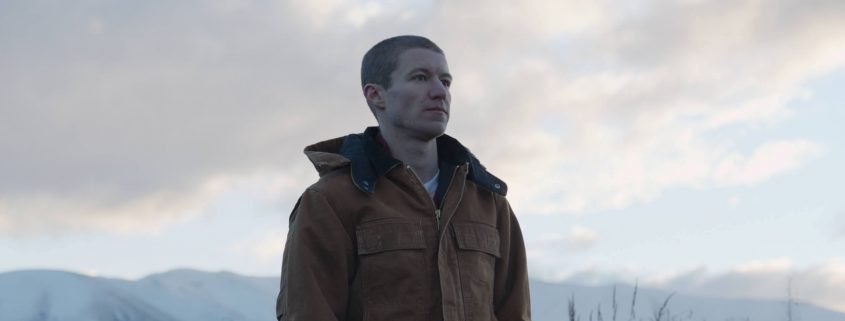
Stray film still

Film Talk at Rialto Cinemas is where filmmakers and film fans meet. After each Film Talk screening, members of the creative team will join a moderator from the Directors & Editors Guild to discuss their work.

On October 3, Film Talk will screen Stray, finishing with an audience Q&A with director Dustin Feneley.

Stray is Feneley’s much-anticipated first feature and is editor Dione Chard’s first full-length film. Both are members of DEGNZ.

Come along if you missed the film at the New Zealand International Film Festival and to hear about the making of the film.

STRAY

Stray film poster

In a cold and remote landscape, two strangers struggle to repair their broken pasts. A young man is on parole after serving time for attempting to murder the man who killed his girlfriend in a hit and run. A woman is released from a psychiatric facility far from her homeland. These two damaged strangers cross paths in the mountains in winter and fall into a complex intimate relationship, putting to the test their capacity to trust and heal.

When: Wed 3 October 2018, 6pm
Where: Rialto Cinemas Newmarket, 167-169 Broadway, Newmarket, Auckland

Cost: $12 for film industry members – Book Tickets

Last updated on 20 September 2018