In 2000, the Guild, which is an incorporated society, discussed whether or not to become a craft union when the Labour Government passed the Employment Relations Act making collective bargaining possible. However, because the majority of Guild members continued to see themselves as freelance operators, there was never unified support for unionisation.

The Hobbit Law introduced in 2010 categorised all film workers as contractors, further preventing film workers from collective bargaining as contractors are unable to access collective bargaining mechanisms currently.

In the independently run DEGNZ membership survey of 2016, nearly 83 percent of the membership said that they would be interested in DEGNZ negotiating collective agreements with minimum rates and conditions on their behalf.

Earlier this year, Minister of Workplace Relations and Employment Iain Lees-Galloway gave The Film Industry Working Group (FIWG), which DEGNZ is participating in, the objective of making recommendations to the Government on changes to the regulatory framework for film industry workers to restore the rights of film production workers to collectively bargain in a way that:

  • Allows film production workers who wish to continue working as individual contractors to do so;
  • Provides certainty to encourage continued film investment in New Zealand by film production companies; and
  • Maintains competition between businesses offering film production services to promote a vibrant, strong and world-leading industry.

Now in 2018, we see the nurses engaged in collective negotiations, former prime minister Jim Bolger appointed to head the Fair Pay working group, and the FIWG some months into the task that Lees-Galloway set it.

Labour relations are coming full circle as is clearly obvious just from the newspaper headlines.

Unionisation has been on the DEGNZ board’s mind for more than the last two years, primarily because of deteriorating terms and conditions and rates of pay for directors and editors, even though many of our members are still contractors.

Do we need to unionise? Not necessarily. We are a craft guild and the representative body for working directors and editors in New Zealand. As long as we are endorsed as such by our membership and officially recognised by industry and government in our role, we are well positioned to continue to advocate, lobby and represent those who chose us to do so.

Internationally, the Directors Guild of America has long been a union. In Australia, the Australian Directors Guild became a union in 2014. Directors UK is both a collection society and a non-profit organisation like us that represents directors’ interests there. The Screen Directors Guild of Ireland is also not a union. What are the pluses and minuses you ask? So far we haven’t discovered anything that massively swings the pendulum either way. But we would like to hear your opinions. Does DEGNZ need to be a union to represent you?

Tui Ruwhiu
Executive Director

Last updated on 21 June 2018

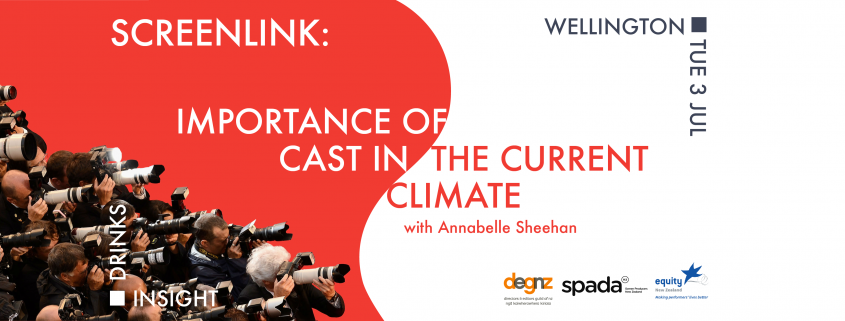
Screenlink banner

DEGNZ, SPADA and Equity NZ warmly welcomes members to join us for a Screenlink in Wellington.

At this discussion and networking event, NZ Film Commission CEO Annabelle Sheehan will share on the importance of cast in today’s feature film climate. Annabelle’s background includes serving from 2004-2013 as CEO and Senior Agent at RGM Artist Group, representing high profile Australian artists in the entertainment industry.

WHEN  Tue 3 July, 6 – 8PM. Talk kicks off at 6:30PM
WHERE  Henry Pollen’s, Level 2, 100 Willis St, Wellington

Cash Bar // Nibbles provided

DEGNZ, SPADA & Equity members – Free
Non-members – $5 koha appreciated

Last updated on 23 July 2018

The Directors & Editors Guild of NZ recently received from the Screen Women’s Action Group (SWAG) proposed recommendations for ‘Creating Culture Change Around Sexual Harassment In The Screen Industry’. You can view the document below.

The board of the Directors & Editors Guild of NZ supports the Screen Women Action Guild in their efforts to:

  • Create a culture that eradicates sexual harassment in the screen industry,
  • address power imbalances that allow inappropriate behaviour to occur, and go unreported, and
  • develop processes for issues and complaints that are accessible, safe and effective.

We commend the work done by SWAG to date in this regard and believe that education is the most effective tool in achieving the desired outcomes.

The board of DEGNZ are in overall agreement with the recommendations document SWAG has provided. We wish though to highlight areas of concern to us, and in some cases suggest alternative options, which we have detailed below for our membership to review.

We welcome any input from you on this for board consideration, which you can direct to admin@deganz.co.nz.


Point 1

DEGNZ has under discussion with other screen industry bodies a Code of Ethics, which would address sexual harassment with a simple statement in line with this code’s purpose to be big picture rather than detailed. Should a cross sector Code of Conduct be instituted, the board agrees that the Policy for Sexual Harassment could be included here.

DEGNZ questions the need for certification in regard to sexual harassment. We aren’t required to be certified for other aspects of occupational health and safety even though, for example, directors on shoots without a dedicated safety officer are required to give health and safety briefings to the crew. And in fact, we question whether or not sexual harassment should be part of occupational Health & Safety, or should be separate. We believe this is an issue for ongoing discussion.

Point 2

We support the idea of an online course for all screen industry workers but do not support the requirement that it be annual and certificated. We believe that individual contracts stipulating that the contractor must sit the online course and will adhere to the Universal Screen Industry Harassment Policy is sufficient—the contracted requirement and daily Health & Safety Briefing on Sexual Harassment we feel will be effective in significantly raising awareness regularly.

A further reason we do not support an annual and certificated course is because we feel that both the sending and receiving of certificates to the Certified PCBU (further on this follows), which we also do not support, is overly administrative.

Point 3

Point 1
DEGNZ does not support the requirement for a PCBU Training Certificate that requires all PCBUs to do a course on what to do if a screen worker lays a sexual harassment complaint. And consequently we do not support the requirement for PCBU Sexual Harassment training at film schools.

Rather we feel that the online course for all screen workers has this content included in it and that the Sexual Harassment Crew Representative, the Producer/Production Company and the independent specialist are the multiple points of contact for complaints.

Further, we feel that the producer/production company and the Crew Sexual Harassment Representative should receive any specialist training. It will be important to identify crew who are willing to take on the role of Crew Sexual Harassment Representative and provide them with the training required.

Point 5

DEGNZ does not support the Safety Officer being responsible for drawing up a plan on how to deal with content of a sexual nature or nudity. A Safety Officer’s role we believe is limited to physical safety on set.

We feel that the Producer/Production Company, Director, Actor’s Agent and Actor should handle the plan because this is where the first and ongoing contact occurs. The plan can evolve and at a later date it can be talked through with the Independent Specialist and Crew Sexual Harassment Representative prior to filming.

Strict precautions in regard to sensitive footage is likely already dealt with in the confidentiality clauses of all contracts, but particular stipulations could be made in the contracts of those who deal directly with the material: directors, editors, data wrangler, etc.

The requirement for an Intimacy Coordinator is the most contentious for DEGNZ because of the potential for usurping of the director’s creative control. At the same time we understand the significant imbalance that can occur because of the actor’s training, the actor/director and actor/producer relationships and the pressures on set that can put undue demands on all involved.

While we are open to a continuing dialogue around the idea of intimacy coordinators, DEGNZ much prefers a requirement for specialist training for directors around nudity and sex scenes that could be provided by the Independent Specialist when such content is a part of a particular production. This could include Equity NZ’s current code of conduct for intimate scenes and auditions.

Our view with third party involvement in a scene whether a proposed intimacy coordinator or any other individual is that the person should work through the director and no one else.

Point 7

DEGNZ feels that the Rehabilitation of people with Harmful Sexual Behaviours is best handled by independent specialists and should not be put onto production companies.

Point 8

DEGNZ does not agree with the requirement for all workers to complete a Sexual Harassment Survey post every production. This is overly onerous, bureaucratic and unlikely to be successful.

Funding

The SWAG recommendations are sweeping and significant. DEGNZ feels that the costs associated with the implementation of any recommendations/requirements should be funded independent of the guilds, associations and productions companies, many of whom are already financially strained.

Related Documents:

SWAG Consultation – Proposed Recommendations

Last updated on 20 March 2020

On Tuesday the government announced the appointment of former prime minister Jim Bolger to head a 10-person working group that would report back on the design of Fair Pay Agreements.

This is welcome news to me as those of you who have read my blog posts will know—I personally and also as the ED of DEGNZ, have long railed against poor pay in the screen industry, particularly for many directors, especially in the online content area and at Māori Television.

The Fair Pay Agreements that were part of Labour’s manifesto going into the election are workplace laws setting minimum terms and conditions of employment for workers in the same industry or occupation.

I along with a representative group of the screen industry have been grappling with such issues for some months. As the Film Industry Working Group, we are working to respond to Minister of Workplace Relations and Safety Iain Lees-Galloway’s objectives for the group to restore the rights of film production workers to collectively bargain, in a way that:

  • allows film production workers who wish to continue working as individual contractors to do so;
  • provides certainty to encourages continued investment in New Zealand by providing certainty to film production companies; and
  • maintains competition between businesses offering film production services to promote a vibrant, strong and world-leading film industry.

The Government’s intentions with the Fair Pay Agreement is, quoting from a Stuff article, “to lift pay and conditions by preventing a ‘race to the bottom’ by preventing employers from competing with each other by lowering wages.”

This is exactly the situation we have been faced with for directors in the screen industry and one the Guild has long sought to address.

Bringing Bolger in to head the panel is both ironic and considered a Labour masterstroke. It was Bolger’s government that introduced the Employment Relations Act that was considered damaging to workplace relations and, according to Economist Brian Easton, advantaged employers over workers, did nothing to raise productivity, and had next to no impact in raising real wages. See The Spinoff article here).

There is obvious concern from employers and businesses about what the Fair Pay Agreements will mean, but there does seem to be an understanding on their parts that a rebalancing is required—a sentiment that is also gaining traction with some producers and production companies in the screen industry.

National certainly seems to have come to the party… with a party, or more accurate with a concert—a benefit concert—in a spoof from the Spinoff—a cynical send up I’d welcome if it were true because the disadvantaged do need help.

Tui Ruwhiu
Executive Director

Last updated on 8 June 2018

The Heart Dances

There’s something magical about experiencing a movie as part of a film festival that beats visits to your local multiplex. It’s one of the reasons why the New Zealand International Film Festival (NZIFF), now celebrating it’s 50th year in Auckland, induces many fond memories and is still an annual highlight on people’s calendars.

For me, it’s also my chance to “binge-watch” some of the best films curated from around the world. But what makes NZIFF particularly special is that it also brings together some of the best feature and short films made right here in Aotearoa.

We know how exciting and rewarding it is for local filmmakers to have their films chosen to premiere at NZIFF and be enjoyed by a New Zealand audience. Here, we celebrate four NZ feature films made by our members – directors and editors – that have already been announced in the festival’s Early Announcements.

The full NZIFF programme launches on June 25.

Angie – Director/Editor Costa Botes

World Premiere

Angie film still

ANGIE / Photo credit: Costa Botes, Lone Pine Films

The compelling new documentary by DEGNZ member Costa Botes (Candyman), who served on the board of DEGNZ between 2013 and 2016. Angie Meiklejohn, prominent and articulate Centrepoint survivor, is joined by her siblings in this lucid exploration of the legacy of sexual abuse, directed without a hint of sensationalism.

“Funny, smart, big hearted, unflinchingly honest, a steadfast friend – whatever her past hurts, Angie is an engaging and loveable human being.” – Costa Botes

Read more  >

The Heart Dances – Director Rebecca Tansley

World Premiere 

The Heart Dances

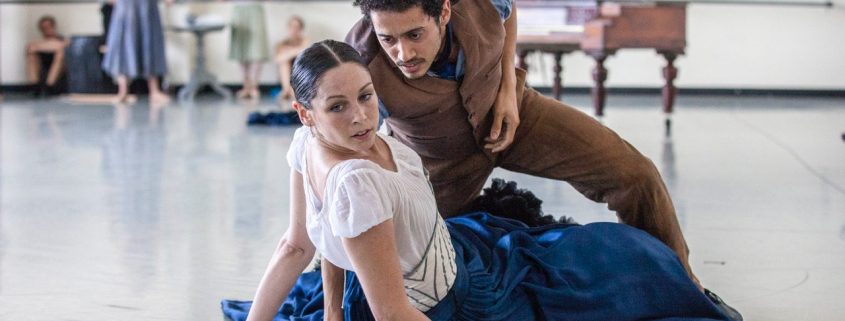
RNZB dancers Abigail Boyle and Alexandre de Oliviera Ferreira rehearse in their roles as Ada and Baines in the RNZB studio. / Photo: Ken Downie

The Heart Dances promises to immerse audiences in a unique creative experience. The new documentary by DEGNZ member Rebecca Tansley (Crossing Rachmaninoff) tracks the collective and cross-cultural journey involved in creating The Piano: the ballet, inspired by Jane Campion’s 1993 film.

“Dance is an inherently ephemeral art form and most of us only ever observe it as a finished – and fleeting – performance.” – Rebecca Tansley

Read more  >

Stray – Director Dustin Feneley, Editor Dione Chard

NZ Premiere

Stray film still

STRAY / Courtesy of Dustin Feneley

Two damaged strangers fall into a complex intimate relationship in DEGNZ member Dustin Feneley’s beautiful and rigorous debut feature film, shot in Otago against the breathtaking Southern Alps.

Stray will premiere at NZIFF after its successful world premiere at Moscow International Film Festival where it collected a best actor win for lead Kieran Charnock. The film also marks a great  achievement for DEGNZ member Dione Chard as editor of her first feature film.

Read more  >

Paul Callaghan: Dancing with Atoms – Director Shirley Horrocks

Auckland Premiere

Paul Callaghan in Antartica

Dancing with Atoms / Point of View Productions

In her latest work, DEGNZ member Shirley Horrocks (Tom Who? The Enigma of Tom Kreisler) discovers the world of atoms and molecules that so entranced Sir Paul Callaghan, one of New Zealand’s most exceptional scientists and public figures.

The Auckland premiere will be a special Cancer Society fundraiser screening. Ticket details will be available when the full NZIFF programme launches.

Read more  >


Tema Pua
Marketing & Events Coordinator

Last updated on 4 July 2018