DEGNZ invites New Zealand directors to apply for a 5-Day Travis Technique Intensive from August 14 – 18 in Auckland. The workshop is designed to fully immerse a small number of directors (max. 5) into STORY (Autobiographical Storytelling), CHARACTERS (Interrogation Process) and STAGING (Power of Placement). By practicing The Travis Technique on a story from their own life, directors will gain the confidence to apply their new skills to their own projects right away.

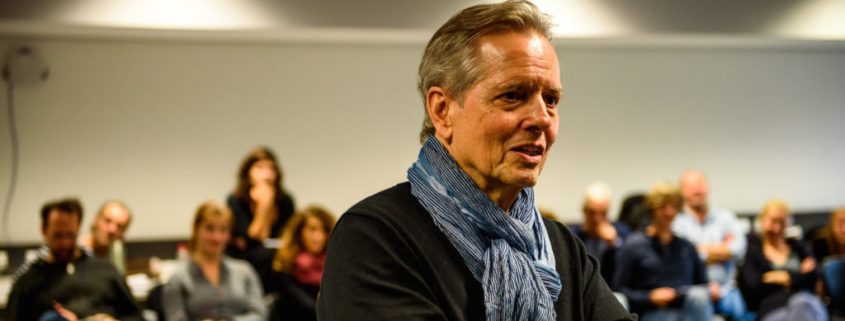
Based in California, Mark Travis trains directors in The Travis Technique worldwide.

Go beyond result directing and venture into inspired and impactful collaboration with your characters

The greatest obstacle for directors and actors is their desire to control the characters. Directors control by demanding results. Actors control by planning their performances, thereby effectively blocking the characters from emerging freely and organically.

The problem is that most directors are not given the training in how to engage with actors in a creative and collaborative way. Without these skills for inspiring and supporting the actors, directors will revert to result directing. This forces actors to fabricate the emotions and attitudes they think will please the director.

With The Travis Technique, directors can bring out the characters’ emotional truths from the actors without falling back on result directing. Actors can release their characters from within – complex and unpredictable, lusting and tumbling through the drama of their lives. Even the most vanilla scenes will start to breathe and pulse.

Once directors and actors have worked together in rehearsal, exploring the characters’ relationships and dynamics in the scenes, the quality of performances will be markedly heightened. During production, multiple takes can be tweaked quickly and efficiently, saving time and money.

“I love working with Mark. It’s as if he opens the top of my head and rummages around in there until all my internal voices are alive and conflict… then he calls action. I can’t plan or play it safe, I am forced to exist in the moment. It’s a gift for an actor.”
“I was fortunate enough to attend a 10 day intensive Mark Travis technique in [Los Angeles]. I found the workshop immensely beneficial. Especially in regards to workshopping characters, deepening my script and also blocking scenes in a more dynamic and interesting way.”

Zoe McIntosh

Our Tutors

MARK W. TRAVIS is one of the world’s leading authorities on the art of film directing, writing and storytelling. On-stage, he has directed over 60 theatre productions in Los Angeles and New York. Author of two important books on filmmaking and winner of over 30 directorial awards in theater, Mark Travis has developed a fresh and innovative approach to writing and directing that cuts to the living and breathing core of every story, script and character. Mark has taught his dynamic Travis Technique at over 50 film schools and director’s guilds around the world. Affectionately called “the director’s director,” Mark is in constant demand to consult on film projects worldwide.

ELSHA TAYA BOHNERT is an award-winning artist and poet, and the author of Don’t Trip over the Garden Hose (Deuxmers, 2013). Elsha has been a longtime student of Mark Travis’ autobiographical storytelling workshops in Hawai`i and is the only person authorized by him to teach it. With her background in multicultural learning and narrative medicine, she helps students learn The Travis Technique through playful and provocative games. “You have to be like an ancient four-year-old,” she says, “clueless and wise about the enchanted worlds we come from and still carry around in our bodies.”

Workshop Details

When: 14 – 18 August, Wed to Sun 9am – 6pm

Where: Samoa House, The Actors’ Program, 283 Karangahape Rd, Auckland

Price (Usually $4000 USD): 
DEGNZ member – $500
Non-member – $1000

Eligibility

To be considered for the course, directors must meet ONE of the following:

  • You’re in advanced development on a feature film (can be a debut feature).
  • You’re attached to direct scripted drama that’s likely to go into production.
  • You have directed on a feature film, scripted drama or telefeature.

What you will need

Selected directors will need to begin preparation two months prior in order to be best prepared to get the most out of the Intensive. Prep will begin with the assignment of writing a short 3-minute autobiographical story. Mark and Elsha will work with each director to develop the characters and deepen their story ahead of the workshop.

Note: Any work done by the directors will be observed in a supportive, collegial environment. This workshop will be open to observation by a modest-sized group of actors and fellow DEGNZ members.

To Apply

Application Deadline: 9AM, Monday 17 June 2019

STEP 1: Submit your details using the form below.

STEP 2: Send in one PDF to tema@deganz.co.nz:

  • your bio and CV, and
  • a brief, maximum 1-page letter that explains why you would like to participate. If you are in development, please provide details of the project, including what stage it’s in and key people.

Late or incomplete applications will not be accepted.

Loading…

This workshop is brought to you with the generous support of the New Zealand Film Commission.

NZFC

Last updated on 20 March 2020

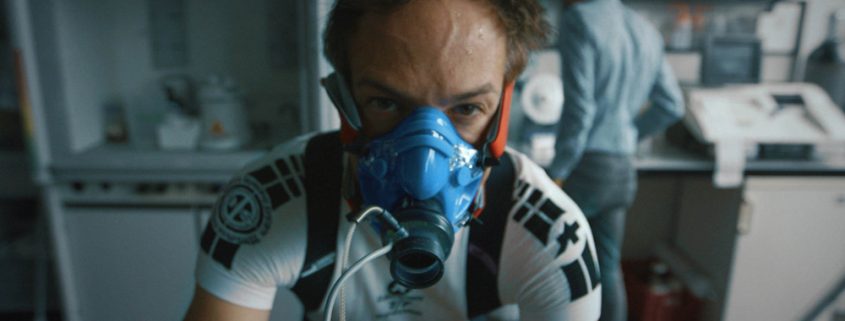
Icarus

This May, the Directors & Editors Guild of NZ is thrilled to present two days of feature documentary workshops for editors, directors and producers with US documentary filmmaker Doug Blush. Doug returns to New Zealand thanks to a partnership with Loading Docs.

DOUG BLUSH is an award-winning editor, director, producer, writer and cinematographer whose work includes over 130 feature and television projects, and is a member of the Academy of Motion Pictures Arts and Sciences (AMPAS) as well as the American Cinema Editors (ACE).

His recent credits include, as edit consultant, Notable Pictures’ The Chills: The Triumph and Tragedy of Martin Phillipps, as consulting editor and co-producer, the 2019 Academy Award winning Period. End Of Sentence, the 2018 Academy Award winning Icarus, and, as supervising editor, the 2013 Oscar-winning 20 Feet From Stardom, for which he also received the ACE Eddie Award for Best Documentary Editing. He was Co-Editor and Associate Producer of Kirby Dick’s The Hunting Ground in 2014, and the Oscar nominated and Emmy winning The Invisible War in 2012.

Doug co-owns MadPix Films, a production and post production company in Los Angeles dedicated to documentary and independent films. He is also a longtime film educator with classes and seminars at USC, UCLA, Syracuse University and the YoungArts Foundation in Miami, as well as exchanges and panels in Indonesia, Brazil, New Zealand, Armenia, Malaysia, Nigeria, China, the Netherlands and more.

Day 1: Masterclass on Producing and Editing a Winning Documentary

Sunday 19 May, 9am – 5pm, MTG RM, Kingsland, Auckland

In the world of documentary, the edit is crucial. This interactive Masterclass for editors, producers and directors will connect editing with the other crafts involved in documentary filmmaking.

The Masterclass will survey where we are and where we’re heading in documentary – using examples from over 15 years of award winning and widely distributed docs from Doug’s catalog of over 130 feature films. Participants will get to see how many major doc features and shorts made the most of great stories and overcame huge problems to succeed.

The day will discuss successful strategies for production, editing and post schedules, and promotion, distribution and festivals. Participants are also encouraged to discuss current issues they’re facing in their films, or questions about ideas in the planning stages.

Cost: DEGNZ members – Free, Non-members – $60

REGISTER NOW  >

Day 2: Project Lab

Monday 20 May, 9am – 4pm, MTG RM, Kingsland, Auckland

Call for Applications!

The Lab will consist of a group seminar with up to 6 selected teams with a feature documentary project in post-production. Editors may attend on behalf of their project or come as a team.

The day will focus on how to think about structure, character arcs and larger meanings of each film, and how to plan out an edit path with goals and benchmarks.

Participants will be asked to introduce their project with a logline summary and show a sample (based on where the project is) for group discussion and feedback in a confidential environment.

We will discuss each project, and go over the potential promising story directions and possible pitfalls of each. Doug will also draw on clips from his past docs to show how they may have dealt with similar issues in the edit and the shoot.

Cost: $85 / team; fee waived if the editor is a DEGNZ Full member

How to Apply for the Lab – Open to Editors

Lab Application Deadline: 4PM, Monday 13 May

STEP 1: Click here to apply using the registration form. You will need to supply details about your project (title, brief synopsis, links if any) and names of those on your team.

STEP 2: Send in PDF to tema@deganz.co.nz:

  • Your CV and/or bio
  • And a brief, maximum 1-page letter that summarises why you would like to attend with your project, and what stage it’s in currently.

Files must be sent before the deadline. Late or incomplete applications will not be accepted.


Doug’s visit is made possible thanks to our partner Loading Docs.

Workshops brought to you with the generous support of the New Zealand Film Commission.

NZFC

Last updated on 6 May 2019

I’ve been watching the debates raging across the Tasman as the Austalian screen industry seeks to ensure the future of Australian content in the face of the realities of SVOD.

Research company Roy Morgan reported in March 2019 that nearly 14 million Australians now have access to some form of Pay TV/Subscription TV, up 11.8% on a year ago.

Netflix with over 11.2 million subscribers had growth on a year ago of 25.2%, with Australian-owned Stan at 2.6 million subscribers seeing a 45.2% increase.

YouTube Premium and Amazon Prime also had significant increases.

Australian broadcasting standards require all commercial free-to-air television licensees to broadcast an annual minimum transmission quota of 55 per cent Australian programming between 6 am and midnight. In addition, there are specific minimum annual sub-quotas for first-run Australian adult drama, documentary and children’s programs.

SVODs in Australia have no Australian content requirement.

Australian commercial broadcasters sought in 2017 to have the quota removed for Australian children’s content. The Australian screen industry united against this, decrying what they said would be the almost complete annihilation of Australian children’s programming.

Then in 2017 the Australian Directors’ Guild; Australian Writers’ Guild;  Media, Entertainment & Arts Alliance and Screen Producers Australia joined together to launch the ‘Make It Australia’ campaign to lobby the Government for support for the sector in the wake of sustained funding cuts and changed viewing habits, which of course includes the rise of SVODs.

They called for no more cuts to SBS, the ABC and Screen Australia; a raising of tax incentives for Australian TV and foreign productions; a cementing of the commercial free-to-air Australian content quota at 55%; and new regulations for Subscription Video on Demand (SVOD) providers.

The Australian Government launched in 2017 an Australian and Children’s Content Review.

In March of 2019, the Senate Committee released its Review paper. Among the recommendations was a call to force streaming services such as Netflix and Stan (and Amazon and any others who might enter the space) to spend a minimum 10 per cent of income earned in Australia on original Australian content. They would also be obliged to promote that content to their subscribers. The other recommendations:

  • The current quota system being preserved.
  • Examining other Terms of Trade provisions and implementing them.
  • Introducing a single Producer Offset of 40%.*
  • Ceasing recognising New Zealand content as Australian.**
  • Increasing the Location Offset to 30%
  • Decoupling the Location and Post, Digital and Visual Effects (PDV) Offset.
  • Platform Neutral Location and ODV Offsets.

*The Producer Offset, Australia’s version of the NZ Screen Production Grant, sits at 20% for TV.

**This refers to Project Blue Sky, which allowed NZ content to be recognised as Australian content because of the Closer Economic Relations (CER) agreement between the two countries.

What did they Australian Government do in response? It allowed streamers that operate behind a paywall access to the production incentive for content they make in Australia, which of course includes international productions shooting there.

“The Government’s policy announcement is inexplicable and one-dimensional given how many times our local sector has called for urgent intervention”, said Austrlian Directors Guild CEO, Kingston Anderson.

“Our screen incentives need to be updated across the board, not just those that apply to international production. This decision shows a tremendous lack of confidence in the ability of Australians to tell our stories in our own voices.”

You are possibly wondering why at this point I am so wrapped up in what’s going on in Australia? It’s because I feel it’s clearly indicative of what we face and have essentially been ignoring till now. The 10-year screen strategy recently called for by the NZ Government is a chance to address the many problems the onslaught of foreign content and SVODs are having on the NZ screen industry. We only have to look across the Tassie for some insights and thoughts on how to address the issues.


Tui Ruwhiu
Exeuctive Director

Last updated on 3 May 2019

Directors & Editors Guild of NZ is pleased to present the second stage for assistant editors – an Advanced Skills Workshop designed to follow on from the Assistant Editors – Mandatory Skills Workshop held in December 2018. The Guild warmly invites applications for this 2-day workshop to be held in Wellington on 25-26 May 2019.

This is a hands-on advanced workshop for assistant editors who have completed either the Mandatory Skills Workshop or have strong basic Avid system skills, and for technically-minded Avid practitioners who wish to step up to more complex productions.  It recognises the distinct and essential role that assistant editors play in post production – across feature, documentary and television projects – and will focus on the essentials you need to excel in that role. This is not a beginners workshop.

The workshop will deal with key skills considered essential for assistant editors moving onto feature length productions involving handling multiple workstations, visual effects, exports, handovers, changes and archiving.

Prospective participants should have a strong working knowledge of Avid Media Composer. Up to 12 participants will be selected from applications.

Our Tutors

Dan Best

DAN BEST has 25 years experience in Film and Television. He spent 14 years working as an Editor, Director and Producer for Television. The last 11 years have been spent working in Film as a Post Production Supervisor, Editor, Assistant and VFX Editor, including 1st Assistant Editor on Steven Spielberg’s The Adventures of Tintin, Peter Jackson’s The Hobbit trilogy, and more recently as 1st Assistant / VFX Editor on Mortal Engines and Post Production Supervisor on They Shall Not Grow Old.

Dan is highly valued as a very experienced 1st Assistant Editor and with these huge and varied productions behind him there is little he has not handled in his career to date.

Jonno Woodford-Robinson

JONNO WOODFORD-ROBINSON has been editing feature films since 1999. Amongst his achievements are, most recently, Peter Jackson’s Mortal Engines, and Pork Pie, the re-boot of the iconic Kiwi road movie Goodbye Pork Pie from the 1980’s. In 2015, he edited American independent drama Chloe & Theo, starring Dakota Johnson and Mira Sorvino. Jonno worked with Kiwi Michael Horton to edit Lee Tamahori’s Mahana, and edited Taika Waititi and Jemaine Clement’s box-office hit What We Do in the Shadows, as well as Waititi’s earlier film Eagle vs Shark in which Clement starred. In the midst of The Lord of the Rings success, Jonno edited the cult documentary Frodo is Great . . . Who is That?!!

Jonno has moved through most genres in his career, editing Predicament; Tongan Ninja; Korean hit The Warriors Way; and the superb NZ musical Romeo and Juliet: a Love Song.

Cost: DEGNZ members – Free, Non-members – $100. Lunch and refreshments will be provided each day.

When:
Sat 25 May, 9am – 5pm
Sun 26 May, 9am – 4pm

Where: Te Kahui Auaha, 65 Dixon Street, Te Aro, Wellington 6012

Travel allowances may be available to a limited number of DEGNZ members travelling from outside the Wellington region to attend.

Eligibility:

Prospective participants must meet all of the following requirements:

  • Has participated in the Assistant Editors – Mandatory Skills Workshop OR at least two feature-length productions as an assistant (not necessarily a 1st Assistant), either drama or documentary.
  • Has a good familiarity with Avid media management systems.
  • Has a strong inclination to the technical/computer aspects of the edit suite.

This is not a beginners level workshop.

To Apply

EXTENDED Application Deadline: 9AM, Friday 10 May 2019

STEP 1: Submit the registration form below.

STEP 2: Send in one PDF to tema@deganz.co.nz:

  • your CV/bio, and
  • a brief, maximum 1-page letter that summarises why you would like to participate in the workshop and highlights how you meet the eligibility requirements.

Files must be sent before the deadline. Late or incomplete applications will not be accepted.

Loading…

This initiative is brought to you with the generous support of the New Zealand Film Commission.

NZFC

Last updated on 30 April 2019

There have been a significant number of developments that have occupied our time recently that are worthwhile highlighting.

Firstly, the Copyright Act Review Issues Paper submission.

DEGNZ made a submission, the primary focus of which was the call for recognition of director’s copyright in audiovisual content and cinematographic film. Directors are the authors of their audiovisual works and this needs to be recognised in New Zealand in the Copyright Act, as it is in many other countries around the world. With copyright, directors will be able to negotiate and receive income beyond solely fees that will help them to generate more creative work, and better sustain themselves in their careers. We have a long road to go to convince Government on this, and we need everyone’s help to do so. I hope that many of you were able to make your own personal submissions to assist us with our case. In future we will be looking to you again to support our efforts, particularly with personal statements about how the lack of recognition for directors in respect to copyright has adversely affected you economically and creatively in seeking sustainable careers for yourselves as directors.

Second, the Screen Industry Strategy.

Some of you may be aware of the formation of a body to respond to the Government’s call for industry to develop a 10-year screen industry strategy. DEGNZ has been extremely unhappy about how this group was formed and the lack of any real consultation and communication with the wider screen industry as it was set up. We have called on the proposed chair of this body, former broadcaster and now lawyer Linda Clark, to ensure clear communication and transparency with all parties in the screen industry as it goes about its work. DEGNZ board member and director Michael Duignan was invited into the facilitation group appointed to work alongside this body in response to our request for involvement. In the coming months we will have more to communicate with you about this very important initiative.

Third, unionisation.

Following the almost unanimous vote at the Annual General Meeting last year to unionise, DEGNZ has been working with legal representation to ensure our constitution meets the requirements of a union. The redrafting of the constitution has been completed and will be presented at this year’s AGM for adoption. This will formalise the Guild’s existence as a union and we will affiliate with the Council of Trade Unions soon after. Many of you will be aware that DEGNZ participated in the Film Industry Working Group along with a number of other guilds and bodies. It was convened by the Minister of Workplace Relations and Safety Iain Lees-Galloway, to find a way for screen industry workers to collectively bargain, and made its recommendations to the Minister after many months of discussion. We look forward to the Government following through and making the changes necessary to allow collective bargaining to occur. Unionisation is one facet of our preparations for the work the Guild will have to do when that happens.

Fourth, sexual harassment and intimacy on set.

DEGNZ board member and director Louise Leitch has been leading the Guild efforts in regard to sexual harassment and protocols around intimacy, simulated sex and nudity content. As Louise outlined in this column a couple of weeks ago, she has been working closely with Equity NZ on their Guidelines for Nudity and Intimacy on Stage and Screen. She also participated in the full workshop programme run by UK Intimacy Coordinator Ita O’Brien. It’s the Guild’s intention to offer an ongoing training programme for directors led by Louise and calling on highly experienced actor, instructor and Equity NZ president Jennifer Ward-Lealand, another full participant at Ita O’Brien’s workshops. At the same time, the Guild is maintaining close communication with the Screen Women’s Action Group as they go about their efforts to ensure a safe, sexual harassment-free workplace for screen industry workers.

Fifth, DVD library.

DEGNZ board member and director Gabriel Reid brought to the board’s attention the potential loss of a significant audiovisual resource with the closure of Auckland’s Videon DVD store this year. Videon had a broad collection of many arthouse, auteur director and hard to obtain DVDs. We all know that DVD stores have suffered immensely from the impact of streaming, with many closing down, and a lot of the DVDs that were available from Videon cannot be accessed digitally, or easily. Now Wellington institution Aro Video is suffering as Videon did. The DEGNZ board felt that something had to be done and quickly to preserve access for directors, editors and others to the rare and difficult to obtain films that Videon had on its shelves. In the fire sale that occurred at Videon, DEGNZ acquired over 3000 of their DVDs. We have these in storage and are currently negotiating a solution to see these held in an audiovisual library for access by anyone interested in these films for research purposes or entertainment. We will inform the membership how to go about this once negotiations are complete and the DVDs have all been catalogued.

Sixth, training for post-production.

DEGNZ board member and editor Annie Collins has been driving our strategic and tactical efforts around ensuring editors and others are trained appropriately for work during post-production. Annie is one of NZ’s most highly experienced narrative short, feature and documentary editors and is drawing on all of her accumulated knowledge as we structure current and future initiatives. The Assistant Editor workshops are one example of the outcomes from our focus in this area, the feature film editing attachments another. The work Annie is leading will hopefully introduce or stimulate other initiatives here.

I am thankful to have such a dedicated and supportive board working on behalf of the membership and their crafts. While our other board members haven’t been mentioned in this particular missive, I would also like to acknowledge board members Roseanne Liang, Phil Gore, Francis Glenday, and of course President Howard Taylor for their tireless efforts on behalf of the Guild. As well, we should recognise the invaluable contribution made by Advisory Board member and ex-board member Grant Campbell who represents the Guild on the board of the Australian Screen Directors Authorship Collecting Society and input into our Copyright Submission.

Finally, we can announce that editor Margot Francis and director Robyn Paterson have joined the DEGNZ board, replacing directors Helena Brook and Zoe McIntosh, who both had to step down because of work/personal commitments.

Tui Ruwhiu
Executive Director

Last updated on 29 July 2020