The Screen Sector Strategy has announced the dates of its intended hui in 3 locales to gather industry input into a strategy document for the New Zealand Screen Industry. This will be taken to Government in the first half of 2020.

This is an important opportunity for every individual to give their ten cents worth on how they would like to see the direction of the screen industry go.

The DEGNZ board has put together a list of questions for members to help stimulate your ideas. You can find the Guild questionnaire available here to download. Please do send your responses back to us at admin@deganz.co.nz with ‘Questionnaire’ in the subject line.

Below are some recent developments that could contribute to your thinking.

The Spinoff reported in an article on Saturday that for the foreseeable future, TVNZ will not report a dividend to government—essentially, TVNZ’s profitability is way down and is likely to remain so. The impact of Google and Facebook on onscreen advertising revenues is a major factor in this, as well as the advent of Subscription Video on Demand (SVOD) services such as Netflix and the fragmentation of the media market.

In the same article, The Spinoff reported an unprecedented call-out by NZ On Air to all the major news providers to attend a meeting to discuss the long term sustainability of journalism.

Across the ditch in Australia, the Australian Competition and Consumer Commission’s Final Report into Digital Platforms addresses this topic amongst others. Key findings include:

  • The availability of a wide range of high-quality news and journalism provides significant benefits to Australian society and is important for the healthy functioning of democracy.
  • News and journalism risk under-provision for a number of reasons, including the general inability of commercial news media businesses to capture the broader social benefits of journalism.
  • Media businesses, particularly traditional print (now print/online) publishers, have experienced a significant fall in advertising revenue as advertisers follow audiences who have migrated online to access news and other content. This has coincided with strong growth in online advertising, which now accounts for half of all advertising expenditure. Google and Facebook together account for nearly two-thirds of online advertising expenditure.

These aren’t earth-shattering revelations, but clearly highlight the fundamentals of what we all are wrestling with and that are driving TVNZ, Mediaworks, Fairfax, and NZME amongst others to the wall.

The Australians have also called for a levy on streamers to fund local content, the need to maintain broadcast TV quotas, and an end to cuts for screen funding bodies and public broadcasters as previously written about in the Guild blog here.

Funding cuts have impacted heavily on Screen Australia and the Australian Broadcasting Corporation. In New Zealand in comparison, our funding bodies (NZFC, NZ On Air) have had relatively static funding for years, with more and more calls upon it.

As many of you will now be aware, there is international production work to be shot in New Zealand coming out of our ears. We are already seeing a shortage of experienced personnel and crew rates and other production costs are rising while New Zealand budgets stay the same. The question of how local production can survive and thrive in the face of the onslaught of offshore work arriving is vexing a number of us.

We are at a crucial time for both the local and international screen industries. There are seismic shifts still to come as Disney, WarnerMedia, Apple and other streaming services come online and continue to shake broadcast and theatrical to their foundations.

The Screen Sector Strategy work now underway needs to be completed quickly and effectively if we are to have a sustainable industry in New Zealand that benefits from international production and contributes to the development of local screen content and Kiwi screen IP.

Please share your thoughts on where to from here with us at the Guild, at the Screen Sector Strategy hui and with submissions, so that a well thought out strategy is distilled that will work for us all.

Tui Ruwhiu
Executive Director

Last updated on 2 August 2019
It’s hard not to bang on about streaming services when they are continuing to upend the screen industry as we know it.

Media intelligence service FilmTake recently reported that Disney, WarnerMedia, and Apple are expected to spend between US$8 million to $20 million per episode on new drama series.

Amazon has supposedly set aside over a billion US dollars to bring a five-season Lord of the Rings series to Amazon Prime.

There are other epics planning to cash-in on the void left after the conclusion of Game of Thrones include WarnerMedia’s Dune series, Showtime’s Halo, and Apple’s fantasy series See.

Disney+ is also producing a Star Wars series, Mandalorian, which is costing $15 million per episode.

And these are just the TV blockbusters.

The Financial Times reported that in Europe, Netflix will make 221 projects in 2019, including 153 originals.

Netflix has launched its first European production hub in Madrid, targeting Spanish-language production and drama series, which have been a priority and a large source of success for the U.S. streaming giant.

In July of this year, it also announced that it is creating a dedicated production hub, featuring 14 sound stages, workshops and office space, at Shepperton Studios in the United Kingdom.

In the last year alone, over 25,000 cast, crew and extras have worked on almost 40 Netflix originals and co-productions across Britain.

New Zealand is certainly not missing out on service production for streamers as witnessed most recently by the noise about the Lord of The Rings TV Series potentially being shot here for Amazon. Netflix has already been here with Letter For the King and is currently shooting another.

But are we missing the boat with local IP to satisfy the booming global appetite for content, particularly drama?

Yes, local producers do continue to sell their NZ ON Air and TMP funded content internationally, but that’s been the case for many years now.

NZ formats for the international market have made headway, as most recently attested to by Filthy Productions’ sale of Filthy Rich to the Fox Network.

It’s easy to forget that Rob Tapert has been making TV shows here for the international market for over 25 years—everything from Hercules and Xena to Spartacus and Ash vs Evil Dead.

But there’s nothing new in all this, as it was happening prior to the advent of Subscription Video On Demand (SVOD) services like Netflix and Amazon.

While NZ On Air continues to do the best it can with limited funds for local drama, it’s essentially locked into a myopic approach by its adherence to the Broadcasting Act, and it doesn’t look like it will change that anytime soon.

But there is a little light at the end of the tunnel.

Screentime has forged into Scandi Noir with its Danish coproduction Straight Forward, now on TVNZ OnDemand, and its soon to be released copro The Gulf, with Paula Boock and Donna Malane’s Lippy Pictures and a German partner.

And we have seen one Netflix Original in Auckland-based Razor Films’ Dark Tourist, while See-Saw Films and Jump TV are into their second series of The New Legends of Monkey for the ABC, TVNZ and Netflix. Almost going unnoticed is Pango Production’s 2018 production All Or Nothing: New Zealand All Blacks for Amazon Prime.

But really! Can we survive the onslaught of service production work from streamers in New Zealand and get our own IP out there in more than an occasional way?

There are a number of factors holding us back and one of them is writers. We don’t have enough skilled writers with the experience required to get internationally-focused shows across the line. The NZFC/NZ On Air Raupapa Whakaari Series Drama Lab initiative is seeking to address this by bringing in international-calibre mentors to work on local show ideas with teams here. Hopefully this will bear fruit.

Another is lack of funding. NZ On Air production funding caps out at $6 million, and you can’t access the NZ Screen Production Grant and NZ On Air Funding for the same project. When even middle-of-the-road Aussie shows are being made for the international market at AUD $1.5 to 2 million or more per episode for 6 to 10 eps, you can see the problem. But before you get to production you have to go through development, and the cost for that is going to be anywhere between $300,000 to $500,000. Again, there’s not the funding here for that. Raupapa Whakaari’s matched funding is limited to NZ$50,000 per year.

You might well ask why do we need to create our own IP anyway, and not just be service providers for international productions?

For directors and editors there’s going to be more work on local shows than international ones. The post production is generally not done here for international shows, and there’s only a very small pool of Kiwi directors with the credits to get themselves hired on international productions. That will expand slowly over time, but local shows hire locals, and we are increasing the numbers of Kiwi directors working on NZ On Air dramas.

In the end though, it’s our distinctiveness as Kiwis with Kiwi stories to tell and landscapes to show that provides cut through in the international market. I’m paraphrasing Paula Boock of Lippy Pictures who participated on our Screenlink panel this week along with Mark McNeill of Razor Films and Steven Zanoski of Filthy Productions to discuss ‘Screen Content for the Global Market’. Locally owned IP also brings revenues back to New Zealand when it’s successful, long after production has finished.

I don’t think we are going to miss the boat entirely when it comes to creating our own shows for the streaming giants. But it does sometimes seem like we are standing at the end of the pier watching the ship sailing away and wondering how the hell we are going to get onboard.

Tui Ruwhiu
Executive Director


Last updated on 18 July 2019

NZIFF 2019

Tonight, the New Zealand International Film Festival opens and with that, we congratulate members of the Directors & Editors Guild of NZ who have films in this year’s programme.

For My Father’s Kingdom

For My Father’s Kingdom premieres at home at the Civic Theatre after its Berlinale world premiere earlier this year. This debut feature documentary is co-directed by Vea Mafile’o (DEGNZ) and Jeremiah Tauamiti, and follows the story of Vea’s father Saia Mafile’o. The film is edited by Guild board member Margot Francis.

Vea and Jeremiah were part of our Documentary Editing Masterclass with their film in 2017 with US editor Doug Blush.

Join them for a Q+A after at screenings in Auckland and Wellington (August 10). Flicks also asked the directors eight questions about their film.


For My Father's Kingdom

New Zealand’s Best 2019

Congratulations to our members whose short films have been selected by Jane Campion for the only competitive programme at NZIFF, New Zealand’s Best 2019. Egg Cup Requiem is co-directed by DEGNZ’s Prisca Bouchet with Nick Mayow. Krystal is edited by Cushla Dillon and Hinekura is the new film from director Becs Arahanga about a young woman’s rite of passage upon her first menstruation in 1600s Aotearoa.

Tickets are officially selling fast for the Auckland screening on Saturday 27 July.


Egg Cup Requiem, Krystal, Hinekura

Ngā Whanaunga Māori Pasifika Shorts 2019

Ngā Whanaunga features Liliu, edited by former DEGNZ president Peter Roberts and Rū, cut by longtime board member Annie Collins.

Ways to See is written and directed by Jessica Sanderson, edited by Anastasia Doniants and made under Fresh 30. We do love a DEGNZ director-editor team up. Ways to See follows the attempts of a young Māori girl to reconnect with her absent father. Anastasia Doniants is also the editor on a second film here, Ani.


Liliu, Ways to See, Ru, Ani

Short Connections

Already sold out in Auckland and Wellington, Short Connections includes director Armagan Ballantyne’s collaboration with Toi Whakaari: NZ Drama School, Hush. Walk a Mile is edited by Janine Frei, and Memory Foam by editor Chia Hsu.

Across all the shorts programmes, it’s exciting to see so many Guild editors with work playing at this year’s festival.


Hush, Walk a Mile, Memory Foam

Herbs: Songs of Freedom

The curtains will close on the Auckland NZIFF programme with the World Premiere of Herbs: Songs of Freedom, an affectionate tribute to the iconic Kiwi band Herbs. The documentary is the latest editing collaboration between DEGNZ board member Francis Glenday and director/editor Tearepa Kahi, following POI E: The Story of our Song. POI E opened NZIFF 2016 and was nominated for Best Documentary Editor at the Rialto Channel NZ Film Awards.

Herbs: Songs of Freedom is bound to be another uplifting (and super catchy) local cinematic pleasure.


Herbs: Songs of Freedom


As a film community, support your fellow filmmakers and enjoy your time at NZIFF!

Members, don’t forget you can receive discounts on select screenings and the Masterclass with Thom Zimny. Check your inbox for the DEGNZ discount code in current newsletters.

Tema Pua
Events & Marketing Manager

Last updated on 18 July 2019

Rehearsal & Performance logo

The Rehearsal & Performance series provides regular opportunities for directors and actors to practise their craft. Each workshop brings in an experienced moderator to guide participants as they explore a workshop scene in groups (one director, two actors) in a safe and non-pressured environment.

Join us in Wellington for the next Rehearsal & Performance workshop with director Chris Dudman.

Moderator

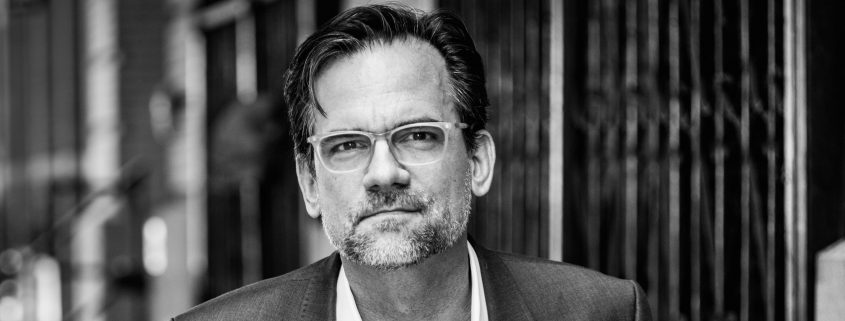
Chris DudmanChris Dudman’s career has involved writing and directing short films, commercials, feature and series documentary and series TV drama. He directed short film successes The Graffiti of Mr Tupaia and Choice Night, and later co-wrote and directed Harry, the gritty crime drama series starring Oscar Kightley and Sam Neill. He wrote and directed The Day that Changed My Life, the multi-award winning documentary about Christchurch’s devastating earthquake, and directed two standalone episodes of James Patterson’s true crime anthology series Murder is Forever. He’s currently writing an adaptation of Archibald Baxter’s memoir We Will Not Cease. Chris was also a longtime partner of and director at Auckland TV commercials company Robber’s Dog.

Preparation

Selected directors and actors will be expected to do some script prep beforehand. DEGNZ will provide the scene at least one week in advance.

Wellington

When: Sun 25 August, 9am – 2pm
Where: Toi Poneke, 61 Abel Smith St, Te Aro, Wellington

Cost:
DEGNZ / Equity NZ member – Free
Ngā Aho Whakaari Full member – Free
Non-member – $69

(Includes lunch and tea/coffee)

Register your interest

Registrations close Friday 9 August, 3PM.

Spots are limited to four directors and eight actors. If your name is selected, DEGNZ will contact you directly to confirm your participation.

Loading…


The Rehearsal & Performance series is hosted by Directors & Editors Guild of NZ with the support of Equity New Zealand and funding from the New Zealand Film Commission.

Last updated on 24 July 2019

Director Thom Zimny

Film director Thom Zimny (The Gift: The Journey of Johnny Cash) will lead a Masterclass for filmmakers in Auckland as part of NZIFF 2019.

This is the second time NZIFF has been able to provide a Masterclass designed for industry practitioners, thanks to an Artistic Development Partnership with Creative New Zealand. The Masterclass will take place on Thursday 1 August and will be run by the Directors & Editors Guild of New Zealand (DEGNZ) on behalf of NZIFF.

Thom Zimny, known for his award-winning documentaries, will take filmmakers inside his process from the research phase through to the edit with special focus on the edit process. Works discussed will include The Gift: The Journey of Johnny Cash and Elvis Presley: The Searcher.

Masterclass attendees are encouraged to see The Gift: The Journey of Johnny Cash at NZIFF beforehand (Tuesday 30 July or Wednesday 31 July).

Limited tickets for the Masterclass are on sale from Ticketmaster.

Masterclass with Thom Zimny

Thursday 1 August 2.00pm to 5.30pm

Venue: WG701, WG Building, AUT City Campus, 55 Wellesley Street East, Auckland Central 1010

Ticket prices: $30 Full price / $20 Industry guild concession*

About Thom Zimny

Thom Zimny is an award-winning artist, director, producer and editor. Working with Bruce Springsteen for the past 18 years, Zimny has directed documentaries including Bruce Springsteen’s High Hopes, The Ties That Bind and the newly released Springsteen On Broadway. He has previously directed and produced two feature length documentaries chronicling key chapters in Bruce Springsteen’s recording career, winning a Grammy for Wings For Wheels: The Making of Born to Run. In addition, Zimny edited three seasons of the highly acclaimed HBO series by David Simon, The Wire and helmed music videos for Bob Dylan, The Low Anthem and many others. The Gift: The Journey of Johnny Cash was made in collaboration with the Cash Estate, and premiered at this year’s SXSW Film Festival.

The Gift: The Journey of Johnny Cash

Auckland screenings featuring a Q+A with Thom Zimny

Tuesday 30 July, 6.15pm at ASB Waterfront Theatre

Wednesday 31 July, 3.15pm at ASB Waterfront Theatre

Wellington screenings

Saturday 3 August at 6.15pm at Soundings Theatre, Te Papa

Monday 5 August at 6.30pm at the Roxy Cinema

Tuesday 6 August at 2.15pm at the Roxy Cinema


* Apply the Industry code from your guild/association when booking.

Last updated on 15 July 2019