
The world of film continues to be shaken up both at home and abroad. The only thing thatโ€™s clear is that streaming is here to stay and picking up steam.

Disney is just undertaking an entire reorganisation of its business to put streaming front and centre with content leading the way. The Mulan experiment as a Premium Video On Demand (PVOD) release possibly helped decide their future direction. Even with the need to subscribe to Disney+ just to get the ability to pay the premium price, punters made Mulan the fifth most-streamed SVOD title in the US in September, as tracked by measurement company Park7 Data.

Disneyโ€™s move follows WarnerMediaโ€™s refocusing on content after the tepid response to the launch of HBO Max. Over at NBCUniversal, they too have reorganised along with the introduction of their streaming service Peacock.

So where does that leave the theatrical exhibitors?

Just two months ago, the world biggest theatrical exhibitor AMC and NBCUniversal paved the way for PVOD to become a Hollywood fixture when they overcame a bitter windowing disagreement to do a deal. Showing how quickly the old model is now becoming defunct primarily due to COVID, attendance numbers are nearly 85% down on what remains of AMCโ€™s just under 500 theatres still open in America. Even worse, AMC predicts it will run out of cash to operate by the end of the year.

The second largest theatrical distributor on the planet, Britainโ€™s Cineworld, has just announced it will shutter nearly 700 theatres in the UK and the US, threatening nearly 45,000 jobs. It doesnโ€™t know when it will reopen them.

All of this comes amidst the moving feast of tentpole film releases. Christopher Nolan managed to convince Warners to put Tenet into theatres this year, but Cate Shortlandโ€™s Black Widow, Denis Villeneuveโ€™s Dune, Cary Joji Fukunagaโ€™s Bond film No Time to Die and Christopher McQuarieโ€™s Mission Impossible 7 are just some of the films pushed back to 2021. All this does is put more pressure on the exhibitors.

Theatres are crying out for tentpole films to help generate revenue, even with social distancing measures in place. They just canโ€™t get them. The situation is so dire directors James Cameron, Clint Eastwood and Steve McQueen amongst others signed a letter to the US Government that said without additional support, 69% of small and mid-sized cinemas in the US would likely go bankrupt or close.

In New Zealand however, NZ films are having a bit of a dream run with no tent poles and not a lot else to compete against.

DEGNZ member director Sam Kellyโ€™s Savage hit a million dollars at the box office, David Whiteโ€™s This Town has done just over $700k. Paul Murphyโ€™s Low Down Dirty Criminals is still in theatres at Week 7. In the old normal it would likely be gone by now, pushed aside by new releases.

Meanwhile, the New Zealand Film Commission just extended for a further six months its COVID-19 Policy regarding its Terms of Trade. This means for films up to $2.5 million, you no longer need to have both a distributor and a sales agent. You only need one or the other. Or, in a major change, a recognised VOD platform can replace the sales agent or distributor.

Frankly, I believe the mandatory need to have any of them for films up to $2.5 million is an old and broken model. If you have a good script and package and they believe in the project, then a sales agent, distributor or platform will come in.

And if they donโ€™t and you make a good film, you will just as likely find them when the filmโ€™s ready to show. The supposed financial commitment they make through a Minimum Guarantee (MG) can sometimes be a sham anyway, so why have it as a mandatory requirement for the finance plan? If you have a finished film and more than one sales agent or distributor wants it, it puts you in a stronger negotiating position.

Guaranteed distribution on the public broadcasterโ€™s OnDemand service would deliver the potential for eyeballs with marketing the key to getting people to watch, guaranteeing a viewing avenue for the NZ public.

Theatrical exhibition then becomes the nice-to-have, not the must-have, while still offering the box office revenue opportunity. Window the theatrical first as is still being done and you protect the box office from pillaging by the OnDemand.

Over the Tasman, Screen Australia has already done away with the need for Australasian distribution. A positive amongst the carnage thatโ€™s been wrought there in film and television. The big โ€˜Ifโ€™ there is whether or not the streamers will pick up the slack as the Australian Government hopes they will. Not levying streamers to produce local content in the expectation that they will take Aussie content anyway is a bet Australian production companies donโ€™t like the odds of.

Meanwhile, here we sit, basking in the glow of the setting sun of the old film industry, hoping like hell that the Golden Age of television is going to save us.

We shall see.


Tui Ruwhiu
Executive Director

Last updated on 15 October 2020
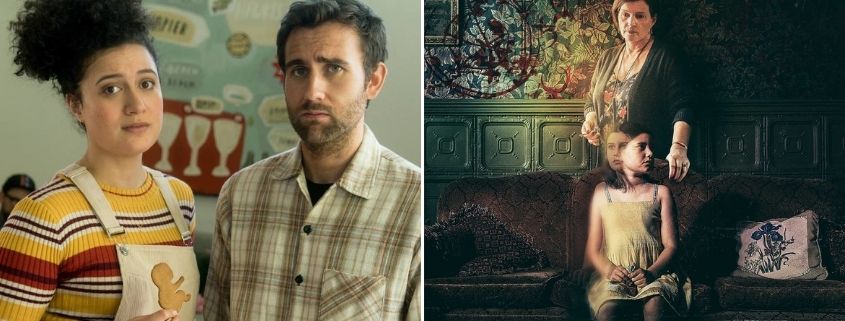
Baby Done and Reunion

We have two more great Film Talks happening in the month of October in association with Rialto Cinemas.

Baby Done

First up, Kiwi comedy Baby Done hits cinemas on 22 October. Director Curtis Vowell and writer Sophie Henderson will be in attendance at this screening for a 30-minute Q&A to discuss their experiences making the movie.

Baby Done stars Rose Matafeo and Matthew Lewis (Neville from Harry Potter!). Wannabe-adventurer Zoe freaks out when she falls pregnant to her long-term boyfriend Tim. As Tim embraces the prospect of fatherhood, Zoe attempts to rush through her dreams.

When: Thursday 22 October 2020, 6pm
Where: Rialto Cinemas Newmarket, 167-169 Broadway, Newmarket, Auckland

Film Industry Member tickets $12.

Book now


Reunion

The week after, watch New Zealand horror Reunion and hear from director Jake Mahaffy (Free in Deed). When Ellie returns to her childhood home, heavily pregnant, sheโ€™s reunited with her estranged mother. She becomes consumed by dark memories that haunt the house and ends up unearthing the hidden, horrifying reality of her family.

When: Saturday 31 October 2020, 7:45pm
Where: Rialto Cinemas Newmarket, 167-169 Broadway, Newmarket, Auckland

Book now


Last updated on 9 October 2020

The 3rd round of the 2020 Table Reads opens today. Open to writer-director teams and solo writer/directors from around Aotearoa who are members of DEGNZ and the New Zealand Writers Guild. Enter the draw with your feature film script and you could win a free online table read with up to six professional actors to help you with your next rewrite!

We would also like to hear from New Zealand actors interested in taking part. For information on how to submit a script or register as an actor, head over here.

An exciting Q&A screening is coming up on the DEGNZ calendar this October in Auckland.

On Thursday 15 October, Director Leanne Pooley’s We Need to Talk About A.I. will screen at 6pm at Rialto Cinemas Newmarket.

We Need to Talk About A.I. takes a closer look at the future of artificial intelligence and the impact it will have on our world. As computers continue to evolve at an even greater speed, soon they will have the capacity to design and program themselves.

Leanne joins us afterwards to discuss the film with audience members.

Book tickets

Last updated on 1 October 2020

We are in the midst of election turmoil both here and in the United States.

Pork barrel politics are in full swing here with promises from all sides intended to sway voters.

We are fortunate, though, that the Arts has already received funding from Government due to COVID in the $8 million-dollar Cultural Capability allocation over two years ($2 million each) to New Zealand On Air, the NZFC, the NZ Music Commission and Creative New Zealand.

Additionally, from the total $150 million allocation itโ€™s managing for the Governmentโ€™s COVID 19 Sector Regeneration Fund for Arts, Culture and Heritage, the Ministry of Culture and Heritage (MCH) is sorting out now how to best spend the other $12 million in Cultural Capability funding. A number of us in the screen sector and from other Creative and Arts-related organisations have been in focus groups with MCH to discuss this.

Participating in these focus groups has made me very aware of how fortunate the screen sector is in comparison to other Arts sectors. There are many creative organisations and individual artists who are barely hanging on in the COVID environment. It was particularly poignant to hear of suicides in the music sector.

Another very clear reminder of the screen sectorโ€™s difference for me in these meetings was the fundamental blending of art and commerce that is central to our sector. Our art comes about as the result of tens or hundreds of thousands, or millions of dollars in investment to generate a work. The annual budgets of NZ On Air at $150 million, NZFC at $26.4 million and with a New Zealand Screen Production Grant Budget in the hundreds of millions of dollars exhibit this.

In television, thereโ€™s no real tension between art and commerce. Itโ€™s a business. Everybody knows it. Thatโ€™s not the case in film. Film still remains the domain of the auteur director, whether they are making an art house film or a Hollywood blockbuster.

Director Christopher Nolan has been given the authorial right by Warner Brothers to bet the bank on a cinema release with the $200 million film Tenet. Why?

Nolan exhibited his artistic talent with his first film Following. His second feature, Memento, on a $9 million-dollar budget grossed $40 million worldwide. His Batman trilogy, Man of Steel, and Interstellar have generated billions. Thatโ€™s why. Nolan is now an established blockbuster auteur.

Nolanโ€™s debut feature Following was made on a budget of ยฃ3,000. Most of the cast and crew were friends of the director, and shooting took place on weekends over the course of a year.

Of course, not everybody whoโ€™s a director has the talent or will take the path of Christopher Nolan. But we should celebrate every New Zealand film that gets made whether its self-funded or the beneficiary of NZFC financing.

Sam Kelly and Guy Pigden, two of the latest DEGNZ members to finish films, took different paths to the same result.

Samโ€™s NZFC funded Savage is knocking it out of the park at the moment, having taken over a million dollars at the box office in two weeks. Guyโ€™s film Older, funded through Pledge Me, had its official premiere last weekend, and is available to stream on Prime Video. Streamer reviews are looking good too.

As well, we have DEGNZ member directors Armagan Ballantyne in production on her sophomore feature Nude Tuesday, Michelle Saville on debut feature Millie Lies Low restarting after a COVID shutdown, Linda Nicol wrapping up on her debut Poppy, and Leanne Pooley with feature documentary Girl On A Bridge, which has finished its cinema run and is now available online.

Even amidst these COVID-created tough times, we have much to celebrate with the success of our members in the feature film arena and the funding our sectorโ€™s received.


Tui Ruwhiu
Executive Director

Last updated on 1 October 2020