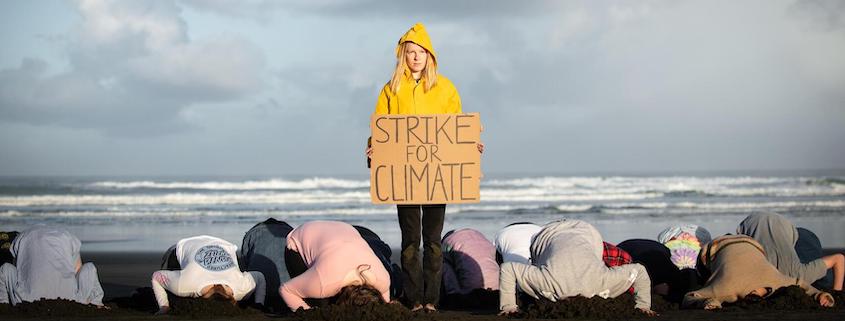
Doc Edge Festival has announced three films, which are set to screen as part of the 16th edition. One is High Tide Don’t Hide, directed by members of The Rebel Film Collective: Niva Kay (DEGNZ), Emily McDowell, Nia Phipps and Phil Stebbing.

In High Tide Don’t Hide, driven by the climate crisis, five teenagers in New Zealand join the global student protests. But when challenged by Pasifika students the movement has to confront its racial prejudices to lead one of the biggest strikes in the country’s history.

The 2021 Festival will be an all new fusion event, returning to Auckland and Wellington theatres while playing online across the nation. Doc Edge is continuing its commitment to offering unique experiences by working with New Zealand artists to create a festival village at each venue. Festival-goers will enjoy entertainment including art installations, live performances, and virtual and augmented reality exhibitions.

Read more

Last updated on 25 March 2021

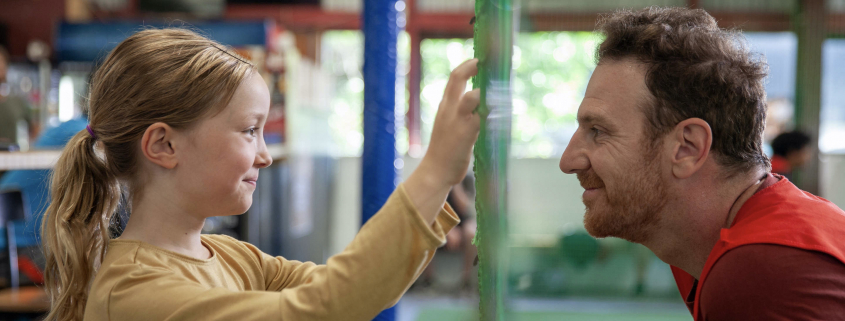
Congratulations are in order for the team behind Pain that includes director and Incubator alumna Anna Duckworth and editor Brendon Chan. The short, funded under the NZ Film Commission’s Fresh Shorts, has been selected for three international film festivals this month.

Their short drama will have its North American premiere in April at the Aspen Shortsfest, followed by the Stockholm International Film Festival Junior and the Busan International Short Film Festival.

Last updated on 25 March 2021

Scrolling through my Facebook feed yesterday to catch up on industry news, a Stuff article caught my eye. “Can Aotearoa make the screen the next primary industry?” the hook headline blared.

Diving into the article, I read that SIGANZ President Brendon Durey believes the “constrained” rebate doesn’t go far enough (the rebate offered to international productions shooting here) as other countries like the United Kingdom and Canada offer higher amounts. A white paper put together by educational outfits YooBee College of Design and UP Education calls for more Government money and resources to go into creativity education. And new Wellington outfit The Granary gets its marketing video promoting the use of LED technology backdrops showcased. Multiple handclaps to all three for getting their PR into Stuff.

My hat does go off to the educational outfits and The Granary, though, because they both promote the idea of local IP creation, with YouBee and Up giving a big plug to the possibilities with local stories and within the New Zealand gaming sector, while The Granary seeks to give Kiwi content creators a way to bring Hollywood tech pizazz to local production in an affordable manner.

One of the key reasons Aotearoa has a massive opportunity on its doorstep, journalist Andre Chumko tells us in the article, is that our sector “struggles to keep up with an unprecedented glut of production born from the Covid-19 pandemic.” I would suggest, however, that that glut isn’t going to continue unabated.

As the whole sector was wrestling during our first lock down with how to get back into production, I was having calls with the Directors Guild of America about what we were doing. NZ’s Screensafe COVID protocols were written up and out while the US guilds were still wondering what to do. Although slow to get their protocols in place, American production has for some time now been operating both domestically and internationally amidst the pandemic with strict guidelines that are keeping on-set infections low. Now, with the vaccine rolling out, the sleeping U.S. behemoth of backlogged productions and a year of new shows developed by showrunners and writers locked up in their homes is going to start hitting.

Will Aotearoa get a slice of that pie? Undoubtedly. As will Australia, which is seen as just as safe as New Zealand by Americans, but with more crew, facilities, and perhaps most importantly, onscreen talent that can pull international financing and audiences. Canada, Eastern Europe, and other countries will also benefit as the American juggernaut gets rolling.

The idea that we are going to be awash in streamer and other international production until the Apocalypse, however, is a little far-fetched in my view. A lot of American production will again take place in the U.S. and Canada, just like it always has. A strategic approach and well managed tactical implementation will I believe see New Zealand continue to benefit long term from production coming in from overseas. But the real opportunity I maintain lays in “constrained” local IP generation, and not just with identifiably Kiwi content.

Putting our culture on screen is vitally important, and we must continue to do so. Māori content cuts through in the global marketplace. Indisputable. But it’s the lack of investment in our screen content that is constraining us, whether it’s identifiably New Zealand or not.

NZ On Air, TMP and NZFC are still essentially operating on the same levels of funding they were receiving 10 years ago. COVID funding, though, has shone a spotlight on local IP.

Depending on which whisper you listen to, there were somewhere between 50 and 150 applications for the one-off $50 million Premium Fund. That’s a lot of local IP vying for, in the greater scheme of things, not a lot of money. There would definitely have been more than one pie-in-the-sky idea thrown in with no chance of success. But even if only 10 per cent of the proposals met a key criteria of being high-quality productions that tell New Zealand stories for global audiences at a scale and ambition not previously possible, that’s a clear indication of how much viable, untapped IP is out there.

Our local screen industry needs more investment to take advantage of global content opportunities:

  • More annual funding for NZ On Air, TMP and NZFC
  • An annual Premium Fund
  • More support for New Zealand’s gaming sector

A massively stimulated local industry will provide more than enough employment for current and future crew, and work for suppliers, with the added benefit of generating export dollars and actually creating and retaining IP here. International serviced production will then become a nice-to-have rather than a must-have for the New Zealand screen industry to survive and prosper.


Tui Ruwhiu
Executive Director


Last updated on 17 March 2021

Ko te manu e kai ana i te miro nōnā te ngahere, 
ko te manu e kai ana i te mātauranga nōnā te ao.

‘The forest belongs to the bird who feasts on the miro berry, 
the world belongs to the bird who feasts on education’.

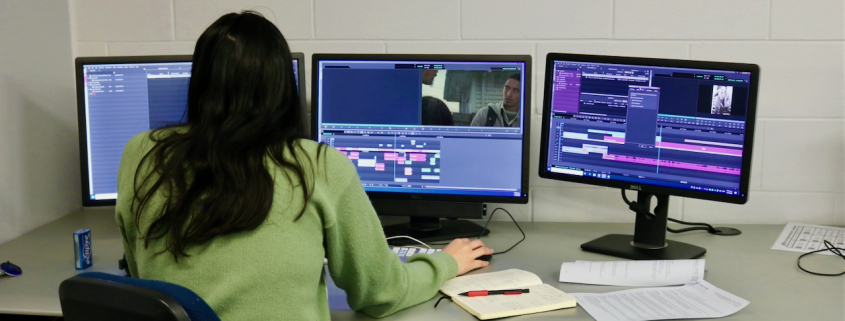
Two-Day Workshop for Maori Editors 17 & 18 April

This workshop is for emerging to mid-level Maori editors with a focus on preparing you to transition to independent drama productions.

Tikanga Maori will be in place, some tutors are te reo speakers, and te reo is welcomed in the workshop.

We will cover:

  • setting up an Editorial department
  • interaction with the pre-production and production crew
  • scheduling an edit
  • setting up the workflow systems from camera originals through to handovers to independent post houses (sound design, picture conform, composer, VFX, titles graphic artist)
  • relationships with other departments including producers and directors
  • handling screenings, and giving and receiving feedback.

The focus is on managing an independent Editorial department for an independent production, not on how to edit – it is assumed that you know how to edit and you have your own style and vision that you should retain. The workshop will use Avid Ultimate 2020.8, and you are urged to familiarise yourself via online tutorials.

The workshop commences at 9:30am each day, finishing around 4:30pm with capacity for a chat, or a little extra time for finishing a task until 5:30pm if required. Lunch is provided, tea and coffee for morning and afternoon breaks.

Limited Spaces. We will email you to confirm whether you’ve been accepted.

Workshop Details

Ngā Kaiwhakahaere: Hineani Melbourne (NAW) & Tui Ruwhiu (DEGNZ)

Ngā Kaiako:

Te Rurehe Paki (editor Merata: how Mum Decolonised the Screen, Vapnierka, Making Good Men, The Gravediggers of Kapu)

Annie Collins (editor Coming Home in the Dark, premiere Sundance 2021)

Location: South Seas Film School Campus – Yoobee Colleges, Unit 6/75 Ellice Road, Wairau Valley, Auckland 0629

Price: Workshop offered free of charge because of the COVID-19 pandemic.

Travel Allowances: If selected to attend, DEGNZ and NAW members may apply for financial assistance of up to $150 (incl. GST) towards their travel costs. To be eligible:

  • Applicants must live in New Zealand outside the Auckland region.
  • Applicants must be a current member of DEGNZ or NAW.
  • There are up to 8 travel allowances available for this workshop.


Application Form

Applications Deadline: Friday 9 April, 2PM

Loading…


Brought to you by Ngā Aho Whakaari and the Directors & Editors Guild of NZ


with the generous support of the
New Zealand Film Commission.

NZFC


Last updated on 18 March 2021

For the first time in its five-year history and as part of its Diversity focus, the DEGNZ Emerging Women Filmmakers Incubator for 2021 will focus solely on a Diversity call for applications.

The Directors & Editors Guild of NZ welcomes applications from Māori, Pacific Island, Pan-Asian and other POC female directors to take part in this talent development programme.

Background

The overall vision of the DEGNZ Women Filmmakers Incubator is to empower the participating directors with the confidence, knowledge and connections that they can use to go on and direct a feature film, drama or scripted series.

The Incubator is intended primarily for emerging debut directors of feature film (drama or documentary), but will also consider those wishing to establish careers in TV drama and scripted content.

Applicants must apply with a project, but the Incubator is primarily focused on filmmaker development, not project development.

The objectives of the Incubator are:

  • Increase the number of women directing features and TV drama.
  • Connect producers, broadcasters and funders with female directors with a view to getting more female-centric stories into and through development.
  • Create networking opportunities for women directors to further their projects and careers.
  • Inspire and encourage women directors to passionately pursue feature film and drama directing careers through interaction with successful women who serve as role models.
  • Improve directors’ understanding of the business of film and television drama.
Workshops

Participants will attend five one-day workshops across 2021 with the first scheduled to take place in late April. All workshops are intended to be held in Auckland, and a travel allowance will be available for participants based in other regions.

Participants need access to a computer (recommended) or another device to participate online via Zoom, if the workshops are affected by COVID-19 Alert Levels.

The workshops are individually themed to provide specific knowledge, networks, skills, and inspiration that enable participants to advance themselves and their careers. As the global screen industry undergoes constant change at this time, DEGNZ will remain flexible as to the actual content of the programme, seeking to incorporate information and opportunities that are relevant.


Eligibility

All applicants will be expected to have a good level of directing experience with scripted content, such as acclaimed web series, shorts with festival success, TV commercials, or broadcast content.

Applicants must:
  1. Have an active project (feature film, documentary feature, telefeature, TV/online drama or scripted series) in development that has never been presented to a broadcaster or funder. It is preferable that the project is at least at first draft script but if not available, there must be a detailed Writer’s Treatment for the project. A Director’s Treatment that includes Style, Tone, Imagery, Look & Feel, etc. is NOT requested. The applicant does not have to be the writer on the project.
  2. Have experience as a director of scripted content (drama, comedy) or documentary in the form of the project they are submitting, i.e. if you are applying with a narrative drama project, you must have experience directing narrative drama or if it’s comedy, experience directing comedy, etc.
  3. Have a directing credit on one of the following:
    • a short film selected for one of the NZFC’s Recommended Short Film Festivals, the New Zealand International Film Festival, Show Me Shorts Film Festival or any regional film festival in New Zealand. You need to supply in your filmography and links section the Festival Name, Year of Selection, and a link to the full film or content selected, for viewing purposes.
    • a commissioned scripted one-off or series by a broadcaster or digital platform. You need to supply in your filmography and links section the Broadcaster or Platform Name, Year of First Broadcast/Play, and a link to content commissioned, for viewing purposes.
  4. For feature film, be a debut director.
  5. Be available to participate in all workshops.
  6. Identify as female and be of Māori, Pacific Island, Pan-Asian or other POC heritage.
  7. Be a NZ Citizen or permanent resident.
Membership

Selected participants must be DEGNZ Full members for the duration of the Incubator programme.


How to Apply

Application Deadline: 9AM, Monday 12 April 2021

Application Requirements:

  1. A completed DEGNZ Women Filmmakers Incubator Application Cover Sheet (PDF 291KB).
  2. A one-page synopsis of the project with the ending revealed.
  3. A maximum two-page letter stating what your career goals are and why you want to participate in this Incubator.
  4. A one-page bio (not a CV).
  5. A filmography and links to completed work that supports the project you are including with this application. Include details as per eligibility requirement 3.

Compile your documents into one single PDF in the order matching requirements 1 – 5.

Give the single PDF the following naming convention: (YourName)_DEGNZWomenFilmmakersIncubator_2021

Send your application to admin@deganz.co.nz with DEGNZWFI2021 in the subject line.

Selection Process

A selection panel will shortlist candidates. Shortlisted candidates must be available for a one-on-one interview via Zoom to be held in the week of April 12. Getting an interview does not imply that you have been selected for the Incubator.

If shortlisted, you will be expected to immediately supply prior to the interview a detailed Writer’s Treatment of your active project (different to your 1-page synopsis). The treatment needs to be within a minimum of 5 pages to a maximum of 10 pages.

The Incubator participants will be selected from the shortlist following the interview.

Decisions will be final and no correspondence will be entered into.


The Incubator is made possible thanks to the generous support of the New Zealand Film Commission.

NZFC


Questions about the Incubator?

Tui Ruwhiu
Executive Director
tui@deganz.co.nz
+64 9 360 2102


Last updated on 22 March 2021