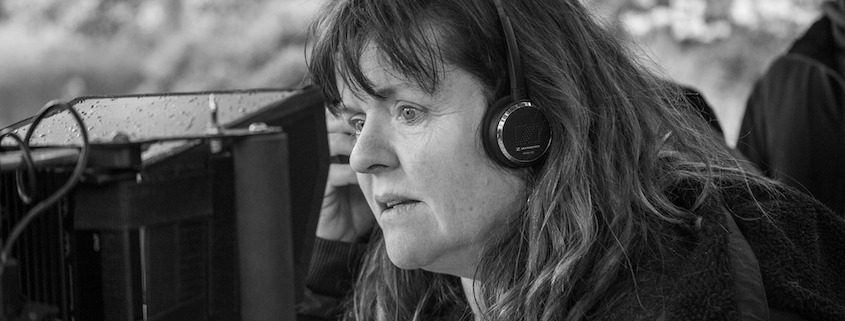
Earlier this year DEGNZ members writer/director Fiona McKenzie (pictured during filming) and producer/editor Scott Flyger saw the World Premiere of their short film Peninsula at the Tribeca Film Festival.

Now the film has just won the ‘Let’s Include’ section, which recognises inclusion at the Academy Award-qualifying Bengaluru International Short Film Festival in Bangalore, India! In November, Peninsula will be heading to the Aesthetica Short Film Festival.

Shot on Banks Peninsula over three days, Peninsula follows a father trying to reconnect with his estranged son, leading to unexpected consequences.

Last updated on 23 September 2021

We are beyond proud of DEGNZ Board member Steven Chow whose short film Munkie will have its United States premiere at the 20th edition San Diego International Film Festival (14 – 24 October).

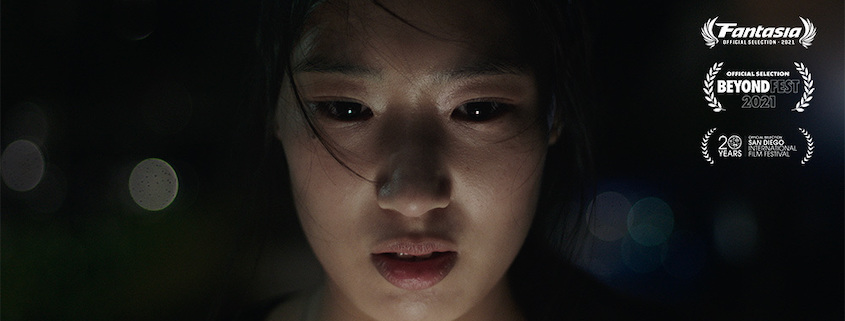
Starting out as a thesis short film for his Masters of Arts in Screen Production at The University of Auckland, Munkie is now going global! The film had its world premiere at the ​​Fantasia International Film Festival last month in Montreal, and has been selected for Beyond Fest in Los Angeles.

Written, directed and edited by Steven, the film follows a vengeful daughter whose violent plan of revenge against her domineering “tiger parents” spins out of control.

Last updated on 23 September 2021

On Wednesday evening I participated in our online Editors and Assistant Editors Gathering. There were about 35 of us. It was an opportunity to discuss issues that affect editors and assistant editors, and to network.

One of the questions that often came up from students studying screen, and one that I regularly encounter, is: How do you get a job in the industry?

This is a question we are wrestling with at the Guild as we put our efforts into the Reform of Vocational Education, to provide both a clear pathway into work as well as to outline educational structures and content that will help to ensure learners are as prepared as they can be to work within the screen sector.

The Gathering also got me to look back at how I got into the screen sector, and I thought I would relate that pathway here.

I was living in Tokyo Japan working with an American and Canadian friend in their small agency as a writer and rewriter of copy for advertising and communications content. A good chunk of the work was taking the Japanese to English translations the Canadian and others were doing of corporate video scripts and brushing them up for re-narrating in English.

The American had gone to film school in California and had a mate who was working as an Editor at Entertainment Tonight, a daily entertainment show on CBS. My friend managed to convince his mate and his mate’s bosses they needed a stringer (contract) crew in Japan to do entertainment stories for the show. They agreed, so he went out and bought camera and sound gear, roped his Canadian partner, me and another friend in, and very quickly we were filing stories for them. It was fun work. In the early days it was occasionally covering well-known bands coming to Japan to play concerts before it spun into much broader entertainment content and more regular work.

Meanwhile I had been travelling back to NZ once a year for breaks. On one trip I met a young Kiwi student studying at Auckland University who was a good Japanese speaker. He told me that he had been getting work with a couple of Japanese line producers, one living in Auckland the other in Sydney. They were coordinating Japanese TV commercial crews coming down to NZ for shoots. This made me think that there was an opportunity to get into this work as my English-speaking Japanese girlfriend (now wife) worked regularly as an interpreter, and my sister was a travel agent. We set up a company and for a few years worked with Japanese crews, most often in Central Otago and Southland shooting commercials.

During this time we returned to NZ to live and continued running the company, but I decided that I wanted to make content rather than just help others to make it. I made up a list of production companies in Auckland (there weren’t many at that time) and started banging on doors. Fortunately, I didn’t have to do too much knocking before I was hired to work as a production assistant for television and film producer Robin Scholes. So began my climb up the ladder through various roles as a writer, director, producer and executive producer doing corporate, TV, travel, and news for companies, including a couple of my own, before I launched into narrative drama.

Everybody has their own path into the screen industry. Every once in a while from now on I’m going to ask someone to write about their own experience. I’m hoping it will at least be interesting if not helpful for readers, while the Guild works to make it less about who you know and more about what you know, and formalise how to get there to kickstart a career.


Tui Ruwhiu
Executive Director

Last updated on 12 November 2021

DEGNZ member Chia Chi Hsu answers some questions about her experience shadowing Millie Lies Low editor Dan Kircher and what she learnt from the mentorship. Chia was selected in 2020 to take part in our Drama Editor Attachment Scheme, funded by Te Tumu Whakaata Taonga New Zealand Film Commission.


For anyone who hasn’t done an attachment, what does being a drama editor attachment through DEGNZ mean in a nutshell?

An opportunity for an up close look at the editorial aspects of a drama production, and be privy to meetings and discussions between the editor and others involved that one might not have the experience of attending before.


You finished your editor attachment not long ago. How long was your attachment and what was your schedule like with Dan Kircher?

The sessions were widely spread out so I got to see a bit of everything, from the rough cut stage till the end of the project. The attachment took well over a year because of Covid, but the lengthy period allowed me to take in and put to use what I had observed.


What’s something you learnt from Dan while observing him work with director Michelle Savill?

Always be prepared and be open to communication. Also I saw a good deal of trust and respect between Dan and Michelle, from which I think the film really benefited.


What was your experience like in later parts of the process?

Similar to earlier but just observing different aspects of the process. Also, I saw that the editor’s involvement carries on well after the locked cut; apart from colour grading and sound, Dan also helped with music clearance. I think being able to see a project through to the end must be very satisfying.


How has your attachment helped you with work that you’re doing?

During the attachment, I happened to be working on a web series. Bit by bit, what I had picked up from the attachment, I was able to apply them directly to what I was working on: from how to organise a project for a drama, how to tackle the notes, to tactfully dealing with tricky situations.


What’s one thing you discovered about feature film editing that was different to what you imagined?

How the extent of an editor’s involvement can facilitate the editorial process, and that being an editor is more than having the technical skills but also being able to communicate well, manage expectations, problem solve, all of which contributes to how well a film will turn out.


How do you think your attachment has contributed to your development as an editor?

With the many solid skills I have picked up during the attachment, I think they are helping me to be more confident, knowing that I have a few more tools under the belt, and more equipped to deal with projects on a larger scale.


What are you working on next?

I am working on a feature drama film at the moment, alongside Dan! The new project started just as the attachment ended, as if the attachment has continued on!


Chia Chi Hsu entered post production in mid-2015 as an assistant editor to documentaries, working with veteran filmmakers and editors on films and series, including Kim Dotcom: Caught in the Web, Yellow is Forbidden and Dark Tourist, among others. Her work includes editing on short film Memory Foam, web series Inked, the TVNZ anthology series episode Giving Up the Ghost; additional editor on Yellow is Forbidden and The Girl on the Bridge.

The DEGNZ Drama Editor Attachment Scheme was initiated to give emerging drama editors the opportunity to advance their craft through shadowing and mentoring from an experienced drama editor. Recipients learn through attendance during editing and later, at director, producer and/or funding body screenings, about the critique and response process so vital to the successful creative collaboration required of the feature film editor. The scheme is made possible thanks to funding from the New Zealand Film Commission.

Last updated on 9 September 2021

We’re excited to see that the 16th annual Show Me Shorts Film Festival programme, just announced, is bursting with our members’ work! You will find a list of them below and be able to catch these great films at the Festival in October.

June – editor Peter Roberts

Willow and David receive a serious diagnosis from their doctor and attempt to deal with the mundane as their world disintegrates in the following 24 hours. This one day for the couple holds raw despair, unleashing carnal natures but a transcendent occurrence offers them the hope of new life.

Milk – director/editor Celia Jaspers

When she sees an old man unable to pay for his milk, a young girl has a change of heart.

Bear with Me – producer Scott Flyger

A support group of toys come together and talk about their traumatic experiences with children. The group’s core belief is challenged by new member Stitch, who comes from a home with problems of its own.

Edamame – producer Roberto Nascimento

A tourist has a big night out in Tokyo and a LSD trip with a gorgeous local girl. It is a night to remember. Only problem is, he can’t. He turns for help from the most unexpected friends to uncover what happened.

These films were created by DEGNZ members and familiar faces from our Emerging Women Filmmakers Incubator.

Sixteen – director/writer/editor Nahyeon Lee (Incubator 2021), produced by fellow member Julie Zhu

With an unplanned pregnancy and a strained relationship with her mother, life is not the K-pop fantasy Yaejin dreams of.

Green – director/writer Rachel Ross (Incubator 2020), editor Ben Chesters

An estranged father and daughter, both with life-altering illnesses, smoke marijuana together for the first time and it becomes healing in more ways than one.

Heart to Heart – director/writer/producer Lauren Porteous (Incubator 2018)

A prisoner’s only chance of escape is to become BFFs with the unpredictable woman holding her hostage.

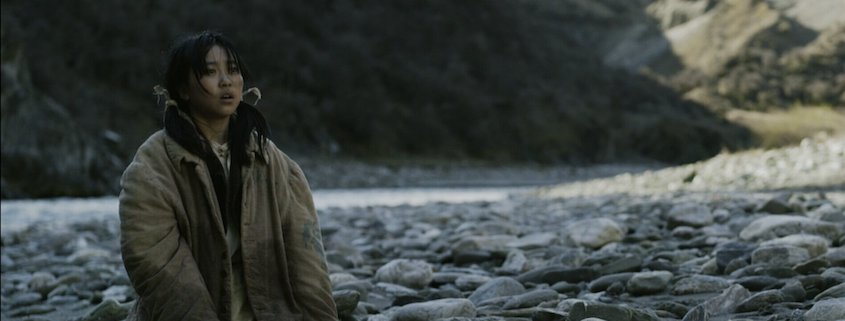
Blood & Gold (pictured) – director Yamin Tun (Incubator 2016), editor Brendon Chan (Drama Editor Attachment alumnus)

New Zealand, 1861. Man’s hunt for gold is feverish. Through the snow-capped mountains a woman flees on horseback. When she encounters a horrific scene, she makes a decision which will alter the course of two lives…

Last updated on 21 September 2021