Congratulations to DEGANZ members whose films have been selected for this year’s Hawai’i International Film Festival (HIFF) in November. Furthermore, several films will be having their US Premieres.

Annually, an average of 150 narrative features, documentaries and shorts are chosen from around 1,500 films. HIFF endeavours to recognise new and emerging talent. In addition, the festival spotlights work that explores social and cultural issues.

High Tide, Don’t Hide is a full-length documentary about teenagers discovering that activism, authority and awareness make for a steep learning curve in the race for existence. The film was written by Niva Kay, DEGANZ member and participant in our Emerging Women Filmmakers Incubator 2021. Niva is one of four producer-directors on this film, which is having its US Premiere at HIFF.

Earlier this year, High Tide, Don’t Hide had its World Premiere at the New Zealand Doc Edge Festival, where it won an award for Best New Zealand Editing and a Special Mention in the Best New Zealand Feature category.

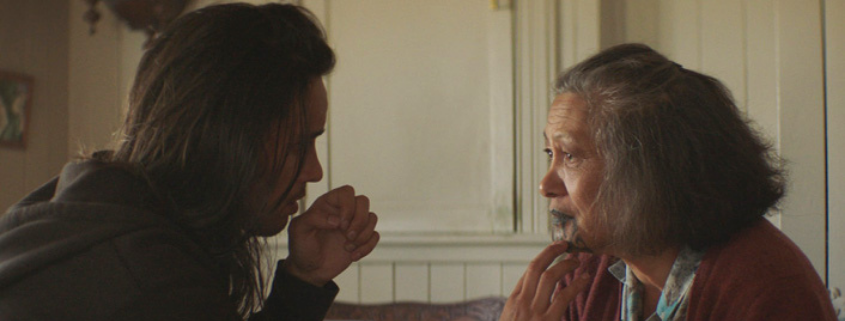
The short film Disrupt (pictured above) follows the aftermath of a burglary gone wrong. In it CJ must choose between his whānau or his next fix. DEGANZ member Lisa Greenfield was the editor with Margot Francis (DEGANZ board member) as the supervising editor.

Celia Jasper, writer, director and editor of short film Milk, explores what happens when a young girl sees an old man unable to pay for his milk. It recently won Best Editing at the Venezia Shorts in Italy and is nominated for Best Screenplay at Show Me Shorts.

Teine Sā is a supernatural anthology series based on legends of the Pacific. After centuries of slumber, the ‘Teine Sā’ or ‘the ancient ones’ have been evoked to come into the world once again. Having its US Premiere at HIFF, Teine Sā has a couple of DEGANZ members behind it. Jack Woon was the editor, while Zoey Zhao worked on episode 3 as his assistant editor. Zoey is part of our Incubator 2021.

Inspired by the Black Panther Party in the USA, a group of young radicals from New Zealand follow suit in The Panthers. The six-part mini series made history as the strongest opening week for a drama on TVNZ OnDemand. DEGANZ member Vea Mafile’o directed two episodes.

Last updated on 15 October 2021

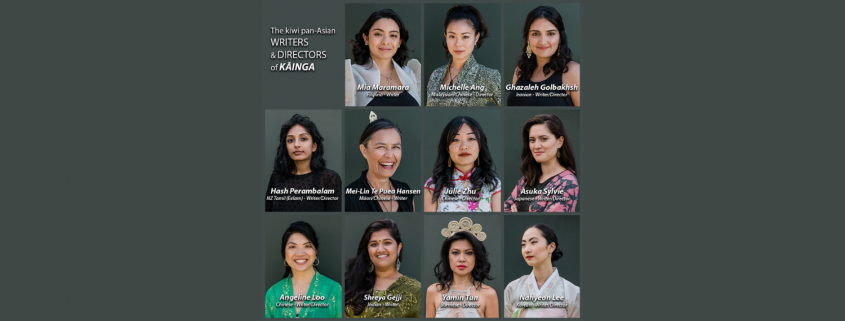
Following the success of feature films Waru and Vai comes Kāinga. With funding through NZ On Air, Kāinga will be an anthology of short films led by Pan-Asian filmmakers that celebrates the experience of eight different Pan-Asian women as they navigate what it means to become ‘at home’ in Aotearoa.

The movie will be produced by Brown Sugar Apple Grunt Productions for RNZ.co.nz. It closes a  film trilogy written and directed by underrepresented female filmmakers in the New Zealand screen industry.

We are delighted that DEGANZ members are among the eleven female creative leads in this project!

Writer Mia Maramara 

Director Michelle Ang 

Writer/director Ghazaleh Golbakhsh 

Director Julie Zhu 

Writer/director Nahyeon Lee


Last updated on 30 November 2021

DEGANZ member Rebecca Tansley directed the New Zealand Opera film Semele, which opens in selected cinemas from 28 October.

Filmed live in Auckland’s Holy Trinity Cathedral, Rebecca had just one live performance to get the film right which required a lot of careful pre-production planning, including bringing camera operators into rehearsals.

Semele is a sensual love triangle between Jupiter, King of the Gods, his wife Juno, and his lover, the mortal princess Semele.

Although the film’s premiere was back in May in Auckland, this nationwide release enables New Zealand Opera to travel from major cities to the regions. Find out more information on the film and see if it’s screening near you.

Meanwhile, Rebecca’s short film The Finding has been selected for Montecatini International Short Film Festival in Italy, one of Europe’s longest running short film festivals. The film, written and directed by Rebecca, was shot on Kodak 16mm in Central Otago and Dunedin. In The Finding, a teenager’s efforts to reconnect with her estranged father forces them to confront a secret in their past.

Last updated on 15 October 2021

FOR IMMEDIATE RELEASE

12 October 2021

The Directors and Editors Guild of New Zealand (DEGNZ) supports the call by Ngā Aho Whakaari, who represents Māori in the screen industry, for direct COVID relief support for the Māori screen production sector.

In July 2020, NZ On Air and the New Zealand Film Commission (NZFC) received $23.4 million for a Screen Production Recovery Fund. In September of this year, the Government announced further COVID relief support accessible through NZ On Air and NZFC. Again, Te Māngai Paho (TMP) received no direct COVID funding. Māori creatives and production companies who are not utilising NZ On Air or NZFC funds therefore cannot access COVID relief funds from those bodies.

“Industry relief has been appreciated but Treaty obligations need to be honoured,” says DEGNZ President Robyn Paterson. “Te Māngai Paho is significantly underfunded compared to NZ On Air, and this results in smaller budgets for Māori productions, many of which are made for Māori Television.”

“The financial hardship this inflicts on Māori creatives and production companies is exacerbated when there is no COVID relief funding to enable them to recover.”

“Māori directors, editors, writers, producers and crew are already working on lower production budgets. This puts a strain on financial sustainability and wellbeing. They need access to COVID funded support” Paterson added.

DEGNZ calls for the Government to support Te Māngāi Paho directly with COVID funding to aid those Māori creatives and production companies under duress due to COVID.

ENDS


Contact:

Tui Ruwhiu
Executive Director
Directors & Editors Guild of NZ
tui@deganz.co.nz
+64 21 659 950

Directors and Editors Guild of New Zealand

The Directors and Editors Guild of New Zealand is a not-for-profit Incorporated Society and Union that represents Directors, Editors and Assistant Editors in the New Zealand screen industry. This includes Directors, Editors and Assistant Editors of feature drama and documentary; television drama, documentary and factual programmes; short films; video art; animation; commercials and web content.

DEGNZ’s two primary roles are advocacy and professional development. We:

  • are dedicated to promoting excellence in the arts of directing and editing.
  • foster collegiality and unity within the screen industry.
  • promote members’ creative and economic rights.
  • work to improve industry working conditions and remuneration.
  • offer professional advice and information on contracts and industry standards and practice.
  • offer professional development events, networking opportunities, career advice, dispute resolution, mentoring, workshops, training, discounts and regular news bulletins for members across all levels of expertise, from novices to seasoned professionals.
  • are a voice for Directors, Editors and Assistant in influencing policy in the interest of our members. We do this through our membership of various pan‐industry bodies, and by making submissions to government and public officials.
  • Internationally work co-operatively with other directors’ guilds
  • belong to the International Affiliation of English‐Speaking Directors’ Organisations, Writer’s & Directors Worldwide, Alliance of Asia-Pacific Audiovisual Writers and Directors and the International Confederation of Societies of Authors and Composers.

DEGNZ is Auckland-based with an office in Grey Lynn.

Contact Details:

Directors & Editors Guild of NZ
Level 2, 66 Surrey Crescent
Grey Lynn
PO Box 47294, Ponsonby
AUCKLAND

admin@deganz.co.nz
+64 9 360 2102
+64 21 659 950

Last updated on 12 October 2021

I’ve been writing this blog for the DEGNZ newsletter for close to six years now. There have been a few times when I’ve been stuck for what to write about, but ultimately came through. But from memory there were two or three times when I couldn’t move from the blank page and we’ve had to delay the newsletter to the following week.

I listen to Jeff Goldsmith’s podcast The Q & A. One of the questions he always asks writers he interviews is what they do when they have writer’s block. Of course the answers vary from: I don’t have it, I go for a walk, I just write anything to get through it, and multiple other responses.

You perhaps have twigged that the above is what I am doing now to address what was the blank page staring me in the face. Moving on.

Something else I listen to on a regular basis is Standing Room Only on RNZ. Last Sunday it featured a Simon Morris interview with the new CEO of NZFC, David Strong. In it, Strong quoted the Jackson Court Report of 2010, in which Peter Jackson said, “Arguably, there might be no more than 25 or 30 truly talented screen writers and directors working in a country the size of New Zealand.”

Supposedly, in each round of EDF at NZFC now, there are 20 – 30 applications. There are five EDF rounds a year. I understand that around 50% of projects applying for EDF get it. They are either new projects or projects coming in again for another round of EDF.

EDF these days doesn’t mean that a script is in early development. The competition for EDF is so strong that if a project isn’t a good way along the development path when it first goes in, then it’s unlikely to get funded. In other words, a lot of blank page staring must be going on during spec writing to get a script in good enough shape to be seriously considered for funding.

Strong also outlined how scripts going through NZFC were selected to be made—EDF with internal and external assessors, and ADF where local and international assessors were used to decide whether or not the film would get greenlit for production funding.

NZFC production funds between 10 – 15 films per year, some of which are documentary features. The remainder are narratives.

With some unscientific number crunching looking forward, you could make a guesstimate that of the 150 or so films that apply for funding each year 75 get EDF, so the odds of getting EDF are 50%, or one in two.

If 75 films got EDF each year and 10 – 15 films are made, then the odds of a film getting EDF and getting made are 20% or one in five.

Another way of looking at it is that of the 150 films in any given year applying for EDF funding, only 10% or one in ten will get over the line and get made, perhaps substantiating Jackson’s view. Some, I’m sure, would dispute that the best scripts always go into production.

Morris also asked Strong what vision he pitched to the NZFC board to get the job. His response: he didn’t pitch an “agenda”. Rather he went on to speak of the dramatic change in the film business globally and the need to continue to attract international production to deliver economic and other benefits that will help to make the New Zealand film industry sustainable—his job he sees it is to create the environment to deliver that. I don’t believe that’s a message that going to resonate with New Zealand filmmakers, but one that will certainly make crew happy.

Coming into the Film Commission doesn’t give any new CEO a blank page. In this instance, Strong picked up on the more recent legacies of former CEOs Dave Gibson and Annabelle Sheehan.

But each CEO gets to decide the direction in which they will drive the organisation. As Morris pointed out, Gibson drove it towards commercial fare, Sheehan towards diverse. You could take from the interview that international production is a priority for Strong, even though he pointed out repeatedly the cultural remit of the organisation and the need to tell NZ stories on screen.

There is perhaps light at the end of the tunnel, though. Earlier in the piece he did state that the whole purpose of being a director or writer is to have their own voice… “Let the director have their voice because we go to cinemas to see great stories, and great stories have to be inspired by great writers and great directors.” If Strong can achieve this for New Zealand film while treading the path of attracting international production, then he will have made his own mark on the industry, and it will be considered a success by NZ creatives. Now if he would only stop calling films “shows”.

You can listen to the full interview here.

Tui Ruwhiu
Executive Director

Last updated on 8 October 2021