My first job right out of film school was to take over an overnight unpaid assistant editing job on a low budget feature… and I had no idea what I was doing.

Film school gave me friends in the same industry, and a good grasp on how to use Avid and what editing was about creatively, but at the time there was little instruction on the technical aspects that the assistant editor role required. I think we only had one day on how to assist!

I was given a short overview of the job by the previous assistant and was left to it. It was a little bit of a trial by fire but (thank goodness for the internet) I was able to google answers to just about everything I had questions for.

I communicated with the editor via a notepad, and he offered something amazing—if I wanted to cut some of the rushes, he would watch and give me feedback. So I spent half of the night importing, syncing and organising, and the other half cutting! It was an excellent learning experience and when we eventually met in person, he told me that he always offered that to his assistants, but nobody ever took him up on it! My next three projects were with the same editor, since at the time nobody else knew who I was.

My first job outside of my editing mentor came through Women in Film and Television (WIFT). I met a producer at a networking event who needed an assistant. My following job also came through attending a WIFT meeting, though kind of sideways… I had been offered a data wrangling job via email but the message went to my spam folder! Luckily the person who messaged me saw me at a WIFT event and asked me about it.

My first job, the unpaid overnight one, was in December 2009. The data wrangling job came in July 2010, and it allowed me to finally quit delivering pizza and move into the film industry full-time.

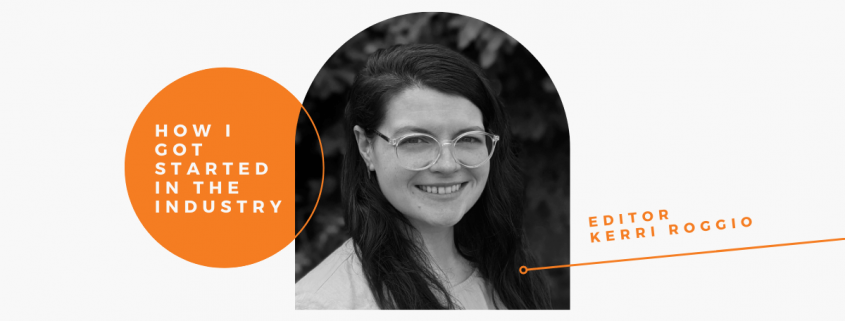
Kerri with her first editor carpark as an editor on The Brokenwood Mysteries / Photo: Supplied

My first bit of advice, and I know this may be super obvious, is to make sure you do your job reliably. You don’t have to go overboard, but producers and editors expect you to get your work done. Make sure you know what they need from you—and do it well. If you make their working life easier, they’ll call you again.

I assisted full-time from 2010 until 2016. During this period I cut as many side projects as possible in my spare time. At the beginning, most were unpaid (or lightly paid) passion projects from other creatives who were also in the early stages of their careers. It took a lot of energy, and it sucks that most of these early jobs are unpaid, but working on so many short films and music videos really honed my storytelling skills. I should also shout out the DEGANZ editing masterclasses! I had the opportunity to attend two of them and they were so valuable in helping me upskill.

Making the move from assistant to editor was really scary. I was at a point in my assisting career where I was very busy. I was also occasionally getting offers for small editing jobs that I had to turn down because I was already occupied by assistant work. You could make a great career out of assisting, but that’s not what I wanted, so I had to stop taking assistant work and focus on selling my skills as an editor. My first year exclusively editing was slow, and as a result I took a big pay cut. But I kept pushing and slowly built a good reputation as an editor and started getting return calls.

My advice for people entering the industry is to say yes to opportunities as often as you can without burning yourself out. Work hard, practise your craft, and be kind. Be comfortable turning down work that won’t take you where you want to be. And let the people you work with know what your goals are—you’d be surprised how much support you will find!

I’ll always be grateful for the willingness of New Zealand editors to be mentors, to give their time and to uplift anyone who wants to give it a go. I hope I can pay it forward!


About Kerri Roggio

Kerri is an Auckland-based editor. In the last few years, she has edited the comedy horror film DEAD; on TV series Mystic (season 2), My Life is Murder (season 2) and The Brokenwood Mysteries (seasons 4-7); as well as short films, documentaries and music videos.

kerriroggio.com

How I Got Started in the Industry is a new guest blog series from the Directors and Editors Guild of Aotearoa New Zealand (DEGANZ). Our members reflect on how they made their way into assistant editing, editing, and directing—with no two stories the same. They offer advice for those starting out. Get in touch with admin@deganz.co.nz if you’re a member and would like to share your story.
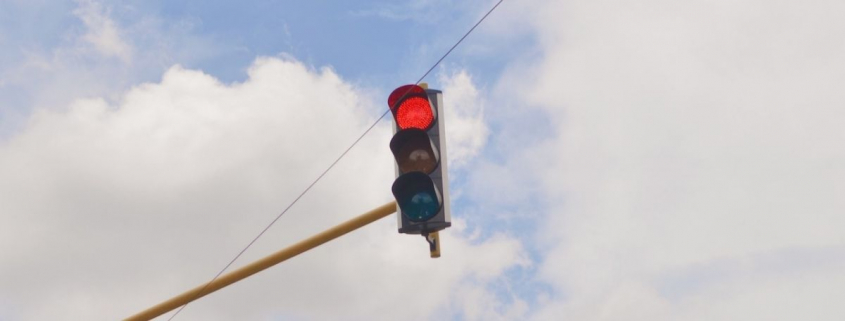
Red traffic light against clouds in the sky

17 November 2021

As announced today, it is expected that on the 29th of November, Cabinet will move both Auckland AND the rest of the country into the RED Traffic Light System “shortly thereafter”.

ScreenSafe are currently rewriting the Screen Industry COVID-19 Protocols in line with the new COVID-19 Protection Framework (aka the Traffic Light System). While that work is underway and while we await more detailed information from the government, MoH and WorkSafe, ScreenSafe has prepared the below initial guidance so our industry can start the mental shift to a new system.

Disclaimer: The below guidance is not official and final advice for implementation, but are assumptions based on the information provided by the government so far. Should additional information be provided, we will issue further guidance.

Read guidance here.

Sincerely,

The ScreenSafe COVID-19 Group

Last updated on 18 November 2021

Member director Michelle Savill (DEGANZ Incubator 2018) spoke about her film Millie Lies Low in a recent interview with RNZ. The film is playing at the New Zealand International Film Festival, and opened for a special preview season for the festival in Wellington.

Millie Lies Low tells the story of anxiety-ridden architecture grad Millie who misses her flight to a prestigious internship in New York. Faced with no money for another ticket and too ashamed to admit her blunder, Millie fakes being in New York through social media prowess while lying low in her hometown.

Michelle shared how her own experiences inspired the making of this film; “The idea came about when the last short film I made, Ellen is Leaving, was screening at a festival in France. I missed my flight, and my first thought was ‘I’m going to have to hide for three weeks and pretend I’m in France’.”

Michelle also drew from her own struggles with mental health to portray anxiety and panic attacks in the film; “I struggle with anxiety a lot, and depression off and on, so I’m always working from ‘write what you know’… so I guess that’s the fountain of creativity that I’m drawing from.”

Tickets to Millie Lies Low are available on the NZIFF website, and you can listen to the full interview on RNZ.

Last updated on 18 November 2021

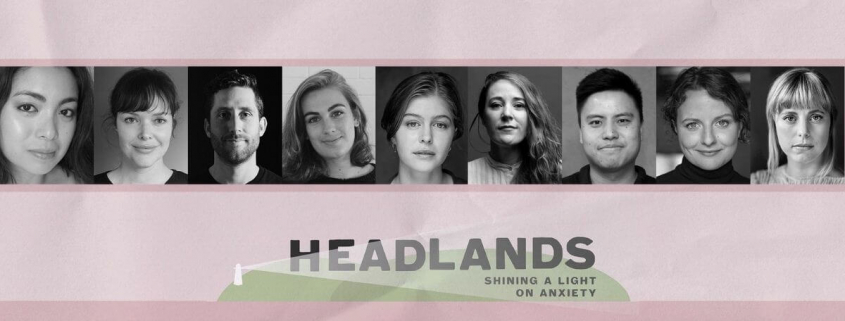
The team behind HEADLANDS, a short film anthology shining a light on anxiety, is seeking support for their Boosted crowdfunding campaign. The team features several DEGANZ members in the director’s chair: Nicky Cameron, Harriett Maire, Mia Maramara, Claire van Beek, and 2020 DEGNZ Incubator alumna Stella Reid.

Tackling the various ways that living with anxiety can manifest in oneself, HEADLANDS aims to shift perceptions and build community around mental wellbeing. The anthology series is adapted from and inspired by Naomi Arnold’s Headlands: New Stories of Anxiety, a book of different stories by New Zealand writers, poets, journalists, and the like.

HEADLANDS will work like a concept album, with stand-alone stories of differing genres. Together the stories will weave “threads of a collective fabric, honouring the unease in our lives.”

After a successful fundraiser in 2019, HEADLANDS has nine finished scripts, with production teams ready to go, and platform support from RNZ and Attitude Live. Now facing a production funding application to NZ On Air, HEADLANDS needs your support to reach their goal in order to have the best chance possible of making this project a reality.

The deadline to reach their goal is November 29. As match donor for the HEADLANDS Booster crowdfunding campaign, The Body Shop will match any contribution made up to the value of $5,556.

Learn more about the project and donate here.

Last updated on 18 November 2021

Our congratulations goes to the DEGANZ members whose work featured among the finalists for the 2021 NZ Web Fest Awards.

Taking out the award for Best NZ Pitch was Léah McVeagh (DEGANZ) for her pitch I Choose. Another special shout out to the runner up of that prize category, which went to fellow member Taylor Nixon for his pitch Roadie.

The five-part documentary series 100 Year Forecast, edited by Ben Chesters (DEGANZ) received a Special Mention under the Best Show – NZ Factual category. The Spinoff produced the online series, which explores the implications of climate change for Aotearoa New Zealand, as well as discussing potential action moving forward.

This year’s list of #NZWF21 award nominees also included other work from our members. Rachale Davies’ The Collective was a nominee for the Best Show – NZ Factual Award. Meanwhile, under the Best Pilot (NZ) category, both Anton Steel’s Chloe and the Crash Test and Samuel Shelton’s The Handy Circle were finalists.

Read the full list of winners on the NZ Web Fest website.

Last updated on 18 November 2021