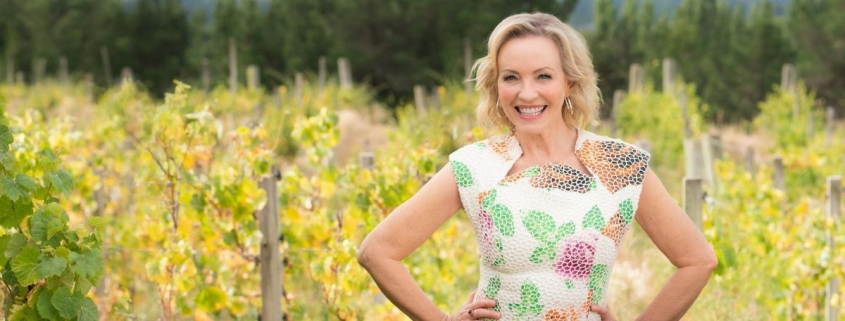
Filmed in Central Otago, Under the Vines is heading back into production for its second season after gaining traction overseas. This charming drama-comedy was created by DEGANZ member Erin White. Guild member Danny Mulheron directed the first block, while Erin directed episodes four to six.

Starring Rebecca Gibney (Wanted) and Charles Edwards (The Crown), the series follows two city dwellers as they navigate rural New Zealand after inheriting an Otago vineyard. But neither knows a thing about hard work, only their dislike for the other.

Co-produced by TVNZ and AMC’s (US) streaming platform, Acorn, Under the Vines has gained popularity internationally. The six-part first series was filmed in the beautiful vineyards around Gibbston Valley. All episodes are now available on TVNZ OnDemand.

Congratulations to Erin and Danny, and good luck to everyone working on season 2.

We are proud to see our members were among the winners of the 2021 New Zealand Television Awards. The annual event was held on March 1st and celebrated the diversity and success of Aotearoa’s television industry.

Congratulations to our members below!

Screen Auckland Best Director Drama

Max Currie (DEGANZ)
Rūrangi
Autonomouse (Neon & NZME)

Best Factual Series

Fight for the Wild
Peter Young (DEGANZ), Tracey Roe, Dave Hansford
Fisheye Films (RNZ)

NZ On Air Best Drama Series

Creamerie
Bronwynn Bakker, Roseanne Liang (DEGANZ), Perlina Lau, JJ Fong, Ally Xue, Tony Ayres
Kevin & Co + Flat 3 (TVNZ 2)

We would like to further point out that DEGANZ member Jochen Fitzherbet, was one of the editors who worked on Creamerie.


The Guild would also like to extend our congratulations to the winners of the other directing and editing categories:

Best Editing: Documentary/Factual

Simon Coldrick
Six Angry Women
Kindred Films (TVNZ 1)

Best Editing Drama

Allanah Bazzard
Black Hands
Warner Bros. International Television Production New Zealand (TVNZ 1)

Best Director: Multi Camera

Wayne Leonard
36th America’s Cup Match 7
America’s Cup Events (Am. Cup website/YouTube)

Best Director: Documentary/Factual

Natalie Malcon & Thomas Robins
Heaven and Hell – The Centrepoint Story
Warner Bros. International Television Production New Zealand (TVNZ 1)


The 2021 NZTV Awards presentation was postponed from November 2021 to March 2022 and shifted to an online virtual presentation due to COVID event restrictions.

Last updated on 10 March 2022

Screen Sector Release – 8 March 2022

ScreenSafe is committed to ensuring the safety and wellbeing of all children and young people in the New Zealand screen sector.

ScreenSafe has zero tolerance for child abuse. All allegations and child safety concerns are treated seriously and consistently with our guideline, policies and procedures.

ScreenSafe is committed to providing guidance on child safe environments where children and young people are safe and feel safe, and their voices are heard. Particular attention is paid to the cultural safety of Māori children and children from culturally and/or linguistically diverse backgrounds, as well as the safety of children with a disability and those who identify as gay, lesbian, bisexual, transgender and/or intersex. Our complaints process is child-focused and responsive to the concerns of children and young people.

Every person involved in the New Zealand screen sector has a responsibility to understand the important and specific role they play both individually and collectively to ensure that the wellbeing and safety of all children and young people in the screen sector is at the forefront of all they do and every decision they make.

What are these guidelines and who is covered by them?

These guidelines set minimum recommended standards for the screen sector to create and maintain child safe environments, free from abuse, exploitation and hazards. These guidelines:

  • affirm our commitment to the safety and well-being of children and young people in the screen sector;
  • inform all production companies, producers, managers, directors, cast and crew of their obligations to act ethically towards children and young people, and their roles and responsibilities in ensuring the safety and well-being of children and young people; and
  • give guidance on the processes and procedures that aim to ensure children and young people’s safety and well-being across all areas of screen sector work.

These guidelines are for all people who conduct work in the screen sector in a paid or unpaid capacity including, but not limited to: production companies, producers, managers, directors, cast, crew, students on placement, volunteers, interns, trainees, contractors, consultants and visitors on set.

When referring to protection from abuse and neglect, a child is defined anyone under 18 years of age. For the purposes of workplace health & safety legislation and regulations, a child is defined as anyone under 16 years of age.

These guidelines support the requirements of Appendix 1 of the SPADA & New Zealand Actors’ Equity Individual Performance Agreement 2014.

These guidelines are informed by the following legislation and standards:

  • The Children’s Act 2014
  • Children’s (Requirements for Safety Checks of Children’s Workers) Regulations 2015
  • The Health and Safety at Work Act 2015
  • The Education Act 1989

See the links here to the full documents of the Child Safety Guidelines, Code of Conduct and Safety Report:

ScreenSafe Child Safety Guidelines

ScreenSafe Child Safety Code of Conduct

ScreenSafe Child Safety Report Document


ScreenSafe would like to thank Safeguard the Children for the support in creating these ScreenSafe Child Safety Guidelines.

Thank you to NZ on Air and NZ Film Commission for funding this important review.

Last updated on 8 March 2022

Piggy bank wearing a surgical mask

The Government is providing two schemes – one provided by Manatū Taonga Ministry for Culture and Heritage and the other by Inland Revenue – that can provide financial support for self-employed people and businesses who have been directly affected by a move to ‘Red’ under the COVID-19 Protection Framework.

  • Inland Revenue’s COVID-19 Support Payment is available for self-employed people and other businesses who have experienced at least a 40% drop in revenue. There will be three rounds of payments available.
  • The Ministry for Culture and Heritage’s Cultural Sector Emergency Relief Grant for Self-Employed Individuals will make a one-off grant of $5,000 available to self-employed people working in arts, culture or heritage, whose income has been directly affected by a move to ‘Red’ under the COVID-19 Protection Framework.

Self-employed people in the arts, culture and heritage sector will only be able to receive the Grant or the first COVID-19 Support Payment. We strongly recommend that self-employed people check their eligibility for both schemes, before commencing an application for the Grant for Self-Employed Individuals.

A reminder that organisations, including Sole Traders with employees, are not eligible for the Manatū Taonga Grant. They should, instead, take a good look at the criteria for Inland Revenue’s Covid Support Payment, or, if they are in real trouble, the Cultural Sector Emergency Relief Fund – Organisations. This is our fund of last resort and is used to support cultural organisations which are at clear risk of no longer operating viably. Organisations can receive up to $300,000 through this fund.

Online Information Sessions

These information sessions are open to anyone interested in applying for the Ministry’s Grant for Self-Employed Individuals, but also touch on the other support schemes administered by Manatū Taonga. The small-group sessions discuss and answer your questions around the application process, eligibility, the evidence you’ll need to provide, and introduce our online application system.

  • Tuesday March 8, 12pm
  • Wednesday March 9, 6:30pm
  • Thursday March 10, 12pm

RSVP here for your preferred session.

Or watch a recorded information session on Facebook Live.

Further Information

For the latest information on other initiatives in the Arts and Culture COVID Recovery Programme, see the Manatū Taonga website.

If you have specific questions, email Manatū Taonga at support.culture@mch.govt.nz.

Last updated on 4 March 2022

Online Session

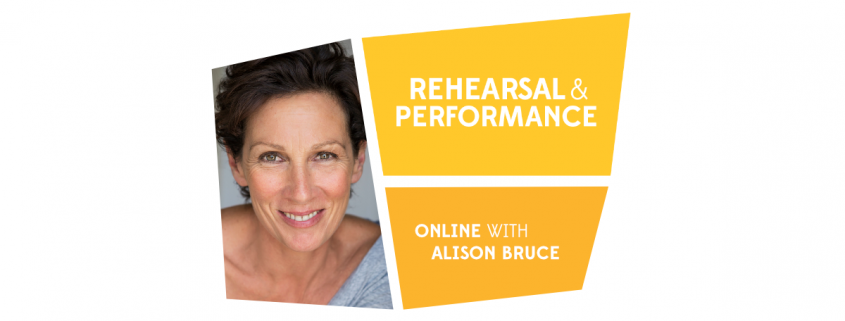
The online sessions of Rehearsal & Performance give screen directors and actors the chance to meet, practise and gain confidence rehearsing by video call in a safe and supportive space. We will focus particularly on how to sustain connection and engagement online.

Similar to the in-person sessions, all participants will spend time in Breakouts of one director and two actors. Groups will rehearse the same scene and perform them later for the class.

About Alison Bruce

Alison has worked in the theatre and screen industry for nearly 40 years. She’s primarily an actor, but is also a tutor and a maker. She has worked with Massive Theatre making work on Zoom during the lockdowns and, last year, co-directed a production of Julie Hill’s Stories Told to Me By Girls on Zoom. Her screen credits include Jane Campion’s The Power of the Dog, One Lane Bridge and The Gulf.

Preparation

Selected directors and actors will be expected to do some script prep beforehand. We recommend actors are off-book. DEGANZ will provide the scene at least one week in advance.

Workshop Details:

When: Sunday 10 April, 9am – 12pm

Where: Zoom Meetings

Cost:
DEGANZ / Equity NZ / Ngā Aho Whakaari members – Free
Non-member – $49 (billed upon selection)

Our Payment and Cancellation Policy

Register your interest

Registrations close Friday 1 April, 10AM

Spots are limited to four directors and eight actors. If your name is selected, DEGANZ will contact you directly to confirm your participation.

Suitable for film school graduates (or equivalent) to mid-career directors.

Registration Form

Loading…

Made possible with the financial support of the New Zealand Film Commission

NZFC

Last updated on 25 March 2022