I joined a childrenโ€™s choir just after my 3rd birthday. That was in Yugoslavia, Zagreb, in 1983. Choir defined me as a person. Iโ€™ve learned early on we are all individuals with different needs, wants and perception, so listening is often more important than talking. Weโ€™d rehearse twice a week and occasionally perform on Sunday morning Kidโ€™s show on Channel 1 broadcasted live from the studio at Zagreb TV. The studio lights were insanely bright and enchanting. Built sets, colourful gels, bubble machines, giant cameras on wheels, heaps of grown ups, discipline, and us kids were all needed to create those few minutes of a TV programme. The Whole is greater than the sum of its parts. I knew I wanted to be an entertainer, and I saw the beauty in the collective, not in soloing.

By mid teens, I was in a few TVCs, had a supporting role in a feature film, acted in couple of theatre plays, but started feeling uncomfortable being recognised on the streets. Rather than escaping that world, I removed myself from the spotlight, and joined the crew โ€œbehind the scenesโ€. I spent my 20s mostly in theatre, making music and sound design, experimenting with 3D mapping and projections, filming and editing my friendsโ€™ gigs and creating short videos for VJing. I was lucky to own a firewire HDV camera, Final Cut Express and a laptop powerful enough to deal with the footage. VJing was a passion giving me a chance to perform my own artwork without too much exposure. I was VJing for 3 bands I liked, and realised that clip making part of the process was my favourite. I wanted to edit more. I approached the team that was producing a weekly music show about demo bands, and I got the gig. It felt like playing music and Lego at the same time, but it was an unpaid job and if I wanted to edit more, I would need to find paid work before I quit the day job.

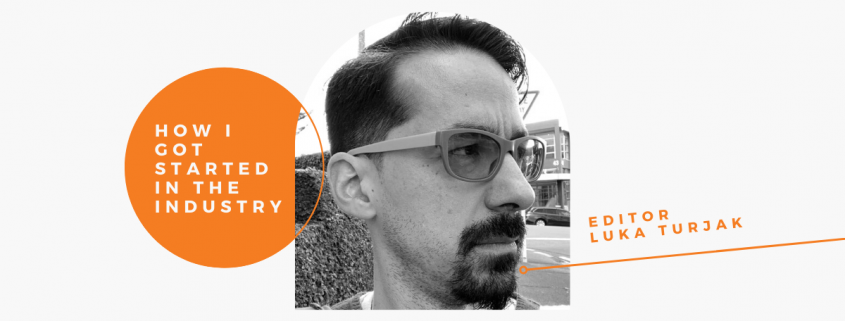
Editor Luka Turjak in his many elements / Photos: Supplied

Same year I was introduced to ลฝeljko Seneฤiฤ‡ who needed an editor to re-cut a film about Yugoslav sculptor Duลกan Dลพamonja. It was edited in Final Cut 6 so it was a rather easy task once I found a common tongue with a director who was larger than life and 47 years older than me. Seneฤiฤ‡ had degrees in Painting from the Zagreb Academy of Fine Arts and Scenography from the Zagreb Academy of Drama Arts and he was a production designer, film director, screenwriter, playwright and way more. I on the other hand was a choir singer, had some college in Mathematics and earned money at a telephone company.

Luckily we understood each other, became good friends and in the next 6 years we made another 8 documentaries, mostly about painters and one TV drama. He supported my idea of quitting my job and turning freelance editor and theatre video/sound designer. Not the wisest thing to do during the Great Recession, but it worked out fine. It made me a happier person. I was editing art exhibition pieces for various artists and took occasional TV jobs and had time for theatre, choirs and my bands.

Editor Luka Turjak in his editing suite / Photo: Supplied

Coming as a tourist to New Zealand in 2014 was a big change. Iโ€™ve met a woman here and we wanted to explore what would living together be like. I stayed taking my chances of starting fresh. No friends, no choirs, no theatre group to belong to. Iโ€™ve taken โ€œthe long way homeโ€ approach. I didnโ€™t know anyone in the industry yet, so I figured Iโ€™d crew for a while. Because for me, it is the people, it is the people, it is the peopleโ€ฆ

I took on everything I felt comfortable with – running, locations and unit assisting, agency/client/talent driving, ADing, DITing… I met a bunch of extraordinary people on sets, in rental and production companies who gave me greater insight into Aotearoa. When I felt the time was right, I put my hand up as an edit assist. And without forcing it I have slowly settled back into the editing chair.

Of course, I still do theatre, sing and perform, occasionally even in the editing suite.


About Luka Turjak

Luka is an experienced editor and assistant editor originally from Yugoslavia, and now based in Auckland. In the last few years, he has edited feature films In Passing and Spring Interlude, as well as documentaries, short films and music videos.

alukat.me

How I Got Started in the Industry is a guest blog series from the Directors and Editors Guild of Aotearoa New Zealand (DEGANZ). Our members reflect on how they made their way into assistant editing, editing, and directingโ€”with no two stories the same. They offer advice for those starting out.

Last updated on 28 July 2022
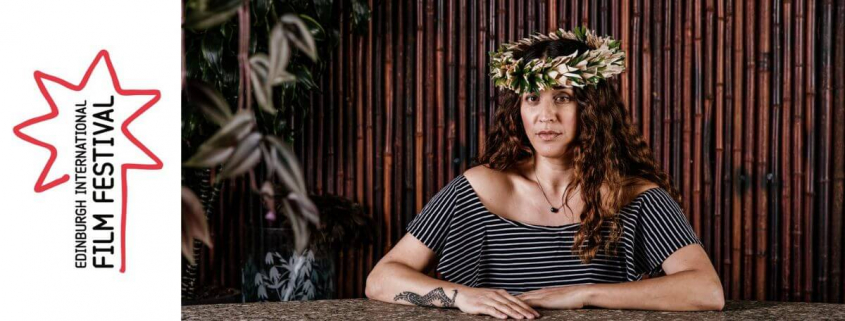
The Edinburgh International Film Festival (EIFF) has chosen DEGANZ member Mฤซria Georgeโ€™s short film fire in the water, fire in the sky for its 2022 programme. While a few Kiwi feature films will be screening during the festival โ€“ Nude Tuesday, Whina, Millie Lies Low and Juniper โ€“ this is the only short featured from Aotearoa.

The film follows polar opposite sisters, Tia and Ina, as they perceive and experience the world differently. It makes a bold cautionary statement about climate change and its impact on migration and the Pacific Islands. This story, which seamlessly blends dance and film, is told in both Cook Islands Mฤori and English.

Mฤซrira originally developed the script for theatre in 2017 as part of the Fulbright Creative New Zealand Pacific Writers Residency. Then, Tawata Productions picked it up upon her return to Aotearoa after spending three months developing the performance installation at the University of Hawaiโ€™i.

The film received special recognition for cinematography from NZIFF in 2021. Last year, it also made the rounds of the Hawaiโ€™i International Film Festival and Pollywood Pasifika Film Festival. This year, it screened at LA Asian Pacific Film Festival, Wairoa Film Festival, and Mฤoriland Film Festival.

Congratulations to Mฤซria and the cast and crew for your UK premiere!

Read more about the film

Member Hweiling Owโ€™sย and Peter Haynesโ€™ animation Cheng Beng has received funding from the Unreal Engine Real-Time Short Film Challenge! Unreal Engine selected the project, alongside another film project from Australia, out of a short list of six others.

Unreal Engine is a 3D computer graphics engine developed by Epic Games. It hosted its inaugural film challenge in 2020. As part of the challenge, applicants receive free online animation training with the software and create pitches for their shorts. Winners (two teams from NZ, four from AUS) then secure funding and the opportunity to showcase their projects to major studio content development executives.

While a great opportunity, the challenge is rigorous as the funded projects only have eight weeks to produce their finished shorts.

Hweiling (Incubator 2021), a producer, director and actor, teamed up with Peter Haynes, who spent lockdown mastering the Unreal Engine software. Fellow DEGANZ member Lรฉah McVeagh is producing the project with executive producer Morgan Leigh Stewart.

Cheng Beng follows the efforts of a lonely man in the afterlife as he communicates with his family on Earth through the Taoist ritual of zhi-zha. While his family continuously offers him material goods, all he truly desires is a dog to keep him company. This film explores Chinese tradition and afterlife through the narrative and its use of animation to visually inform the world.

The team has just completed the filmโ€™s voiceovers, including Cantonese, Mandarin, Hokkien and English.

Keep an eye on the MHM production Facebook and Instagram for updates on the project!

Last updated on 28 July 2022

Last year, DEGANZ was joined by director James Ashcroft and editor Annie Collins to discuss why they worked so well together on New Zealand thriller Coming Home in the Dark, and why trusting each other was an important factor. Enjoy this largely spoiler-free Q&A, moderated by DEGANZ member/director Rob Sarkies, on The DEGANZ Podcast.

Content warning:

  • This episode is for mature audiences only.
  • It contains references to abuse in state care.

Starring Daniel Gillies (The Vampire Diaries), Erik Thomson (The Luminaries), Miriama McDowell (Head High) and Matthias Luafutu (Ghost in the Shell), Coming Home in the Dark garnered rave reviews after premiering at Sundance 2021. It won Best Narrative, Best Director and Best Supporting Actor (Matthias Luafutu) at the Sitges International Fantastic Film Festival.

Coming Home in the Dark is on streaming platforms. Click here for a list on where to find it.

Coming Home in the Dark / Photo: Sandy Lane Productions

Last updated on 28 July 2022

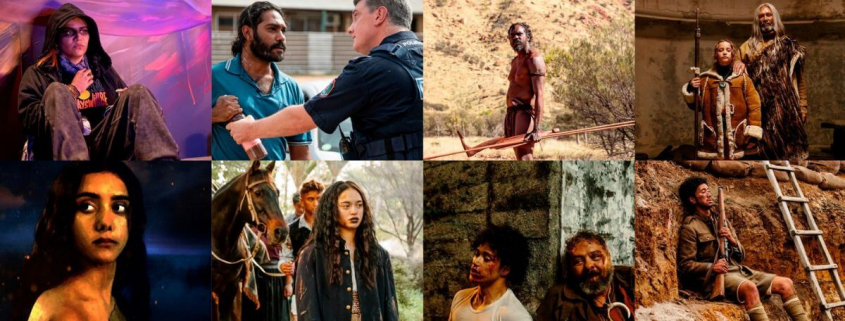
The trailer for We Are Still Here was locally released on July 25, giving us a taste for this new, exciting film. The directorial team includes DEGANZ members Chantelle Burgoyne, Tim Worrall and board member Renae Maihi, along with Richard Curtis, Miki Magasiva, Mario Gaoa, Beck Cole, Danielle MacLean, Dena Curtis and Tracey Rigney.

The uniquely Indigenous film will make its Aotearoa premiere at the Whฤnau Mฤrama: NZIFF on August 4. It is also set to screen at MIFF in Melbourne and featured during the Sydney Film Festivalโ€™s opening night.

We Are Still Here is told through the perspectives of eight protagonists across 1,000 years, spanning past, present and future. It explores themes of kinship, grief and resilience. The interwoven stories highlight the strength of love and hope over the trauma that Indigenous people in the Pacific share. The film seeks to remind viewers that despite colonialism, racism, imperialism, and the attempted erasure of lives and culture, Indigenous people are still here.

Purchase tickets for NZIFF