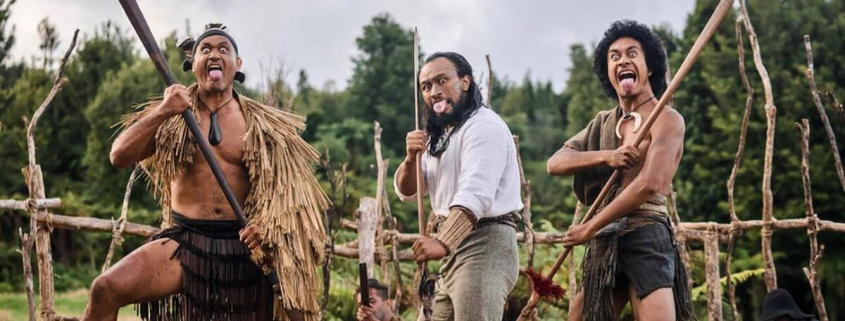
The new action-adventure drama KA WHAWHAI TONU has hit the worldwide market at Cannes. It is written by DEGANZ member Tim Worrall and edited by DEGANZ Board Member Te Rurehe Paki.

Set in Aotearoa in 1864, the film reveals the story of a crucial battle in the land wars between Māori and Colonial forces. With impossible odds between the armies, it shows courage and heroism from the Indigenous people. The historical drama, filmed in Te Reo Māori, follows two teenagers forced to make adult decisions and take hold of their destinies.

The film introduces young actors Paku Fernandez and Hinerangi Harawira-Nicholas in the lead roles. It also stars Temuera Morrison (Ngāti Whakaue, Ngati Maniapoto), Cliff Curtis (Ngāti Rongomai, Ngāti Pikiao), and Jason Flemyng (X-Men: First Class).

NZFC’s He Pounamu Te Reo Māori Feature Fund Initiative, New Zealand on Air, and Te Māngai Pāho provided funding for the feature. Tim also received assistance from the Sundance Native Lab.

KA WHAWHAI TONU is set to release on Matariki Weekend in 2024. This release corresponds with the 160th anniversary since Chief Rewi Maniapoto refused to surrender and proclaimed, 

E hoa, ka whawhai tonu mātou, Āke! Āke! Āke! (Friend, we will fight on forever, forever and forever!).

This famous phrase still leads to calls for sovereignty today. 

As Tim said to The Hollywood Reporter, 

It has been a great privilege to be part of telling this story to honour our courageous ancestors who fought and died to ensure that we survived.

Last updated on 22 May 2023

View from the Top banner

Here at DEGANZ, we are working through an educational and information campaign as part of our work around the Screen Industry Workers Act (SIWA).

One of the things we are asking editors, assistant editors, and directors to do for themselves is to look at the last ten jobs they did, the number of episodes and durations of the content, the platform it was for, what the total budget was, and then to write down the rate that they were paid to do those jobs. (You can often find the total budgets on the NZ on Air, NZFC, and TMP websites under funding decisions.)

Most people are required to work a 10-hour day, so it’s then a good idea to look at the hourly rate you got.

The current Minimum Wage is $22.70/hr; the current Living Wage is $23.65/hr. So if you do a 50-hour week that’s $1,135.00 Gross at the MW and $1,182.50 at the LW. By looking at your Gross weekly figure, you can see how you compare against the minimum and living wages.

But did you do a 50-week? Or did you do more hours and not get paid anymore for them? This will naturally decrease your hourly income. Why not average out your estimated hours per week and then see how well you did in comparison.

Directors, editors, and assistant editors don’t normally get paid overtime, but are required to work the same work day, being 10 hours, that crew on set work, who do get paid overtime.

The current Blue Book, which lays out the terms and conditions under which crew work, specifies that a standard crew day for a short-term engagement is 10 hours including paid lunch, with overtime at T1.5 for the 11th and 12th hours, and T2 for any time over that.

Most directors already understand that they are often the lowest paid person on set from the start for all key/HOD roles, and it just gets worse if they factor in the hours over 10 they do, while the pay to their key/HOD collaborators climbs with the overtime rates they receive.

All of the above and more will factor into our thinking when it comes to considering what minimum rates should be under SIWA for the various roles we represent in the sub-sectors the work is done—Factual and Entertainment, Scripted, Film – Narrative and Documentary, and Advertising and Marketing Content.

Then there are terms.

NZ crew as we know work hard, but as anyone will tell you, there are times when the crew isn’t working because they are waiting for talent, light, rehearsals, or myriad other things.

Editors and assistant editors however don’t have the luxury of downtime waiting for others. They are usually at it for all those hours of that 10-hour day. That’s significantly different in comparison to the crew. Who decided on the 10-hour day in the edit suite many are now starting to ask, not just because it affects their well-being but because it can affect the quality of the work.

We are having to weigh up many aspects of the current paradigm of work in the screen industry for directors, editors, and assistant editors before we settle on what we will negotiate for when it comes time to enter collective bargaining. What to do about public holidays, turn-around times, the working day, creative rights for directors and editors, and a host of other issues are all under discussion. And then of course we have to solidify our thoughts and come to you all to see whether or not you agree with where we have gotten to before we can start collective bargaining. If you don’t, then we will need to do more work.

Collective bargaining for us requires the employment of a democratic process designed to ensure that the majority are involved in the decision-making leading up to, during bargaining, and in settling on the final terms and conditions we will work under going forward.

There’s no better example of this in action than the screen guilds negotiations happening in the United States at the moment. The Writers Guild of America has kicked it off. The Directors Guild of America is about to start. And the US Screen Actors Guild will follow shortly.

A 98% majority vote by WGA members gave their board the endorsement to call a strike. And they eventually did after negotiations between the WGA and the Alliance of Motion Picture and Television Producers (AMPTP) reached an impasse. Democratic votes will be employed at various steps by all those guilds from here on in, in negotiations until they reach solutions.

We’ll be doing the same under the Screen Industry Workers Act, but in our own way, not following the US model.

And that’s why it’s so important right now for every screen worker to join the guild that best represents them: DEGANZ, NZWG, Equity NZ, SMSG, SIGANZ, VFX, Motion Designers and Animators, or the producers’ associations SPADA and APA (formerly NZAPG). These organisations will be negotiating on your behalf and they need your support to make it work for us all.


Tui Ruwhiu
Executive Director

Last updated on 11 May 2023

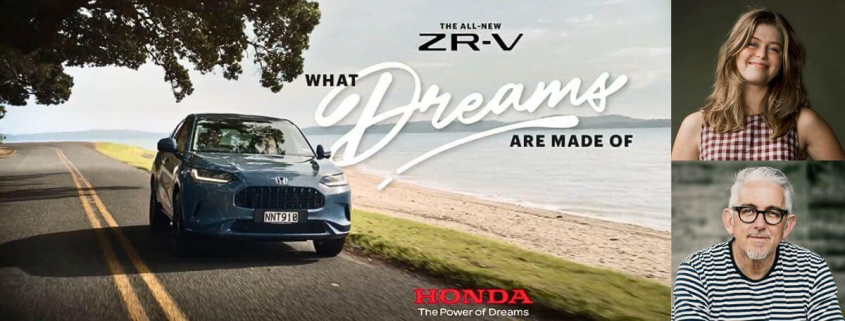
DEGANZ members Perry Bradley and Harriett Maire (2023 Incubator) have a new commercial for Rainger & Rolfe and Honda out now. This is Harriett’s first time directing a car commercial, and she joined forces with TVC veteran Perry to work on the ad, promoting the launch of the new ZR-V e: HEV hybrid SUV.

Following a family trip in the new Honda, viewers will get a sense of what dreams are made of. Classical music played by the grandmother inspires her granddaughter to daydream about her own musical passions. Within their marketing, Honda aims to touch the hearts of their customers by appealing to their emotions. They often highlight how their cars can bring people together and take them where they want to go. As R&R CD Kelly Putter said:

The brief was to connect with the hearts, minds and aspirations of New Zealanders and I feel we’ve achieved this with some really bright, bold and emotive work.

You can watch the light-hearted Honda commercial of Perry and Harriett here.

Last updated on 24 May 2023

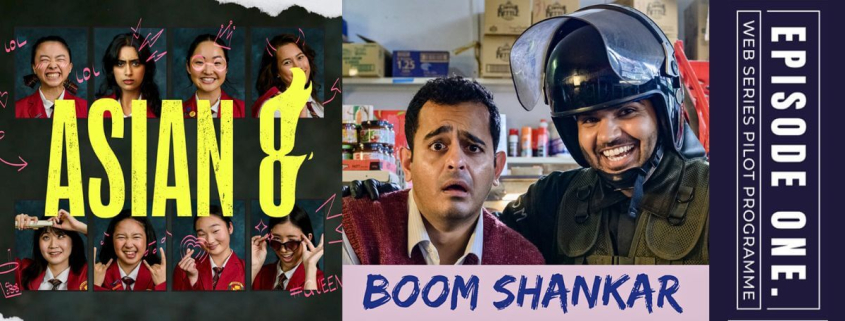
The Asian 8 and BoomShankar Title Images with the Episode One logo on the right

Two of the pilots from PASC’s Episode One initiative are now available to watch online after a successful screening a few weeks ago.

Fans of the teen genre can watch Asian 8, directed by 2021 Incubator alum Nahyeon Lee (DEGANZ) and edited by fellow member Jack Woon. It follows the ambitious Ming Zhao, who is determined to become Head Girl at her posh girls’ school. But in order to defeat the wildly popular Pākehā heir apparent Zoe Belshaw, Ming will have to persuade a group of overlooked Asian students to help her win. Victory has a steep price. Will Ming pay it?

In an Instagram post, Nahyeon shares:

When making Asian 8, I thought a lot about leaning into the poppy and fizzy. The unassumingly radical act of using a crowd-pleasing genre to inject politics and disruption […] and use these conventions in the teen genre […] but usurp the Western paradigm.

Comedy fans who also aren’t afraid to consider their mortality and morality should tune in for Boom Shankar, directed by DEGANZ member Bala Murali Shingade. When an overconfident bomb defusal officer and an anxious dairy owner end up dead after a failed bomb defusal, they must work together to navigate the bureaucratic Afterlife for one last chance at redemption. 

You can also find the trailers for Pincher, edited by 2022 Incubator alum Jolin Lee (DEGANZ), and THAW, directed by Asuka Sylvia (Incubator 2018), on the PASC website.

Last updated on 3 June 2025

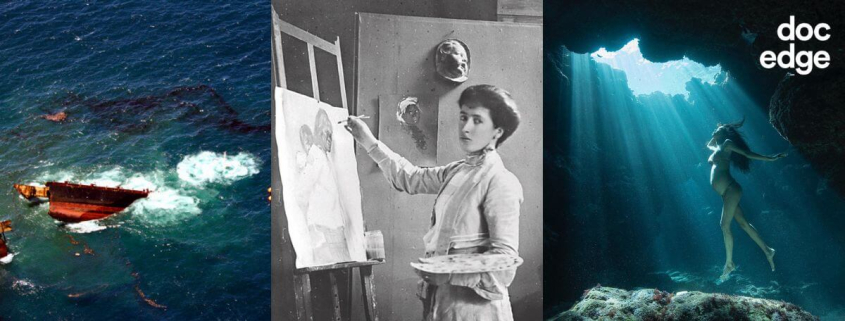
This year’s Doc Edge Festival will feature projects by DEGANZ members Katherine McRae, Anton Steel and Blandine Massiet du Biest. The Oscar-qualifying festival will run in Auckland and Wellington in May-June and virtually in June-July.

Having previously worked on Power Rangers Dino Fury and Crouching Tiger, Hidden Dragon: Sword of Destiny as an assistant editor, Blandine made her directorial debut with her documentary Frances Hodgkins, Anything but a Still Life which follows the life and career of the Kiwi still-life artist. Art experts Mary Kisler and Linda Tyler discuss Frances’ challenges and her undeniable power to create in the feature, which will appear in the festival’s ‘The Art of Storytelling’ category.

Anton’s new documentary Taking Back Our Beach examines Aotearoa’s worst maritime environmental disaster and will feature in the ‘Making an Impact’ category. When the Cargo Vessel Rena struck the Astrolabe Reef in 2011, it carried and split tonnes of heavy oil and diesel fuel. The aftermath is still fresh in the memories of everyone in the area due to the devastating and long-lasting impact on wildlife. Anton focuses on the power of a united community and its experience of the shocking grief that later becomes a driving force in saving the environment. He talks about the project more in a podcast with RNZ.

Under the category Being Oneself,  Pacific Mother follows free divers Sachiko Fukumoto and William Trubridge looking into maternity systems for their first child. Through the film, a sequel to Water Baby, Katherine attempts to reconnect families with the global environment. The film examines women’s maternity experiences from the Pacific, Hawai’i, Tahiti, the Cook Islands, and Aotearoa. Within their stories, Pacific Mother discusses the community, gaining back its traditional birthing knowledge, and the importance of nurturing both children and parents.

Don’t miss the chance to see them at Doc Edge!

Last updated on 12 May 2023