My earliest, real childhood memory is being about 3 years old. I’m sitting in front of an electric heater, one of the old fireplace-mounted ones. It has two bright orange electric resistors. In my left hand, I have a toy; a silver metal cowboy gun with white plastic handgrips. And I can remember thinking very clearly “What if I put the barrel of my gun between those two glowing bars?” As I am thinking this I am slowly inching the end of the gun barrel forward, forward toward the point of contact….. 

When I was older my mother told me that the heater basically exploded and I was thrown back across the room. What the hell was I thinking? Well, maybe it wasn’t formulated this clearly, but it was something pivotal to my creative process: What happens if I put THIS between THOSE? And to me, that’s editing; creating a story by putting things together and watching sparks fly.

As a kid, I was forever making forays into the world of narrative. I spent weekends watching countless old movies with my grandmother, I’d while away endless hours drawing and was obsessed with making comic books. In the mid 80’s my father bought an old computer and taught himself how to program in machine code. He showed me how we could reprogram letters on the keyboard into custom art, and then write programs to animate them. I was making my comic book characters move. 

By the mid 90’s I was enrolled in a painting course and painfully coming to the realisation that I just wasn’t good enough to make it as an artist. But I did really enjoy the film elective I’d taken out of curiosity. The comic book stuff, the endless old movies, the knowledge of how to use a computer as a creative tool, and the sense of timing and rhythm I got from playing music in my teens all kind of clicked together in my head.

After swapping my major to film and graduating, I moved to Auckland. I knew that being able to cut student films on Avid wasn’t the same thing as knowing how to edit, so I was going to have to start at the bottom somewhere and grind my way up. At that time TVNZ seemed like a good place to start, so I pestered the head of operations and after a few weeks of almost daily phone calls they gave me a job as a tape opp. After a year though I was restless so I handed in my notice. One of the older hands told me that a small production company was looking for an editor for a new kid’s TV show and asked if I was interested.

I did that job for 4 years, first cutting Tumeke and then the follow-up show Pūkana. Every week I made hundreds of individual edits, and all those cuts added up to a tremendous bank of knowledge. And there was a huge amount of freedom too; we made music videos, comedy skits, I introduced claymation into the mix, and one torturous night with a show a minute short of duration, 2D animation.

From ‘Social Distancing,” an animated web series Francis made during lockdown from his perspective of the COVID-19 pandemic / Photo: supplied

By the time I’d left that job, I’d really learned what being an editor actually is. I was fortunate – I got to edit comedy, music videos, history and science documentaries. I set up my own suite in Auckland in 2004 and having that facility meant I also got to make things that might not happen because of budget, happen. I got to go to Singapore and cut a big documentary there. I learned a lot about editing when working with the director on that project, about how to put disparate shots together on the basis of a similar element. Like cutting a tracking shot through an ancient stone arch in rural China to a matching tracking shot in a tunnel in the science museum in Shanghai can be a perfect edit.

Through this period I also worked on my own projects and wrote and directed a short film in the mid-2000s that screened at festivals all over the world, including Clermont Ferrand.

All those thousands, probably tens of thousands, of individual cuts add up, but a push is what’s needed to take you to the next level. Tearepa Kahi, who I’d first met during my days on Pūkana asked me in 2015 to have a go at finishing off his doco Poi E. I remember after our first screening him looking at me and saying “It’s better, but it’s still not good enough.” Together we hammered at that work, and the film became something really great. Since then I’ve worked on a bunch of exciting movies; drama and documentary, including the HBOMAX original  No I in Threesome. It was just a small film when we started, but the director and I really gave it everything we had and when it went to market, it blew up. Seeing something you’ve edited reviewed in every major publication in North America is a hell of a thing, and I’m intensely proud of it.

From ‘There is No I in Threesome’ edited by Francis

The next big push for me was working on the America’s Cup, a completely different challenge to the doco or drama I’m used to. I suddenly find myself in Barcelona with a very fun mountain to climb. When racing starts and there are helicopters and chase boats with cineflexes tearing around gathering mind-blowing shots every day, it’s hard not to feel excited. And privileged. I’ve made a lot of edits throughout my career, but I still find the work exciting, visceral and fun. After 25 years of this stuff, I feel like I’m really getting the hang of it.

The biggest thing I can say about editing is this: trust your gut rather than your brain and don’t overthink it. If you find yourself in front of a metaphoric wall heater with a cap gun in your hand wondering what will happen if you put the barrel in between those two glowing bars. Go ahead and do it. Something really exciting might happen.


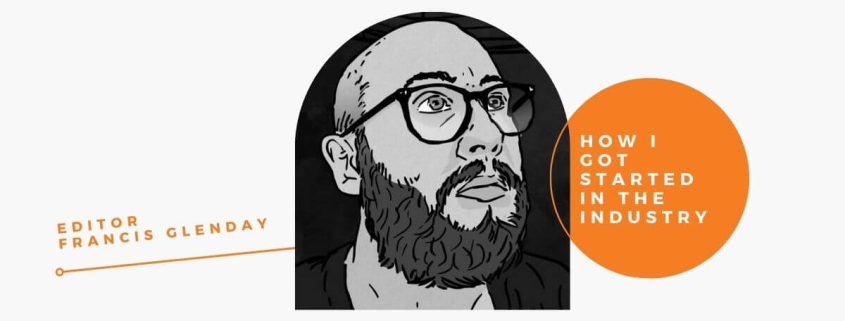
About Francis Glenday

Film Editor with 25 years of experience cutting feature films for theatrical release and streaming (including an HBOMAX original), premiere documentary for international TV & loads of New Zealand and Australian documentary & factual TV, as well as a bit of drama. On top of that, tons of TVCs for some of NZ’s biggest companies (LOTTO, Vodafone, KFC, Samsung etc etc). He was lead editor for the 36th America’s Cup and is back again in 2024 for the 37 iteration of the iconic event. Francis is also experienced in animation and VFX. He created the award-winning animated web series Social Distancing during the COVID lockdown and has created VFX, animation and motion GFX for most of the feature films and a lot of the TV he’s cut.

How I Got Started in the Industry is a guest blog series from the Directors and Editors Guild of Aotearoa New Zealand (DEGANZ). Our members reflect on how they made their way into assistant editing, editing, and directing—with no two stories the same. They offer advice for those starting out. Get in touch with admin@deganz.co.nz if you’re a member and would like to share your story.

Last updated on 20 June 2024
Whānau Mārama New Zealand International Film Festival is back for 2024 and has announced the films selected for this year’s festival. Two features and 19 shorts from Aotearoa make up the Māhutonga strand of the programme, and amongst those, 11 feature work by DEGANZ members.

Check them out below!

Feature Films

Marimari

Paul Wolffram’s urgent documentary takes us into the remote highlands of Papua New Guinea and one Indigenous woman’s fight against the insidious influence of sanguma – sorcery violence.

Editor: Annie Collins

The Haka Party Incident

In 1979, a group of young Māori and Pasifika activists sought to stop Pākehā students at the University of Auckland performing a parody of haka each capping week. Unfortunately, the consequences for those activists were severe – many were convicted of crimes. Director Katie Wolfe uncovers this largely forgotten event in our history with interviews from both in this resonant and thought-provoking documentary.

Director: Katie Wolfe

The House Within

Filmmaker Joshua Prendeville’s sterling documentary holds a delicate lens to the fascinating life and work of one of Aotearoa’s literary treasures, Dame Fiona Kidman.

Co-Editor: Cushla Dillon

Aotearoa Film Focus Weekend

Naughty Little Peeptoe

Garth Maxwell offers a deeply personal film, co-directed by the late Peter Wells, in Naughty Little Peeptoe. An ode to a friend, fashionista and foot-fetishist Doug George, Maxwell along with collaborator Debra Daley recorded the caustic, chaotic narration from George, retelling the story of how high heels saved his life. The film will be preceded by a screening of Maxwell’s first ever film Come With Us, a short collaboration with Simon Marler. A response from queer erotic fiction writer, Samuel Te Kani, will follow.

Co-Director: Garth Maxwell

New Zealand’s Best

New Zealand’s Best is a compilation of the year’s top short films from Aotearoa New Zealand. Each year local filmmakers are invited to submit their films to compete in the strand, with a Guest Selector choosing the finalists from a shortlist curated by the NZIFF team. A total of 95 submissions were received for this year’s competition, with just 5 selected for the final by 2024 Guest Selector, Gerard Johnstone.

I See You

A young mother struggles with her toddler’s delayed development until a chance encounter with a charismatic young man shifts her feelings.

Director: Briar March

Editor: Adam-Luka Turjak

First Horse

In pre-colonial Aotearoa, a young Māori girl witnesses the best and worst of a rapidly changing world when she encounters a dying man and his horse.

Editor: Cushla Dillon

Lea Tupu’anga/Mother Tongue

A young speech therapist who has lied about her language skills must find a new way to communicate when she is assigned to an elderly Tongan patient with aphasia who can no longer speak English.

Director: Vea Mafile’o

Ngā Whanaunga Māori Pasifika Shorts

This collection of seven Māori and Pasifika short films has been selected by co-curators Leo Koziol (Ngāti Kahungunu, Ngāti Rakaipaaka), Director of the Wairoa Film Festival, and Craig Fasi (Niue), Director of Pollywood Film Festival.

Chatterbox

Today is the first day of Tui’s dream life. She snuggles in bed with her well-meaning paakeha (white) boyfriend, Edward. Everything’s perfect until her vagina, Teke, calls him a loser.

Editor: Amarbir Singh

Short Connections

Five new Aotearoa shorts examine the ways we connect with each other. From strangers uniting to stand up for what is right to fleeting moments of understanding between loved ones, these films deftly capture the bonds and binds between us.

Payback

When a welfare department’s insidious prejudice can no longer be tolerated, a group of unlikely heroes band together against a narrow-minded caseworker. Made in collaboration with Toi Whakaari, Mia Blake cleverly reflects the state of the nation in this punchy black comedy. 

Director: Mia Blake

Editor: Ben Chesters

Earthlings

A lonely teenager shares a moment of intimacy with a mysterious stranger in this surprising and sensitive film. Jamie Lawrence (Darryl Exists, NZIFF 2011) evokes a surreal world that tenderly explores identity, belonging and the desire for connection.

Director: Jamie Lawrence

The Sea Inside Her

Award-winning filmmaker and choreographer Alyx Duncan (The Tide Keeper, NZIFF 2015) builds on her unique movement-led films, depicting an anxious grandmother desperate to protect her grandchild from the dangers of the world. Using performance, puppetry and visual effects, Alyx Duncan paints a fantastical picture of fear and frustration for these fragile times.

Director: Alyx Duncan

Editor: Adam-Luka Turjak


Last updated on 24 June 2024

The 2024 Doc Edge Festival is officially underway, with films by DEGANZ members Phillida Perry and Annie Goldson in the lineup.

The Doc Edge is an international Oscar-qualifying documentary festival held annually in Aotearoa. This year marks the festival’s 19th edition, with 66 films and 28 digital immersive projects on display. The festival will run from 19 June – 14 July in cinemas across Christchurch, Auckland, and Wellington. From 15-31 July, you can watch the films nationwide online.

Breaking The Mould

A visceral glimpse into the life and work of acclaimed New Zealand sculptor, Jaime Jenkins, whose unconventional upbringing combines with the elements to inform her ceramic explorations. The short will screen before the feature film Spontaneous Combustion: Songs for Barry Brickell.

Director: Phillida Perry

Refuge: A Duty to Care

From Doc Edge Superhero (2023), director Annie Goldson’s film centres on life and work at a secret pet shelter, allowing victims of family violence to seek safety while knowing their animals are being cared for. The film will play as part of the Short 5 collection.

Director: Annie Goldson


Last updated on 20 June 2024
DEGANZ members Ramon Te Wake and Richard Curtis have been selected for Ngā Aho Whakaari’s 2024 round of Aho Shorts. This year, five films were selected for the short film development programme aimed at empowering tangata whenua and te reo me ngā tikanga Māori within the film and screen industry.

Ramon is the writer/director of Wait Wait, Now and is joined by Nicola Smith and Grayson Goffe on the team. Richard is the writer/director of Rapido, with Lea McLean and Tihini Grant on board.

The films underwent a selection process overseen by a panel of Aho Shorts alumni and esteemed industry professionals. The panel noted themes of resilience, identity, and the ever-evolving Māori worldview in the submissions.

Through Aho Shorts, the selected teams will participate in development sessions to get their projects production-ready. Additionally, the films will premiere at the Rotorua Indigenous Film Festival in November 2024. Ngā Aho Whaakari has also partnered with Te Reo Irirangi o Aotearoa (RNZ) and Whakaata Māori as broadcast platforms for the finished films.

Congratulations Ramon and Richard!

Last updated on 20 June 2024

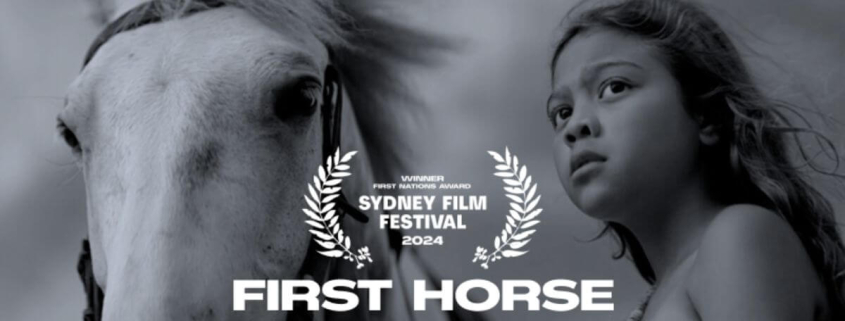
After screening at the Sydney Film Festival, First Horse directed by Awanui Simich-Pene and edited by DEGANZ member Cushla Dillon, won the inaugural First Nations Award. This accolade is the largest cash prize in Indigenous filmmaking, rewarding $35,000 to the winner.

The film, set in 1826 with Aotearoa on the cusp of colonisation, follows a young Māori girl who encounters a dying man and his horse, exposing her to the best and worst of her rapidly changing world.

The jury commented on the film saying,

In awarding the winning work, the jury recognises its originality, elegance, and cinematic achievement in story and form. In a few short minutes, the talented creative team has crafted a deeply impactful film with a resonant emotional punch.

If you are keen to see the award-winning film, it will also screen at NZIFF this year as part of the NZ’s Best programme.

Congratulations Awanui, Cushla, and the rest of the First Horse team on the win!

Last updated on 20 June 2024