View from the Top banner

While everyone angsts about what the New Zealand Film Commission is or isn’t up to—and frankly I still don’t know either—I thought I’d take a look at the work situation for directors and editors with television/platform content.

Now I’ve been hearing anecdotally that there are a lot of directors and editors out of work, so I looked to what NZ On Air and Te Māngāi Paho have funded this year so far.

According to their websites, in 2024:

NZ On Air funded:

22 Scripted Projects to a total of$26,982,203
10 Factual projects to a total of6$6,186,872
22 Non-Fiction projects to a total of$8,542,922
9 Returning projects to a total of

NB: Genre wasn’t defined but look all Factual

$10,673,286
6 Aotearoa New Zealand Pacific Regional Media Fund projects to a total of$1,859,996

NZ on Air (60%)/TMP (40%) funded:

5 projects to a total of$10,020,333

TMP funded:

8 projects (no info. on genre) to a total of$7,237, 871


All up, that’s 82 projects to a total of $71,503,483


Even though it’s nigh on impossible for a director or editor to make a living in feature film (shorts—foget about it), I thought I should also include what the NZFC has according to its website greenlit for production equity investment so far in 2024:

2 narrative features to a total of$3,687,602

But back to TV/platforms.

So for the half year we have 82 projects across all genres with budgets totalling $71, 503,483.

If we guesstimate that on average at least three directors and three editors will work on each project, that’s 246 jobs for directors and 246 jobs for editors coming out of those projects receiving NZ On Air or TMP funding this year to July 2024.

Let’s imagine that the same number of projects will get funded in the second half of the year so that’s all together 492 jobs for directors and 492 jobs for editors across 2024 with funding from NZ On Air and TMP.

Now we know that a director or editor generally needs to work on at least 2 – 3 projects a year to have any kind of sustainable income.

We also know that not every project happens at the same time, so a director or editor working on one project in 2024 could also be working on one or more projects in the same year. And we know that there’s a contraction in the domestic market going on.

What I’m getting at here is that while it might seem like there’s enough work to go around, there’s also anecdotally a good number of people out of work. The simple deduction from this is that there isn’t enough work for the number of directors and editors out there.

So what’s the answer here? Less directors and editors? Or more work?

Of course, all of us will advocate for the latter. The conundrum is: Where is the money going to come from to fund the work?

NZ On Air thankfully survived the government slashing of budgets with its baseline funding remaining unchanged.

TMP also went into this financial year with an unchanged budget from 2023.

However, Whakaata Māori has announced a decrease of $9.5 million in funding available over the next two years.

The freeing up of the New Zealand Screen Production Rebate (NZSPR) to allow funding from our funding bodies for all genres of content to be combined with the NZSPR is meant to be one solution to creating more work and delivering more production by combining domestic and international financing. The verdict on this is still out.

International productions coming in offer very few work opportunities for our domestic directors and editors.

So what to do? Find more money, right?

I’ve looked at the strategic documents from NZ On Air, TMP, and the NZFC. There’s lots of corporate language about vision, mission, objectives, values, etc. And lots of statements about responsibly managing the money they are given. But nothing about getting more money to disperse.

Nobody is talking about finding more money. Even SPADA’s mutterings about a Love Local campaign around which to build momentum for a streamer levy seems to have been jilted.

More money for domestic production means more work for directors and editors.

It’s pretty clear we need to find new sources of funding to make this happen. And fast. Or we’ll all be looking for below-the-line jobs on international productions, which seems to be happening more commonly now.


Tui Ruwhiu
Executive Director

Last updated on 19 July 2024
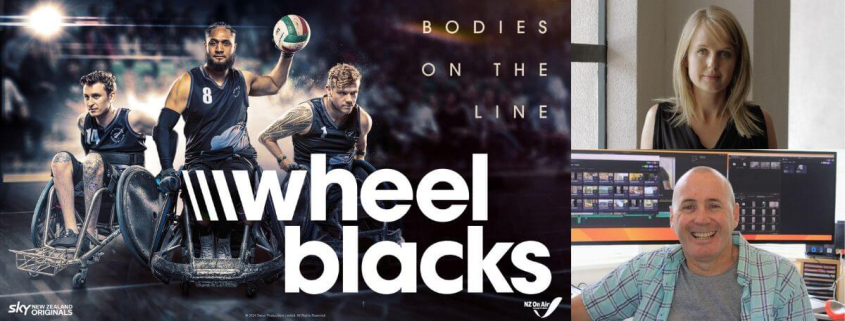
Check out the trailer for the new docu-series Wheel Blacks: Bodies on the Line, directed by DEGANZ Board President Robyn Paterson and edited by fellow DEGANZ member Jai Waite.

The series goes behind the scenes of Aotaroa’s wheelchair rugby team as they battle to rise above declining resources for the chance to qualify for the 2024 Paris Paralympics. The series lifts the lid on the dramatic, hard-hitting, and compelling sport played by athletes affected by a disability. It captures the highs and lows of life as a Wheel Black, both on and off the court. While other high-level international teams have high-performance budgets in the millions, the Wheel Blacks have to rely on fundraising, charity, and volunteers. This lack of resources is seeing player numbers dwindle locally – not only are the team fighting for a place at the Paralympics, but also for the future of a sport that has transformed their lives and is a source of inspiration for many.

Robyn and Jai co-produced the series for their production company, Sweet Productions.

In a recent press release, Jai, a former Wheel Blacks player who helped take home the gold at the 2004 Athens Paralympics, says,

Wheelchair rugby and the Wheel Blacks is a taonga I carry within me that was pivotal in my own journey from accident, through acceptance, to thriving in life with a disability. This year we celebrate 20 years from the peak of the sport with Gold at the Athens Paralympics – it’s important to me that we shine a light on the game here in New Zealand and encourage more players to come through.

Wheel Blacks: Bodies on the Line premieres on Sky Open on 18 August, 8.30 pm, before airing on Sky Sport 1 on 19 August, 8.30 pm (episodes airing weekly). All episodes will be available on Neon from 19 August.

Last updated on 18 July 2024

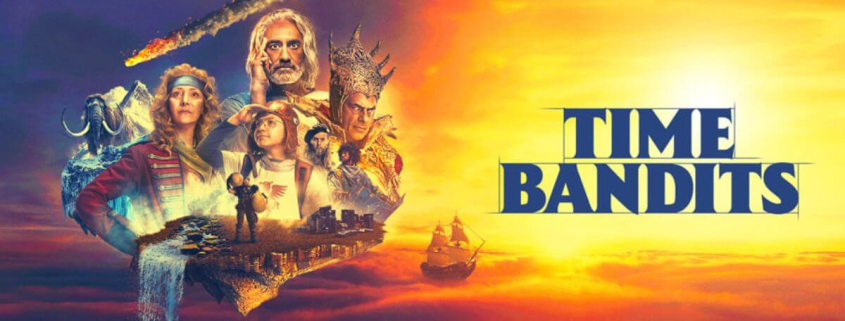
The trailer for the new Apple TV+ adaptation of the beloved 1981 cult classic Time Bandits is out now! DEGANZ members Jackie van Beek and Armagan Ballantyne have directing credits for an episode each on the 10-episode series.

The action comedy series is an unpredictable journey through time and space with a ragtag group of thieves and their newest recruit: an 11-year-old history buff named Kevin. Together, they set out on a thrilling quest to save the boy’s parents — and the world. Together they stumble upon fascinating worlds of the distant past while seeking treasure, depending on Kevin to shed light on each situation.

The series was created by fellow New Zealanders Taika Waititi and Jemaine Clement, along with Iian Morris, and was shot here in Aotearoa.

Time Bandits premieres globally on Apple TV+ on 24 July.

Last updated on 17 July 2024

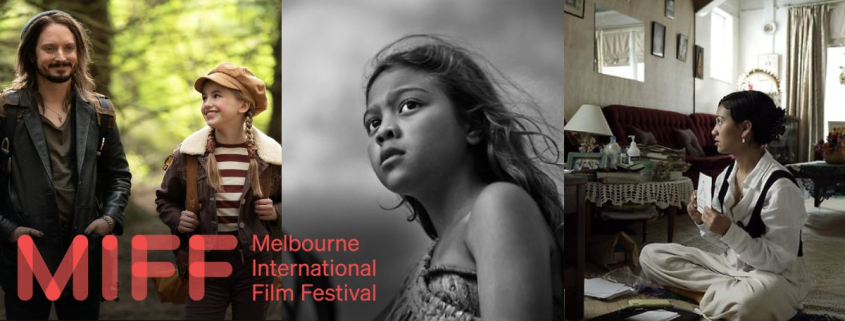
The Melbourne International Film Festival (MIFF) has announced this year’s programme, with DEGANZ members in the mix. Congratulations to DEGANZ members and editors Dan Kircher and Cushla Dillon and fellow member and director Vea Mafile’o!

From 8-25 August, the festival will present over 250 films from over 62 countries. Alongside its screenings, MIFF hosts a series of industry programs including the Premiere Fund, Accelerator Lab, 37°South Market, and Critics Campus program.

Read more about the selections below:

Features

Bookworm

Editor: Dan Kircher

Following her mother’s hospitalisation, 11-year-old Mildred is left under the care of her estranged father. Worried by her despondent state, he decides to distract her by taking her camping in the New Zealand forest. There, they can seek out the Canterbury Panther, a mythical beast that may prove essential to healing their family. But unexpected forces fight to get to them first.

Short Films

First Horse

Editor: Cushla Dillon

In 1826 Aotearoa, a small girl in an isolated rural setting comes in first contact with two facets of colonisation: a foreign infectious disease and the first horse she’s ever seen. The film is shot in sparkling black-and-white for widescreen, featuring a score by lead actor (and acclaimed musician) Troy Kingi.

First Horse will play in the Accelerator Short 2 programme, previewing the next generation of homegrown directors.

Lea Tupu’anga / Mother Tongue

Director: Vea Mafile’o

Hoping to land employment, a Tongan speech therapist tells a white lie – except a headstrong patient challenges her to reconnect with her heritage. Written by star Luciane Buchanan (The Night Agent) and directed by Vea Mafile‘o (For My Father’s Kingdom, MIFF 2019), this Sundance-premiering film is a poignant story of cultural dislocation and language.

Lea Tupu’anga / Mother Tongue will screen in the Accelerator Shorts 1 programme, a selection of bold works from emerging New Zealand and Australian filmmakers.

Last updated on 17 July 2024

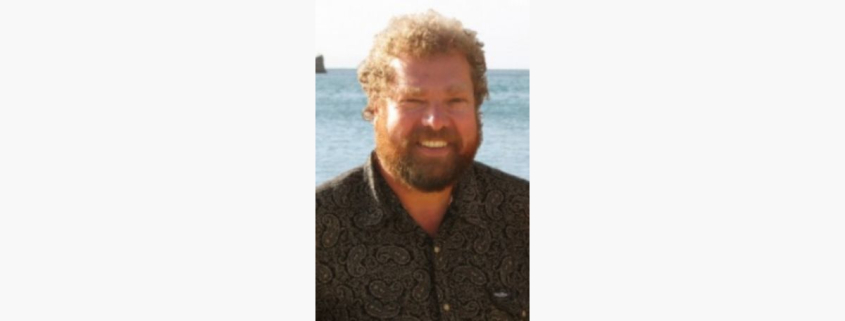
It is with sadness that we record the death of long-time Guild member Grant Campbell from cancer at 64. Grant was a Guild stalwart, a board member from 2000 to 2016, and an outspoken critic of the imperfections in the New Zealand screen industry. In the days when the Guild had its own magazine, Take, Grant could be relied on to provide penetrating analysis expressed in his own no-holds-barred, salty vernacular. 

His funeral at the Wainuiomata Golf Club will be fitting. He’d played golf from 14 to 20 and was, according to brother Bryce, quite good. He was also a good tennis player. Grant and Bryce were tight all their lives. They were a co-writing team and worked on many projects together.

The brothers became interested in film from about the age of 10. After a double degree in Maths and English, Grant started selling himself round production companies. Sue May decided he would either be a good worker or a good drinker and gave him a job as an assistant chippie. He turned out to be both. After working in film construction for a while he moved into special effects. Gibsons took him to Aitutaki for eight months to shoot the feature Silent One. It was formative – learning about another culture. He developed a love for the islands and the people. Bryce says it opened up his eyes to the possibilities of life. He also learned a lot about film-making. However it almost killed him – he got severe blood poisoning.

On his return he specialized in special effects, working on major Hollywood productions alongside humbler New Zealand fare. It was during this time that his philosophy formed. Seeing the waste and glacial pace of production on the former, he came to truly embrace the latter, taking pride in the Kiwi ethos of everyone mucking in, working ridiculously long hours, being under-resourced and running on pure adrenalin. He came to see the magic that a small team of like-minded Kiwis could achieve where a small budget was not an impediment to making a great film.

He ended up working in most departments on features, television productions and commercials, always in the freelance industry, of which he was immensely proud.

His ambition was always to direct. Based on this same low-budget kiwi ethos Grant cadged gear and called in favours to make music videos. Harry Sinclair and Don McGlashan of theatre group Front Lawn noticed and asked him to make one for them. They had such a good experience they asked Grant to be their manager and also make films for them. He produced Linda’s Body, a short film with Harry, Don and Jennifer Ward-Lealand, and The Lounge Bar. As manager he organised overseas tours – the States, London and Edinburgh.

Harry remembers Grant as “an incredibly fun person to be around, always positive, never complaining about anything. He liked to sleep on the floor so we didn’t need a bed for him. It saved the budget! We had a lot of laughs. An incisive thinker, he always had a slightly different take on things from everybody else.”

Then, under the auspices of Wingnut Films, Grant directed and co-wrote (with Fran Walsh) Dirty Creature, a short film which screened at the Clairmont-Ferrand Film Festival.

He produced a lot of documentaries with Vincent Burke and Topshelf. The standouts were Sam Neil and Judy Rymer’s Cinema of Unease, and the brothers’ Shadow of Vietnam on New Zealand soldiers’ experiences in Vietnam. This documentary led to the next phase of his career. Grant and Bryce were so moved by the stories they uncovered that they thought they deserved a bigger canvas – a feature film about a young Kiwi soldier going off to fight. But with few writers around, Grant reinvented himself once more, this time as a writer.

They worked with producer Sue Rogers on a number of screenplays and and came close with the Vietnam feature. They raised 2 and a half million but needed a million more. However they couldn’t pull it off.

Not daunted, Grant focused on self-funding his own feature. With the new technologies becoming available, not having to deal with funding bodies became a liberating concept. To build up their skillset they started filming concerts at Wellington’s Bodega nightclub – groups like the Muttonbirds and the Chills. Unfortunately soon after this Grant became ill.

As we know, good things take time. When the brothers were about 15 they acquired a super 8 camera and started shooting a short film on their grandmother. Born on the South Island’s West Coast, she’d started treading the boards when she was 13 and travelled to the States where she was a vaudeville performer. Half a century later the documentary is almost finished. Bryce is hopeful it will finally hit the screen next year.

Grant will be missed by Bryce, ex-partner Gail, son Sergio and daughter Thalia.


Last updated on 17 July 2024