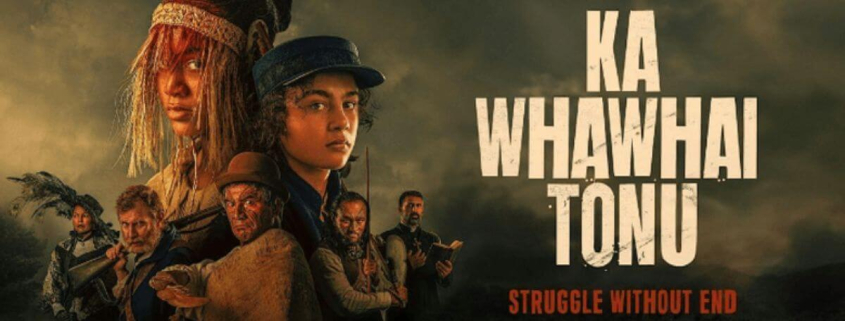
Ka Whawhai Tonu has become the highest-grossing NZ film this year after just four weeks in cinema and now sits at just over $800,000 at the box office. The screenplay was written by DEGANZ member Tim Worrall while board member Te Rurehe Paki and fellow member Martin Brinkler ACE edited the feature.

Transmission Films states that this success is a powerful testament to the story of Ka Whawhai Tonu and the desire of New Zealand audiences to embrace poignant locally-made films. NZFC CEO Annie Murray says,

The Film Commission is delighted with this result for ‘Ka Whawhai Tonu.’ This Māori language film is timely and has obviously resonated with New Zealand audiences, and we look forward to seeing it continue to reach audiences across various platforms locally and globally for many years to come.

It is great to see DEGANZ members involved in this success story. Congrats to Tim, Te Rurehe, Martin, and the rest of the Ka Whawhai Tonu team!

You can still catch Ka Whawhai Tonu in cinemas near you.

Last updated on 31 July 2024

DEGANZ board member Celia Jaspers has been selected for the Melbourne International Film Festival’s (MIFF) 37ºSouth: PostScript & Direct. The programme enables directors, writers, and creatives from Australia and Aotearoa to meet with, pitch to, and network with selected producers.

Celia attended the 2023 programme as a producer and is excited to be returning as a director this time around.

PostScript & Direct (PS&D) will take place 8-11 August 2024 as part of MIFF’s 37ºSouth Market. Along with PS&D, the Market delivers a financing market, screenings for Australian and New Zealand films seeking world sales agents and distribution, and opportunities for IP rights holders to pitch their creative assets for screen adaptations.

We wish Celia a great time at the programme!

Last updated on 31 July 2024

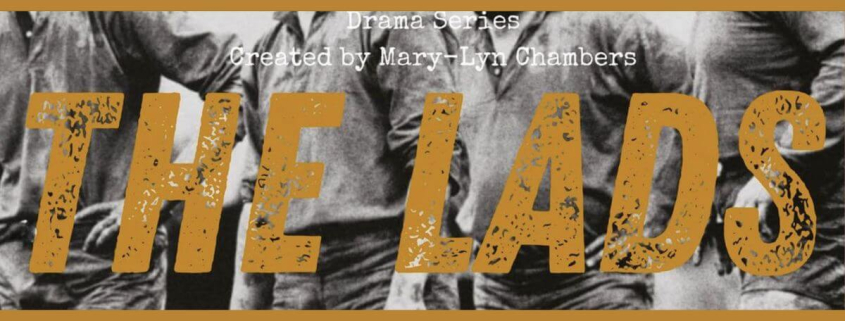
DEGANZ member and 2022 Incubator alum Mary-Lyn Chambers‘ in-development series The Lads has made The 2024 Women’s List.

The Women’s List is an American screenplay competition to bolster women writers in the screen industry. The selected screenplays receive promotion from The Women’s List on their website and social media. Additionally, the selected writers gain access to exclusive development and networking opportunities.

The Lads is a one-hour drama series set in 1981, Wellington. Amidst the violent anti-apartheid protests against the Springbok rugby tour, a former rugby champion’s daughter goes missing, revealing a buried secret about his involvement in the suicide of a young gay violinist. This revelation and disappearance unravel his marriage, friendships, and everything he thought he knew about his glory days on the rugby field.

Mary-Lyn began working on The Lads during her time in the DEGANZ Emerging Women Filmmakers Incubator in 2022. Since then, she’s developed the project further in Keren Green’s Five in a Room writers programme, a writing residency at the Château de La Napoule on the Côte d’Azur in France, and an Auckland Table Reads. She’s now gearing up to present the project to producers for an international co-production.

Congrats Mary-Lyn; we look forward to seeing where The Lads goes next!

Last updated on 31 July 2024

View from the Top banner

While everyone angsts about what the New Zealand Film Commission is or isn’t up to—and frankly I still don’t know either—I thought I’d take a look at the work situation for directors and editors with television/platform content.

Now I’ve been hearing anecdotally that there are a lot of directors and editors out of work, so I looked to what NZ On Air and Te Māngāi Paho have funded this year so far.

According to their websites, in 2024:

NZ On Air funded:

22 Scripted Projects to a total of$26,982,203
10 Factual projects to a total of6$6,186,872
22 Non-Fiction projects to a total of$8,542,922
9 Returning projects to a total of

NB: Genre wasn’t defined but look all Factual

$10,673,286
6 Aotearoa New Zealand Pacific Regional Media Fund projects to a total of$1,859,996

NZ on Air (60%)/TMP (40%) funded:

5 projects to a total of$10,020,333

TMP funded:

8 projects (no info. on genre) to a total of$7,237, 871


All up, that’s 82 projects to a total of $71,503,483


Even though it’s nigh on impossible for a director or editor to make a living in feature film (shorts—foget about it), I thought I should also include what the NZFC has according to its website greenlit for production equity investment so far in 2024:

2 narrative features to a total of$3,687,602

But back to TV/platforms.

So for the half year we have 82 projects across all genres with budgets totalling $71, 503,483.

If we guesstimate that on average at least three directors and three editors will work on each project, that’s 246 jobs for directors and 246 jobs for editors coming out of those projects receiving NZ On Air or TMP funding this year to July 2024.

Let’s imagine that the same number of projects will get funded in the second half of the year so that’s all together 492 jobs for directors and 492 jobs for editors across 2024 with funding from NZ On Air and TMP.

Now we know that a director or editor generally needs to work on at least 2 – 3 projects a year to have any kind of sustainable income.

We also know that not every project happens at the same time, so a director or editor working on one project in 2024 could also be working on one or more projects in the same year. And we know that there’s a contraction in the domestic market going on.

What I’m getting at here is that while it might seem like there’s enough work to go around, there’s also anecdotally a good number of people out of work. The simple deduction from this is that there isn’t enough work for the number of directors and editors out there.

So what’s the answer here? Less directors and editors? Or more work?

Of course, all of us will advocate for the latter. The conundrum is: Where is the money going to come from to fund the work?

NZ On Air thankfully survived the government slashing of budgets with its baseline funding remaining unchanged.

TMP also went into this financial year with an unchanged budget from 2023.

However, Whakaata Māori has announced a decrease of $9.5 million in funding available over the next two years.

The freeing up of the New Zealand Screen Production Rebate (NZSPR) to allow funding from our funding bodies for all genres of content to be combined with the NZSPR is meant to be one solution to creating more work and delivering more production by combining domestic and international financing. The verdict on this is still out.

International productions coming in offer very few work opportunities for our domestic directors and editors.

So what to do? Find more money, right?

I’ve looked at the strategic documents from NZ On Air, TMP, and the NZFC. There’s lots of corporate language about vision, mission, objectives, values, etc. And lots of statements about responsibly managing the money they are given. But nothing about getting more money to disperse.

Nobody is talking about finding more money. Even SPADA’s mutterings about a Love Local campaign around which to build momentum for a streamer levy seems to have been jilted.

More money for domestic production means more work for directors and editors.

It’s pretty clear we need to find new sources of funding to make this happen. And fast. Or we’ll all be looking for below-the-line jobs on international productions, which seems to be happening more commonly now.


Tui Ruwhiu
Executive Director

Last updated on 19 July 2024

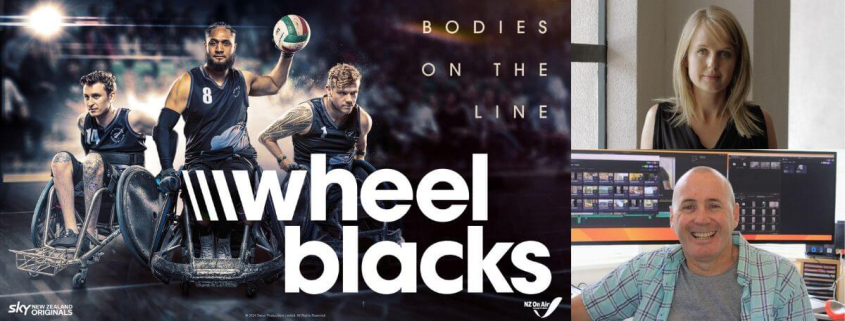
Check out the trailer for the new docu-series Wheel Blacks: Bodies on the Line, directed by DEGANZ Board President Robyn Paterson and edited by fellow DEGANZ member Jai Waite.

The series goes behind the scenes of Aotaroa’s wheelchair rugby team as they battle to rise above declining resources for the chance to qualify for the 2024 Paris Paralympics. The series lifts the lid on the dramatic, hard-hitting, and compelling sport played by athletes affected by a disability. It captures the highs and lows of life as a Wheel Black, both on and off the court. While other high-level international teams have high-performance budgets in the millions, the Wheel Blacks have to rely on fundraising, charity, and volunteers. This lack of resources is seeing player numbers dwindle locally – not only are the team fighting for a place at the Paralympics, but also for the future of a sport that has transformed their lives and is a source of inspiration for many.

Robyn and Jai co-produced the series for their production company, Sweet Productions.

In a recent press release, Jai, a former Wheel Blacks player who helped take home the gold at the 2004 Athens Paralympics, says,

Wheelchair rugby and the Wheel Blacks is a taonga I carry within me that was pivotal in my own journey from accident, through acceptance, to thriving in life with a disability. This year we celebrate 20 years from the peak of the sport with Gold at the Athens Paralympics – it’s important to me that we shine a light on the game here in New Zealand and encourage more players to come through.

Wheel Blacks: Bodies on the Line premieres on Sky Open on 18 August, 8.30 pm, before airing on Sky Sport 1 on 19 August, 8.30 pm (episodes airing weekly). All episodes will be available on Neon from 19 August.

Last updated on 18 July 2024