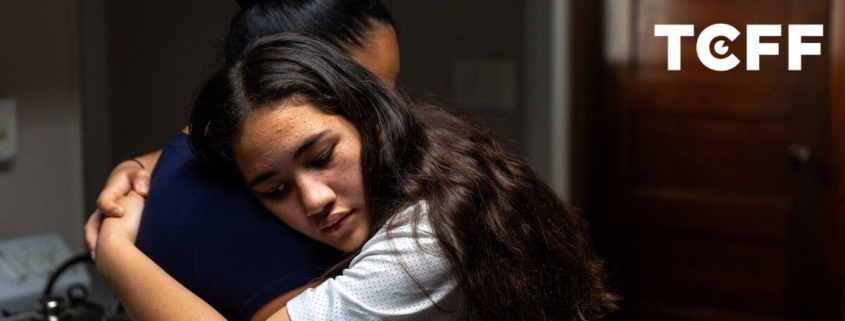
DEGANZ member Giselle Ilaoa celebrated the premiere of her debut short film Teine at the Third Culture Film Festival. The film screened as part of The Bonds that Bind Us programme, a collection of films with themes of putting family before oneself.

Teine focuses on the dutiful eldest daughter within a Samoan household. With the weight of her responsibility and expectations from her family, she struggles to maintain a grasp on her own aspirations in life.

Giselle shared with PISA,

Through ‘Teine’, I aim to share the profound alofa and respect I hold for the women in my life, my elders, and my Samoan heritage, and I hope audiences are able to watch it and feel the same connection woven throughout.

Congratulations Giselle!

Last updated on 14 March 2024

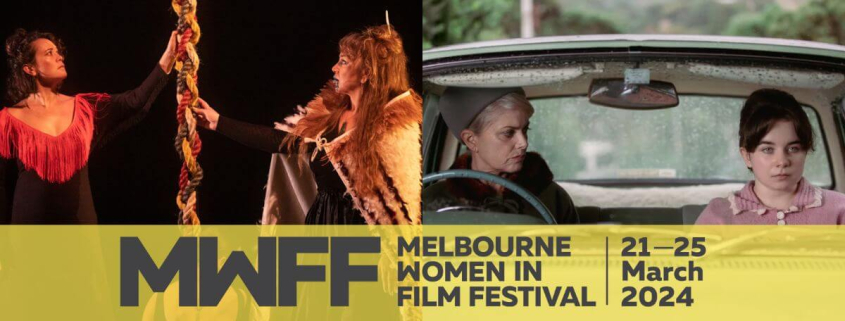
The Melbourne Women in Film Festival (MWFF) recognises Incubator alumni Mary-Lyn Chambers (2022) and Ella Gilbert (Rongowhakaata/Ngāti Kahungunu) (2023) at this year’s festival. Each year, MWFF celebrates women’s stories on screen by facilitating the participation of women and gender-diverse creatives and audiences.

Mary-Lyn’s Karanga is one of two films to open the festival. The 17-minute short is a dance and spoken word exploration of the intersectionality of descendants of both Māori and Pākehā. It centres on the late Tiahuia Te Puea Hērangi Ramahana Gray (Ngāi Tahu, Rangitāne, Tainui), well-known for her extensive public service in Wellington. Her daughter, Merenia Gray, choreographed the piece. The work is a love letter to Tiahuia and a tribute to all mothers. Mary-Lyn and Merenia will both be in attendance at the festival’s opening night.

Mary Mary, written and directed by Ella, will screen in the Freshly Squeezed Shorts 1 programme. Set in 1963 Aotearoa, an out-of-wedlock pregnancy forces 18-year-old Mary to take things into her own hands, at great personal risk. The short was funded and made through the 2022 Someday Stories initiative (now called Day One Shorts).

See the festival’s full programme here.

Last updated on 13 March 2024

View from the Top banner

The proposal by Warner Bros. Discovery to shut Newshub highlights the dismal failure past and present by successive New Zealand governments, bureaucracy and those in the screen sector to grasp the seismic changes that have flowed through our wider industry across the last twenty years, exacerbated in large measure by the global tech giants and streamers, particularly in the last ten.

A large part of the responsibility, in my view, lies with the neoliberal economic reforms brought about by the Rogernomics Labour Government of the 1980s.

New Zealand’s commitment to free trade from both sides of the political spectrum was firmly cemented in the Uruguay Round of the General Agreement of Trade and Tariffs (GATT). We were so determined to open up markets for our agricultural produce and flush with success when the Round concluded in 1994, that we paid scant attention to the potential impact of free trade on our audio-visual and media sectors when we signed up to the General Agreement of Trade and Services (GATS) in 1995. New Zealand was one of only 13 countries that made market-opening commitments in the audio-visual sector, which includes ‘multimedia’ services. Australia negotiated a specific exception. Other countries like Canada and those of the European Union have exceptions like domestic content requirements, screen quotas, divestiture requirements, foreign ownership restrictions and other protectionist measures to ensure their cultures, their stories, and their screen sector and media businesses have an opportunity to adapt and survive in the face of intensifying global competition.

But no, not us.

We have for decades continued down the free market path. Even worse, when the writing was clearly on the wall for our screen and media businesses years ago, we had become so inculcated with a free market mentality that we did practically nothing. And still haven’t.

Our broadcasters and media companies have been screaming till they’re blue in the face that the global tech companies are sucking up all our domestic advertising revenue, making it increasingly unsustainable for them to operate. And the streamers are all getting in on the act now. Meanwhile, the streamers have so dramatically altered the landscape for film and television content that we are struggling to have our cultural voices heard.

While the global entities point to GATT, GATS  and the World Trade Organisation as justification for their right to dominate, we could still have changed our approach and it would have been accepted. But we didn’t. The former Labour Government’s proposed Fair Digital News Media Bargaining Bill and other protectionist measures are ten years too late. And the Bill is looking rather like a deceased feathered thing right now. The current government from the majority of their responses to the Newshub debacle seems relatively unconcerned, believing companies need to innovate to survive and that there are more than enough media voices about.

Meanwhile, international serviced production, the lack of financial support for domestic content creation and the blinkered approach by our screen sector including our funding bodies to identify, truly understand and rapidly adapt to the global shifts in our business, has those of us dependent on domestic production facing a future of dire uncertainty.

Leave it to Winnie to deliver that unexpected twist in the Newshub story: “A critical part of any democracy and free society is the fourth estate and an independent fourth state, and I am concerned about where we are going now,” he said.

I remember the excitement and energy that flowed through the industry when TV3 got going in Flower Street all those years ago. A lot of the people bubbling about the place were journalists but also included all those in the independent sector thrilled that somebody other than just TVNZ would be controlling their future.

It’s a sad day to see the likely demise of Newshub and the loss of the hundreds of jobs that will accompany it, and what it will mean for our democracy and our journalism.

It’s going to be even sadder when the impact of the Warner Bros. Discovery decision and others to come directly shake up our own little corner of the screen universe forever.


Tui Ruwhiu
Executive Director

Last updated on 29 February 2024
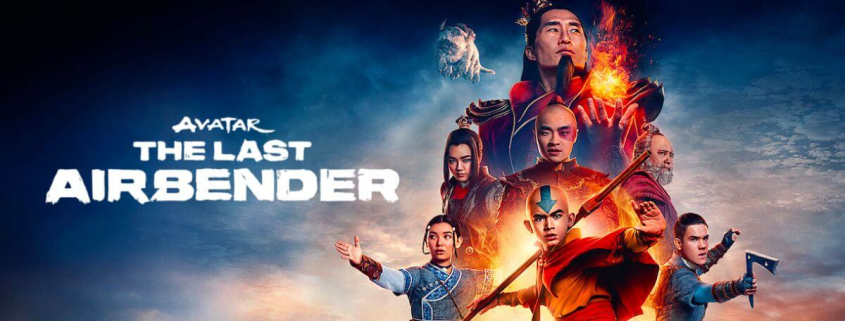
Netflix’s live-action adaptation of Avatar: The Last Airbender takes the number one ranking on the global streaming service, with 21.2 million views (so far!) this week alone. DEGANZ member Roseanne Liang is a series co-executive producer and one of four directors, with fans and critics alike agreeing that her episodes are some of the season’s best.

The series reimagines the acclaimed animated Nickelodeon series of the same name, literally bringing the characters and fantasy world to life. Young Aang, the Avatar and master of all four elements, must hone his powers to save the world rampaged by war at the hand of the ruthless Fire Nation.

Roseanne directed episodes five and six of the eight-part series, which explore the Spirit Realm and dive deeper into the character’s backstories. Episode six, Masks, is receiving particular approval for the way it balances the show’s extensive lore, character development, and action.

All episodes are available to stream on Netflix now.

Last updated on 29 February 2024

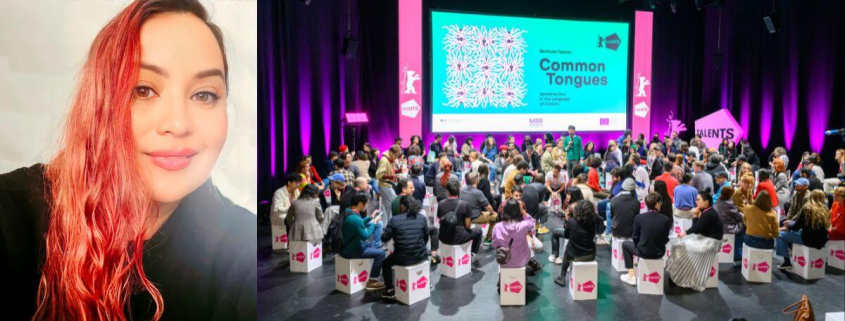
DEGANZ member and 2017 Incubator alum Renae Maihi attended the 2024 Berlinale Talents Summit as a selected writer/director.

Each year, the renowned Berlinale Film Festival hosts the talent development programme to foster the growth of the world’s top emerging filmmakers. Participants attend The Summit in Berlin for a week of discipline-specific workshops, talks with acclaimed guests, and project development labs. They also join the Berlinale Global Community, an exclusive group of filmmakers and professionals to find support, inspiration, and potential collaborators.

This year, Renae and 201 other talents were selected from a record 3,832 applications from 131 countries. She attended the highly competitive programme as the sole participant from Aotearoa and the only Indigenous filmmaker in the group.

She shared with DEGANZ about her time at The Summit,

Highlights of my time at Berlinale Talents include listening to Martin Scorsese and Lupita Nyong’o talk for us about their careers, dinner with director Wes Anderson’s Art Department collaborator, the lovely Simon Weisse, as well as a direct invitation from the European branch of the Academy to be a member. I found some future collaborators who were also talents in the program working at the top level in their countries. Definitely an excellent time in Berlin.

The Summit took place from 17-22 February with the theme, Common Toungues: Speaking Out in the Language of Cinema.

It’s great to see Renae being recognised for her mahi on such a large international scale!

Last updated on 29 February 2024