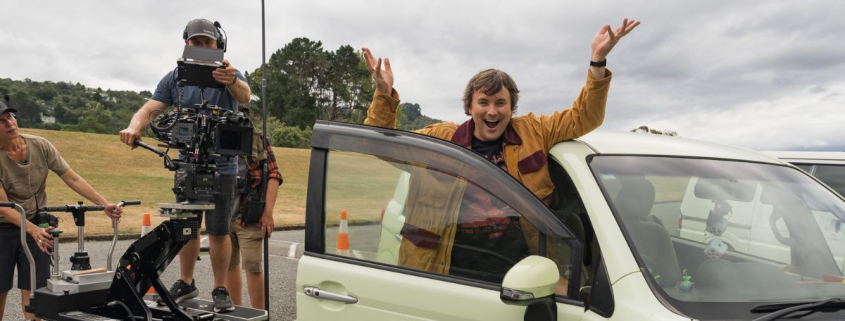

I made my first film when I was about 8. I hijacked my dad’s chonky Hi-8 home video camera, hit record, stopped, then hit record again. I could make people vanish!

In my first year of high school, I made a Star Wars parody about the ozone hole for a social studies project. The ozone molecules did a trench run and blew up the chlorine Death Star and the universe rejoiced. My teacher screened it in the school’s little theatre where I got a standing ovation. 25 years later, I’m still idiotically chasing that rush.

My addiction followed me to university where I formed a film club with the dream of making a feature film. After about a year and a half of begging people for favours (what I believed the role of a director truly was), abusing student loan funds for late-night shoots in between lectures, and editing in my bedroom, we put up posters and sold tickets like drug dealers around campus. (Incidentally, one foolish stranger who handed me cash on the street was Hweiling from a few blog posts earlier). We managed two full houses at the Academy Cinema.

Rocking the Aaton Super 16mm camera for the short film ‘Venture’ / Photo: Supplied

That cheesy Bollywood-inspired musical rom-com was the turning point for me. Word got out that this kid could finish what he started. I met some of my dearest friends and mentors because of that reputation. One of them was Steven Chow, who gave me my first paid gig, assisting him on Kōrero Mai. Not long after that, my name got put forward for an Online Editor job. I didn’t tell anyone that I’d never worked as an Offline Editor before. It turned out just fine – I had already suffered through years of Avid clunkiness and had even begun to love it.

Left: Timeline for NHNZ doco, Right: Jack’s Edit Suit at NHNZ / Photos: Supplied

After each gig, I faced unemployment and contemplated changing careers. But at the last moment, there would be a call or email, buying a lifeline of another few weeks or months. I’m constantly amazed that I’m still even in this industry.

I went from editing at TVNZ on FRESH, to NHNZ Dunedin where I worked not only as an editor but also writing and directing factual programmes at an international scale. I had stints in China and India, as well as time in Samoa with my ‘film family,’ Stallone and Abba-Rose Vaiaoga-Ioasa. As their editor and camera assist on Three Wise Cousins and Take Home Pay, I got a front-row view of how they make feature films #forthepeople. Covid hit and I directed live streams for Tourism New Zealand’s Chinese market, directed/edited TVNZ food show Sik Fan Lah! and became a drone pilot. That lifeline continues even now, as I start my next job editing season 7 of Ahikāroa.

Shooting ‘Sik Fan Lah!’ (Left: rugged shoot in Wellington, Right: shooting Sam Low’s meal) / Photos: Supplied

Yes, I edit – it’s how I get fed. But I never saw myself as an editor. I also love writing and directing – it’s just hard to make a living that way. Good editors are forever in demand (we fix things), while directors just cause problems (half joking). The latest problem I’ve caused is an NZFC kung fu short film, Let’s Settle This!, which may just top my Ozone Depletion Trilogy. I can’t wait to share it with you all.

I reckon this blog should be called ‘How I’m Always Starting In This Industry.’ Everyday feels like step one, not knowing if there will be a step two, but at least I’m buff as because of all the treading water I’ve been doing. But I guess if I look back, there are plenty of mountains that I’ve crossed.

If there’s something to take away from my rambling journey, it’s that starting is the easiest part. What’s hard is finishing.


About Jack Woon

Jack Woon is a Kiwi-Malaysian filmmaker with two decades of experience in escaping boxes and labels. He enjoys practising his diverse skills as a director, writer, editor, cinematographer, drone pilot, engineer and coffee maker – anything to do with sharing his love for unique visual stories. As a cross-cultural nerd, he has worked on Samoan comedy feature films (Three Wise Cousins, Take Home Pay), Kiwi shows (Teine Sā: The Ancient Ones, SIS, Ahikaroa) and directed factual TV in China and India for National Geographic, Discovery and Tencent Video. He wrote, directed and edited Sik Fan Lah!, a Chinese food series, which rated in the top 10 of locally funded shows. He has put his love for food and kung fu together into an NZFC short film, Let’s Settle This!, now beginning its festival run.


How I Got Started in the Industry is a guest blog series from the Directors and Editors Guild of Aotearoa New Zealand (DEGANZ). Our members reflect on how they made their way into assistant editing, editing, and directing—with no two stories the same. They offer advice for those starting out. Get in touch with admin@deganz.co.nz if you’re a member and would like to share your story.


Last updated on 9 April 2025
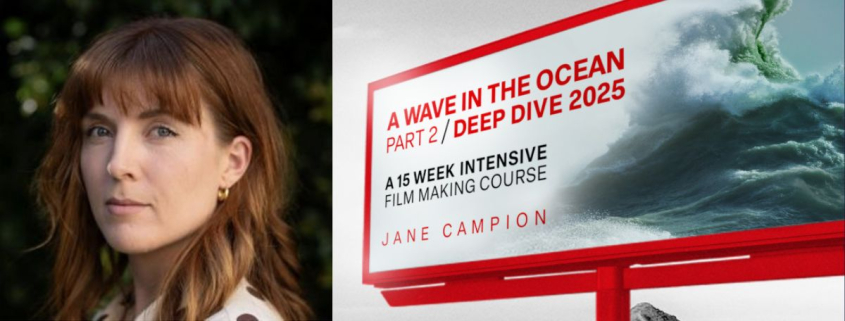
Congratulations to Incubator alum Isla Macleod (DEGANZ) for being selected for the second iteration of A Wave in the Ocean (AWITO).

Through the professional development programme, the seven selected filmmakers will engage in a full-time 15-week film intensive course in Te Whanganui-a-Tara Wellington. Under the guidance of Academy Award-winning writer and director Jane Campion, they will also receive funding to practice their craft with a short film.

AWITO is founded on the belief that filmmakers have a sacred psyche that dreams to express itself poetically, humorously, and dramatically through visual storytelling. The students will learn through experience, explore their curiosity, and learn the balance of risk and ambition.

All the best to Isla and the other participants as the course kicks off this month!


Last updated on 27 March 2025

DEGANZ members Ghazaleh Gol and Calvin Sang are directing the upcoming comedy mystery series Small Town Scandal for Sky NZ Originals.

Adapted from comedian Tom Sainsbury’s hit podcast, the show follows disgraced journalist Toby (played by Sainsbury) as he investigates the suspicious lawn mower-related death of his millionaire uncle. As Toby dives into the whodunnit mystery set in the fictional town of Te Hōiho, the show questions which of the quirky small-town suspects is behind the scandal.

While Sainsbury voiced all the characters on the podcast, he will be joined by Morgana O’Reilly, Alexander England, and more to fill out the show’s zany cast of characters.

Small Town Scandal is currently filming in Te Whanganui-a-Tara Wellington and is set to come out later this year. We look forward to watching!


Last updated on 26 March 2025

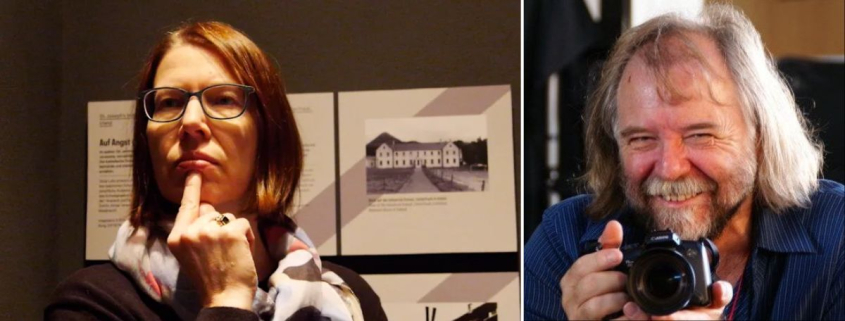
DEGANZ member Tony Forster is crowdfunding on Indiegogo for his second documentary feature Abducted.

In 1973, nine of Anke’s extended family were arrested by the Stasi in East Germany for trying to escape to the West. At just two years old, she is taken from her family and put in an institution for political prisoners. Five turbulent years later, two strangers appear to take her to the West where she is reunited with her mother and father. However, she does not recognise them and the reunion feels more like another abduction to the young girl.

Now Anke returns to East Germany with her husband and children for work. Being back at the place of her childhood trauma brings forgotten and repressed memories to the surface. Through the film, she seeks to tell her story to not only process her past but to promote the need for the world to care for all children living in political conflict.

Abducted has been a long time coming, as Tony and Anke met while he was making his first feature An Accidental Berliner. So moved by her story, Tony promised to return to Germany to put her story on the screen. And after many years of delays, Tony is back in Germany to do so.

The mostly self-funded film is looking for a $5,000 boost to ensure the next shooting period is able to be completed.

You can find out more about the project and donate on Abuducted‘s Indiegogo page.


Last updated on 27 March 2025

View from the Top banner

The success of director Miki Magasiva’s Tinā in theatres brings into focus theatrical exhibition at a very relevant time with the Ministry Of Culture and Heritage’s Media Reform Discussion document out for feedback.

Tinā ranked the third-biggest opening week for a New Zealand film, behind Hunt for the Wilderpeople and Sione’s 2: Unfinished Business.

In only its second week of release, last weekend’s attendances saw Tinā’s total take increase to $1,992,389 at the NZ Box office, pushing it into the top 10 films in NZ of all time.

At a time when streamers, digital convergence and a high cost of living are supposedly ringing the death knell of theatrical, it’s clear that Kiwis will still turn out to theatres for a film that resonates.

And it’s not just in New Zealand.

Reported in screendollars.com, “the popularity of movie going in China fueled a US $3.8 billion global box office take for February 2025. This made February the second highest grossing of the decade to date, only falling behind July 2023 when the ‘Barbenheimer’ phenomenon drove receipts. What’s more, it also meant that Global results topped the pre-pandemic three-year average (2017-2019) by 7%.” And it’s Chinese films that often drive the box office there. Read the full article here.

In France, where film is seen as a key component of French culture, Le Monde reports that The French industry recorded a million more cinema-goers in 2024 compared to the year before and is back to the same level of revenues as the pre-Covid era, setting it apart from its peers, industry figures show. The French being French, they ensure through government policies, various incentives, taxes and fees that French film production and distribution is well funded, and that French audiences get to see films at reasonable prices. Read more here.

While other European countries aren’t faring quite as well as France, The European Audiovisual Observatory told us at the end of last year “that cinema attendance in 2024 was down 2% over 2023, and that it appears to have settled at around 24% below pre-pandemic levels (2017–2019), suggesting that the post-pandemic rebound has run its course and that the market may have reached a new equilibrium.” Read here.

Back home in New Zealand, we can see similar indicators from box office numbers thanks to Box Office Mojo, with a decrease in receipts in 2024 from 2023 at a higher 10%, and a drop of around 28% from pre-pandemic levels in that 2017 – 2019 period. Whether or not we are reaching a new equilibrium or not here is unclear, at least to me.

New Zealand Yearly Box Office

Data as of Mar 11, 19:47 PDT

YearTotal Gross%± LY
2025$13,488,156–
2024$87,786,884-10.4%
2023$98,018,580+9.8%
2022$89,227,396+37.5%
2021$64,881,995+0.4%
2020$64,631,961-47.6%
2019$123,284,717+6.7%
2018$115,590,406-7.4%
2017$124,828,159-12.6%
2016$142,847,305+11.3%
2015$128,323,590-9.1%

Source: Box Office Mojo


Our domestic film ecosystem is far more fragile and far less supported than in Europe, which is why it’s so important for Kiwis to keep turning out for New Zealand films, as encouraged to in this RNZ article here.

But that isn’t to say that every Kiwi film has to be a box office smash to be a good film. More importantly, it has to find its audience, both domestically and internationally, whether that audience be niche or broad.

In the meantime, let’s celebrate the success we are having. Congrats, Miki and team!


Tui Ruwhiu
Executive Director


Last updated on 9 April 2025