View from the Top banner

The Copyright Act Review is back on, with a proposed Stage 1 set of proposals being finessed for feedback.

Although we lobbied long and hard on behalf of directors in the previous review started in 2017, the whole review was ultimately put in the too hard basket in 2020 by the government. COVID didn’t help.

DEGANZ has been seeking shared copyright for directors with producers since 2005.

The NZ Copyright Act says that the author and therefore the copyright holder is “in the case of a sound recording or film, the person by whom the arrangements necessary for the making of the recording or film are undertaken.”

The default interpretation of this has long been that it is the producer who does this, therby making them the author, and thus the copyright holder.

Our position though is that the Director is the creative decision maker in a process of artistic collaboration who takes final responsibility for the aesthetic cohesion and artistic integrity of the work. One of the elements the Director uses to create the final work is the screenplay. The other underlying elements include the actors’ performances, cinematography, the production design, the wardrobe and makeup, the editing, the musical score, the sound design, etc. These are underlying works that contribute to the film through the talent of the Director.

Just as the writer is the “author” of the screenplay, and the composer is the “author” of the musical score, the Director is an “author” of the film or audiovisual work.

What has prompted the government to put the Copyright Act back on the table is the major transformation brought about by the digital age, and the scary beast that is AI. As well, it has obligations to address certain copyright requirements that were put in place with both the recent UK and EU Free Trade Ageements (FTAs).

As part of the representations we made on behalf of directors as the FTAs with Europe and the UK were being negotiated, we highlighted:

  • In the UK, their copyright act stipulates that the producer and the principal director are joint copyright shareholders of the film.
  • In the EU, an EU council directive requires all European member states to recognise the principal director of a film or audio-visual work as an author—and therefore first owner of copyright of that work.
  • In more than 37 other territories around the world, the director is the primary copyright holder in the work.

As directors are already recognised as authors with moral rights over their work under the NZ Copyright Act, you’d think it was a no brainer for government to accept that the economic rights conferred by copyright would go to directors, too. But no, that logic has proven one step too far for our beaurocrats and ministers to get their heads around since we started way back when.

We are back at it in this stage of the review, though. Even though it’s not on the government’s agenda at this point.

It’s a long hard row that we have to hoe until plain common sense sees through.


Tui Ruwhiu
Executive Director

Last updated on 26 June 2025
Whānau Mārama New Zealand International Film Festival (NZIFF) is back for 2025 and is bigger than ever. This year will feature a selection of around 100 films across the four main cities and six regions across Aotearoa.

11 DEGANZ members have worked on eight films in the lineup this year, most of which make up the new Ngā Whanaunga: Aotearoa New Zealand’s Best programme.

Artistic Director Paolo Bertolin comments on this year’s selections, saying,

NZIFF continues to be where audiences discover New Zealand films before the rest of the world. This year’s programme will […] include local stories that are ready to make their mark internationally.

Check out the films from DEGANZ members below and keep up to date with NZIFF to know when you can catch them on the big screen!


Māhutonga Strand


TOITŪ Visual Sovereignty

Editors: Cushla Dillon, Brendon Chan and Huhana Ruri-Panapa

Unprecedented insight into the curation of the Toi Tū Toi Ora: Contemporary Māori Art exhibition reveals the struggle for Māori artistic sovereignty within the structures of Aotearoa New Zealand’s cultural institutions.


Ngā Whanaunga: Aotearoa New Zealand’s Best


Since 2012, NZIFF have curated both the New Zealand’s Best and the Ngā Whanaunga Māori Pasifika short film programmes. This year, it has evolved to Ngā Whanaunga: Aotearoa New Zealand’s Best, combining the two programmes. The films will screen in two parts: Programme One and Programme Two.

Chrysanthemum

Writer/Director: Jolin Lee

Editors: Jolin Lee and Steven Chow

When her child mysteriously vanishes in a garden centre, an anguished gardener develops an unhealthy relationship with a chrysanthemum plant.

Growing Still

Editors: Adam-Luka Turjak and Margot Francis

An elderly woman wilting away in a retirement home longs to commune with the vibrant natural world outside. This magical short offers a positive spin on our impending mortality.

I Am Not Your Dusky Maiden

Writer/Director: Vea Mafile’o

Ala is a Samoan woman living with dissociative identity disorder. In therapy, she shifts between different versions of herself — from young Flo to fierce ancestor Puipui — and confronts her deepest trauma.

Let’s Settle This

Writer/Director and Editor: Jack Woon

Two kung fu masters meet in a Chinese diner via a dating app and turn to the art to settle scores.

Puti

Writer/Director: Aroha Awarau

It is a hard life on the street for Puti; perhaps she best not follow her mother’s footsteps. With hope, there is another journey, another possibility.

Stage Challenge

Writer/Director: Stella Reid

Shy Ali joins a group of zealous schoolgirls creating a stage challenge concept that will both wow audiences and distract the girls from their concerns for the future.

Womb

Writer/Director: Ira Hetaraka

A young filly struggles to break from the stable in this absurd and wildly original fable, starkly reminding us of the past dehumanisation of Indigenous whānau.


Last updated on 28 January 2026

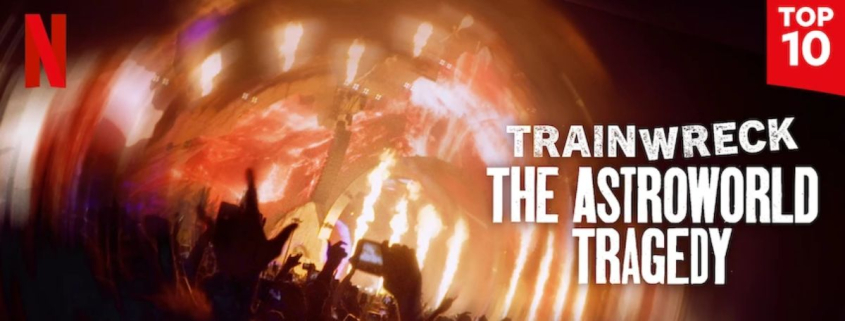
DEGANZ member Jesse Dixon edited Netflix’s recently released documentary Trainwreck: The Astroworld Tragedy. Currently, it ranks third on Netflix’s global top 10 movies.

In 2021, hundreds of people were injured and ten were killed in a crowd crush during the headlining performance at Travis Scott’s Astroworld music festival in Houston, Texas. The film unpacks the logistical failures and the tragic consequences through exclusive interviews with survivors, paramedics and festival staff. Additionally, compiled footage from concertgoers’ phones brings viewers into the heart of the crowd, demonstrating just how extreme the crowd was on the day.

The film is the first of Netflix’s documentary anthology series exploring massive event disasters that made global headlines, created corporate scandals, and cost lives. Other topics covered later in the series include the infamous Poop Cruise and storming Area 51.

Congrats to Jesse and the rest of the team on Trainwreck: The Astroworld Tragedy’s success!


Last updated on 26 June 2025

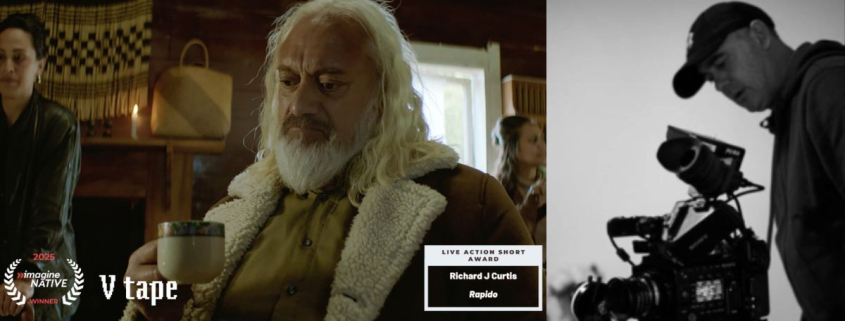
Congratulations to Ricard J Curtis (DEGANZ) for winning the Live Action Short Award with Rapido at the 2025 imaginNATIVE Film + Media Arts Festival! This is an Oscar-qualifying category, meaning the film is now eligible for consideration for the Academy Awards in the Best Live Action Short Film category.

Rapido follows a young Māori boy whose fascination with war comics comes closer to home than he could ever imagine when he discovers his estranged grandfather was a World War II veteran.

In Ngā Aho Whakaari’s media release, producer Lea McLean comments on the film saying,

Rapido explores intergenerational trauma, inspired by Richard’s childhood and his uncle’s untold struggle with ‘Shell-Shock’. This story honours the sacrifices of Māori soldiers and highlights the enduring impact of PTSD on their whānau at home.

The short was made through Ngā Aho Whakaari’s short film development programme, Aho Shorts, in 2024.

It’s great to see local indigenous films recognised on the global stage!


Last updated on 26 June 2025

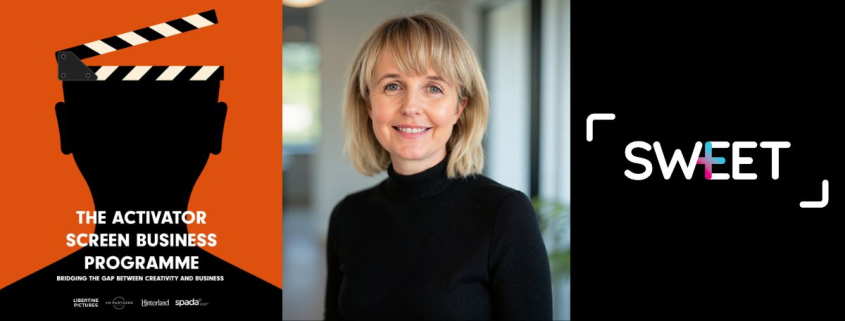
Award-winning documentary filmmaker and DEGANZ board member Robyn Paterson is one of 12 producers selected for the Activator Screen Business Programme.

Activator is an international business development initiative designed to build export capability within Aotearoa’s screen production sector. Across the second half of 2025, Robyn and fellow participants will engage in an intensive programme of industry workshops, international market visits to Sydney, London, and Los Angeles, and expert business training.

The programme describes the cohort as “some of the most entrepreneurial and ambitious screen talent in Aotearoa – working across film, television, documentary and factual – and are now poised to take their projects and businesses to the global stage.”

Robyn is taking part in the initiative with her production company, Sweet Productions, an innovative disability-led company established to bring purposeful, authentic and diverse content to a wide audience spectrum. Her credits include Down for Love, Grand Designs NZ, Finding Mercy, and Licence to Drive.

Massive congratulations to Robyn and all the best for the programme!


Last updated on 26 June 2025