
DEGANZ’s Izzi Hoskyn sat down with award-winning Colourist Damian McDonnell to take a peek behind the curtain of the craft of colour grading.

Damian has over twenty years’ experience as a colourist and editor in both Hollywood and Aotearoa. He began his career as an assistant colourist on The Lord of the Rings: The Two Towers and The Return of the King. From there, he worked as a colourist at Laser Pacific and Technicolour Hollywood in LA for six years, working on blockbusters such as Life of Pi, TRON Legacy, and multiple Avengers films. When he returned to Aotearoa, he worked at Park Road Post for eight years, having a hand in various projects and taking on the role of on-set colourist and supervising colourist for Mortal Engines. His recent work includes Ti West’s X and Pearl and Taika Waititi’s Our Flag Means Death and Time Bandits. In 2024, Damian won the prestigious Hollywood Professional Association (HPA) award for ‘Outstanding Colour Grading – Live Action Episode or Non-Theatrical Feature’ for his work on Time Bandits.

In this first iteration of our new blog series, A Kōrero With…, Izzi and Damian discuss a colourist’s role and how the colour grade is the final piece of the puzzle on a project, taking it to the next level.


Izzi: In fairly simple terms, what does a colourist do? 

Damian: A colourist’s intent, at its most simple, is to put the filmmaker’s vision on screen. So whatever the director’s or cinematographer’s intent is, I help them achieve that look.

Izzi: Who else in the production do you work closely with?

Damian: When working with clients, the most important relationship is with whoever makes the creative calls in the room. Sometimes there are a lot of people in the suite, sometimes there’s just a director or a cinematographer. Whoever it is, that relationship is paramount. When a client gets to know you and how you work, then it becomes a fun environment and one where they can just trust you to work.

Izzi: And on the more technical side, you’re working closely with an online editor?

Damian: Yeah, the technical relationship with an online editor is also very important. Their main function is to translate the timeline into the grading system. There’s crossover with what they and a colourist do, so it’s important to work out what areas you each cover. That can be things like stabilisation or basic effects like paint-outs.

The online editor that I work with at the moment is a guy called Antonis who lives in Greece. He onlines for me overnight, and then I wake up in the morning, have a chat with him, and get underway. He’s a creative editor, but he’s also technically very, very good. And so we’ve got a great working relationship; it’s very efficient. And we use the time difference to our advantage.

Some of the productions Damian has colour graded.

Izzi: What’s your creative process in the role, and what do you bring to each project? 

Damian: Every film is different when you grade it. I don’t like to say I’m a certain type of colourist, because I’m responding to the demands of the client. I believe you can grade creatively for any genre or any type of film. I’ve worked on everything from tiny budget films to some of the biggest blockbusters in the world. But I approach them all roughly the same.

Firstly, you watch the film, do a continuity pass, and spot any issues. Then you do a creative pass. And then I do what I call a windows pass or a secondary pass where you start isolating various parts of the image. But at that stage, you’re improving the film bit by bit. I like to work on the whole film rather than get bogged down in tiny details at the start and leave that towards the end.

Left: Damian at work / Right: Damian’s suite while working on Kirsty Cameron’s ‘The Garden Room’

Izzi: Do you feel that you can bring your expertise in colour into the conversation from the get-go or do you leave it up to the director or DOP to first bring their thoughts forward?

Damian: It depends on the relationship with the clients. But I always think that people are hiring me for my artistic ability, not just my technical ability.

I like to put my point of view forward, but ultimately, I always understand that these aren’t my images. These are the director’s or cinematographer’s images and I’m there to help them achieve their look. But it’s best when it’s collaborative. 

And I like to make it an enjoyable experience. You’re at the end of a very long road when you get to the colour grading suite, and it’s the last stage before your film is distributed for everyone to see. I like to try and take that stress away from the final delivery and so people can finally see their film in its completion.

Izzi: It’s like the last piece of the puzzle. You can finally step back and see it all as one cohesive work.

Damian: I’m gonna steal that. It’s a really great stage of the process; it’s really fun.

Izzi: What has been a career high for you?

Damian: There have been a few!

My very first film was The Two Towers, and that’s how I learnt to colour grade. Digital intermediate (DI) was a new process, so there was no manual for the software and initially no one to teach me. I literally sat down, pushed buttons, and wrote down what it did. It was such an exciting time being part of something that you knew was going to be an important film.

More recently, I worked with Ti West on X and Pearl, which were shot in Wanganui. They were shot on the same camera three weeks apart, same main actress, same location, but they looked wildly different. Which mostly comes down to the grade. Ti wanted X to look like the Texas Chainsaw Massacre, and Pearl was meant to emulate the Technicolour 3-strip look, and our reference was The Wizard of Oz. So our starting point was similar, but the end products were very different. I’m very proud of those two films. And I think it’s a good example of what you can do as a colourist. You can really bring a strong creative look to a film.

Side-by-side comparison of the colour grade of ‘X’ (left) and ‘Pearl’ (right).

Last year, I won an HPA award for colour grading the TV series Time Bandits. There aren’t many colour grading awards around. It’s an overlooked profession, so it was really nice to be there. I was sitting next to Dave Cole, who taught me to colour grade, and he won for his film. So that was a particular highlight, both of us being in LA and both winning awards.

Izzi: Congrats! That’s a massive achievement.

Damian: It was neat working on Time Bandits. Every time the characters went through a portal, it had to look quite different from the previous world that they’d been in. And so creatively, I was always being pushed to create more and more looks. As a colourist, it was kind of a dream job in that way. It was difficult because we were working on ten episodes at the same time, but it was an exceptionally fun show to work on.

Damian accepting his HPA Award for Outstanding Colour Grading for ‘Time Bandits’

Izzi: What’s something you wish collaborators knew when working with a colourist? 

Damian: One of the most important things a collaborator should know is the importance of being decisive. Colourists can develop and put forward looks, but if you change your mind a lot, you waste a lot of time redoing work.

By that, I mean, you never really finish a film, you just run out of time. So using your time wisely, even though that sounds boring, is really important. I always work out a schedule of targets for my passes so I know how long to spend on each one. Being able to make decisions upfront helps a lot.

The other thing is allowing me time to do something. It’s not a magic button. So, knowing that if I say it’s going to take a certain amount of time to do something, it’s going to take that amount of time.

Izzi: In terms of being decisive from the beginning, what can directors do to prepare for that?

Damian: It helps when people come along with a preconceived idea of what they want. I will often ask people to bring in their lookbooks if they want and try to use their ideas as a starting point. But being open to other ideas is great and fun. And they might be surprised by what I can do and what I bring to it.

Izzi: There’s that artistic touch to it. The colour grade is one of the parts of the film where it can elevate your film and take it to the next level. 

Damian: I think that you touched on something important.

It probably took me like three or four years before I felt comfortable being a colourist. It’s not just a technical skill; it’s a creative skill. And that’s what draws me to it. It’s sort of a merging of the two, but it is a discipline that you really have to learn, and it takes practice. There’s a lot more to it than just knowing how to use the software.

A good colourist can really add an amazing amount of value to a project, especially on low-budget films. It can take it from looking like a sitcom to looking like a piece of cinema.

Izzi: Thank you so much for taking the time to share your knowledge of colour grading. It was super insightful and can hopefully prompt our members to seek out a strong colour grade in their own projects.


This interview has been edited for brevity and clarity.


Last updated on 1 September 2025

DEGANZ is thrilled to announce the Aotearoa New Zealand directors attending the 2025 Melbourne International Film Festival’s (MIFF) Accelerator Lab.

Ira Hetaraka, Lucy Suess, and Raymond Edwards have been selected by MIFF to attend the Accelerator Lab, alongside their films screening in the Accelerator Shorts programme.

Additionally, DEGANZ has selected fellow directors Aroha Awarau, Jolin Lee, Maza White, and Saito Lilo to attend the Lab as Express participants.

The Accelerator Lab is designed to help short film directors move towards their first long-form work. Across four days during the festival, participants attend workshops, screenings, seminars, and networking events to learn more about the creative and business aspects of filmmaking.

DEGANZ is proud to be managing the participation of the New Zealand filmmakers through the Lab with the financial support of the New Zealand Film Commission. Executive Director Tui Ruwhiu will be attending MIFF to assist Aotearoa’s participants, observe sessions, and contribute to panel discussions.

2025 MIFF ACCELERATOR LAB NEW ZEALAND DIRECTORS

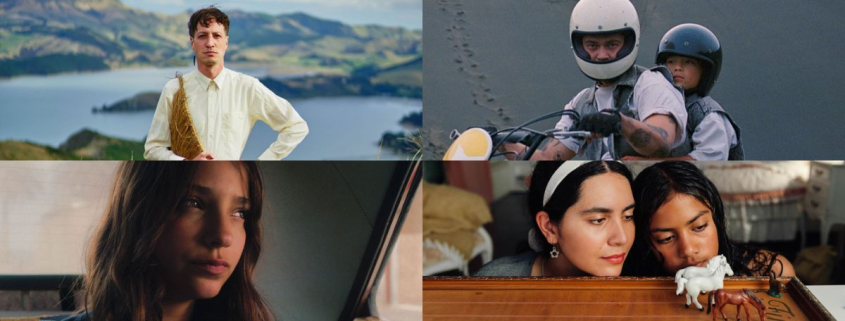
Ira Hetaraka is an emerging Māori filmmaker who aims to tell intimate and entertaining indigenous stories that explore class, identity, and desire from an authentic perspective. She studied film and screenwriting at UCLA School of Theatre, Film & Television in LA before relocating back to Aotearoa to work in distribution at Vendetta Films, Madman Entertainment and Rialto Distribution and as the Director’s Assistant on numerous AppleTV+ and Netflix Series. Ira’s debut short film Womb world premiered at Tribeca Film Festival in NYC and played Sydney Film Festival as part of its First Nations Award category. It will play at NZIFF: New Zealand’s Best, Melbourne International Film Festival, and others to be announced. Ira is currently based in the UK, where she is working on the development of her debut feature film.

Womb
A young Māori girl is caught in a racially loaded custody battle between her conservative adoptive parents and her birth mother. Born of experiences that shaped her own childhood, Ira Hetaraka’s moving debut is a tough and tender exploration of family, cultural displacement and the ways in which systemic power continues to impose Western prejudices on First Nations peoples.


Ray Edmonds is a director/cinematographer who has been working in the film industry for 15 years, working his way up through the camera department, from clapper loader to DOP. Coming off of his award-winning seven year career as a cinematographer (Al Guilford Emerging Cinematographer Award, feature films Cousins and We Are Still Here, and countless commercials and short films), Ray looks to bring that knowledge and talent to directing his own creative projects. In 2021 he released his debut short film, True Love, and more recently, has been directing commercials with production company Collider. He is currently developing the feature True Love and series Hotel Matipo. Ray grew up in the Bay Of Plenty, in his Maori culture and around the marae. He is a fluent speaker of te reo and an active member of his community in his iwi of Te Whakatohea.

ACE
Riding along with his imaginary daredevil friend ACE, six-year-old Jimmy sets out on an epic quest to save his parents’ marriage. We Are Still Here cinematographer Raymond Edwards makes a vibrant directorial debut with this wonderfully bright and visually inventive adventure. The fanciful world of imagination and play doubles as a beautiful portrait of a young child connecting with his whakapapa. Featuring a soulful soundtrack in te reo by Aotearoa musician Mara TK.


Lucy Suess is a New Zealand-American writer/director/editor based in New York City. Her award-winning shorts, Shadow Cut and Pack Rat, have screened at leading festivals around the world, including Toronto and Melbourne International Film Festivals, Atlanta and New Orleans Film Festivals and Tallinn Black Nights, earning awards in Directing, Screenwriting, Cinematography and Acting. She has received funding grants and talent development opportunities from the New Zealand Film Commission and was mentored by Dame Gaylene Preston. Lucy is currently developing her debut feature films, Needles Inn and Big Sky.

Pack Rat
Baby Teeth is forever out to prove she’s one of the guys: talking shit, stealing beer, accepting dares. But will she take it too far? Lucy Suess’ depiction of a teenage girl trying to find her place among a group of male friends gets to the heart of a complex, often contradictory, adolescent desire: wanting to preserve your identity while fitting in with the crowd. An endearing slice of rural New Zealand, Pack Rat comes complete with a needle-drop of Garageland’s Flying Nun classic ‘Fingerpops.’


2025 MIFF ACCELERATOR EXPRESS LAB NEW ZEALAND DIRECTORS

Aroha Awarau is an award-winning playwright and filmmaker. His short film Home (2015), which he wrote and produced, was followed by Disrupt (2020), for which he was the screenwriter and associate producer. Most recently, he directed Puti, which is nominated for Best Short Film at the 2025 New Zealand International Film Festival. Films Maisuka, a documentary he directed, and Cherries, a romantic comedy which he wrote, are also currently screening at film festivals. He is developing his first feature film, Hidden, a story about human trafficking in Auckland, which was written during the screenwriting accelerator at Māoriland, a residency for indigenous filmmakers supported by Sundance and imagineNATIVE. He is also writing Redemption League, a feature film about a troubled and disgraced rugby league star who finds purpose and redemption in prison.

Jolin Lee is a non-binary narrative filmmaker of Singaporean Chinese heritage, based in Tāmaki Makaurau. Jolin explores themes of family, community, and sociology through narrative analogies. Their debut short Ur Dead to Me screened at numerous festival audiences in 2018 including the Academy Award qualifying Palm Springs Shortfest. In 2019, Jolin served as a writer and editor for the award-winning local series The Eggplant. In 2022, Jolin was part of the DEGANZ Emerging Women Filmmakers Incubator to develop their feature film, as well as the Episode One pilot development programme through the PASC. Their third short film Chrysanthemum, funded through the NZFC’s Catalyst programme, is set to screen in NZIFF’s NZ’s Best programme in 2025. Jolin is also a creative and the current head of post production at Auckland advertising agency Motion Sickness.


Saito Lilo traces his ancestry to the villages of Gagaifo, Matafa’a and Moata’a in Samoa. He is a proud resident of South Auckland, which inspired his award-winning debut short film, The Last Sunday. It explores the tension between money and church in a Pasifika community. The film won the Wellington UNESCO City of Film Award for Best Short Film at the New Zealand International Film Festival Ngā Whanaunga Māori & Pacific Shorts programme in 2023. Saito is a graduate of the Unitec Performing and Screen Arts programme, specialising in writing and directing for screen and theatre. He was selected as one of seven students in Jane Campion’s prestigious A Wave In The Ocean filmmaking programme and is currently part of the 2025 cohort.


Maza White is an Iranian-born writer and director based in Aotearoa. She speaks multiple languages and has lived across several continents, giving her work a deep, cross-cultural perspective. Her NZFC-funded short film Daughter of God won Best Screenplay at the 2023 Show Me Shorts Festival and was selected by Niki Caro for NZIFF’s New Zealand’s Best. She holds a Master of Creative Writing and is an alum of DEGANZ’s Incubator and Script to Screen’s FilmUp, where she was mentored by Garth Davis. Maza is fascinated by the nuanced layers beneath character behaviour. Her voice is raw, visceral, and intuitive, with a controlled intensity shaped by years of dedicated craft. She often explores themes of identity, belonging, and female resilience.


Last updated on 24 July 2025

Congratulations to the DEGANZ members whose films have been selected for the Melbourne International Film Festival (MIFF)!

Marlon Williams: Two Worlds – Ngā Ao E Rua, edited by Josh Yong (DEGANZ), is screening as part of the Music on Film programme. This collection of films showcases cinematic explorations of sound, performance, and the stories behind music.

Fellow DEGANZ members Raymond Edwards, Lucy Suess, and Ira Hetaraka have films in the Accelerator Shorts programmes. In addition to their work screening in the festival, the writer/directors will attend the corresponding Accelerator Lab. The professional development programme is aimed at nurturing the selected directors on their journeys towards their first long-form work. The four-day lab includes workshops, screenings, seminars, and networking events focusing on the business and creative aspects of the film industry.

Features

Marlon Williams: Two Worlds – Ngā Ao E Rua

Editor: Josh Yong

Feeling burnt out from the touring cycle, acclaimed New Zealand musician Marlon Williams returns to his quiet coastal hometown of Ōhinehou/Lyttelton to work on a life and career-changing undertaking: recording an album, Te Whare Tīwekaweka, in his ancestral language of te reo Māori. Using song to explore his split cultural identity – part pākehā, part Māori, from both Ngāi Tahu and Ngāi Tai iwi – the project finds Williams reconnecting with his heritage, deepening his community and reclaiming his reo.

Shorts

ACE

Writer/Director: Raymond Edwards

Riding along with his imaginary daredevil friend ACE, six-year-old Jimmy sets out on an epic quest to save his parents’ marriage. We Are Still Here cinematographer Raymond Edwards makes a vibrant directorial debut with this wonderfully bright and visually inventive adventure. The fanciful world of imagination and play doubles as a beautiful portrait of a young child connecting with his whakapapa. Featuring a soulful soundtrack in te Reo by Aotearoa musician Mara TK.

Pack Rat

Writer/Director: Lucy Suess

Baby Teeth is forever out to prove she’s one of the guys: talking shit, stealing beer, accepting dares. But will she take it too far? Lucy Suess’ depiction of a teenage girl trying to find her place among a group of male friends gets to the heart of a complex, often contradictory, adolescent desire: wanting to preserve your identity while fitting in with the crowd. An endearing slice of rural New Zealand, Pack Rat comes complete with a needle-drop of Garageland’s Flying Nun classic ‘Fingerpops.’

Womb

Writer/Director: Ira Hetaraka

A young Māori girl is caught in a racially loaded custody battle between her conservative adoptive parents and her birth mother. Born of experiences that shaped her own childhood, Ira Hetaraka’s moving debut is a tough and tender exploration of family, cultural displacement and the ways in which systemic power continues to impose Western prejudices on First Nations peoples.


Last updated on 24 July 2025

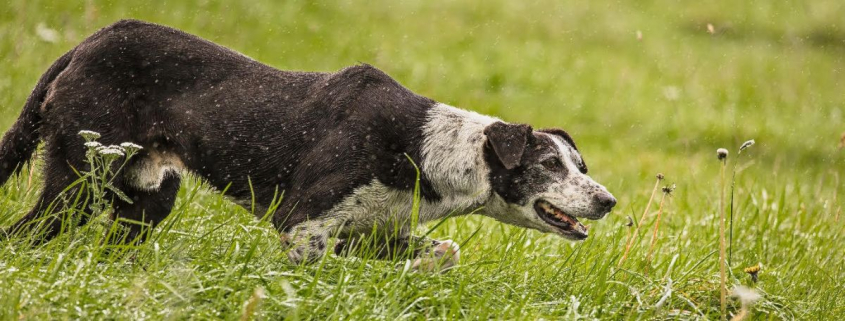
DEGANZ members Alex Galvin and Celia Jaspers are bringing beloved TV series A Dog’s Show back to local screens in a new family feature film.

Set in 1970s rural Aotearoa, A Dog’s Show tells the story of a disillusioned former sheepdog triallist who must come out of retirement—guided by his spirited granddaughter and their loyal dogs—to win one final trial and save the family farm.

The original series ran from 1977 to 1992 and cemented itself as a Kiwi classic. In each trial, a farmer equipped with whistles and commands instructed a sheepdog to wrangle a flock of sheep along a course or into a pen while the bearded and Swannie-clad John Gordon provided commentary.

Alex comments on the project, saying,

One of my fondest childhood memories was watching A Dog’s Show every Sunday night with my family. With this film, I want to honour that simplicity and charm, while telling a story full of warmth, humour and heart. I know that audiences—whether they know the original series or not—will fall in love with it.

Alex is the film’s writer, director, and one of three producers. Celia and Mark Westerby join him as producers, with renowned filmmaker Timothy White as EP. Scottish actor Graham McTavish, known for Outlander, The Witcher, The Hobbit and House of the Dragon, is set to play the role of Jack, a proud but weathered farmer facing one last chance at redemption.

Filming will take place across the greater Wellington region, with authentic dog trial sequences choreographed by Aotearoa’s top experts in the sport, using local farms, sheep and fully trained dogs.


Last updated on 24 July 2025

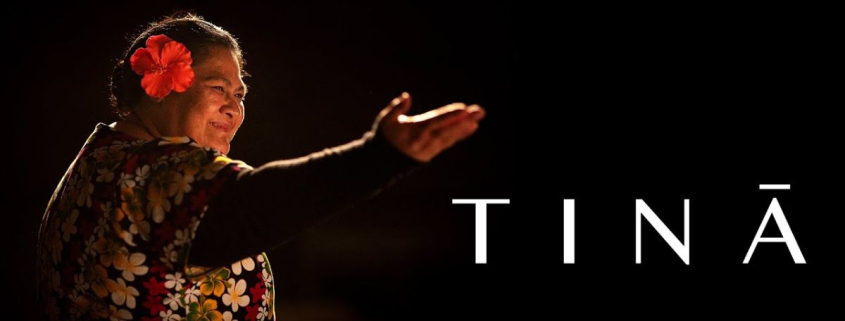
Feel-good feature Tinā, edited by Luke Haigh (DEGANZ), is celebrating its American theatrical release on 29 August with Rialto Distribution.

Since its world premiere, the film has won the hearts of audiences across Aotearoa, Australia, and the Pacific. It’s earned over $6 million in box office revenue, landing it in the top 10 highest grossing New Zealand films.

In addition to box office success, the film has won accolades such as the Palm Springs’ Best Narrative Feature Audience Award, the Perth Festival’s Audience Award, and the Seattle International Film Festival’s Golden Space Needle Award.

In an article with Deadline, Rialto’s Managing Director Kelly Rogers says,

Tinā is a rare gem – brimming with authenticity, rhythm and emotional power. We’re incredibly proud to champion this uniquely Pasifika story and deliver it to global audiences hungry for heartfelt, original cinema.

Congrats to Luke and the team on the continued success!


Last updated on 23 July 2025