
I’ve been writing View from the Top almost every two weeks now for the last ten years. With AI such a topical issue, I thought I would task AI to write the blog for me this week to see what it came up with. I gave it one prompt, and here’s what it delivered:
New Zealand Screen Industry: What’s Shifting
- Major boost to the Screen Production Rebate / Incentives
In Budget 2025 the NZ Government committed NZ$577 million over four years to bolster the International Screen Production Rebate (now part of the NZ Screen Production Rebate or NZSPR). Mirage News The Beehive The Big Idea
- The rebate gives 20% back on qualifying costs for feature films spending more than NZ$15 million, and TV productions more than NZ$4 million locally. The Beehive+2National Party
- There is also an additional 5% uplift available under some conditions (e.g. productions that deliver strong growth or value locally). Ministry of Foreign Affairs and Trade+2The Beehive
- This is meant to keep New Zealand competitive in attracting international‐scale productions and to sustain work opportunities for crews and post‐production. The Beehive+2New Zealand Film Commission
- International Engagement & Trade Missions
The NZ Film Commission (NZFC) has been active in supporting NZ filmmakers at international markets and festivals (Cannes, Toronto, India, UK, etc.). New Zealand Film Commission+2New Zealand Film Commission
In parallel, there’s a new International Placement Initiative aimed at emerging‐to‐mid‐career writers, directors, and producers to take internships or placements with overseas companies (Australia, UK, Ireland etc.). Scoop
- Domestic Hits with Strong Cultural & Box Office Impact
A recent example is Tinā (directed by Miki Magasiva), a Samoan‐led NZ‐story film, which has done very well locally: wide release, strong ticket numbers, and overtook Whale Rider to become one of NZ’s highest grossing domestic films. New Zealand Film Commission
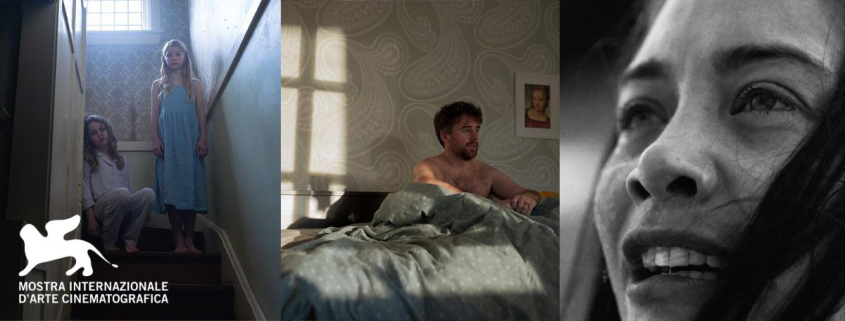
Also Mārama, a gothic horror with Māori cultural and historic angles, premiered at Toronto International Film Festival, showing how even genre work drawing on indigenous narratives is getting international attention. Wikipedia
- Co-productions & Treaties
NZ has formal co-production treaties or arrangements with many countries (Australia, Canada, China, UK, France, Germany, India, Ireland, Singapore, South Africa etc.). New Zealand Film Commission+2The Beehive+2
Official co-productions allow projects to gain “national film” status in both countries, making them eligible for funding or incentives in both jurisdictions, helping with financing, distribution, risk, and pooling of creative & technical resources. New Zealand Film Commission+2New Zealand Film Commission+2
- Sustainability & Green Practices Increasingly Material
The organisation Greenlit launched in late 2023 and in its first year has been involved with over 50 productions (domestic and international) helping them embed sustainability practice: mandatory sustainability action plans, employing sustainability managers, measuring emissions, etc. Greenlit+2Greenlit+2
Screen Auckland also released a Screen Sector Emissions Study (“Kua takoto te mānuka”) aimed at helping NZ work toward halving carbon emissions by 2050 in the screen sector. aucklandeconomicdevelopment.com
- Challenges: Workforce, Capacity & Stability
Despite the incentives and international successes, there are concerns:
- Many crew report inconsistent work and uncertainty: surveys suggest that production work has dropped in mid-2025 compared with 2024, with many “crew” not knowing what their work pipeline looks like. Screen NZ International
- There is a skills / labour supply issue especially in certain crafts, editing, post production, VFX etc., particularly for large international work that expects very high standards. The perception of career pathways is unclear for many. aucklandeconomicdevelopment.com+1
- Domestic content ‒ even with rebates ‒ still needs stronger creative control, ownership, and infrastructure if local directors and editors are to build sustainable careers rather than rely only on international or co‐production projects.
- Policy & Screen Sector Review
The government (MBIE & Manatū Taonga / MCH) has initiated a screen sector review, with goals including:
- Ensuring long-term sustainability and resilience of the industry in the face of global shifts (in financing, incentives abroad etc.). aucklandeconomicdevelopment.com
- Improving pay, conditions, and clearer career pathways for NZers on and off screen. aucklandeconomicdevelopment.com
- Growing more local content that reflects NZ’s cultural diversity and better reaching domestic AND international audiences. aucklandeconomicdevelopment.com
What This Means for Directors & Editors
Given the above, here are some implications and strategic takeaways.
- Strong incentive to aim for mid‐to-higher budget projects: The rebate scheme favours “hefty spend” productions (feature films, big TV), and the additional uplift for those that meet specific criteria (sustainability, local economic impact) means that projects that scale up tend to reap greater benefit. Directors who can package projects at that scale (financially, creatively) will find more opportunity.
- Editing & Post Production Boom Potential: With more international productions choosing NZ (e.g. Avatar sequels etc.), there is growing demand for domestic post‐production, visual effects, sound, color grading etc. Editors who maintain high technical standards, familiarity with international workflows (e.g. remote collaboration, VFX pipelines, etc.) will be in demand.
- Co-production is a lever: Projects structured as official co-productions can unlock more funding, access new markets, hire specialists, etc. Directors and editors can benefit from these through broader teams, varied crew, and cross‐border collaborations. Knowing the treaties (which ones NZ is signed with and what their criteria are) is valuable. New Zealand Film Commission+1
- Sustainability is no longer optional: The rebate rules increasingly require sustainability plans / metrics if you want the uplift. Editors and directors need to be able to plan for greener production and post-work (e.g. power usage, travel, etc.). Understanding what a Sustainability Action Plan looks like, measuring emissions, etc., will increasingly be part of the workflow. Greenlit
- Domestic storytelling is being rewarded: Films like Tinā show that local stories, especially from underrepresented communities, can succeed both critically and commercially. For editors and directors, authenticity, community connection, and strong local voice have value — and may help with funding, distribution, audience draw.
- Need for clarity in career pathways: For editors in particular, the uncertainty of work and the competition from larger international projects can create unpredictability. There’s opportunity in becoming specialised (genre, VFX editing, color, remote collaboration) and staying current with tech and standards. Also, networking via NZFC trade missions, placement initiatives etc. helps. Scoop
International Comparisons & Risks to Watch
- Other countries (Canada, UK, Australia, parts of Europe) continue to compete aggressively with generous incentives, often tied to tax credits, foreign spend, content quotas etc. NZ has been boosting its game but must keep the rebate scheme competitive. Ministry of Foreign Affairs and Trade
- Trade and policy shifts matter: e.g. proposals in the U.S. for high tariffs on foreign films could ripple out to affect demand and how international productions allocate budgets. NZ is already taking that into account in policy. Reuters
- Global supply chain and labour issues remain: cost pressures, inflation, exchange rates, travel restrictions, location access can all have impact. Editors and directors might need to plan for contingencies.
Strategic Tips for Directors/Editiors
Here are some suggestions (based on the context) to take advantage of current dynamics:
- Build projects knowing rebate / incentive criteria from the start.
If you want the international rebate with uplift, or want your production interpreted as a co-production, structure your creative, budget, location, crew etc. to satisfy those requirements (e.g. sustainability, percentage of NZ content, etc.). - Plan for post-production excellence domestically.
If editors can be involved early in planning (workflow, VFX, color, remote collaboration tools), you’ll have more control over quality, schedule, budget. Also, consider scaling up editing VFX partnerships since NZ’s reputation is strengthening in these areas. - Engage with co-production partners.
Identify treaty countries that align creatively. Co-productions may also allow you to use crew, facilities, subsidies abroad. This may allow flexibility in where some parts of editing or post workflows happen, or bring in additional talent. - Invest in sustainability literacy.
Learn what a sustainability action plan includes; keep track of emissions; consider production decisions (travel, local vs overseas VFX, power usage etc.). Being ahead of this curve may help your project get the rebound uplift & also prepare you for wider international standards. - Network internationally, use placement & trade mission opportunities.
NZFC’s new placement initiative, trade missions etc. are chances to build global contacts. For editors, working occasionally with international teams or on co-productions (even remote) can widen your experience and reputation. - Stay alert to domestic content demand.
While big international work is good, there is increasing appetite (from funders and audiences) for stories rooted in NZ culture, indigenous perspectives, underrepresented voices. Finding ways to tell local stories with strong editing, directing could lead to both funding & audience success.
ChatGPT for Tui Ruwhiu, Executive Director
Last updated on 18 September 2025