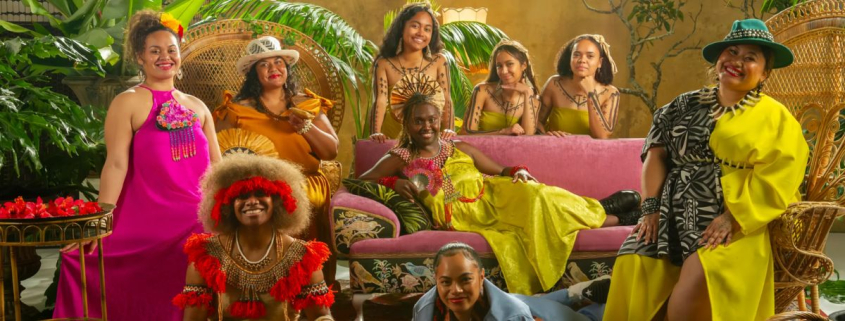
Myths & Maidens, edited by DEGANZ member Cushla Dillon, won the Best Current Affairs (long) or Documentary category at the 2025 Voyager Media Awards.

The annual awards ceremony encourages, showcases, and acknowledges the best of Atearoa’s news media across all platforms. Since 1973, the awards have recognised the work of journalists, reporters, feature writers, columnists, cartoonists, reviewers, photographers, and video journalists.

Myths & Maidens is a self-proclaimed love letter to Moana women. It delves into collective trauma, challenges, and inequities faced by women across Pasifika. By sharing women’s stories, the Coconet TV documentary tackles issues of colourism, fat-phobia, and how our societies have been taught to view women of colour across the ages. Yet in the face of all this, Myths & Maidens highlights how Pasifika women’s resilience and celebration of themselves is an act of colonial resistance.

The judges commented on the doco saying,

‘Myths & Maidens’ is a wildly original and thought-provoking documentary about female identity in Pasifika society. The producers used creative devices and structured the story in a clever way to make the subject matter compelling. With the western gaze of artists like Paul Gauguin and the historical representation of indigenous societies now facing closer scrutiny, this documentary is an important addition to that very important cultural reckoning.

Congratulations, Cushla and the entire Myths & Maidens team, on the win!


Last updated on 29 May 2025

April Phillips (DEGANZ) is crowdfunding to finish post-production on 1978, a feature film she co-wrote and is co-directing.

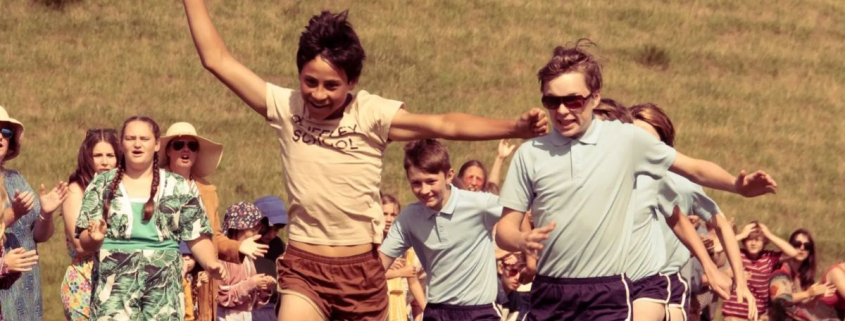
Set in 1978, the film follows the lives of a rural Māori-Pākehā family fighting on two fronts: the loss of ancestral land and the closure of their small country school. Inspired by one of the team’s childhood, 1978 shines a light on the strength of community and identity in the face of change.

So far, the team has self-funded the film over the past three years. It is now 80% complete but needs a final push to make it over the finish line. All funds raised from the Boosted campaign will go towards visual effects, colour grading, and the final delivery costs.

You can find out more about the project and support it on the Boosted page.

All the best to the team on the crowdfunding, and we look forward to seeing 1978 once it’s finished!


Last updated on 28 May 2025

View from the Top banner

Donald Trump’s tariff threats on film is causing considerable angst globally and extreme nervousness in New Zealand, even though detail is still entirely lacking, apart from Jon Voight’s plan, which seems to have triggered Trump’s reaction.

In discussions with the Directors Guild of America two weeks ago, I was informed that production in the US was already down by around 40%. Estimates put the global decrease at 17 – 20%.

Anecdotally, we seem to have a reasonable level of international production here right now with at least two Evil Dead films, Gollum and Zelda. The forward slate from June is supposedly looking positive at this point, too. Of course, things could change dramatically in an instant, depending on which way the wind is blowing Trump’s ‘do’.

Even though NZ seems okay for now, there is concern regarding the uncompetitiveness of our international screen production rebate at 20% plus a possible 5% uplift. When they can get a guaranteed federal 30% plus state rebates that can add up to 10% or more in Australia, it’s not hard to see why US production continues to go there.

The US guilds are cautiously supporting the call for more production to stay in California and the US, even though there is a general acceptance that runaway productions are still a necessity for the system to function.

The NZ above-the-line guilds and associations who depend primarily on domestic production for our members to be gainfully employed are much more interested in the funding available for making local films and programmes.

Scripted is still the biggest employer of crew, while scripted and factual are good job sources for both directors and editors. The funding available from NZ On Air, the New Zealand Film Commission (NZFC) and Te Māngai Pāho (TMP) is therefore crucial for the creative, cultural and financial wellbeing of DEGANZ members.

For NZFC and NZ On Air, funding comes from Vote Arts and Culture and for TMP, Vote Māori Development. For many years, the funding was essentially at a default setting. But as we all know, NZFC funding was cut last Budget, although NZ On Air’s and TMP’s funding remained the same. With the Coalition still focused on cost cutting, how our funding bodies will fare come Budget time next week is on many people’s minds.

International production is the rich cousin when it comes to the New Zealand screen industry. But international and domestic are in a symbiotic survival relationship, even though those who work primarily in international sometimes forget that. Should international production drop off, we are going to need a greater increase in funding for domestic production than we already require to carry the load. Here’s hoping Minister Goldsmith has pointed this out to his cabinet colleagues in a convincing manner.


Tui Ruwhiu
Executive Director

Last updated on 15 May 2025

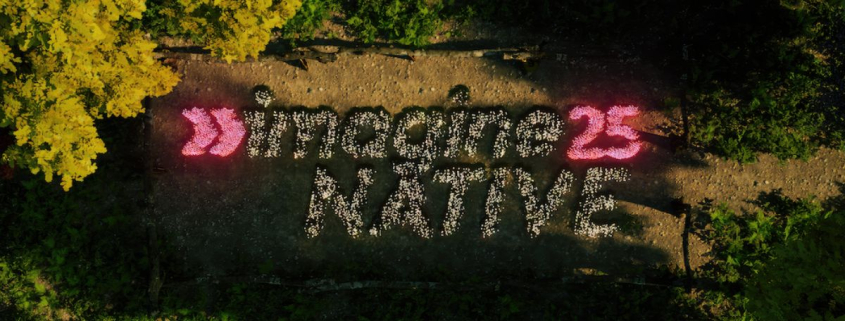
Seven DEGANZ members’ mahi is being showcased in this year’s programme of imagineNATIVE Film + Media Arts Festival, the world’s largest exhibition for film, video, audio, and digital, and interactive media made by Indigenous creators.

Starting in 2000, this year marks imagineNATIVE’s 25th run with 55 Indigenous nations from 16 countries included in the line up. The theme this year is seed keeping and the passing down of seeds to the next generation. The festival reflects on the theme saying,

Like ancestors planting their seeds to grow and harvest sustenance for the people, we look back on 25 years of Indigenous artists breaking barriers, opening doors for each other, connecting, collaborating, and inspiring fearlessness in storytelling for future generations.

imagineNATIVE will run 3-8 June in Toronto and 9-25 June online. Congratulations to all those selected!

Features

Kōka

Editor: Te Rurehe Paki

Worlds collide when Māori Elder Hamo accidentally hits Jo, a rough-around-the-edges wahine, with her car. Feeling responsible for her care, Hamo tries to help Jo back on her feet, only to find herself entangled in Jo’s antics after Jo lost her only home and family — a group of misfits who outlived their stay in an encampment. Hamo reluctantly agrees to take Jo under her wing, bringing her along on the trip back home. While on the road, the women form an unlikely bond that leads them to face the past and lean on each other on the path to healing.

The Haka Part Incident

Writer, Director & Producer: Katie Wolfe

This impressively candid documentary revisits the three-minute-long “incident” at the University of Auckland, which triggered race relations between Māori and non-Māori in 1970s New Zealand. Current Interviews with the engineering students who participated in the mocking haka party and members of the activist group that disrupted it, now adults, reflect on their versions of what happened. Directed by Katie Wolfe (one of the directors of 2017’s Waru) this doc, originally a theatre piece, is the ultimate telling of this true story. With archival footage and insights from those who were there, The Haka Party Incident brings forgotten history to life.

Ka Whawhai Tonu – Struggle Without End

Editors: Te Rurehe Paki & Martin Brinkler

Writer: Tim Worrall

It’s 1864 and against impossible odds, the Māori in the Waikato region valiantly face an army of colonial settlers to fight for their lands and people. Haki is a half-Māori and half-European teenager fighting on the side of the New Zealand military and taken prisoner by the Māori resistance. He befriends Kopu, a Māori girl who is imprisoned in her own right as she is believed to be the vessel for manifesting a Māori god of war, used for guidance as a resistance tactic in her people’s battle for sovereignty. Haki and Kopu find themselves caught between many concurrent battles of identity politics, physical and spiritual warfare, and friends and enemies, as they both discover there is no escape without a fight.

Short Film Programme: Knee Slappers

Honey Kaha

Writer, Director & Co-Editor: Te Waiarangi Ratana

The low-budget adventures of streetwise fisheries officer Honey Kaha are brought to life by star Dr. Julia Love and her dastardly former husband, Kent Barry.

Chatterbox

Editor: Amarbir Singh

A woman struggles with her relationship with her body. It’s not that she hates it, she just wishes her vagina would stop calling her a bitch.

Short Film Programme: Elder Stories

Rapido

Co-Writer, Director & Co-Editor: Richard J Curtis 

A young Māori boy’s fascination with war comics comes closer to home than he could ever imagine.


Last updated on 15 May 2025

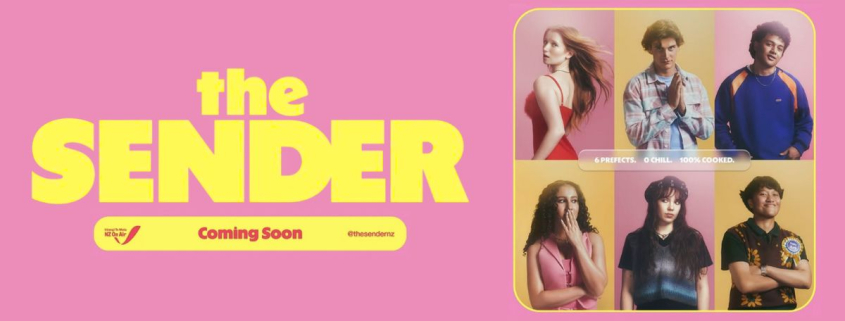
The Sender, directed by Liv McClymont (DEGANZ) and edited by fellow member Ben Chesters, is out now on Instagram and TikTok.

The NZ On Air funded web series was created by Liv and producer Jessica Todd to meet young audiences where they are. Shot in a vertical aspect ratio and edited to suit the short form platforms, the series is not only made for social media, it is all about social media.

When six school prefects sneak away to a remote bach for a night of underage drinking and questionable decisions, they expect a chill evening—not total social annihilation. At 10 P.M. their phones light up with messages from @thesender, an anonymous account sending scandalous photos that could destroy their carefully crafted lives.

While filled with classic teen drama hijinks, The Sender also tackles the serious topics of image-based abuse and sextortion. It approaches this serious subject matter with humour and authenticity, making the difficult conversation more accessible to younger audiences.

The first five episodes are out now, with new episodes dropping four times a week.

Congrats to Liv, Ben, and the entire The Sender team!


Last updated on 28 May 2025