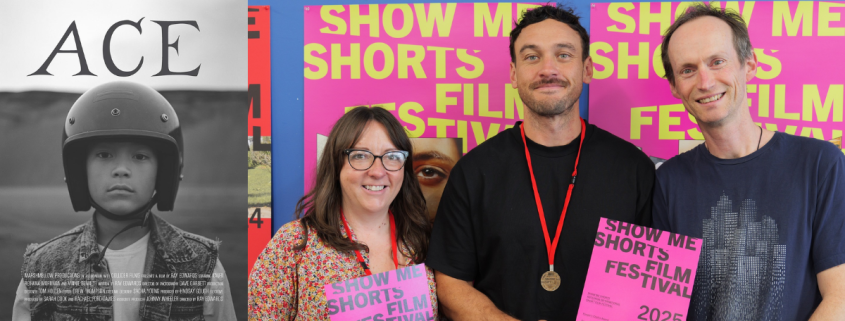
The 15-minute short follows six-year-old Jimmy as he sets out on an epic quest to save his parents’ marriage with his imaginary daredevil friend, Ace. Set within a visually striking world, the film offers an intimate portrait of a young child connecting with his whakapapa.
In addition to the certificate and engraved bronze medal to mark the win, the filmmakers also won a $500 cash prize. This win continues the shorts’ successful festival circuit, having won Best Cinematography at the Show Me Shorts awards ceremony and travelling to Melbourne International Film Festival, where Ray took part of the festival’s Accelerator Lab.
http://degnz.sensedesign.co.nz/wp-content/uploads/2025/12/ACE-Show-Me-Shorts.png4561200admin/wp-content/uploads/2021/10/DEGANZ_logo_home.pngadmin2025-12-03 13:54:402025-12-03 13:54:58‘Ace’ Scores Show Me Shorts’ People’s Choice Award
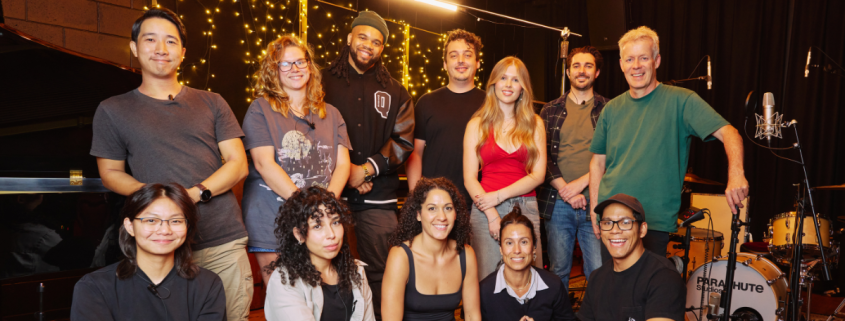
DEGANZ member Gal Hochman‘s Beyond the Beat, in collaboration with Chillbox Creative, is returning for a second season.
Season one of the factual web series followed five artists as they transformed some of Aotearoa’s biggest hits. In each episode, an emerging artist met with a music legend to turn their most iconic song into something new, reflecting each artist’s unique style. At the end of the season, all the remake songs were released and put to a public vote; the winner would receive a music video for their winning track.
The show gave audiences a unique glimpse into music production and introduced the next wave of musicians. NZ On Air is continuing to support the series by greenlighting five more episodes for season two.
Gal recently wrapped filming the music video for Don’t Worry Bout’ It for local artist Liberty. She was the winner of the public vote from season one for her remake of the original song by Kings. The music video for her winning track is set inside a retro Aotearoa diner and follows Liberty as she goes about her day as a waitress until a chance encounter sparks a vibrant, high-energy musical number.
Congratulations to Gal, Chillbox, and the whole Beyond the Beat team on the exciting news! We look forward to seeing season two and the Don’t Worry Bout’ It music video when they come out.
http://degnz.sensedesign.co.nz/wp-content/uploads/2025/12/Beyond-the-Beat.png4561200admin/wp-content/uploads/2021/10/DEGANZ_logo_home.pngadmin2025-12-03 13:54:252025-12-04 14:17:15‘Beyond the Beat’ Bags Second Season
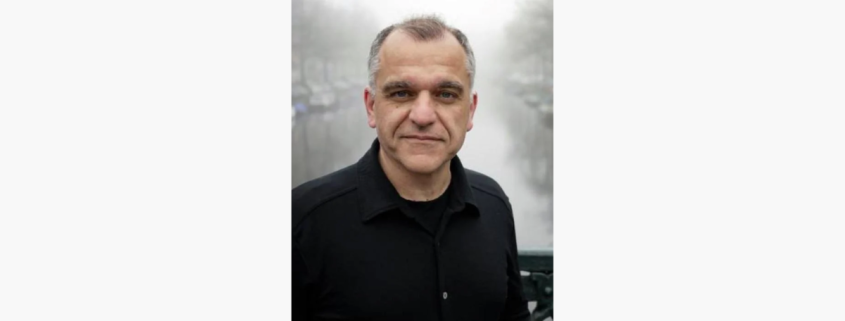
It is with deep sadness that we mark the passing of long-time DEGANZ board member Costa Botes, who died on 21 November 2025 after a decade of living with cancer. A renowned documentary filmmaker, a generous mentor, and a dedicated advocate for the screen industry, Costa served on the DEGANZ Board from 2013–2018.
Born on the Turkish island of Imbros in 1958 and raised in Wellington, Costa discovered filmmaking as a teenager, experimenting with a Bolex wind-up camera. After initially enrolling in English Literature at Victoria University, he returned to screen and transferred to the filmmaking course at Ilam School of Fine Arts in Christchurch. Upon graduating, he committed fully to working in the screen industry. By 1985, he had directed The Lamb of God, the opener for the anthology series About Face. Soon after, he created Stalin’s Sickle, which won a jury prize at the Clermont-Ferrand International Short Film Festival in 1988. The short was based on the short story of the same name by novelist and poet Michael Morrisey, whom Costa would later make a documentary about.
Costa’s most iconic work is the cult classic mockumentary Forgotten Silver, co-written and co-directed with Peter Jackson. Its blend of fiction and documentary styles sparked controversy on release, with many viewers believing the story was true. The film went on to win Best Director at the New Zealand Television Awards and the Special Critics’ Award at the Venice Film Festival in 1996. Earlier this year, Costa revisited that landmark project with the publication of Remembering Forgotten Silver: The Film that Fooled a Nation.
In 1999, Costa continued working with Peter Jackson, documenting the making of The Lord of the Rings trilogy. His extensive behind-the-scenes work resulted in three feature-length documentaries and was used in extensive behind-the-scenes content for the trilogy.
Another significant creative partnership was with director Zoe McIntosh, who described Costa as someone who “gives his time generously, quietly, without agenda.” Together they created a body of work that included Lost in Wonderland, Day Trip, King of Caravans, The World in Your Window, and The Deadly Ponies Gang, which all travelled widely on the festival circuit and collected numerous awards.
Across his career, Costa has contributed to the making of over 40 projects as a writer, director, editor, director of photography, and producer. His dedication to storytelling continued throughout his life; he completed the first cut of a new film just weeks before his death.
In addition to his screen career, Costa was deeply involved in Wellington’s music scene, both as a gifted musician and as an enthusiastic supporter of local artists.
Costa will be missed by many, including his wife, Debs Botes.
http://degnz.sensedesign.co.nz/wp-content/uploads/2025/11/Vale-Costa-Botes.png4561200admin/wp-content/uploads/2021/10/DEGANZ_logo_home.pngadmin2025-11-26 16:06:562025-12-05 16:05:53Vale Costa Botes
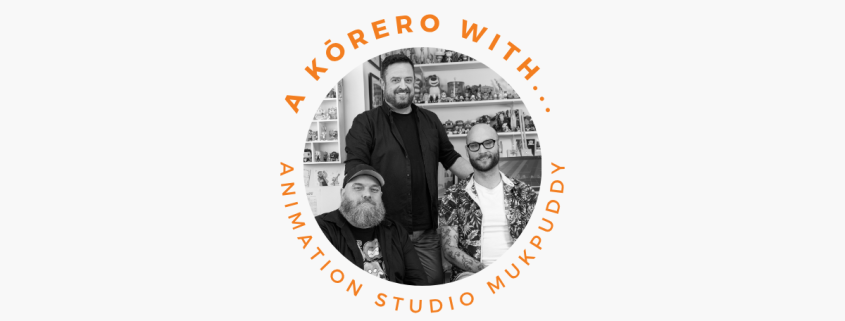
As a follow-up to this year’s Animation Matchmaking series, DEGANZ’s Izzi Hoskyn sat down with Ryan Cooper and Alex Leighton, two-thirds of the team leading Mukpuddy Ltd.
Mukpuddy originated from humble beginnings in 2002, starting in a basement before evolving into Aotearoa’s leading 2D animation studio. The team has created original shows, such as The Barefoot Bandits, Jandal Burn, and Night Eyes, as well as adapted Spike Milligan’s iconic Badjelly the Witch to the screen. Mukpuddy has solidified itself as a cornerstone of local animation, crafting worlds with a distinct style and humour appealing to audiences both locally and internationally.
In this kōrero, Ryan and Alex discuss the animation process, the secret actor living inside every animator, and some tips for local creatives to step into the world of animation themselves.
Izzi: So the first question is a biggie, but in fairly simple terms, what does the animation workflow look like?
Ryan: It all starts with us coming up with an idea we want to make. From the script, it goes into a combination of the voice recordings and storyboarding. Our storyboarders will jump into dissecting the script and start asking us for direction on how we see things. Then, background artists can start to get a sense of what environments we’ll need. The riggers can also start seeing what characters we need to begin building.
Alex: Character design also usually starts around the brainstorming and writing stage, depending on the project.
Ryan: And that’s quite nice for writing because you can picture the character in your head. Sometimes, we also know the voice actor you want, so you can write the character based on that as well.
Once we have the storyboards and the voices recorded, they are then sent to an animatic editor. They’ll compile all the storyboards and voices into a rough assembly so that we can see whether the episode is working before we begin animating. That’s where we’ll sometimes throw in temporary music, sound effects, and play with the vocal performances.
That’s the upside to animation: we can see whether the finished thing is going to be successful from early on.
Alex: Animation is very heavily loaded at the front end of production before animators even touch anything, especially if you’re building a new concept from scratch.
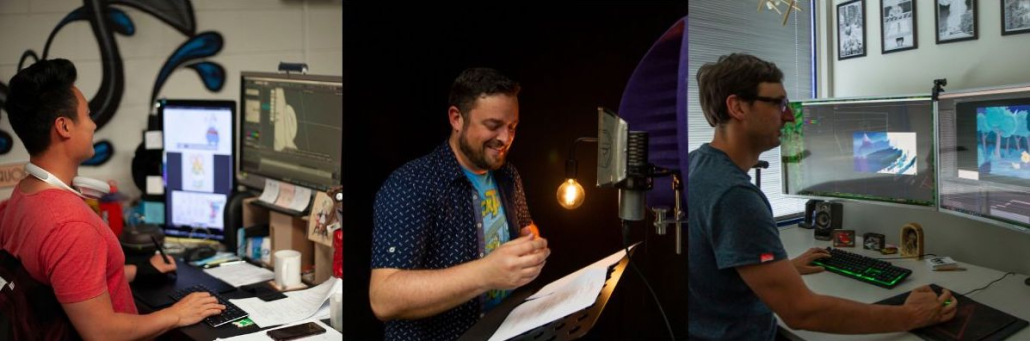
Stages of the animation workflow from character rigging, to voice recording, to compositing / Photos provided
Ryan: From there, it’s basically divvied out. An episode gets chopped up into its scenes and handed out to the animators. An animator can animate anywhere between 5 to 15 seconds a day, depending on the complexity of a shot.
Once the animation’s done, it goes to compositing. Compositors take the backgrounds, character animation, and any effects animation and put them all together to make it look extra pretty. You can add far more cinematic depth to something with techniques like focus pulls, lighting, or particle effects, which make it stand out from the average animated cartoon.
At that stage, we start looking at the final music, whether it’s production library music or a custom score. Then it’s all mixed, and that’s it.
Izzi: It’s interesting that you’re basically doing the edit before the project is even made.
Alex: That’s so important because then you’re not wasting an animator’s time and energy on something that might end up getting cut. We’ve probably cut one or two scenes from any of our projects after it’s been animated, but the hope is to avoid that.
Because our entire career hinges on storyboarding and animatics, it’s wild to think that live action doesn’t always do that. It’s a crucial part of the process for us.
Izzi: It’s a very different medium, and I think it’s reflective of the pace at which live action can be made versus animation.
Alex: Exactly, a film shoot can be six weeks, but Badjelly was over 70 weeks of work in total. Different departments were on for various lengths, but it’s a long production. That’s why we advocate for support in the animation sector because it creates jobs for longer.
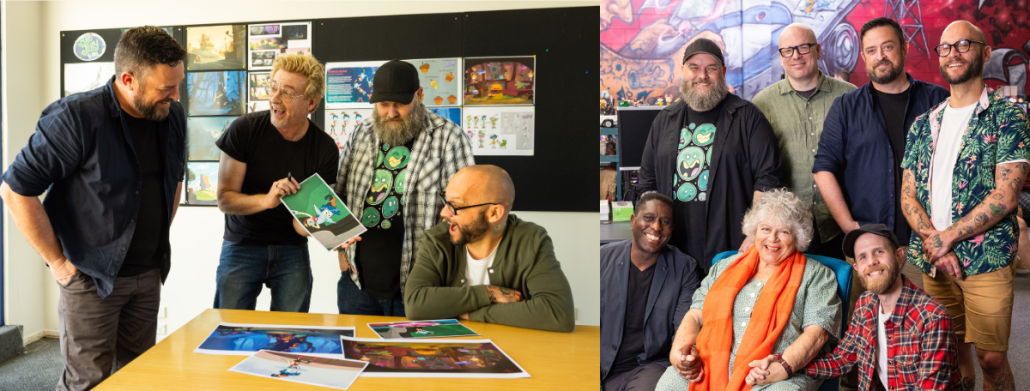
From the making of ‘Badjelly’ / Photos provided
Izzi: Could you also talk a bit more about how an individual animator will step into the process?
Ryan: We’re really big on animators bringing a piece of themselves to their scenes and taking creative liberties. Sometimes, we get a different vocal performance than we expected, so the storyboards don’t quite match. For instance, if we have a comedian in and they’re ad-libbing, we want the animators to match that.
Animators are actors in a way. They have to know how a person is going to react, how they look with certain emotions, comedic timing, and all that. It’s always exciting to see what can come out of a really talented animator who has a secret actor living inside them.
Alex: For Badjelly, we suggested that the animators film themselves acting out scenes. It gives them the chance to embody the character. That’s the moment the show comes to life in a lot of ways. You know, the characters are moving, blinking, and talking. We have a big emphasis on acting and reminding people that you don’t just act with your whole body. Sometimes it’s a subtle eye dart or a little hand gesture.
We also keep an open-door policy if animators want to come and talk to us as the directors. They have their team leaders whom they report to on a day-to-day basis, but if they want to speak to us as directors, we’re always open to a chat because we love getting into the nitty-gritty of it. Often, animators will come to us and ask, “What’s the emotion?”
Ryan: Or “What do you think the character is really meaning when they’re saying this?” It’s fun to talk about, you know, it’s a silly cartoon, but there’s real depth there.
Izzi: I was going to ask about where creativity comes into the technical aspects of animation, but it sounds like it’s just acting through drawing?
Alex: It is very technical, but the performance art of it all is what so many animators love about it.
Izzi: How do you maintain consistency in a character’s ‘performance’ if you have multiple animators working on them across various scenes or episodes?
Ryan: As the directors, we’ll try to set those boundaries up front. We might say, “This is a cartoon, but the physics are real.”
For a show like The Barefoot Bandits, the idea was that fantastical things are happening in this world, but the three main kids are grounded in reality. They can’t stretch and do things that SpongeBob could do, or magically pull things from behind their back. It’s quite fun when you set those rules because the boundaries can make for really interesting animation choices.
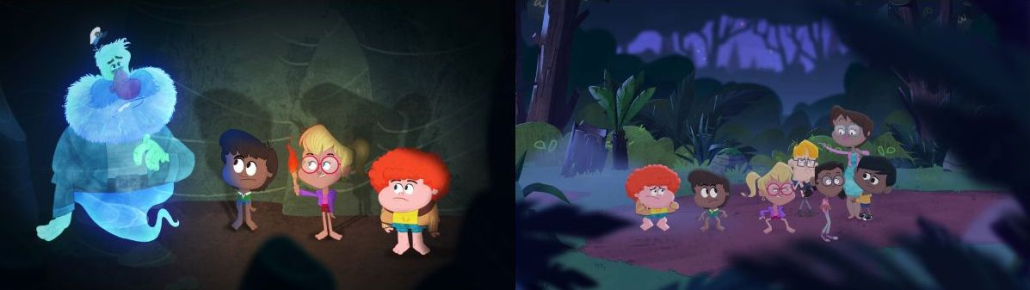
The Barefoot Bandits / Stills provided
But it’s also just a matter of all the animators being able to see what the others are doing. Sometimes one person sets the tone, and everyone agrees that’s what it should be. It may require a bit of looking back and forth, but people often check to see who has tackled a character first. It happens naturally, and vocal performance also helps.
Alex: If an actor’s performance is very low-key, then there’s no need to go big with their animation.
Izzi: Who else in the production does an animator work closely with?
Ryan: They often work closely with background designers because if a character is interacting with the background, the animator will need to have the final version of it before animating the actions. They also work closely with compositors. They may have a set of expectations of what needs to be delivered, whether it’s just a technical file or if they have some other ideas of what could make it look extra good in the final product. And riggers, who make the characters. They can get feedback from the animators, asking for tweaks to the way a character is built.
Izzi: Mukpuddy is both creating your own IP and working with other studios or companies. Is there something that you wish collaborators knew before approaching you for a project?
Alex: If it’s a service gig where someone comes to us with an idea and we animate it, it’s important to know what your budget is, be honest about it, and have some kind of knowledge of what we do and what our studio makes. Also, having an understanding of how a budget dictates the scope of an animated project. We don’t just point and shoot a camera. Everything on screen is designed, drawn, rigged, and then integrated into the animation pipeline. It’s time-consuming and a tricky medium to come into naively.
Also, having as many reference materials and resources as possible is really helpful, so we’re not taking a stab in the dark when we come on board.
Ryan: I think a good thing for people to know before they get into this stuff is to put ego aside. The thing you’re making is important, but it’s always nice to take the path of least resistance. Obviously, you want to stand your ground on things you believe in, but it’s good to check whether that’s just pride getting in the way.
Alex: It’s a collaboration all the way through. Which is true for the entire screen industry, but in animation, it just feels like there’s an extra layer. Everybody needs to communicate in a healthy way to get the job done.
Ryan: Consideration for people next in line is a big one. So, when I’m writing, I ask myself, “Do I need to include this prop in this scene? Is this important?” And if the answer is no, I just get rid of it straight away because someone will be spending a lot of time on that one prop.
Alex: Or you’ll ask, “Have we seen this prop in a previous series? Was there a mug or a cup, or a pen?” I’ll check, and if yes, then sweet, we can reuse it.
Ryan: Or if not, is there something else I could use for this gag that would have the same impact? Knowing that someone is next in line to do their part of the job and trying to hand it off as kindly as possible is great.
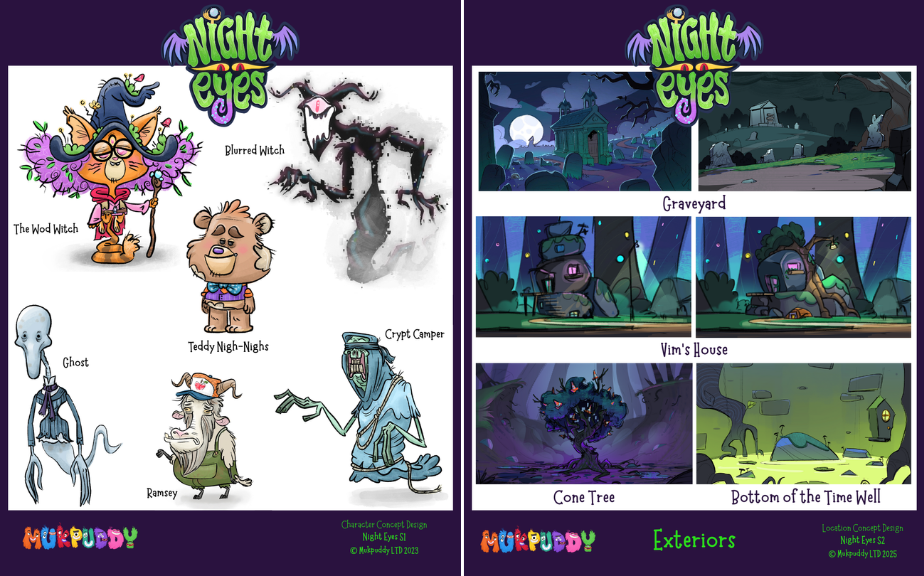
Character and Location Concept Designs for ‘Night Eyes’ / Photos provided
Izzi: What would you recommend to people who want to get into animation in Aotearoa, whether they are animators or those who want to write or direct for animation?
Ryan: Keep absorbing what’s out there. Have your finger on the pulse because inspiration can come from anywhere. The people who do best are those who know what’s happening in the industry. They know what cartoons kids are watching these days, who’s making those shows, who’s directing them, and who’s designing the characters.
Alex: The people who have longevity in the industry are the people with the ambition and the love of it. You know, meet with your peers and make a little animation gang to create stuff together.
Also, upskill where you can. If you know how to animate in Flash, maybe you can get some work animating in Toon Boom. So learn a few different softwares.
Ryan: As Ross Geller famously said: pivot. The road can get a little bit windy, but as long as you’re related to the thing you want to do, I think that’s pretty good.
We’ve had crew members who have jumped from animation to rigging and from storyboarding to background art and vice versa. Being a jack of all trades is useful. At the very least, having an understanding of who the other roles are in the industry is great because you might find yourself being in one of those roles from time to time.
And the last thing is just talk to the studios that are out there. The more you pick the brains of the people who’ve been in it for a long time, the more skills you’re going to pick up. So here in New Zealand, talk to us, Flux, Yuk Fu, speak to any of these people.
This interview has been edited for brevity and clarity.
http://degnz.sensedesign.co.nz/wp-content/uploads/2025/11/A-Korero-With.-Animation-Studio-Mukpuddy.png6751200admin/wp-content/uploads/2021/10/DEGANZ_logo_home.pngadmin2025-11-20 11:30:012025-11-20 15:15:43A Kōrero with Animation Studio Mukpuddy
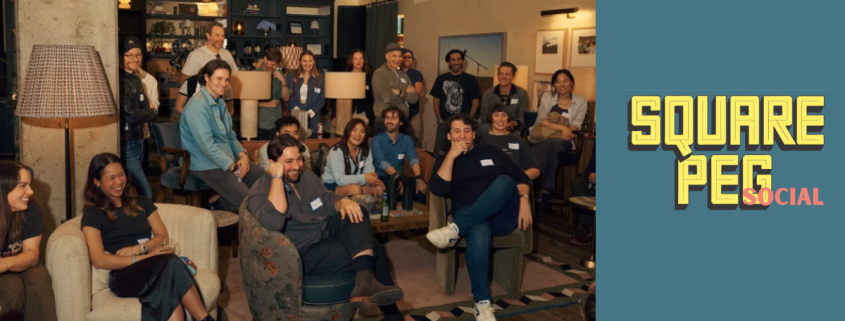
DEGANZ member Matthew Saville was recently selected for and attended the inaugural Square Peg Social, a four-day networking and mentorship event helmed by director Ari Aster and producer Lars Knudsen, the team behind renowned films such as Midsommar, Hereditary, and Beau is Afraid.
The event took place in Austin, Texas, where 35 chosen filmmakers from nearly 1,800 applications came together. Aster and Knudsen invited 27 of their most trusted collaborators to create an almost one-to-one ratio of established industry professionals to attendees.
Rather than focusing on conventional methods of pitching, development sessions, or securing funding, the programme focused on building community and connections. Its ethos was to bring together experienced mentors and impressive filmmakers to be candid about their experiences, both good and bad, to yield its own value for all those there. Square Peg Social intended to open doors, lift barriers, and create space for more seasoned filmmakers to help and nurture a new generation of creatives.
Being co-founded by two of Hollywood’s most innovative filmmakers, the initiative specifically recognised and selected filmmakers who challenged the norms of storytelling, redefined genre, and pushed creative boundaries.
Matthew shared with DEGANZ about his experience, saying,
The curation of filmmakers was wonderful, and the generosity of spirit from Square Peg was really hard to comprehend. I loved it. There was an openness from everyone. At any level were all just hustling and pitching and trying to tell great stories. It’s good to be with your people.
Congratulations, Matthew, for being selected to such an exclusive and exciting initiative!
http://degnz.sensedesign.co.nz/wp-content/uploads/2025/11/Sqaure-Peg.png4561200admin/wp-content/uploads/2021/10/DEGANZ_logo_home.pngadmin2025-11-20 11:29:352025-11-20 12:33:10Saville Selected for Square Peg Social