
View from the Top banner

A couple of weeks ago, thanks to Madman Distribution, I got to watch the Cannes Jury Prize-winning Sirat, a French – Spanish coproduction helmed by French-born director of Spanish descent, Oliver Laxe.

It’s the sort of auteur arthouse fare that reminds me why I love cinematic film as a storytelling medium.

It’s an incredibly divisive film, praised and panned in equal measure by critics.

Made on a reported budget of approximately US$7.5 million, its worldwide take to date is just under US$11 million according to Box Office Mojo. If it keeps achieving more sales, then it might break even.

Now Laxe is a Cannes darling, with all of his previous three films screening there. Throw in Pedro Almodóvar as one of the producers of Sirat, and you can see Laxe and his films have the kind of pedigree that helps make an arthouse director a success at Cannes. But he had to start somewhere.

Laxe got going with his debut feature, You All Are Captains. It premiered in the Directors’ Fortnight (Quinzaine des réalisateurs) section at Cannes in 2010, winning the FIPRESCI Prize.

The Cannes pathway to success is not new. Jane Campion has walked it. Australian Rolf de Heer has, too. As have the Dardenne brothers, Ken Loach, Ruben Östlund, and Yorgos Lanthimos, amongst others.

All of these directors have been driven to tell their stories in their own way for the big screen, and often they have had to overcome seemingly insurmountable hurdles to get their first film made.

It’s something every filmmaker struggles with.

Not every NZ filmmaker wants to make a film that gets into Cannes, though. And not every New Zealand film that gets made is Cannes fare, as witnessed by the total lack of New Zealand films screening there since the last one, Christine Jeffs’ Rain, in the sidebar Director’s Fortnight in 2001.

The last New Zealand film to screen in official competition at Cannes was Jane Campion’s The Piano in 1993, while Vincent Ward has had three films screen in main competition at Cannes, two NZ features in Vigil (1984) and The Navigator: A Medieval Odyssey (1991), and international production Map of the Human Heart (1993).

What Sirat gave me, though, is confidence that cinema still has a place amid the fragmentation of screen audiences—it’s a film crafted to be seen on the big screen, with an audience. And its cinematic language is ever-present.

I also have great faith that another New Zealander will find their way into one of the sidebars or the main competition in Cannes at some point in the future, even though it’s never been tougher for filmmakers than it is now. It’s well overdue. But it will require putting aside the commercial imperative and committing wholeheartedly to artistic endeavour. And who knows, it might break even if it’s lucky.


Tui Ruwhiu
Executive Director

Last updated on 26 February 2026
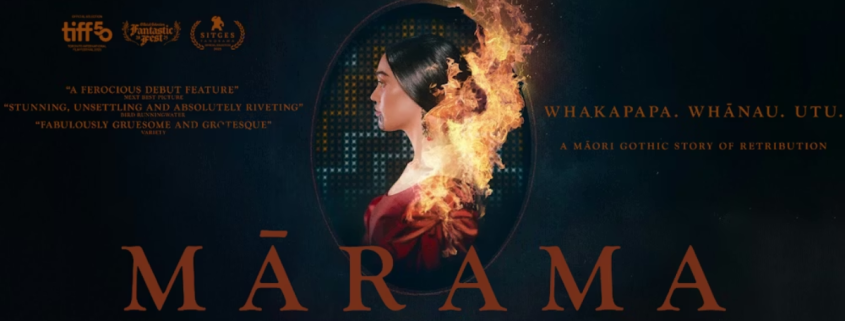
DEGANZ member Taratoa Stappard‘s debut feature film, Mārama, is out now in Aotearoa cinemas with a stream of positive reviews following, currently holding a 100% Fresh score on Rotten Tomatoes!

The film celebrated its world premiere at the Toronto International Film Festival in September 2025 and has since screened at a variety of different festivals.

Set in Victorian-era North Yorkshire, the gothic horror film follows a young Māori woman named Mary fighting to reclaim her identity and connect with her whakapapa and culture while living in a foreign land. Taratoa describes the film as a Māori gothic, drawing on the horrors of colonisation in Aotearoa.

Madeline Hakaraia de Young, director of the Māoriland Film Festival, reviewed the film for RNZ, commenting,

In the days and weeks since I first saw the film […], its memories have lingered. Its images return to mind and trigger a succession of trains of thought. It’s a film you want to talk about. It disturbs not to shock, but to reckon. And in doing so, it expands Māori cinema not as spectacle, but as authority.

The film is also screening in the Māoriland Film Festival as the closing night film on 28 March 2026. If you can’t catch it then, you can find a screening of Mārama near you here!


Last updated on 26 February 2026

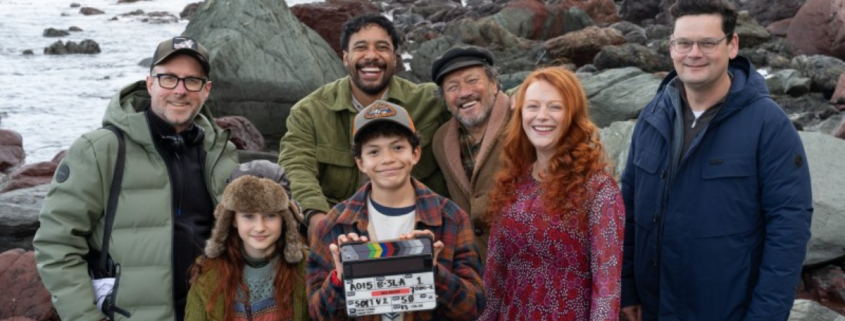
DEGANZ member David Stubbs‘ hit family adventure series, Secrets at Red Rocks, has been greenlit for a second season!

Season one was adapted from Kiwi author Rachel King’s novel Red Rocks. The sophomore season will expand the world, introduce new characters, and dive deeper into the established mysteries, while continuing to blend Aotearoa’s dramatic coastal landscapes with myth, adventure, and family drama.

Secrets at Red Rocks season one received three Children’s & Family Emmy Award nominations recently, including Outstanding Editing for a Preschool or Children’s Live Action Program by fellow DEGANZ member Alex Boyd, Outstanding Writing for a Preschool or Children’s Series, and Outstanding Music Direction and Composition for a Live Action Program. It was also the National Winner for Best Children’s Programme at the Asian Academy Creative Awards.

David will continue to helm the project as the director and producer for season two, which has already begun production in Te Whanganui-a-Tara Wellington, and is set to be delivered in October 2026.

Congratulations to the team and we look forward to season two!


Last updated on 26 February 2026

17 DEGANZ members have work selected for the 2026 Māoriland Film Festival (MFF). This year’s theme is “He taonga tuku iho te rama ataata,” meaning “The light that reveals our legacies.”

111 films have been selected from 130 Indigenous nations and 27 countries, ranging from Arctic love stories to Māori gothic dramas to climate resistance in Papua New Guinea to language revitalisation across the Pacific. They will all come together across five days of storytelling, connection, and celebration.

The festival describes the selection saying,

These are stories that shine in the darkness. Stories of resistance, love, land, language and survival. Stories that remind us we are part of something bigger, and that we have the power to build the world we deserve.

MFF is the world’s largest Indigenous film festival, not only by showcasing Indigenous stories, but by bringing filmmakers, artists, rangatahi, and audiences together for premieres, screenings, industry events, art exhibits, and community events. It is returning to Ōtaki from 24 to 28 March 2026.

Check out the festival trailer and the selected DEGANZ members below!

Kiriata – Feature Films

Mārama

Director: Taratoa Stappard

1859. When a young Māori woman is summoned from New Zealand to North Yorkshire, she uncovers the horrific truth of her colonial heritage and sets out to destroy the titled Englishman who has devastated her family. In his debut feature, Taratoa Stappard (Ngāti Toa, Ngāti Raukawa ki te Tonga, Ngāti Tūwharetoa) presents a bold and unsettling gothic tale of colonial reckoning with a stand-out performance from Ariana Osborne (Ngāti Mutunga and Te Āti Haunui- a-Pāpārangi).

Mārama is the festival’s closing night film.


Pakipūmeka – Feature Documentaries

Taiarahia: Te Kākahu Tawhito

Director: Nicholas Riini

Taiarahia: Te Kākahu Tawhito revisits the 1985 protest and occupation of the sacred mountain Taiarahia in the Ruatoki valley – a stand led by the people of Te Māhurehure hapū to protect their sacred maunga from being stripped of its ancient native forest and replanted with pine for financial gain.

Kiriata Poto – Shorts

Ace

Writer/Director: Ray Edwards

In a quest to save his parents’ marriage, Jimmy ventures to the east coast of Aotearoa in search of papers he believes will keep his family together.

Ata Pūao

Producer: Angel Kameta

Amid the nightlife of a new city, a young Māori trans-woman reckons with safety, isolation, and the fragile bonds of old friendships outgrown.

Devil in the Gat

Editor: Te Rurehe Paki

Desperate for his big break, an aspiring musician discovers a forgotten country singer at a nightclub who may hold the key to his dreams – but the answers come with a dark price.

Forget It

Director: Ashley Pye

A boy watches helplessly as his grandmother begins to slip into dementia.

I Am Not Your Dusky Maiden

Director: Vea Mafile’o

Editors: Lisa Greenfield and Jolin Lee

When a Sāmoan woman enters therapy, she must navigate a series of alter egos protecting herself from painful memories.

Kurī

Editor: Sam Small

Kurī hasn’t been back home to Te Urewera since she was bitten on the face by a dog as a child. After the death of her father, Kurī must return and face the uncertainty of grief – whether she is ready to or not.

O Alofa Nei, O Alfoa Na

Writer/Director: Giselle Ilaoa

Manaia, a young woman caught between expectation and self- acceptance, finds herself confronting her repressed sexuality when a chance reunion with her first love stirs old feelings

Rapido

Writer/Director and Co-Editor: Richard J Curtis

A young boy’s fascination with war comics comes closer to home than he could ever imagine.

Raupā

Editor: Allan George

When two people you love sit on the precipice of death, whose hands do you hold?

Spdrtwnbby ft JARNA – Back to Self

Director: Litia Tuiburelevu

‘Back to Self’ is a hypnagogic mirage of neo soul, R&B and art-pop, elegantly dressed in oneiric symbolism and poetic metaphors straight out of the South Pacific.

The Charm of the Magpies

Writer/Director: Liam Ngahina Joseph Maguren

A lone tūī must find her voice to speak up against her adoptive family before they start a war.

The Return

Editor: Alex Boyd

When Lupesina answers her ancestors’ call, she must accept herself, or risk being stuck in the in-between.

Womb

Writer/Director: Ira Hetaraka

A young Māori girl in the care of a conservative Pākehā couple savours her mother’s weekly visitations, as a custody battle driven by racial bias will ultimately decide their fate.


Last updated on 7 April 2026

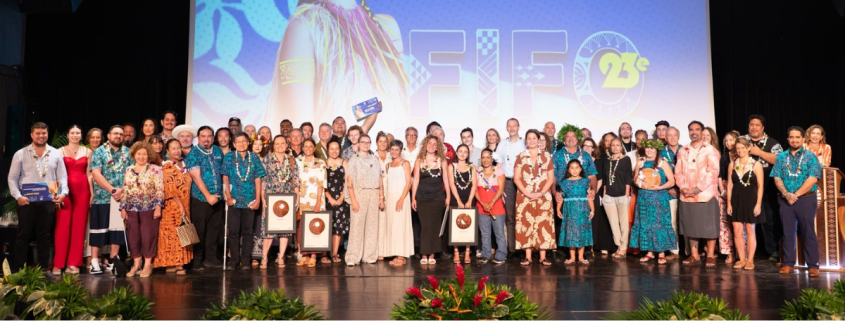
The International Oceanian Documentary Film Festival (FIFO) took place earlier this month in Tahiti, with multiple projects from DEGANZ members in competition and screening in the programme. Join us in congratulating members Katie Wolfe and Mana Hira Davis for winning awards at the festival!

Katie’s The Haka Party Incident took home the 2nd Special Jury Award. The feature documentary details the historical events of May 1, 1979, when a group of young Māori and Pasifika activists, which later became known as “He Taua”, confronted engineering students at the University of Auckland who were rehearsing a “mock” haka for their end-of-year parade. The clash that followed forced the entire nation to confront systemic racism and set in motion a process of real change.

Meanwhile, the Best Fiction Short Film Award went to Pākehā, written and directed by Mana. Set in the 1980s in Aotearoa, a young Pākehā mother’s determination to learn Te Reo Māori exposes her struggles, resilience, and courage, in an inspiring true story of cultural reconciliation.


Last updated on 26 February 2026