There’s Nothing To Be Scared Of
Today, Thursday 22 October, it’s expected that more than up to 100,000 doctors, nurses, allied health workers, and primary and secondary school teachers will go out on strike. They are seeking better pay and working conditions, and better environments in their work places for every New Zealander. All at a time when many people, including many of those going on strike, are doing it tough.
Screen industry workers under the Screen Industry Workers Act, however, are prevented from striking. It’s one of the concessions that was made to help ensure collective bargaining for screen workers would become a reality when the legislation passed.
Well, the legislation passed. But what hasn’t happened is the collective bargaining.
SPADA, the representative body for screen producers in New Zealand, has not registered since the Act came into force in December 2022, even though they said they would.
That is more than two and a half years of ducking and diving from them while we, Equity NZ (actors), NZWG (writers), and more recently SIGANZ (techos) and SMSG (composers/audio)—all registered parties for collective bargaining—have been meeting with SPADA and amongst ourselves, to make it as easy as possible for them to fulfil on their promise. We haven’t been sitting on our hands. We just haven’t been public about it until the first quarter of this year.
Recently in industry news, SPADA’s recalcitrance has received the spotlight. An increase in cost for production due to increased pay rates has been highlighted as potentially a key reason why SPADA doesn’t want to engage. This is the scare.
The reality: Collective bargaining will set the base rates of pay—the rates below which nobody can be paid. This does not mean high rates of pay across the board. At our Creative Power workshops, this is how we propose pay rates be established:
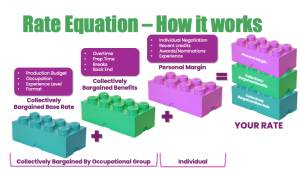
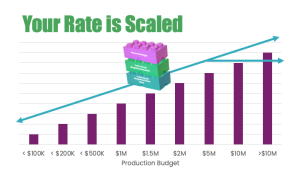
What you should deduce from this is that base rates of pay will differ depending on the size of the budget (budget ranges also to be negotiated). This will allow lower budget TV productions and low budget films to still be produced—a high percentage of NZ TV production is lower budget. What does low or lower budget mean? That’s to be negotiated in collective bargaining as well. Allowances would likely be made to accommodate short films and ‘amateur’ productions, i.e., no or micro-budget productions and small-budget, self-funded productions.
All of the guilds realise that there is a limited amount of production funding available. And we all want to ensure a healthy and vibrant screen production sector making New Zealand content, and servicing international production. So, we will be pragmatic in approaching collective bargaining.
SPADA: there’s nothing to be scared of. Clarity is a win for everyone.
Tui Ruwhiu
Executive Director
Last updated on 23 October 2025