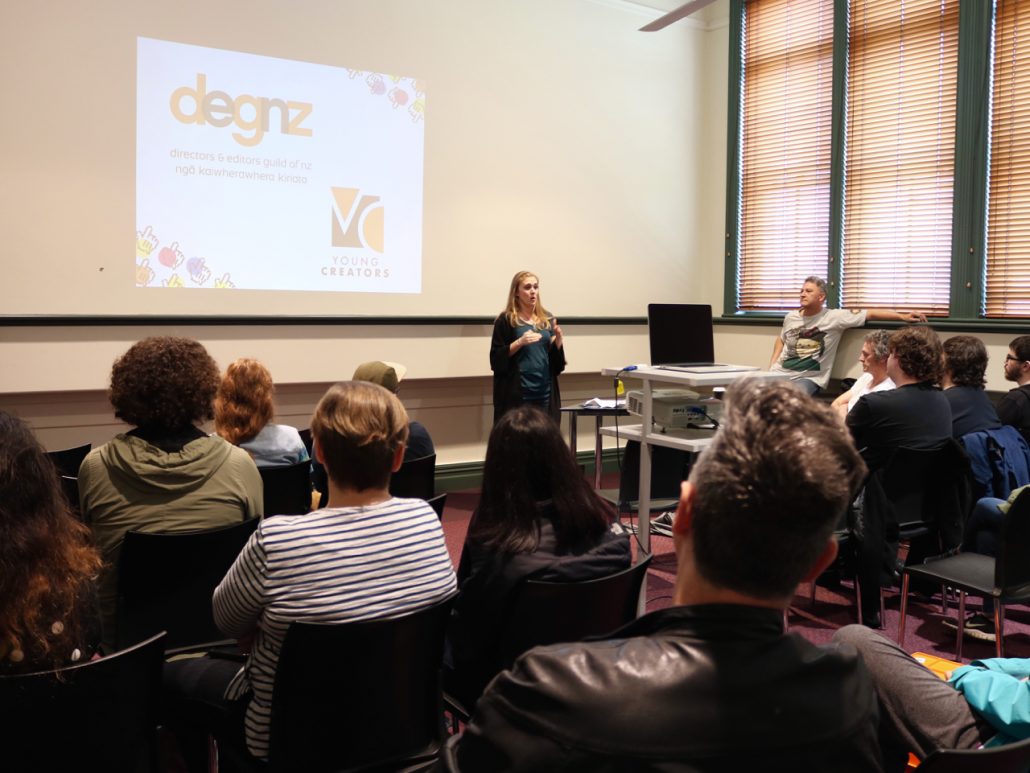
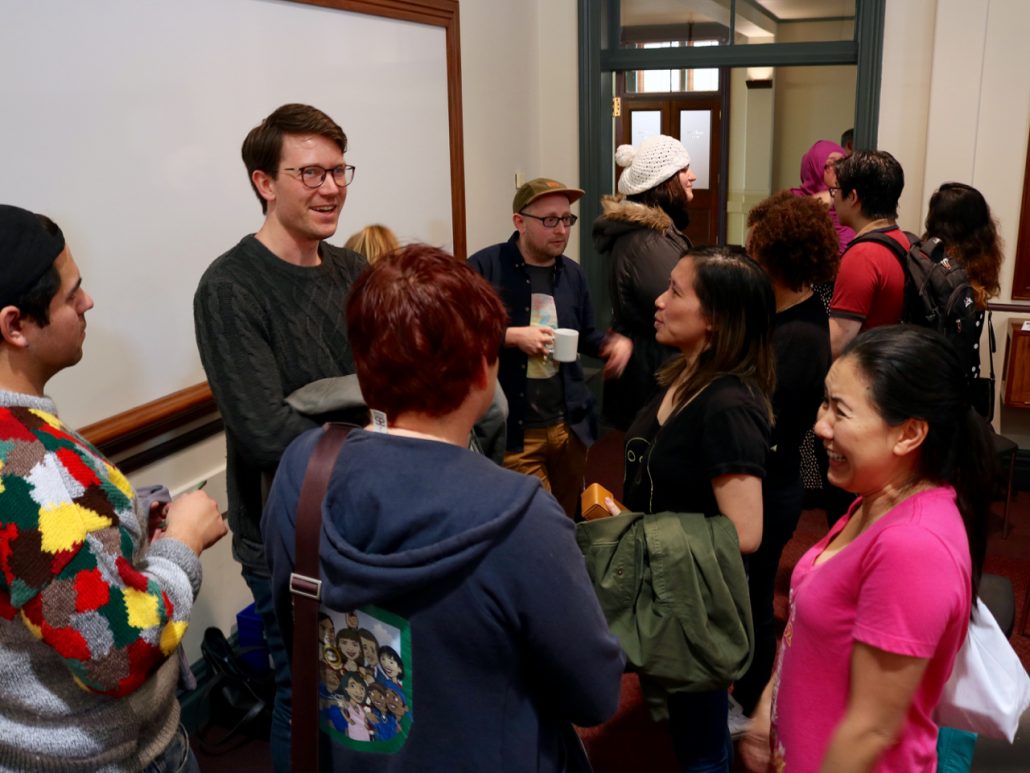
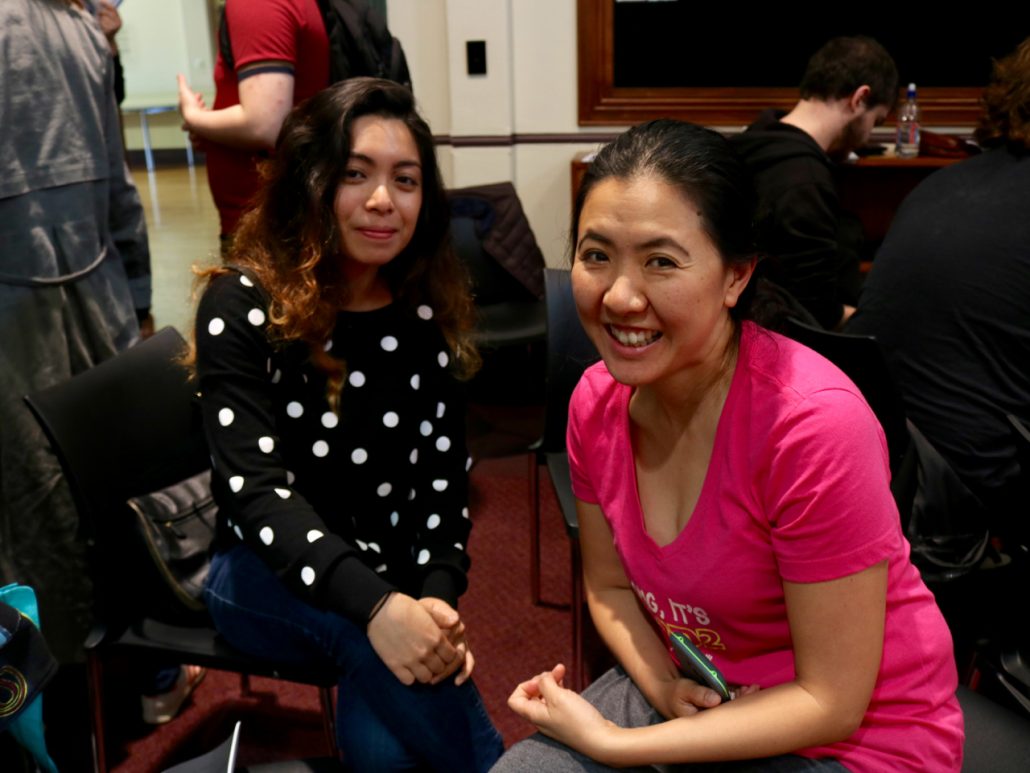
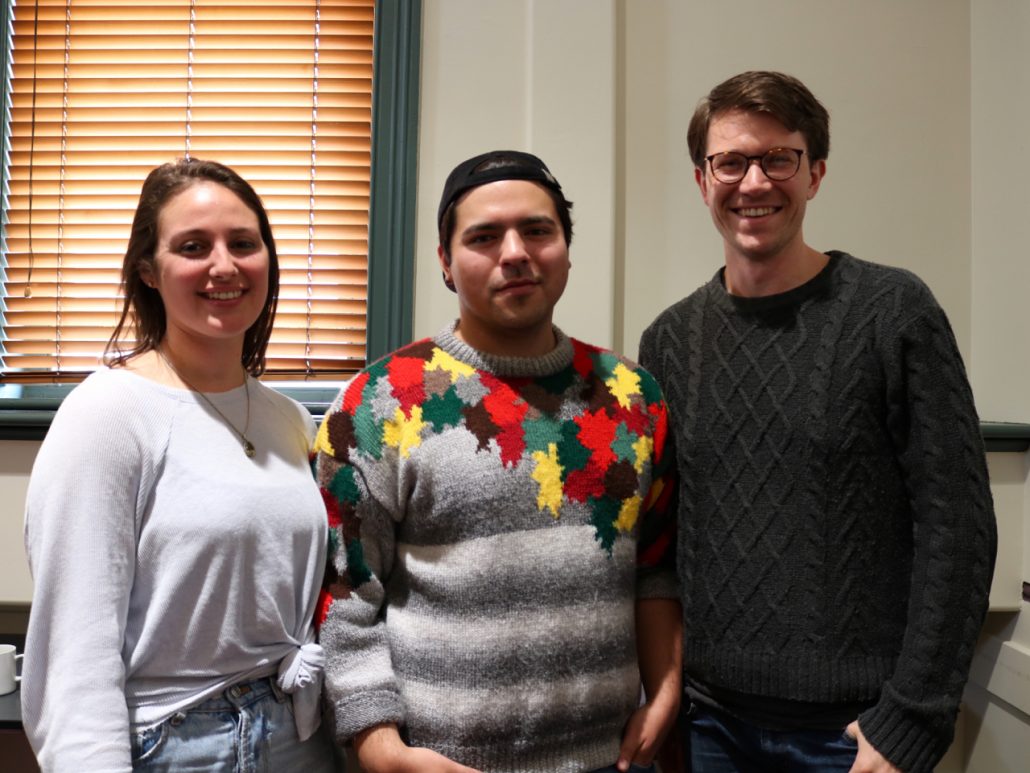
DEGNZ launched its new Young Creators initiative with its first event Before You Say Yes to Web Series.

Young Creators is a programme of events with a mission to inform and inspire younger or emerging directors and editors to build successful, sustainable careers in the screen industry.

The Young Creators initiative will be more career and business focused, while the Guild will continue to provide its craft-based professional development programme to members.

At Before You Say Yes to Web Series, Executive Director Tui Ruwhiu spoke in depth about the current issue of digital platforms expecting quality online series at rock-bottom prices.

Problems directors have faced include below minimum wages and a lack of creative rights and copyright. Another issue is that directors have signed contracts without properly understanding the agreement or knowing that they can negotiate for better conditions. And in some instances, directors have not received contracts until long after they have begun working on projects.

In response, DEGNZ outlined a proposed Standard Online Series Director Agreement at the Young Creators event. Tui and Tim Riley from Dominion Law highlighted and provided explanation of sections in the agreement. They also received valuable feedback that will shape the final document.

Because of the many problems that DEGNZ has heard about both directly and anecdotally, the Guild has decided to make the agreement available to both members and non-members on request.

DEGNZ will notify once the standard agreement is ready for release, and filmmakers will be able to receive a free copy by contacting DEGNZ directly.

The Guild encourages everyone to negotiation terms and conditions and get signed contracts before any work is undertaken. Everyone has a right to be compensated fairly either through purely financial terms, or a mixture of fees and retaining copyright, at the same time receiving creative control and rights for the work undertaken.

Thanks to our speakers and everyone who attended and helped make the event a success.


Last updated on 20 March 2020

When Minister for Employment Iain Lees-Galloway told ONE News just over two weeks ago that the government would repeal the Hobbit Law, all hell let loose.

The Hobbit Law prevents screen industry workers from unionising by making all film workers contractors not employees, thereby preventing collective bargaining.

To understand why the Hobbit Law was forced on the screen industry, there’s a need for a bit of history around two key events: The Bryson vs. Three Foot Six case which was settled in the NZ Supreme Court in 2005, and the move by Actors Equity NZ to unionise on The Hobbit in 2010. And I’m going to simplify things because it’s all a bit complex and convoluted.

The Supreme Court decision in 2005 saw James Bryson classified as an employee not a contractor and therefore able to pursue a personal grievance claim against Three Foot Six, the production company that made The Lord of The Rings.

In 2010, Equity NZ made an untimely play around The Hobbit to collectively bargain to improve working conditions for actors with the support of Australia’s Entertainment union the MEAA and the Screen Actors Guild of America among others.

Sir Peter Jackson and the Techos got up in arms about the potential loss of work and revenue to the screen industry due to the actors’ actions, and the National government swung in behind the pro-business argument. At the same time, Warner Bros., the studio behind The Hobbit saw a massive opportunity to squeeze greater concessions from the NZ Government, and duly did.

The upshot was the rushed through Hobbit Law, which prevents film workers being classified as employees and therefore stops them from unionising and collectively bargaining, and supposedly providing certainty for international studios and producers when assessing NZ as a destination for film productions.

The Techos, who have recently rebranded as the Screen Industry Guild of Aotearoa New Zealand, were understandably nervous with Lees-Galloway’s announcement—their concern is about a loss of work and revenue such as was threatened around The Hobbit and which became a reality during the dry patch in 2012 and 2013 because the screen incentives for international production were uncompetitive and the NZ dollar was high. At the time, many either moved overseas or out of the industry. The National Government in 2014 finally came to the party and upped the incentives. International production into New Zealand began to flow again and our crew capability and capacity, while still wearing scars from that time, has returned.

It’s important to say at this point that directors, editors, writers and composers very rarely work on international productions—they depend on local production to survive—and on having capable technicians available to work with them on those productions. Technicians work across both international and local productions, while most producers work on local productions and a handful on international ones.

Back to two weeks ago. It seemed like battle lines were being redrawn with the actors, together with directors and editors, stunties, and composers on one side wanting collective bargaining to improve what they view as their poor terms and conditions, the writers as a union wanting to protect the rights of workers, and the producers uncommitted. On the other side were the technicians who don’t want to see their livelihoods eroded or eliminated should the number of international productions coming here slow down or cease, while also wanting the choice to work as contractors and not employees. And driving the issue, a worker-oriented government wanting to get rid of unjust legislation that is also illegal according to an international convention NZ is a signatory to.

After an initial flurry of activity from the individual guilds we all settled down to talk and then we agreed at the government’s invitation to all settle down to talk in a working group to resolve the situation to the satisfaction of all parties. The ball is essentially now in the Government’s court to sort it out with all our input. We will keep you posted on developments.

For a more in-depth look at the issues, a recent NZ Herald article is well worth reading and I highly recommend you follow the threads and read the associated articles. You can find it here.


Tui Ruwhiu
Executive Director


Last updated on 20 February 2018

Congratulations to former Guild President Peter Roberts who took home the Craft Award for Best Editing: Drama for Jean at the New Zealand Television Awards.

The finalists in the remaining categories were also announced at the Craft Awards ceremony on Wednesday. Congrats to all the finalists and to our members in the running:

Best Director: Multi Camera

Mitchell Hawkes
Vodafone New Zealand Music Awards 2016
MediaWorks (Three)

Best Director: Documentary or Factual

Mitchell Hawkes
Born This Way: Awa’s Story
Ruckus (TVNZ1)

Best Script: Comedy

Roseanne Liang
Friday Night Bites
Flat3 Productions (TVNZ On Demand/YouTube)

New Zealand On Air Best Web Series

Friday Night Bites
Maha Albadrawi, Roseanne Liang, JJ Fong, Perlina Lau, Ally Xue & Kerry Warkia
Flat3 Productions (TVNZ On Demand, YouTube)

New Zealand On Air Best Factual Series

Why Am I? – The Science of Us
Paul Casserly, Mark McNeill & Irena Dol
Razor Films (TVNZ1)

The announced finalists for the New Zealand Television Awards to be held on 30 November: http://nztvawards.co.nz/2017-finalists/

For ticketing enquiries: leanore@janda.co.nz

Last updated on 20 February 2018

8th November 2017

A core group of organisations representing those involved in the screen industry met on Friday (3 November 2017) following recent media regarding the Government’s proposed repeal of the Employment Relations (Film Production Workers) Amendment Act 2010 (colloquially known as the ‘Hobbit Law’).

The discussion was positive and the organisations agreed to work constructively with each other and the Government to ensure that all the diverse interests associated with the sector are fairly represented. We look forward to engaging with the Government on what we all agree is a critical piece of legislation for the screen production sector.

Statement released by: Equity New Zealand, the Directors and Editors Guild of New Zealand, the Screen Industry Guild Aotearoa New Zealand, the Screen Producers Association, the Stunt Guild of New Zealand and the New Zealand Writers Guild.


Last updated on 4 April 2018

Join us for a special Rialto Newmarket screening of Human Traces, the debut feature from DEGNZ member Nic Gorman, which was selected for the New Zealand, Melbourne and Toronto film festivals.

When a mysterious young man arrives on a remote Sub-Antarctic research station, secrets threaten the relationship of a married couple working on the island.

Afterwards, lead actor Mark Mitchinson will join us for a 20-minute Q&A, moderated by Tui Ruwhiu.

In their Toronto Film Review, Variety wrote, “Nic Gorman has delivered a suspenseful, engrossing and very well performed mood piece that marks him as a talent worth watching.”

Watch the trailer here.

When: Thu 16 Nov, 6pm
Where: Rialto Cinemas Newmarket, Auckland
Tickets: Via Rialto online or at the cinema; $12 discounted tickets for DEGNZ and film industry members

Last updated on 25 March 2018