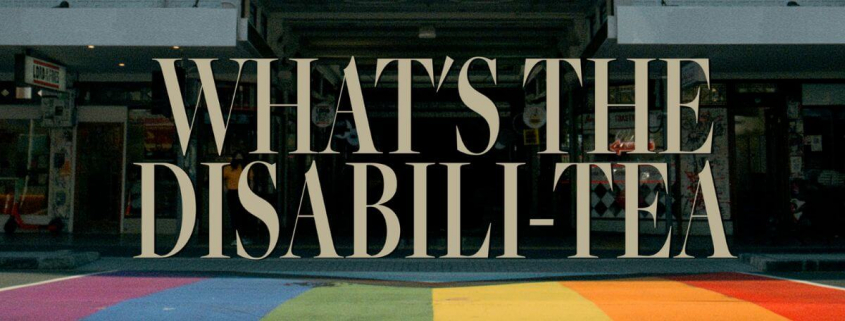
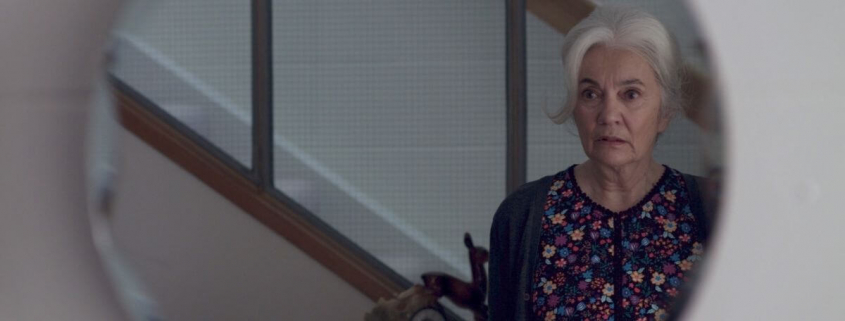
What’s the Disabili-Tea, edited by DEGANZ member and alum Brendon Chan is available to watch on Attitude! DEGANZ president Robyn Paterson worked as the executive producer with director and producer Justin Scott. It explores the lives of queer and disabled people in Aotearoa as a six-part anthology docuseries, funded by NZOA.

While drag icon Misty Frequency celebrates autistic and Takatāpui excellence, Ari proudly struts down Karangahape Road with his cane, and Cait and Rimu spill the tea on being misgendered in the healthcare system. The series also delves into living with invisible disabilities and showcases queer and disability pride.

This series offers an authentic look into the experience many non-disabled people do not consider. While highlighting issues of accessibility within society, What’s the Disabili-Tea ultimately celebrates the queer disabled community.

Brendon Chan works as a film and television editor for drama, factual, music videos, TV commercials, and other promotional content. His past credits include The Pact, Albularyo, and short film Blood and Gold.

Congratulations to Brendon and Robyn on the release!

Watch the series

The first two episodes of Hair Now, directed by Michelle Ang (DEGANZ), are available on The Spinoff. The series, edited by Kat Kasajima and made with the support of NZOA, features six Pan-Asian wahine and their relationships with their hair.

Episode one follows Yasmine, a Palestinian Jordanian New Zealander, as she navigates contradictory cultural ideas about hair coverage and removal. Since deciding to wear a hijab at 15, Yasmine finds strength and power in how she presents her hair in the world.

She explains, “Hair is a statement […], and it’s the first thing you can take control of in your own life.” The rest of the episodes follow this ethos. They explore how each woman expresses their identity through the growth, grooming, or removal of their hair.

Michelle is well known for her acting career in projects such as Star Wars: The Bad Batch, Vegas, and Fear the Walking Dead: Flight 462. However, she has been making a name for herself as a director and in 2020, she participated in our Emerging Women Filmmakers Incubator. Her directing credits include the animated short series Riddle Me This, the anthology feature Kāinga, and her new coming-of-age series Self Help.

We look forward to watching the rest of the episodes!

Watch the series

Last updated on 19 August 2022

As if we didn’t have enough on our plate with the Screen Industry Workers Bill, the Reform of Vocational Education, The Screen Sector Investment Review, and an NZFC still in managerial stagnancy sans a permanent CEO (David Strong has resigned but there’s now a need to find a replacement), we now have the combining of TVNZ and RNZ under the new entity Aotearoa New Zealand Public Media (ANZPM) to contend with.

Following a decision by Government to move ahead with this new approach to public media, a Governance Group was established. The Group has been busy, and has published a couple of important documents.

The first and easiest to read is the Business Case Governance Group Report. This report takes an overview of the need for a restructuring of public media in New Zealand, including thoughts outside the formal review they were asked to deliver by the then Minister of Public Broadcasting and Media, Kris Faafoi.

The second document is the Business Case they were required to construct—a long document laid out in the format required by Treasury. Often repetitive in nature, it is still worth a read for the truly interested.

And for those into literary self-flagellation, you can review the draft legislation here.

Faafoi then appointed an ANZPM Establishment Board whose responsibility it is to oversee the detailed design of the new entity and the change required to create it. The new entity will come into full operation by July 2023.

With the resignation of Faafoi, the portfolio has moved to Willie Jackson, who has been quick to express his views on ANZPM and other media matters in an interview with Duncan Grieve at The Spinoff.

The ANZPM is a massive undertaking. And like so much in the New Zealand screen sector, long overdue. It will affect everybody producing content for TV and Radio and thus is of utmost interest to the entire production sector. Strangely, there is nary a mention of the New Zealand Film Commission in any of the documentation, which I find curious considering the convergence of content and distribution channels and the expressed objective of the new entity to engage, inform, educate, enlighten and entertain. NZFC after all is a public media stakeholder and the only government funding body seemingly left out of the mix in considerations.

There is a call for submissions out now with a deadline of 8 September. DEGANZ will be responding and we encourage all of you in the screen sector to do the same, whether you are a content creator or viewer/listener. The ANZPM is going to shape the way we consume Aotearoa New Zealand content for decades to come and we want it to be done right.


Tui Ruwhiu
Executive Director

DEGANZ member Mandalina Stanisich’s 2018 short film Bass Line is set to screen at the Silver Screen – European Film Festival for Generations (EFFG). During the festival, screenings take place in about 100 venues across Germany to more than 13,000 viewers.

The Heidelberg University and Institute of Gerontology in Germany established EFFG in 2010. The festival features films, both drama and doco, that study themes of demographic change and ageing. It aims to promote images of positive, healthy, and active ageing and intergenerational dialogue.

Bass Line follows elderly couple Johnny and Kuini as they grapple with debilitating health issues in an increasingly unempathetic environment. While Johnny suffers from PTSD as a war veteran, Kuini’s recent diagnosis of dementia strains their relationship. Yet, despite these challenges, the this short film is a story of resilience, courage, and true love.

Mandalina’s film has made rounds in international festivals and exhibitions such as the Veterans Film Festival and NEW Gallery in 2020. It also received an honourable mention at the Be Epic London International Film Festival this year. Our congratulations to Mandalina.


Last updated on 11 August 2022

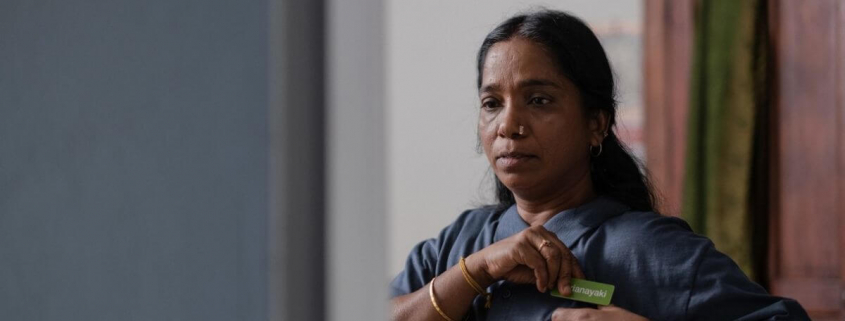
After the sold-out screening of New Zealand’s Best 2022 short film competition, Whānau Marama: NZIFF announced the winners. DEGANZ member Bala Murali Shingade’s Perianayaki, written and produced by Shreya Gejji and edited by Shailesh Prajapati (DEGANZ) swept up two awards!

Perianayaki won the Creative New Zealand Emerging Talent Award with a cash-prize of $4,000 and the Flicks Award for Best Short Film with $7,500. Additionally, actor Jeyagowri Sivakumaran received a special mention for her vulnerable performance as the titular character. Inspired by the story of the real-world Perianayaki, the film’s heartfelt, slice-of-life narrative encourages empathy in all who watch it.

Additionally, Trees, directed by Tom Scott and Ben Bryan, won The Auckland Live Spirit of The Civic Award with a cash-prize of $4,000.

Jury member Tim Wong said, “We were ultimately drawn to two shorts at opposite ends of the spectrum of excellence: one that swung for the fences and committed to a vision, and another that grounded itself quietly yet profoundly in the everyday. Trees was striking in its confident ambition, while Perianayaki was searingly truthful, with a central performance we won’t forget.”

The Audience Award, voted for by the public, will be awarded on the closing night of the festival in Wellington on August 14. This winner will walk away with a 25% share of the box office sales from the competition’s total screenings.

Congratulations to Bala, Shailesh and the Perianayaki team and to the other finalists and winners!

Read more

Last updated on 11 August 2022