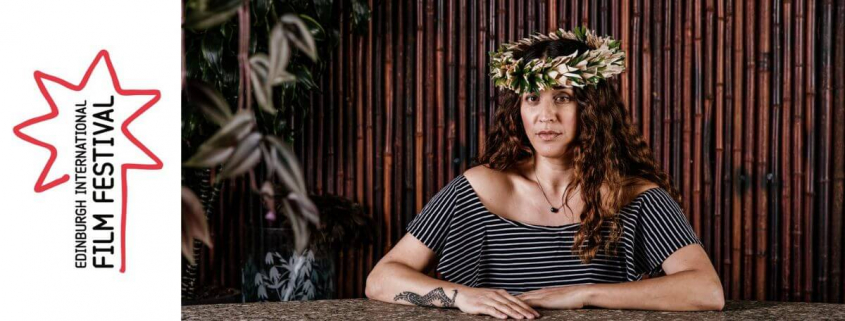
The 75th Edinburgh International Film Festival (EIFF) is featuring multiple members’ mahi this year! The festival runs from 12-20 August and will screen five NZ projects across various programmes.
Member Michelle Savill’s Millie Lies Low and Matthew Saville’s Juniper, edited by member Peter Roberts, are making their UK premiere in the festival’s Heartbreakers programme. They will appear alongside other films exploring the fraught relationships of friends, family, lovers, and cheaters.
Meanwhile, Nude Tuesday, directed by DEGANZ member Armagan Ballantyne, and feature film Whina will celebrate their European debuts. Nude Tuesday, a literally gibberish film devised by Armagan and fellow DEGANZ member Jackie van Beek, is set to screen as the Central Gala film.
Additionally, the festival’s New Shorts: On Leaving programme will feature member Mīria George’s short film fire in the water, fire in the sky. This strand features stories about migration, from the anticipation of leaving and journeying to the physical and psychological consequences after the move.
Both Armagan and Michelle will attend the festival with the support of NZFC and the EIFF, respectively.
We are excited to see these Kiwi films achieving international recognition in their festival rounds. Congratulations to Michelle, Peter, Armagan, Jackie and Mīria!
http://degnz.sensedesign.co.nz/wp-content/uploads/2022/08/EIFF-compressed.jpg4561200admin/wp-content/uploads/2021/10/DEGANZ_logo_home.pngadmin2022-08-10 11:34:522022-08-10 11:34:52NZ Films Selected for Edinburgh, 4 out of 5 Involving DEGANZ Members
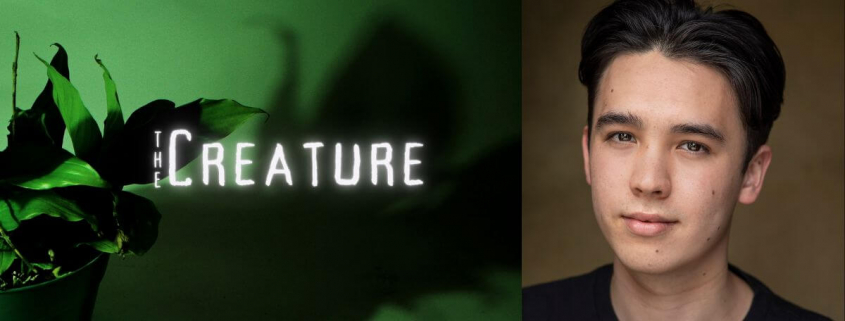
DEGANZ member Jake Tabata’s Boosted campaign for horror, queer web series The Creature closes on 26 August! The project is in the final stretch, currently sitting at 73% of its total goal of $9,000.
This project is Jake’s first excursion into directing. Since completing his BA studying Screen Production and Drama at the University of Auckland in 2020, Jake has worked on numerous plays and short films. He is also a committee member of Equity New Zealand’s Inclusion Committee.
Jake is thrilled to bring The Creature to life as an opportunity to share a deeply personal story that authentically represents the queer and East Asian communities. The script’s inspiration grew from him wanting to process and explore his own dating and relationship anxiety. He hopes this story resonates with and helps those in the throws of online dating realise they are not alone.
Additionally, Jake is particularly excited to work with such a diverse group of industry newbies as most of the team are emerging queer and BIPOC creatives. The production’s kaupapa focuses on authentically telling queer stories, upskilling young creatives, and ensuring accessibility to the finished project. Jake and the creative team want young queer people to feel seen, heard, and validated through this story.
If you would like to support this project and team, visit their Boosted page or follow them on Instagram or Facebook.
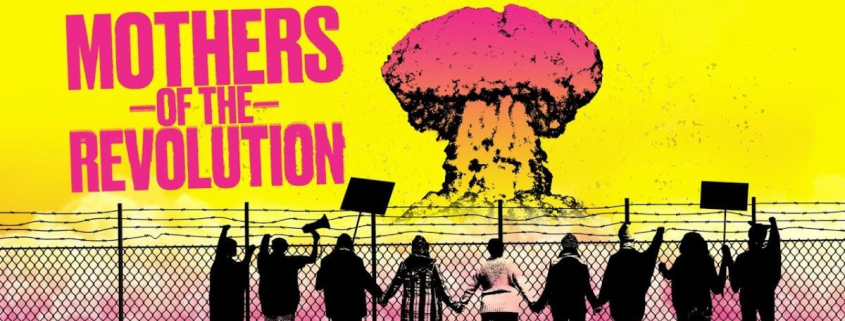
Mothers of the Revolution, directed by Briar March and co-edited by DEGANZ board member Margot Francis, Simon Coldrick, John Gilbert, and Tim Woodhouse, has been shortlisted for a 2022 Grierson Award. Along with seven other films, it is in the running for Best Single Documentary – Domestic.
The documentary delves into the women-led protests against nuclear production during the Cold War. While history has greatly minimised their efforts, the film uncovers the mystery behind the Greenham Common Women’s Peace Camp and highlights the women as wartime heroes. It reflects the tensions of the time by playing out like a drama-thriller with infiltrations of top secret government military bases and hidden messages transmitted under cover of night. Tales of conflicted families and love make this tension all the more real and personal. The film celebrates the women’s accomplishments and how they have inspired individual action to change the world.
The Grierson Awards, also known as the British Documentary Awards, recognise and commemorate documentaries that have significantly impacted the genre, demonstrating quality, integrity, creativity, originality, and overall excellence. Established in 1972 to honour the Scottish doco filmmaker John Grierson, the awards are now a key event in the UK film calendar.
We wish all the best to Margot and the Mothers of the Revolution team.
http://degnz.sensedesign.co.nz/wp-content/uploads/2022/08/mothers-of-the-revolution-compressed.jpg4561200admin/wp-content/uploads/2021/10/DEGANZ_logo_home.pngadmin2022-08-05 14:10:342022-08-05 14:10:58Mothers of the Revolution Shortlisted for Best Single Documentary Grierson Award
I joined a children’s choir just after my 3rd birthday. That was in Yugoslavia, Zagreb, in 1983. Choir defined me as a person. I’ve learned early on we are all individuals with different needs, wants and perception, so listening is often more important than talking. We’d rehearse twice a week and occasionally perform on Sunday morning Kid’s show on Channel 1 broadcasted live from the studio at Zagreb TV. The studio lights were insanely bright and enchanting. Built sets, colourful gels, bubble machines, giant cameras on wheels, heaps of grown ups, discipline, and us kids were all needed to create those few minutes of a TV programme. The Whole is greater than the sum of its parts. I knew I wanted to be an entertainer, and I saw the beauty in the collective, not in soloing.
By mid teens, I was in a few TVCs, had a supporting role in a feature film, acted in couple of theatre plays, but started feeling uncomfortable being recognised on the streets. Rather than escaping that world, I removed myself from the spotlight, and joined the crew “behind the scenes”. I spent my 20s mostly in theatre, making music and sound design, experimenting with 3D mapping and projections, filming and editing my friends’ gigs and creating short videos for VJing. I was lucky to own a firewire HDV camera, Final Cut Express and a laptop powerful enough to deal with the footage. VJing was a passion giving me a chance to perform my own artwork without too much exposure. I was VJing for 3 bands I liked, and realised that clip making part of the process was my favourite. I wanted to edit more. I approached the team that was producing a weekly music show about demo bands, and I got the gig. It felt like playing music and Lego at the same time, but it was an unpaid job and if I wanted to edit more, I would need to find paid work before I quit the day job.
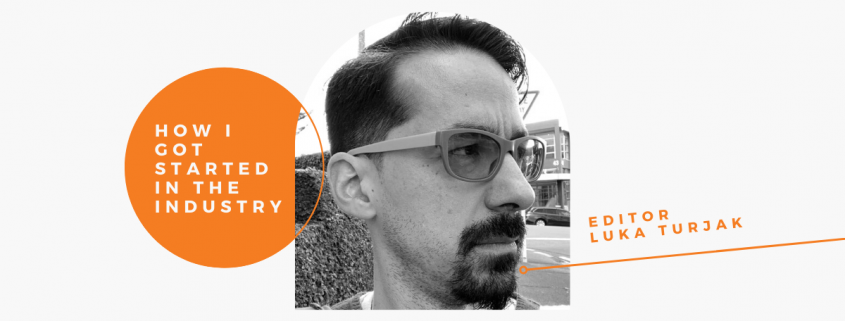
Editor Luka Turjak in his many elements / Photos: Supplied
Same year I was introduced to Željko Senečić who needed an editor to re-cut a film about Yugoslav sculptor Dušan Džamonja. It was edited in Final Cut 6 so it was a rather easy task once I found a common tongue with a director who was larger than life and 47 years older than me. Senečić had degrees in Painting from the Zagreb Academy of Fine Arts and Scenography from the Zagreb Academy of Drama Arts and he was a production designer, film director, screenwriter, playwright and way more. I on the other hand was a choir singer, had some college in Mathematics and earned money at a telephone company.
Luckily we understood each other, became good friends and in the next 6 years we made another 8 documentaries, mostly about painters and one TV drama. He supported my idea of quitting my job and turning freelance editor and theatre video/sound designer. Not the wisest thing to do during the Great Recession, but it worked out fine. It made me a happier person. I was editing art exhibition pieces for various artists and took occasional TV jobs and had time for theatre, choirs and my bands.
Editor Luka Turjak in his editing suite / Photo: Supplied
Coming as a tourist to New Zealand in 2014 was a big change. I’ve met a woman here and we wanted to explore what would living together be like. I stayed taking my chances of starting fresh. No friends, no choirs, no theatre group to belong to. I’ve taken “the long way home” approach. I didn’t know anyone in the industry yet, so I figured I’d crew for a while. Because for me, it is the people, it is the people, it is the people…
I took on everything I felt comfortable with – running, locations and unit assisting, agency/client/talent driving, ADing, DITing… I met a bunch of extraordinary people on sets, in rental and production companies who gave me greater insight into Aotearoa. When I felt the time was right, I put my hand up as an edit assist. And without forcing it I have slowly settled back into the editing chair.
Of course, I still do theatre, sing and perform, occasionally even in the editing suite.
About Luka Turjak
Luka is an experienced editor and assistant editor originally from Yugoslavia, and now based in Auckland. In the last few years, he has edited feature films In Passing and Spring Interlude, as well as documentaries, short films and music videos.
How I Got Started in the Industry is a guest blog series from the Directors and Editors Guild of Aotearoa New Zealand (DEGANZ). Our members reflect on how they made their way into assistant editing, editing, and directing—with no two stories the same. They offer advice for those starting out.
http://degnz.sensedesign.co.nz/wp-content/uploads/2022/07/Luka-Header-Compressed.png6751200admin/wp-content/uploads/2021/10/DEGANZ_logo_home.pngadmin2022-07-28 12:49:412022-07-28 12:50:29Editor Luka Turjak: How I Got Started in the Industry
The Edinburgh International Film Festival (EIFF) has chosen DEGANZ member Mīria George’s short film fire in the water, fire in the sky for its 2022 programme. While a few Kiwi feature films will be screening during the festival – Nude Tuesday, Whina, Millie Lies Low and Juniper – this is the only short featured from Aotearoa.
The film follows polar opposite sisters, Tia and Ina, as they perceive and experience the world differently. It makes a bold cautionary statement about climate change and its impact on migration and the Pacific Islands. This story, which seamlessly blends dance and film, is told in both Cook Islands Māori and English.
Mīrira originally developed the script for theatre in 2017 as part of the Fulbright Creative New Zealand Pacific Writers Residency. Then, Tawata Productions picked it up upon her return to Aotearoa after spending three months developing the performance installation at the University of Hawai’i.
The film received special recognition for cinematography from NZIFF in 2021. Last year, it also made the rounds of the Hawai’i International Film Festival and Pollywood Pasifika Film Festival. This year, it screened at LA Asian Pacific Film Festival, Wairoa Film Festival, and Māoriland Film Festival.
Congratulations to Mīria and the cast and crew for your UK premiere!
http://degnz.sensedesign.co.nz/wp-content/uploads/2022/07/Miria-George-compressed.jpg4561200admin/wp-content/uploads/2021/10/DEGANZ_logo_home.pngadmin2022-07-28 11:00:172022-07-28 10:17:00Mīria George’s Fire in the Water, Fire in the Sky to Screen in Edinburgh