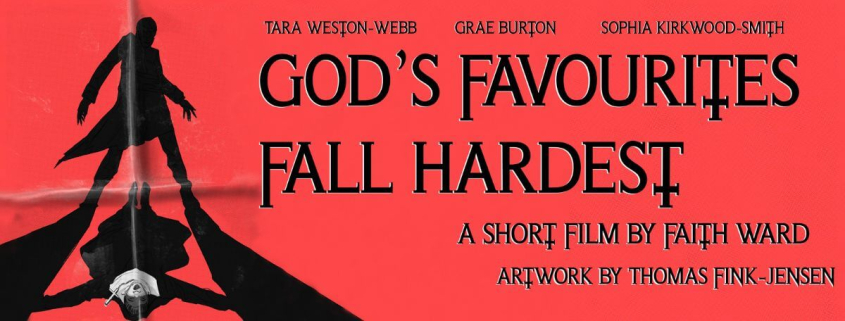
Help DEGANZ member Brian Gill bring short film God’s Favourites Fall Hardest to life by supporting the project’s Boosted campaign. Brian is taking on multiple roles for the film as the editor and producer.

The short calls upon and pays homage to nunsploitation films, the Italian Giallo slasher murder-mystery genre, and other classic horror motifs. The 6-8 minute thriller follows an amnesiac nun working to uncover her church’s secrets against the efforts of a cult leader seeking psychological control.

While aiming to crowdfund $3,300 on Boosted, the team is also looking to various filmmaking grants, both locally and internationally. The support from the Boosted will go towards paying for the film’s shooting location (a classical Gothic church in Remuera Tāmaki Makaurau), hiring the camera department, and paying for unit and art department costs.

Boosted is all or nothing, so if the team doesn’t meet their goal, all funds return to donors. While high-risk, this strategy raises Boosted campaigns success rates by raising the stakes.

You can support Brian and the team by donating to the Boosted campaign or following them on Facebook and Instagram!

Last updated on 29 August 2023

View from the Top banner

I went to a Screen Industry Guild of Aotearoa New Zealand (SIGANZ) membership drive event last night. And this morning I read a blog post out of the US about the effort to establish an independent producers union.

SIGANZ, like DEGANZ and other membership organisations that work to represent their members’ interests, and the efforts that the producers in the US are making to establish a union to represent their potential members’ interests, are faced with the same issues—the incredible apathy of many of the people they are seeking to represent.

SIGANZ has a membership of about 6 – 700 of the possible 5 – 10,000 below-the-line people in the NZ screen industry who could be a member of that guild. We have just over three hundred members of the possible 1,000 – 1,500 working directors and editors in New Zealand.

In the US article, many reasons were given for why they weren’t getting the support from the producers they needed to establish a truly representative organisation. One paragraph from that blog stood out:

“There was also a large group of producers who were sceptical of our efforts and whether or not being involved would be detrimental to their relationships with financiers and studios. Then there was another type of producer who couldn’t see the bigger picture. For example, in one town hall, I had a very prominent producer ask, “But how does this benefit me?” While I understand this question, I explained that it’s not just about one producer. The work we were doing is also about the next generation and ensuring that they aren’t exploited in the same ways we have been. It’s about preserving the role of the producer in the future.”

You could substitute the word ‘producer’ with the word ‘director,’ ‘editor,’ or ‘techo,’ and it would have the same relevance for us.

Having worked in this job for close to seven years now, I’ve been faced with the same difficulty those seeking to set up the producers union in the US faced—getting directors and editors who aren’t members to understand that the work we do is more than just about the immediate benefit to the individual, i.e., it’s also about the bigger picture work.

I have multiple big-picture meetings each week with some or all of the EDs and GMs of the other guilds and associations, together with funding bodies, government ministries, and others involved in whatever discussion we are having. Recent examples are the Reform of Vocational Education, The NZ Screen Sector Investment Review, the Screen Industry Workers Act (SIWA), and the proposed merger of RNZ and TVNZ. In the past, it’s been the Copyright Act Review, the NZFC CEO conflict of interest situation around David Strong, and input into the NZ On Air and NZFC strategies. There are others. Some of those went on for years.

The Film Industry Working Group meetings that DEGANZ and many of the other screen industry bodies participated in took place regularly over four long years and resulted in SIWA. All of these things are somewhat abstract when it comes to answering the individual question: How does this benefit me?

A lot of the work that DEGANZ and all the other NZ guilds and associations do is not just about the ‘you’. It’s about the ‘you’ and who comes after ‘you’. Thankfully we all have members and board members who understand this. There just aren’t enough of them. But there could be.

Last night SIGANZ took a different tack by serving up a partnership programme that helps to answer the “what’s the benefit for me” question for them—something they are well positioned to do as representatives of the below-the-line Art Department where the business partner they’ve found could have a significant bottom-line benefit. Not so easy for others of us with small memberships and little buying power.

Every guild and association in New Zealand could significantly grow its membership if a lot of those non-members who could afford it joined the guild or association that best represents them, understanding that we work on their behalf as well as on behalf of future generations of screen workers.

This is a call out for you to encourage those you know to join a guild, whether it’s DEGANZ, SIGANZ, NZWG, Equity NZ, SMSG, VFXPNZ, MDGNZ, or SPADA. We will be more representative, financially independent, and better able to do the work we do now and into the future. There is a significant benefit in that for us all.


Tui Ruwhiu
Executive Director

Last updated on 17 August 2023

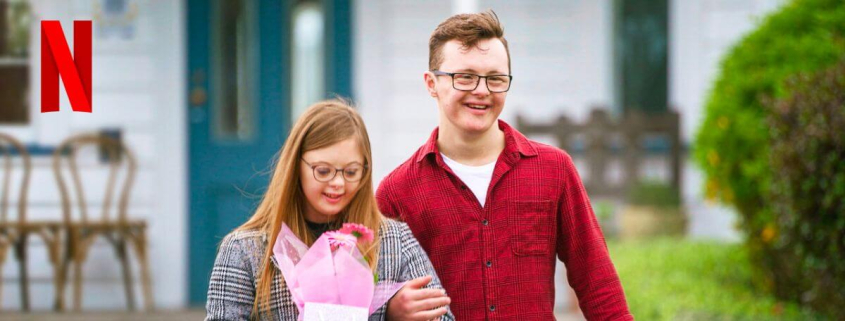
While we wait for season 2 of Down for Love, season 1 of the wholesome reality series, produced by DEGANZ board president Robyn Paterson, caught the eye of Netflix and is now internationally available on the streaming service!

As described in the show’s logline, the “heartwarming quest for love […] follows several people with Down Syndrome as they navigate the trials and triumphs of dating.” The show takes you along on a series of dates between the singletons as they search for their right match.

While adhering to the match-making reality TV genre, the series is uniquely personal to the participants due to the production’s dedication to thorough research of what each person was looking for in a partner, what sort of date activities they’d enjoy, and their plans for the future. In an interview with The Spinoff in 2022, Robyn shared that the show’s match-making strategy was based on pairing people with similar lifestyles and interests, not what would create the most drama. She commented,

[A]t the very least, if there wasn’t a romantic connection they would get a really solid friendship.

In the same interview, Robyn shared how the entire production had an extended duty of care, from comfortable scheduling for the participants to having disability-specific counsellors available. She also explained that allowing the participants control over their own stories was crucial. She said,

We really wanted people to stay in the driver’s seat of their own stories. Especially with intellectual disabilities, because people aren’t often afforded the right to tell their own stories.

Audiences were perceptive to the production’s care for the participants, causing the show to amass a strong following of viewers from its debut season.

Congrats to Robyn and the team! It’s great to see a Kiwi show earn its spot on such a popular international streaming service.

Kiwi audiences can watch season 1 of Down for Love on TVNZ+, while the rest of the world can catch it on Netflix.

Last updated on 17 August 2023

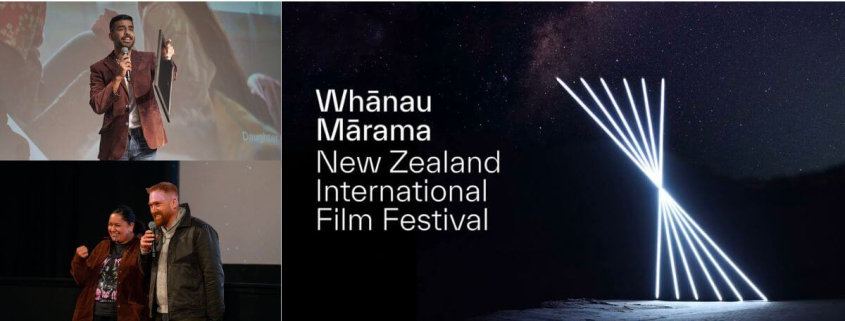
NZIFF announced the final awards and special mentions during the festival’s Wellington run, with DEGANZ members Pulkit Arora and Douglas Brooks being recognised for their mahi.

Pulkit won the hearts of audiences across the country with his short film Anu, earning him the NZ’s Best 2023 Audience award. The film’s unique perspective of a widow immigrating to Aotearoa through managed isolation proved universal with its exploration of grief. With the accolade, he will receive 25% of the box office revenue from the NZ’s Best screenings in Auckland, Wellington, Christchurch, and Dunedin. This is Pulkit’s second win for Anu during NZIFF, after receiving the Creative New Zealand Emerging Talent award at the Auckland screening of the shorts programme.

Meanwhile, Douglas received a Special Mention award for Kōkako during the Wellington screening of the Ngā Whanaunga Māori Pasifika Shorts. His short follows an aspiring ornithologist into the New Zealand bush. While searching for a thought-to-be-extinct bird, she learns of her grandmother’s death and must process the loss while isolated in the wilderness.

Congrats Pulkit and Douglas; what a great way to wrap up the awards section of the festival!

NZIFF is still running throughout Aotearoa until 10 Sept; don’t miss the chance to enjoy some great cinema in your town before it closes.

Last updated on 17 August 2023

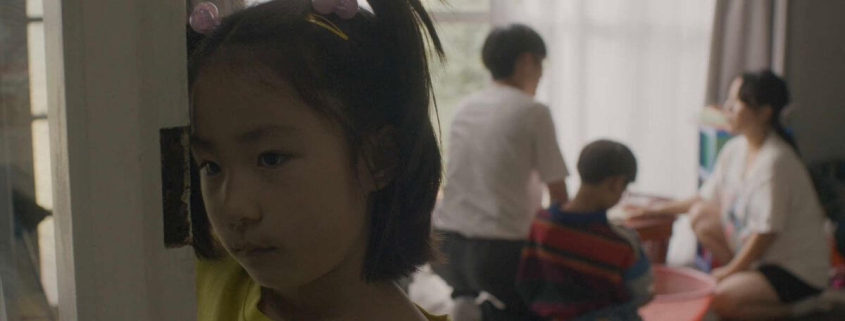
Kāinga is returning to Aotearoa! Following the feature’s premiere at NZIFF last year and its international festival run (including MIFF, HIFF, and IFFI Goa) the film will return to Kiwi screens on Radio New Zealand (RNZ). DEGANZ members Michelle Ang (Incubator 2020), Ghazaleh Golbaksh (Incubator 2021), Julie Zhu, and Nahyeon Lee (Incubator 2021) each directed one of eight stories in the anthology film. Fellow member Mia Maramara (Incubator 2022) was a writer on the project along with Ghazaleh and Nahyeon.

The film roots itself in a single Kiwi home, and glimpses into the joys and struggles of the various families who live there across five decades, bringing Pan-Asian women’s narratives to the forefront. From exploring the historical connection to tangata whenua, to coping with isolation and dissatisfaction, to excitement about making home and finding community support, to finally claiming home, the film does not shy away from the challenges of the immigrant experience in Aotearoa.

You can catch Kāinga on RNZ, free to view from 20 August.

Last updated on 17 August 2023