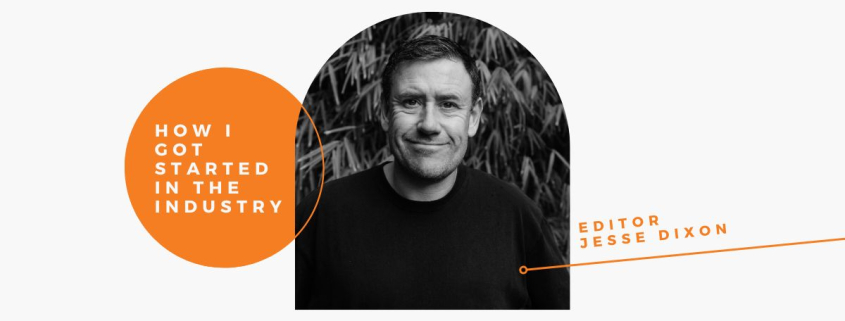
I didn’t always want to be an editor. I loved film and the moving image, but I was put off by the big crews and the “art by committee” feel of it all. Like many artsy teens, I thought I was a revolutionary artist with something profound to say, so I did a fine art degree.
Three years later, I graduated broke, back at my parents’ house in a small town in rural England, with no idea what to do next. The art world looked like a terrible way to make a living. I’d made short films during my degree and realised I enjoyed editing, mostly because it let me muck about on computers for hours, but also because it was a way to combine everything I liked: music, images and storytelling.
As luck would have it, someone in my small town ran a tiny corporate video company out of a barn. They needed an editor and, as probably the only person in the area who knew how to use Final Cut, I got the job. It taught me a lot, not just about how to cut, but about how to take a note. After a year editing corporate videos, I thought I was ready for the big league and set off to conquer London. Six months later, the only thing conquered was my overdraft. I had to accept that if I wanted in, I’d have to start at the bottom.
So I became a runner in Soho post houses, palaces of post filled with offline suites, audio rooms, VFX teams and finishing bays that looked like spaceships. I was serving teas, fetching lunches and sprinting DigiBeta tapes across London, but it was exciting to be involved. I worked my way up from tea boy to tape op in the machine room, where I learned the technical side of the craft: all the cables, codecs and late-night error messages. Outside work, I grabbed whatever scraps I could: no-budget music videos and unpaid short films, eventually stitching them into a reel good enough to land me my first real editing job.
It was cutting news for an experimental network called Current TV. Owned by Al Gore, it aimed to give young people a platform through short documentaries mixed with an early social media-style website. It was at the dawn of the social network: Myspace was king, Facebook and Instagram were just arriving, and everyone was wondering how the internet and TV could mix.
My job was turning whatever was trending online into TV news. Every hour, a new story had to be cut and exported straight to the server. It felt less like editing and more like playing Tetris at speed, with the added thrill of knowing that if I dropped the wrong block, it would air live. It was chaotic but groundbreaking; we were one of the first to put tweets onscreen in news packages. Inventiveness, creativity and taking risks were championed.
Eventually, the channel realised it needed longer programmes to be able to get ratings, so I joined a tiny internal team making longer documentaries. It was like a filmmaking youth club: we pitched ideas, got a few greenlit each quarter, and got on and made them. We were terrible at scheduling and would never set ourselves realistic targets in the edit, so finishing often meant working until 2 a.m. for weeks on end. But it was fun and made me fall in love with long-form documentary.

Some of the long-form documentaries Jesse has gone on to work on.
I stayed at Current for five years, until it shut down, and I bounced around various projects in a similar space. Vice and BBC3 all tried to capture that young online audience on television with varying degrees of success. It had been a great place to start out. I had cut hours upon hours of television, learned how to make something from nothing, and how to make something cheap look expensive.
Since then, I’ve moved into bigger, more grown-up documentaries, but I’ve tried to keep some of the playful irreverence from those early youth films in my editing. Over the years, I’ve realised editing is about half technical skill, half managing relationships. You need to know how to cut, of course, but you also need to work with directors, execs and producers while keeping your sense of humour intact. Nobody wants to work with a grumpy ideologue, no matter how talented. If you want a career in editing, be the person people actually want to spend months locked in a tiny room with. Taking notes on the chin, even the bad ones, and trying to answer them with a smile and creative energy is what gets you asked back.
About Jesse Dixon
Jesse Dixon is a documentary editor with many years of experience crafting bold, cinematic, and character-driven stories. He began his career making innovative documentaries for a youth audience across Al Gore’s pioneering TV network Current TV, online platform VICE and youth channel BBC Three. Since then, he’s worked with some of the UK’s top production companies, editing a wide range of projects including archive-based documentaries, big-budget adventure series, observational documentaries, specialist factual and current affairs. Jesse’s films have featured on most of the UK’s broadcasters, including the BBC, Channel 4, and ITV, as well as major international streamers including Netflix, Disney+, and Apple TV+.
How I Got Started in the Industry is a guest blog series from the Directors and Editors Guild of Aotearoa New Zealand (DEGANZ). Our members reflect on how they made their way into assistant editing, editing, and directing—with no two stories the same. They offer advice for those starting out. Get in touch with admin@deganz.co.nz if you’re a member and would like to share your story.
Last updated on 1 September 2025