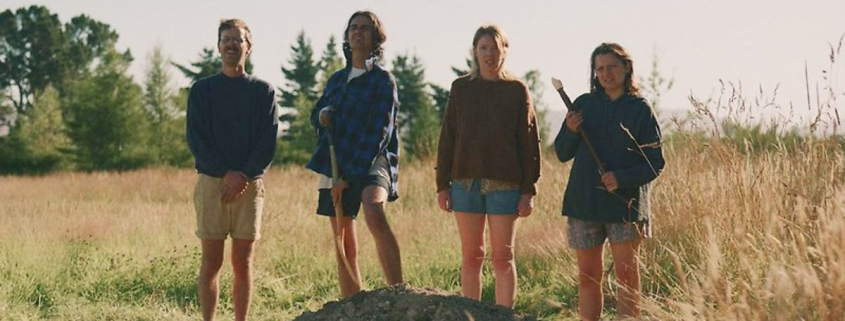
The film follows four friends on a New Year’s Eve trip gone wrong. When they stumble upon and smoke some ancient weed, the group devolves into cannibalism.
The Weed Eaters premiered at the 2025 Whānau Marama NZ International Film Festival and has gone on to collect a successful line-up of festival laurels, including Frightfest in London, the Adelaide Film Festival, and now SXSW Sydney. The film was shot on location in northern Canterbury for the micro budget of $19,000 and has been praised for its distinct New Zealand voice and ingenuity.
Congratulations to Callum and the rest of the team on the win!
http://degnz.sensedesign.co.nz/wp-content/uploads/2025/10/The-Weed-Eaters.jpg4561200admin/wp-content/uploads/2021/10/DEGANZ_logo_home.pngadmin2025-10-22 21:27:472025-10-22 21:27:47‘The Weed Eaters’ Wins Best Feature at SXSW Sydney
Check out this very full DEGANZ Watchlist with Day One Shorts, new series, and trailers for soon-to-be-released projects!
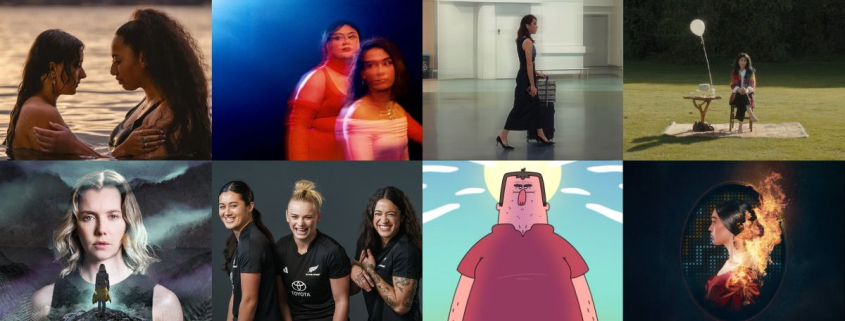
DEGANZ members Giselle Ilaoa, Angel Kameta, Lee Li, and Shamin Yazdani celebrate the online premiere of their Day One Shorts after two packed screenings during Show Me Shorts.
If you’re looking for something new to watch at home, The Ridge, a Kiwi/Scottish co-production crime drama directed by Robyn Grace (DEGANZ), is releasing weekly on Sky Go and Neon. If you’re more of a sports fan, you’ll be interested in Triple Threat, a factual web series covering the highs and lows of three Black Ferns.
Meanwhile, trailers dropped for projects from DEGANZ Board President Ben Powdrell and fellow member Taratoa Stappard. Ben’s comedy animated series, Bloke of the Apolocalypse, is coming to YouTube on 31 October. We have to wait a little longer for Taratoa’s highly anticipated directorial debut, Mārama, set to hit local cinemas in early 2026.
Manaia, a young woman caught between expectation and self-acceptance, finds herself confronting her repressed sexuality when a chance reunion with her first love stirs old feelings.
Amid the nightlife of a new city, a young Māori trans woman reckons with safety, isolation, and the fragile bonds of old friendships outgrown — as the promise of belonging rises just beyond the horizon.
After her gender identity was denied in her homeland, Lee Li, a transgender asylum seeker, embarks on a journey toward belonging, freedom, and self-empowerment.
Single and with a mid-thirties birthday approaching, Shamin confronts the question she’s long been avoiding: should she freeze her eggs? Born in Iran, raised in Ōtautahi Christchurch, and having spent her twenties overseas, Shamin uses her own story to unpack what at first seems like a simple decision. However, as she embarks on this deeply personal journey, the question of motherhood reveals itself to be intertwined with something much bigger: her identity as the daughter of Iranian immigrants.
Leaving a life in tatters in Scotland, Mia travels to New Zealand for her sister’s wedding. On arrival, she’s shocked to learn her sister has died. Determined to uncover the truth, Mia becomes entangled in a small town’s web of secrets and lies.
Editors: Josie Haines, Jake Tattershall, and Isaac Stati
3 BLACK FERNS rookies fight for their FIRST Women’s Rugby World Cup spot! Follow Jorja Miller, Maia Joseph, and Katelyn Vahaakolo as they chase their dreams of making New Zealand’s elite squad heading to the UK. This behind-the-scenes journey reveals the intense pressure, gruelling training, and personal sacrifices these talented athletes face during the rigorous selection process. Will they make the cut for rugby’s biggest stage?
In the rural back blocks of New Zealand, a father and son battle a zombie apocalypse and some annoying neighbours, all while taking care of their pet lamb, Lambie.
1859. When a young Māori woman is summoned from New Zealand to North Yorkshire, she uncovers the horrific truth of her colonial heritage, and she must destroy the titled Englishman who has devastated her family. In cinemas across Aotearoa from 12 February 2026.
http://degnz.sensedesign.co.nz/wp-content/uploads/2025/10/DEGANZ-Wathclist-Oct-22.jpg4561200admin/wp-content/uploads/2021/10/DEGANZ_logo_home.pngadmin2025-10-22 17:05:112025-10-22 17:04:58DEGANZ Watch List: Day One Shorts, New Series, and Trailers
DEGANZ members April Phillips and Jeremy Masters have had films accepted to film festivals both near and far.
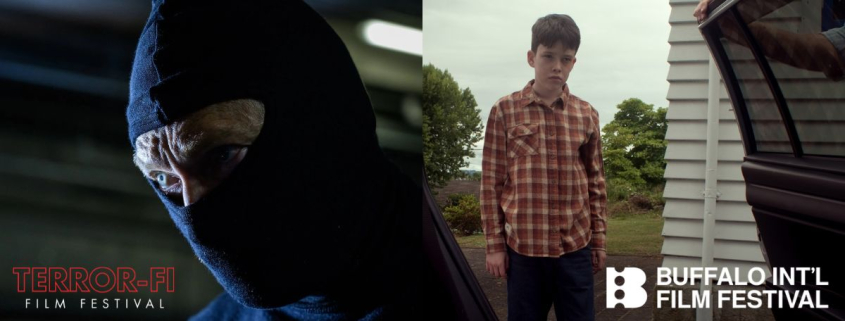
Blind Panic, a feature film co-produced by April, is celebrating its premiere here in Aotearoa at the Terror-Fi Film Festival in Pōneke Wellington on 31 October. The film tells the story of a blind woman who befriends an ex-con, unaware that he is on home detention with a target on his back. She finds herself caught up in his past and hiding in plain sight of a sadistic crime lord. The crime thriller is the directorial debut of the late Mark Willis and was completed before his untimely death in May 2023. It will also screen in Auckland and Christchurch before receiving international distribution.
Home Base, directed and edited by Jeremy and colour graded by fellow member Damian McDonnell, screened at the Buffalo International Film Festival in mid-October as part of the Growing Up programme. The short follows a young boy who is left paralysed by anxiety after a traumatic event. His parents struggle to help him move forward, only to find their efforts deepening the problem.
http://degnz.sensedesign.co.nz/wp-content/uploads/2025/10/Screening-Near-and-Far.jpg4561200admin/wp-content/uploads/2021/10/DEGANZ_logo_home.pngadmin2025-10-22 17:04:432025-10-22 17:04:43Screening Near and Far
For this iteration of DEGANZ’s new blog series, A Kōrero With…, Izzi Hoskyn spoke with Director of Photography Simon Raby NZCS.
Simon is a freelance Director/Cinematographer with 45 years of industry experience. He works largely in feature films, both local and international, with credits such as The Lord of the Rings, District 9, Elysium, Deathgasm, No Exit and The Heart Dances. His latest project is as Cinematographer on Rebecca Tansley’s feature opera documentary Tenor. In 2018, he was awarded official accreditation from the New Zealand Cinematographers Society (NZCS).
In this kōrero, Simon shares his technical and creative processes, shedding light on the unique skills that a DOP brings to a project to interpret the director’s vision and help serve the story.
Izzi: What does a Director of Photography do?
Simon: At its most basic level, a DOP is responsible for how the images look on screen. My job when working with the director is as an interpreter. I’m interpreting the script, the director’s vision, and the film’s emotions and themes. For example, we may have decided to incorporate a colour theme that appears at specific points in a film to remind the audience of something or to make them feel a certain way. So, it’s not spoken, and it’s not necessarily part of the script, but you might find ways of associating certain things with a subconscious subtext, if you like. It’s all to help the narrative. I’m a storyteller, just like the director, and I have tools in my skill set that help me tell the story.
That’s why I’m called a director, because I will direct the photography in a way that interprets the director’s vision.
I’m also a translator. Once the director and I have a clear vision of what we want to do, I then translate that into technical instructions for the crew.
Izzi: I like how you described it as being a translator where you’re essentially translating the director’s vision into tech speak.
Simon: It depends on the director because every director has different strengths. Someone like Nikki Caro, who is an incredibly strong actor’s director, can very succinctly convey what she’s trying to do, but won’t necessarily say, ‘Throw on a 40 mil or throw an 85 for this.’ It’s up to me to interpret the director’s vision and go, ‘This is going to be the right lens for this kind of field of view and how much we want the background to be in or out of focus.’ But some directors, like James Cameron, will say, ‘I want a 135 on that camera,’ and he’ll know all the depth of the fields. In that instance, as a DOP, you are more in charge of making sure it all happens.
So, it really depends on what the director wants and how much they’re looking for. Most DOPs are more than happy to support the director in any way that works for that particular dynamic.
Simon working with director Rob Sarkies / Images: Provided
Izzi: The relationship between the DOP and the director is at the core of your job, but who else in the production do you work with?
Simon: The departments that the DOP is directly responsible for are the camera, lighting, and grip departments. That’s the sphere of influence that I have in terms of who I’m directing as the Director of Photography. Outside of those three teams, I also liaise with the Art, Makeup and Costume, Locations, SFX, and VFX Departments over a multitude of onscreen details.
Izzi: What does your workflow look like?
Simon: The first thing I do is read the script, and I’ll usually read it with just the story in mind at first. I’ll make notes at the end about my thoughts, how it might feel, and what sort of things came to mind as I read. Then I’ll reread it and start thinking about potential technical things.
Then I’ll usually have a series of meetings with the director, where we’ll review the director’s resources, like the mood board, and discuss them at length. From that, I will gain a clear understanding of some of the technical challenges. It’ll help me start to break down the sorts of equipment I’ll be asking for because all this is tied to budget.
Then there are a series of pre-production meetings with all the department heads, where you’ll do script breakdowns and discuss how we’ll approach certain things. Then, you’re off to do technical recess and tests. You might be doing tests with visual effects as well. You’re working with all these different departments because you’re all interested in what ends up in the frame.
After that prep process, you go into shooting and watching daily rushes with the director.
At the end of the shoot, it’s all kind of over for the DOP until the edit’s done, unless there are pick-ups. You don’t come back until the colour grade when you’re in a suite making the colours and the contrast and the look of the film as sweet as you can, often with the director.
Simon on set / Image: Provided
Izzi: The last blog we did was with Damian McDonnell, who discussed how his job as a colourist involves working closely with the director and DOP to bring their images to life. Do you have any insights on the DOP-Colourist dynamic?
Simon: Those relationships are quite personal. A colourist is both highly skilled and has strong creative ideas about how the film should look.
I’ve worked with Damien before; we did Mortal Engines together. He was the on-set colourist, and it was great because we got to set up a look on the shoot day, and then eight or nine months later, we got together again to finalise it all. So we got to know each other reasonably well. He’s such a skilled colourist and has strong ideas about how things could look, so sometimes we had to consider who had the better idea for how something should look in the grade. But it’s always about what’s best for the film and the story.
Izzi: So, we’ve discussed the technical workflow. What’s your creative process?
Simon: Personally, I rely quite a lot on instinct. I have instinctual feelings about the way I’d like to cover things. But if I had to really break it down, I know that maybe some of that is habit and some of it is cultural influences. There’s no right or wrong way, but there are more effective ways than others at telling a story. For instance, when I break down a script, I always look for important beats.
Where you put the camera is vital because it tells the viewer where they are in the room. Being in someone’s face on a wide lens is much more intimidating than watching the person from the back of the room on an 85mm. Their face is the same size in the frame, but you know you’re closer or further away because you can feel it through the lens choice.
Izzi: What sort of conversations do you have with the director around finding the beats in the scene?
Simon: That’s again a really personal thing, depending on the director. I have to feel out the director when I first meet them.
But I think it’s important to be aware that the director is responsible for how that film turns out. You’re job isn’t to say, ‘Well, my idea is better.’ Your job is to help the director make the film great. And if the director hasn’t got a vision, then often the DOP will step in and fill the vacuum, because someone will need to. So it’s really good when a director can make those calls.
Izzi: Is that something you wish collaborators, specifically directors, knew when working with you as a DOP?
Simon: Yeah, I like it when the director has a clear decision-making process, and they know what they want to do. That’s not to say that I want them to be closed to ideas, because on a good shoot, everyone is giving good ideas.
The other thing I would like to say to collaborators is that the sooner you can address something in pre-production, the smoother shooting will go. If a director suddenly says 30 minutes before shooting that they want a shot to start from above the roofline, come down the chimney, go down the pipeline, then finish on the grass, I may not have the equipment I need to make that happen. So if the director has a clear idea of the sort of shots they want to get before the shoot, it helps both the DOP and First AD.
Izzi: Do you have any thoughts on the DOP-First AD-Director dynamic?
Simon: There’s a huge amount of work that a DOP does with the First AD prior to the shoot starting. It’s an essential communication process because the First AD is working directly with the director, and they’re in the middle of the director’s quest for creative brilliance, and the production’s need to finish things on time.
Inexperienced directors will often be steered quite heavily by both the First AD and the DOP, who are working together to make sure that the schedule is honoured alongside the creative vision of the director. There’s a three-way responsibility there.
Photos from across Simon’s Career / Images: Provided
Izzi: My last question is more specifically focused on your career. What has been a career high for you?
Simon: District 9 was really great because I was directing and shooting the second unit. I would go to Neil, who was the Director, and ask what he was looking for in a scene, and he would look at me and say, ‘Just make it cool.’
And I didn’t have to spend a lot of time discussing or debating with my DOP because I was the DOP, so I could just get on with it. It was very freeing from my point of view. There were big days, but the crew was really accommodating. I had fun on that show.
Izzi: It’s interesting that you’re able to cross between being a director and DOP, or even hold them at the same time.
Simon: It depends on the intensity of the project, really. District 9 was moderately easy for me because it was mostly on-the-shoulder handheld. It was all rough and mockumentary style.
Directing and DPing use different parts of your brain as well. I like directing because I enjoy working with actors. It’s the same when operating the camera, which I love to do. I much prefer being in front of the actors with the camera than in a tent far away. It’s that closeness to what it’s all about, which is the story and the performance.
Izzi: That seems to be the common theme from these kōrero. It always boils down to the importance of the story.
Simon: Absolutely!
This interview has been edited for brevity and clarity.
http://degnz.sensedesign.co.nz/wp-content/uploads/2025/09/A-Korero-With-Simon-Raby.jpg6751200admin/wp-content/uploads/2021/10/DEGANZ_logo_home.pngadmin2025-10-02 15:22:182025-10-02 15:23:44A Kōrero with Director of Photography Simon Raby NZCS
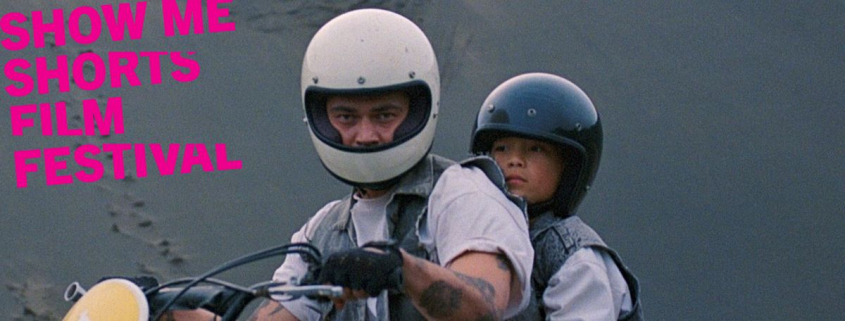
Show Me Shorts has unveiled the nominees for this year’s awards, with multiple films from DEGANZ members in the mix! As an Oscar-qualifying short film festival, Show Me Shorts provides a pathway to international recognition at the highest level.
The awards ceremony will be held on Sunday, 12 October, as part of the festival’s Vista Foundation Industry Day. One film will be awarded the People’s Choice Award at the conclusion of the festival based on audience voting.
DEGANZ is a proud sponsor of the Best Director and Best Editor Awards. Congratulations to the nominees below, and we look forward to seeing your hard work screen across the country.
A young emergency dispatcher forms a fleeting yet profound bond with an elderly widower, reminding her of the fragile beauty of life and human connection.