View from the Top banner

Today, Thursday 22 October, it’s expected that more than up to 100,000 doctors, nurses, allied health workers, and primary and secondary school teachers will go out on strike. They are seeking better pay and working conditions, and better environments in their work places for every New Zealander. All at a time when many people, including many of those going on strike, are doing it tough.

Screen industry workers under the Screen Industry Workers Act, however, are prevented from striking. It’s one of the concessions that was made to help ensure collective bargaining for screen workers would become a reality when the legislation passed.

Well, the legislation passed. But what hasn’t happened is the collective bargaining.

SPADA, the representative body for screen producers in New Zealand, has not registered since the Act came into force in December 2022, even though they said they would.

That is more than two and a half years of ducking and diving from them while we, Equity NZ (actors), NZWG (writers), and more recently SIGANZ (techos) and SMSG (composers/audio)—all registered parties for collective bargaining—have been meeting with SPADA and amongst ourselves, to make it as easy as possible for them to fulfil on their promise. We haven’t been sitting on our hands. We just haven’t been public about it until the first quarter of this year.

Recently in industry news, SPADA’s recalcitrance has received the spotlight. An increase in cost for production due to increased pay rates has been highlighted as potentially a key reason why SPADA doesn’t want to engage. This is the scare.

The reality: Collective bargaining will set the base rates of pay—the rates below which nobody can be paid. This does not mean high rates of pay across the board. At our Creative Power workshops, this is how we propose pay rates be established:
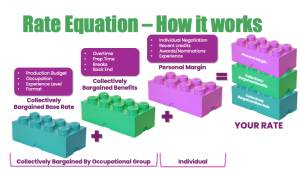
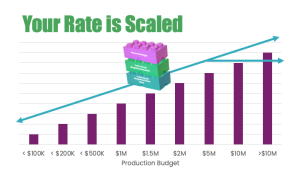
 

What you should deduce from this is that base rates of pay will differ depending on the size of the budget (budget ranges also to be negotiated). This will allow lower budget TV productions and low budget films to still be produced—a high percentage of NZ TV production is lower budget. What does low or lower budget mean? That’s to be negotiated in collective bargaining as well. Allowances would likely be made to accommodate short films and ‘amateur’ productions, i.e., no or micro-budget productions and small-budget, self-funded productions.

All of the guilds realise that there is a limited amount of production funding available. And we all want to ensure a healthy and vibrant screen production sector making New Zealand content, and servicing international production. So, we will be pragmatic in approaching collective bargaining.

SPADA: there’s nothing to be scared of. Clarity is a win for everyone.


Tui Ruwhiu
Executive Director

Last updated on 23 October 2025
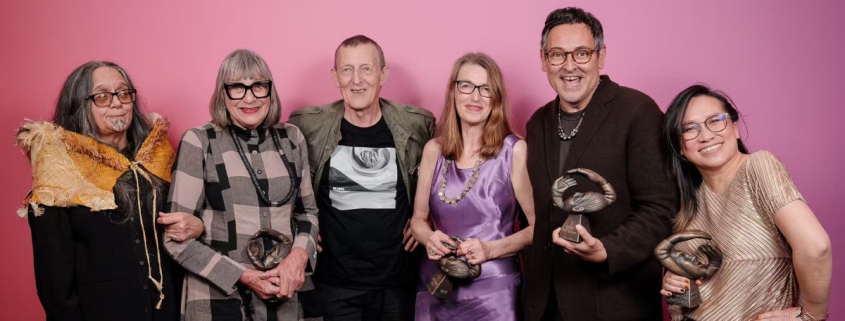
Massive congratulations to DEGANZ member Roseanne Liang for being the latest filmmaker to receive an Arts Foundation Te Tumi Toi Laureate Award. Roseanne was honoured with the Gaylene Preston Filmmaker Award alongside seven other Arts Laureates at this year’s Arts Foundation celebration, also marking 25 years of the organisation.

Arts Foundation Te Tumu Toi Laureates are practising New Zealand artists recognised for exceptional achievement in their field, a world-class body of work, and a lasting contribution to Aotearoa’s culture and communities. Each Laureate demonstrates artistic excellence, a deep commitment to their craft, and the potential for continued impact.

The selection panel commented on Roseanne’s work, saying,

From her groundbreaking debut feature My Wedding and Other Secrets to the cult web series Flat3, the dystopian television series Creamerie, and the internationally acclaimed action-horror Shadow in the Cloud, Roseanne Liang creates films with a strong – and often humorous –  cinematic voice, frequently placing kick-ass women at their centre. As one of the co-founders of the Pan-Asian Screen Collective (PASC), she has provided much-needed support for the Asian filmmaking community and remains a steadfast advocate for equity and representation. Through talent, craft, tenacity, and unapologetically bold storytelling, Roseanne Liang has offered audiences fresh perspectives and profoundly enriched the tapestry of Aotearoa’s cinematic landscape.

In addition to the accolade, Roseanne will receive $50,000 as a nudge of encouragement to keep crafting.

In her acceptance speech, Roseanne honoured those who guided her path,

I want to dedicate this award to another great bulwark against imposter syndrome – and that is to my teachers. […] Some of the my teachers are here, who have challenged me, expanded my horizons, invested their time and souls and energy into making me better not because it’s their job but because their vocation is rooted in uncommon generoisty that inspires and floors me everyday. Thank you with all my heart.


Last updated on 23 October 2025

25 DEGANZ members’ mahi has been nominated for a 2025 New Zealand Screen Award (NZSA)! DEGANZ is proud to sponsor two awards this year: the DEGANZ Best Director and Best Editor for Drama Feature.

From over 700 entries across the 57 categories, the finalists highlight the vibrant storytelling, creativity, and technical excellence that continue to drive Aotearoa’s screen landscape. Nominees represent a wide spectrum of content spanning free-to-air networks, subscription television, digital platforms and streamers, and, as of this year, the local film industry.

NZSA committee member and CEO of South Pacific Pictures, Kelly Martin, commented,

The response to the awards has surpassed expectations – especially with the exciting inclusion of film, which has brought a wonderful new energy to this year’s awards. Each of our finalists stands as a testament to the talent and innovation that make our screen community so extraordinary.

The winners will be revealed at the NZSA ceremony on Friday, 21 November at the Viaduct Events Centre in Tāmaki Makaurau Auckland.

Here are the nominees for the DEGANZ-sponsored awards:

Directors and Editors Guild of Aotearoa New Zealand Best Director: Drama Feature

Miki Magasiva

Tinā

Lee Tamahori

The Convert

James Ashcroft

The Rule of Jenny Pen

Directors and Editors Guild of Aotearoa New Zealand Best Editor: Drama Feature

Gretchen Peterson

The Rule of Jenny Pen

Martin Brinkler ACE (DEGANZ) and Chris Plummer

Joika

Luke Haigh (DEGANZ)

The Convert


Check out the list of nominated DEGANZ members below:

Best Director: Documentary Feature

Katie Wolfe

The Haka Party Incident

Screen Auckland Best Director: Drama Series

Peter Meteherangi Tikao Burger

The Gone season 2

Best Editor: Documentary / Factual – Feature

Josh Yong

Marlon Williams: Ngā Ao E Rua Two Worlds

NZ On Air Best Drama Series

The Brokenwood Mysteries

Directors include Katie Wolfe, David de Lautour, and Geoffrey Cawthron

Dead Ahead

Edited by Ben Wildish

The Gone Season 2

Directors include Peter Burger

A Remarkable Place to Die

Directors include Caroline Bell Booth, Peter Burger, Josh Frizzell, and Charlie Haskell

New Zealand Film Commission Best Feature Film

Tinā

Edited by Luke Haigh

Ka Whawhai Tonu

Directed by Mike Jonathan

Edited by Te Rurehe Paki and Martin Brinkler ACE

New Zealand Film Commission Best Short Film

Lea Tupu’anga (Mother Tongue)

Directed by Vea Mafile’o

Best Comedy Programme

Vince

Directed by David de Lautour

Madam

Directors include Kate McGill

Edited by Martin Brinkler ACE

Happiness

Directed by Robyn Grace

Best Factual Series

Hyundai Country Calendar

Directors include Howard Taylor

NZ On Air Best Documentary – Series

Motuhaketanga

Editors include Cusha Dillon

New Zealand Film Commission Best Documentary – Feature

Stylebender

Edited by Peter Roberts

NZ On Air Best Children’s Programme

Secrets at Red Rocks

Directed by David Stubbs

Te Māngai Pāho Best Māori Programme

Dead Ahead

Edited by Ben Wildish

Te Māngai Pāho Best Rea Māori Programme

End of the Valley

Directors include Richard J Curtis

Best Sports Programme

Grit & Glory

Directed by Dan Salmon

Edited by Emma Patterson

Produced by Peter Brook Bell

Australian Writers’ Guild of Authorship Collecting Society Best Script: Series

Victoria Boult

N00b

Richard J Curtis

End of the Valley


Last updated on 23 October 2025

It has been another great year of films in this year’s Show Me Shorts, Aotearoa’s leading short film festival. During the Vista Foundation Industry Day, the festival announced this year’s winners, including Best Director and Best Editor, proudly sponsored by DEGANZ.

The DEGANZ Best Director award went to Allan George for Mirumiru (Bubble), a poignant animation about grief and letting go. A determined elderly man attempts to save his ailing wife’s memories from literally escaping her mind, so she doesn’t forget him before the end.

Joe Lonie won DEGANZ Best Editor for Flagfall, which he also directed. The 13-minute thriller follows a troubled cabbie haunted by voices and visions, fearing that something terrible happened in his taxi and that his friend might be hiding the truth. Flagfall also took home the Toi Whakaari Best Actor award for Dahnu Graham’s performance.

Best Cinematographer went to Dave Garbett for his work on Ray Edwards‘ short Ace. Riding along with his imaginary daredevil friend Ace, six-year-old Jimmy sets out on an epic quest to save his parents’ marriage.

All the winning films are available as a collection to watch in Auckland, Katikati, Wellington, Christchurch, and On Demand.

If you’d like to shout out your favourite film from this year, you can cast your vote for the People’s Choice Award, which will be presented at the conclusion of the festival.

Congratulations to Allan, Joe, Ray, and all the award winners and nominees!


Last updated on 23 October 2025

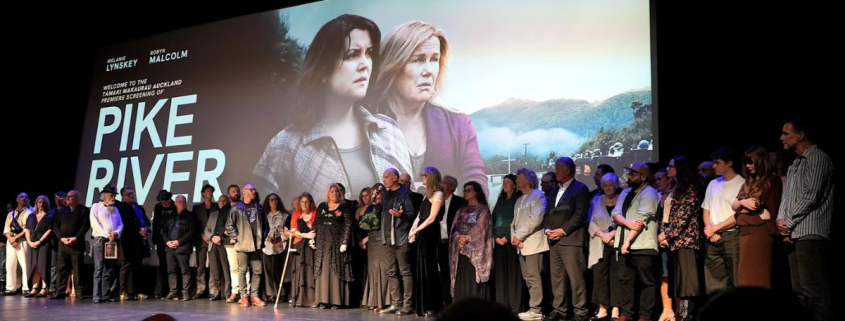
The highly anticipated Pike River, directed by Rob Sarkies (DEGANZ) and edited by fellow member Peter Roberts, celebrated its world premiere this month in Greymouth, Auckland, and Wellington.

Starring Melanie Lynskey and Robyn Malcom, the film follows the true story of Anna Osborne and Sonya Rockhouse, who became leading voices in their community following the infamous Pike River Mine disaster. When 29 men are killed in an explosion, Anna and Sonya lead the fight for truth and accountability.

The decision to premiere the film in the small South Island town of Greymouth first is particularly special as it is where the real-life events occurred. The theatre was filled with the men’s families and friends, including Anna and Sonya.

In an interview with RNZ after the Greymouth screening, Rob shared,

The community here, specifically the Pike River families we’ve been working with, want this story told, and they really want New Zealanders to understand the human truths of the story, what it’s taken to fight and why they have fought it, because this should never have happened.

The film went on to have private screenings in both Auckland and Wellington for special red-carpet cast and crew events.

Pike River is hitting local cinemas from 30 October. You can find a screening near you here.


Last updated on 22 October 2025