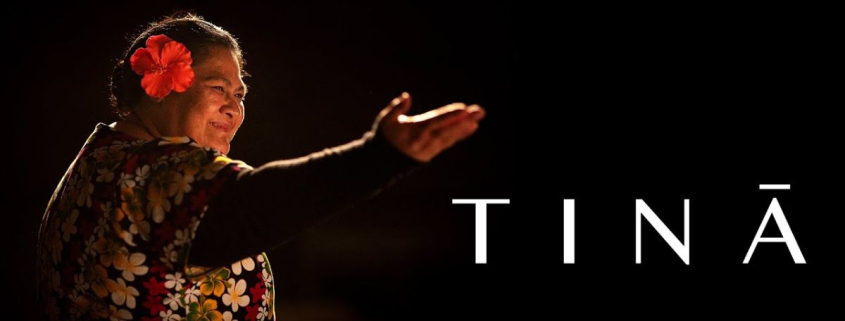
Local feature Tinā, edited by Luke Haigh (DEGANZ), is out in local cinemas now!
This wider cinematic release follows its successful festival run over the past year. It was selected for various high-profile festivals, was the special opening or closing event for numerous festivals, and won Best Narrative Feature Audience Award at the Palm Springs International Film Festival.
Now local audiences can see the film in cinemas across the motu.
Tinā is the heartwarming story of Mareta who finds hope after her daughter’s death in the Christchurch earthquakes when she becomes the substitute teacher to children in desperate need of guidance, inspiration, and love.
http://degnz.sensedesign.co.nz/wp-content/uploads/2025/02/Tina.jpg4561200admin/wp-content/uploads/2021/10/DEGANZ_logo_home.pngadmin2025-02-27 11:53:462025-02-27 11:53:46Catch ‘Tinā’ in Cinemas Now
This news piece contains references to sexual abuse and violence. Please proceed with care.
DEGANZ member Chye-Ling Huang is seeking support on Boosted for her latest project, Beast Mode.
The short film was filmed in December 2024 with funding from NZFC and Script to Screen’s Kōpere Hou – Fresh Shorts programme. Now, the team are crowdfunding to finish post-production.
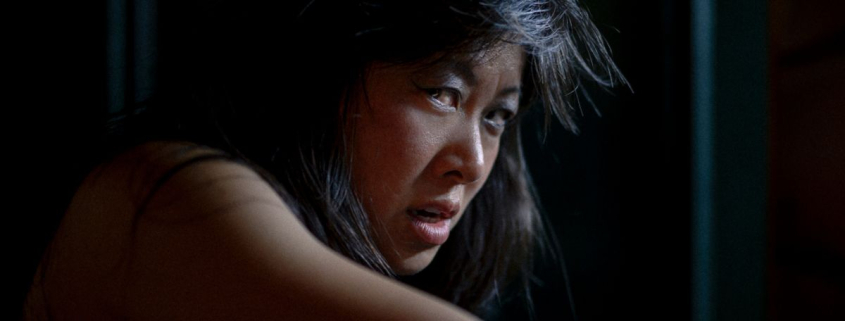
Beast Mode is a psychological drama, following a repressed sexual assault survivor, Sing (Nikita Tu-Bryant). On a drunken night out, she savagely attacks an innocent man (James Sexton), pushing her to face the energy of trauma that lives within her body.
The team hopes that this film will encourage more healing conversations within Asian communities, where sexual assault is not openly discussed due to the stigma surrounding sexuality and shame experienced by victims. They also hope that those who have experienced assault feel seen and heard in a non-traumatic way.
Writer/director Chye-Ling shares,
This is a story for those who know that the shades beyond that moment are deeper, weirder and much more confusing.
This film is also for those who want to understand more and I think we’ve done a pretty damn good job at capturing how it feels; a strange, satisfying, badass film with an imperfect heroine at the centre.
You can learn more about Beast Mode and support the team on their Boosted page.
This is the biggest shakeup to affect our sector next to that of the advent of international streamers, which has forever changed the global screen industry.
The changes proposed are significant. Many are long overdue.
Simply put, the proposed reform is due to:
The Broadcasting Act and New Zealand Film Commission Act being out of date.
The wider New Zealand media landscape—print, online and screen—is suffering because local advertising is being hoovered up by global platforms that do not pay tax in New Zealand.
The advent of streamers and online platforms has fractured New Zealand audience viewing habits, with more and more eyeballs going to content made internationally.
We are now part of a globally competitive content market and our shows in large part suffer from a lack of quality due to the lack of funding available firstly for development, and then for production.
The reforms proposed are:
Ensuring accessibility of local media platforms: Require TV manufacturers to ensure local media services are prominent and visible on devices such as smart TVs so they can be easily found by audiences (Page 11).
Increasing investment into and discoverability of local content: Require streaming platforms and TV broadcasters to invest in local content and implement measures to ensure it is more ‘discoverable’ on their platforms, supporting the production of and engagement with New Zealand stories (Page 15).
Increasing captioning and audio description: Require more captioning and audio description on content that is broadcast or streamed to ensure access for disabled New Zealanders (Page 19).
Modernising professional media regulation: Revise the broadcasting standards regime (including the Broadcasting Standards Authority) with platform-neutral and system-level regulation of professional media (Page 22).
Streamlining Crown content funders: Consolidate NZ On Air and the Film Commission into a single entity, supporting efficient administration of government funding for local content and industry development
If you review the industry’s Aotearoa New Zealand Screen Sector Strategy delivered to the then Labour Government in 2020, you can see that many of the items up for discussion—and more—were mooted for examination. Read here.
Perhaps most contentious in the proposed reforms is the establishment of a single entity to replace NZ On Air and NZFC. There are advocates for and against this.
The merging of TV and film into screen content brought about by the streamers is highlighted in the document as one of the reasons a single entity should be considered. Another, is undoubtedly the current government’s sometimes misguided drive for greater efficiency and productivity, with the reasoning being one entity could do the work more efficiently and cost-effectively than two.
As our screen world continues to be affected by the constant change happening to it, which includes that being wrought by AI, it’s important that we do our best to influence how it will be governed.
I encourage you to read the Media Reform Discussion Document and to provide feedback on it as outlined by the deadline of 23 March 2025.
As part of our response, we will shortly conduct a survey to ascertain your thoughts on the proposal for a single funding body entity to replace NZ On Air and NZFC. Please take the time to do this.
http://degnz.sensedesign.co.nz/wp-content/uploads/2022/12/View_from_the_top_new.png7361280Tui/wp-content/uploads/2021/10/DEGANZ_logo_home.pngTui2025-02-13 11:25:522025-02-14 21:28:01Shake Up
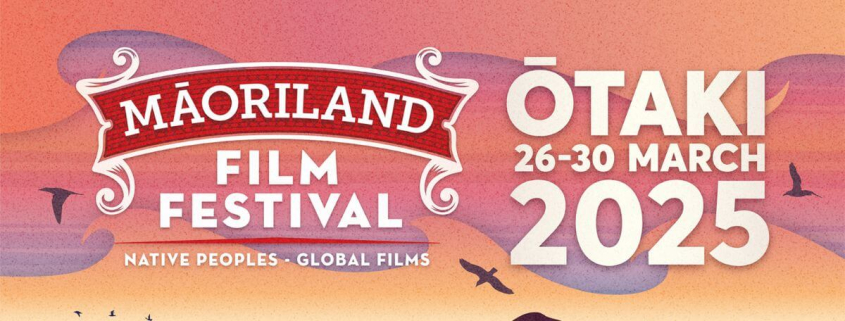
This year marks the 12th annual Māoriland Film Festival (MFF), with many DEGANZ members’ mahi in the mix.
MFF is the world’s largest celebration of Indigenous storytelling with a wide range of of screenings, interactive installation and art exhibitions, industry events, and more. This year 130 films and digital works from 86 indigenous nations are screening across the five-day festival. It will run from March 26-30 2025 in Ōtaki on the Kapiti Coast.
‘Ko te mauri, he mea huna ki te Moana’ is a whakataukī that speaks of the life force of the ocean and the life force within us all. […] When we were programming this year’s festival, we watched stories that evidence these profound changes all over the planet told through an Indigenous lens. We also saw stories of resilience, ingenuity and courage informed by generations of knowledge. Indigenous communities have solutions and we hope visitors to Māoriland will leave this year’s festival activated and inspired.
Under the celestial guidance of Matariki, Maori elder Hamo and local delinquent Jo form an unlikely bond on a road trip. As they confront past traumas and each face their demons, their shared path becomes a journey of healing, community and reconciliation.
Grieving the loss of her daughter in the Christchurch earthquakes, Mareta reluctantly becomes a substitute teacher at an elite private school. There, she discovers students yearning for guidance and inspiration. Drawing on her cultural roots, she forms a choir and leads her students toward the prestigious Big Sing competition.
The last New Zealand War happened in 1979. It lasted three minutes. On May 1st, 1979, a group of young Maori and Pasifika activists, He Taua, confronted a gathering of University of Auckland engineering students as they rehearsed their ‘mock’ haka for their capping parade. The fracas that followed prompted the nation to confront systemic racism and instigate change for a better and more equal partnership between Pakeha and Maori.
Aotearoa, 1826. A dying man rides home along the coastline, while a Māori girl weaves a toy boat. She ventures through the forest to launch her boat and is led astray. Sensing danger, she hides and spies on the man and his horse. Fascinated by the horse, she approaches the man. Realising he may have infected her with his disease, he faces a dark dilemma: let her go and risk spreading the illness further or end it there.
Luka is a boy full of action and adventure, distinguished by his long, uncut hair—a proud symbol of his Niuean heritage. As his tenth birthday approaches, Luka prepares for the Hifi Ulu ceremony, a rite of passage that will mark his transition into young manhood. Navigating this milestone in his own unique way, Luka’s journey is quietly mirrored by his father’s unresolved feelings, having never experienced the ceremony himself. As the day draws near, anticipation builds, leaving everyone to wonder how Luka truly feels about this pivotal moment in his life.
Struggling with grief, Tia is plagued by mysterious earthquakes that seem to follow her. These unsettling tremors lead her to an otherworldly geothermal space, where she encounters a haunting spirit. The child-like figure is both terrifying and familiar, compelling Tia to confront her deepest fears. As she learns to communicate with the spirit through the geothermal waters, a profound and unexpected connection is revealed. In this emotionally charged moment, Tia comes to terms with her past, allowing both herself and the spirit to find peace.
Far from their islands in Te Moana-nui-o-Kiva – the South Pacific Ocean – three sisters are raised by their father in a small village in Aotearoa. Rei, Ina and Matilda G share a love of basketball. The sudden death of the eldest sister takes the younger two to Havaiki Nui – the Underworld – where they’re forced to play ball to return home. Opens Looks is a short film told in English and Cook Islands Maori. This is a story of love, grief and basketball.
When a welfare department’s insidious prejudice can no longer be tolerated, a group of unlikely heroes band together against a narrow-minded caseworker. Made in collaboration with Toi Whakaari, Mia Blake cleverly reflects the state of the nation in this punchy black comedy.
Our marine environment is facing enormous pressure from human activities such as excess sediment, nutrients, and plastic pollution, along with impacts at sea from commercial and recreational fishing, aquaculture, extraction of natural resources, introduction of non-indigenous species, and coastal development. These cumulative stressors are being made worse by a changing climate, leading to increased ocean acidification, sea-level rise, and sea-surface temperatures. In Turning The Tide: Mātauranga-led Restoration, Kura Paul-Burke of the University of Waikato is working with doctoral and undergraduate students to research and restore mussel beds in a Mātauranga-led approach.
http://degnz.sensedesign.co.nz/wp-content/uploads/2025/02/Maoriland-25.jpg4561200admin/wp-content/uploads/2021/10/DEGANZ_logo_home.pngadmin2025-02-13 11:21:152025-02-13 11:21:15DEGANZ Members in the Māoriland Mix
Kōkā, edited by DEGANZ board member Te Rurehe Paki, is making history as the first feature film shot in the original dialect of Ngāti Porou and is coming to cinemas in June 2025.
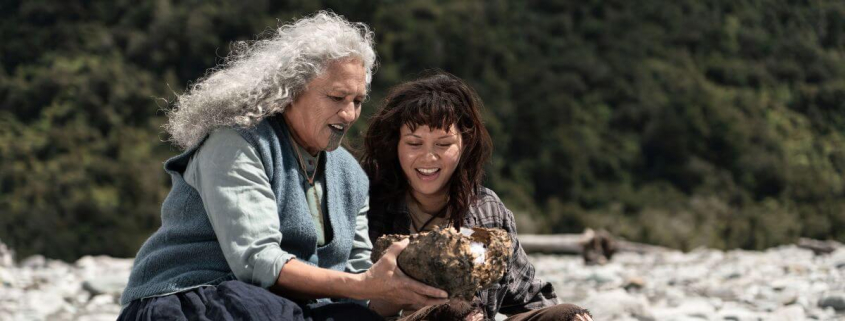
The film is a powerful relationship drama following Māori elder Hamo and troubled teen Jo who form an unlikely bond on a road trip in a Ford Falcon. Together they confront past traumas and each face their demons. Their shared path becomes a journey of healing, community, and reconciliation.
Writer/director Kath Akuhata-Brown (Ngāti Porou) speaks on the film’s inspiration saying,
I wanted to make a film that puts a Māori world view front and centre of the screen. It’s a road trip about an elder who feels it’s time to go home, but getting home isn’t going to be easy for her.
She invites audiences to experience Kōkā as a “journey of dignity, heart and of mana in the face of a landscape that is constantly shifting.”
Check out the trailer below and keep an eye out for Kōkā in cinemas this June.