
The A Kōrero with… blog series is back for 2026! This time, DEGANZ’s Izzi spoke with Music Supervisor Aminé Ramer to hear all the ways music plays its part in screen productions.
An award-winning music supervisor and consultant, Aminé has helped define the sound and emotional tone of feature films, documentaries, and television series. Her work is driven by a strong sensibility for connecting sight and sound to create a visceral audience experience, along with deep expertise in music rights and the complexities of the clearance process. Her credits span numerous international productions, including the Academy Award–nominated and Peabody Award–winning documentary Crip Camp, and the Apple TV+ drama series Shantaram. She has also contributed to a range of Aotearoa screen projects, including recent features Tinā; The Rule of Jenny Pen; Big Girls Don’t Cry; Red, White & Brass; and Baby Done.
In this kōrero, Aimné shares how she has one foot in the screen world and one in the music world, her secret to keeping track of thousands of songs, and her favourite part of her job.
Izzi: What is a music supervisor’s role on a project?
Aminé: The music supervisor is the head of the music department. We oversee everything music-related on a project and work creatively with the director to help facilitate the project’s musical vision.
Ideally, we’re brought in before shooting begins, so we help shape the tone, present musical options, find the right composer, and make sure the music budget aligns with the project’s creative expectations.
Izzi: In fairly simple terms, what does your workflow look like?
Aminé: The workflow starts with reading the script and creating a document to track anytime music is mentioned. I also add ideas if the script doesn’t specifically mention anything. Like if a scene is set in a shop, I’d add a note that the shop could have music playing in the background. So I make sure to account for all the music possibilities based on the script.
Then I’ll talk with the director about their creative vision and with the producer about the budget to make sure that the creative expectations and budget are aligned. After that, I start gathering ideas for songs and potential composers. If there are specific songs in the script, I’ll get quotes to see whether we can get approval and how much it’ll cost.
There may also be some practical stuff. Like if the script says, ‘Michael sings to his beloved as they’re sitting on the farm,’ I need to figure out what the song is, if the actor can sing, if they need a vocal coach, if there will be a backing track, and how the song will be recorded. So, I’m coordinating with the sound person, the first AD, and the director about all of that.
Once filming wraps, I’ll have conversations with the editor and hopefully prevent any random temp tracks from being used. Ideally, the composer can send through temp music options.
I’ll also present music options that fit creatively and the budget. That way, the editor isn’t spending hours cutting to the perfect song that we can’t afford or clear. Even if I only send five options through, I may have gone through 500 tracks to get there.
A large part of my job is making sure communication channels are open, especially in post-production when things move much faster. I’m seeing footage, working with the composer, looking through hundreds of songs, sending emails, checking prices, and discussing whether scenes work better with a pre-existing song or something original. The director ultimately calls the shot, but everyone’s talking through the options.
There are a lot of moving parts, but it keeps me on my toes.
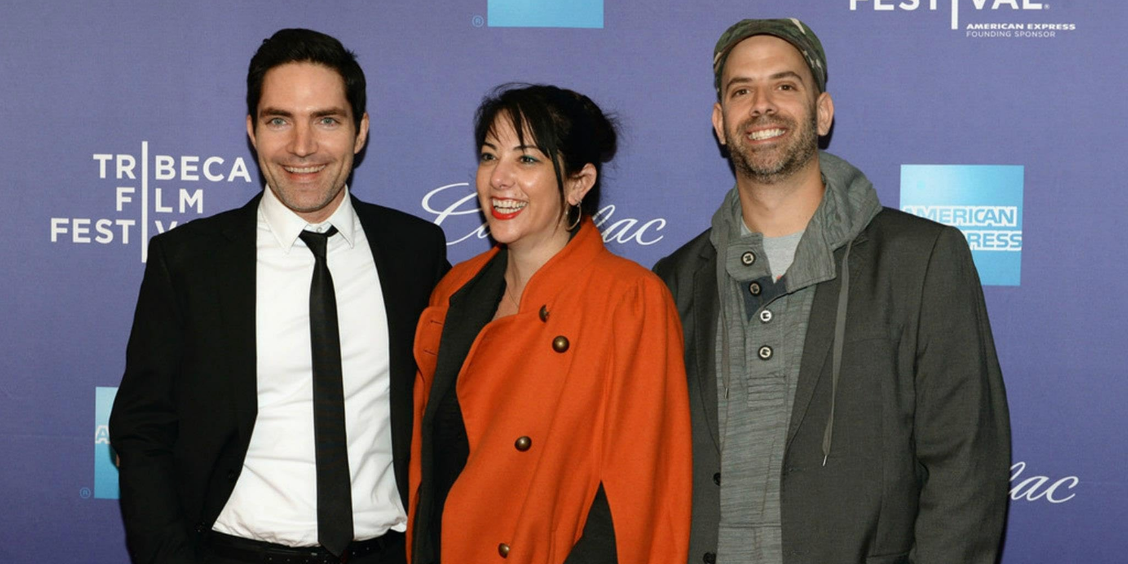
Aminé with Christopher Peterson and Adam Dorn (aka Mocean Worker) at the Tribeca Film Festival in New York / Photo provided
Izzi: How do you go about getting the costs and rights for songs?
Aminé: I use a platform called Disco, which means I’m regularly sent music from major labels, publishers, and managers, complete with metadata attached to each track. So a lot of the information I need is already there.
If I don’t have that information, or if there’s something very specific written into the script, then I’ll go to APRA or Recorded Music NZ to find out who owns the master rights.
Every good music supervisor has strong contacts across labels, publishers, and independent managers. I spend a lot of time listening to music, going to shows, and building relationships within the music community. That means I sometimes hear music before it’s released, or I can call a manager directly and inquire about a song for a project.
Izzi: What’s your creative process in the role?
Aminé: The creative process is the whole reason I do the job. It’s my favourite part.
My creative process begins after reading the script and discussing tone with the director and producers. We’ll talk about whether they’re open to counterpoint. For example, instead of playing a scene straight with a love song, maybe there’s something more unexpected that works better emotionally.
From there, I start figuring out what options I want to present. Sometimes that means getting the exact song they’ve written into the script, but I’ll also prepare alternatives in case it doesn’t fit the budget, or even suggestions that might work better creatively than the original reference.
That’s the part I really love — matching music to visuals. I often have access to unreleased music, emerging artists, or older tracks that aren’t as widely known, and it’s exciting to find the perfect fit for a scene. It’s quite an intuitive process.
Izzi: How do you keep track of all of your music knowledge? Is it like a massive Rolodex in your brain?
Aminé: I start with instinct, thinking about what might feel right for the scene. I’ll make playlists of songs that immediately come to mind, but I also keep a huge library of playlists organised by emotion or tone, like happy, sad, driving, or counterpoint.
I’ll go through those first, and if nothing feels right, then I’ll reach out to labels, publishers, or managers with specific requests. They’ll send back options they think fit the brief, and often listening through those will send me down another creative rabbit hole.
I also keep a long-running wish list of songs I love that could work for certain types of scenes. Because I’m constantly listening to music, I’ll often hear something and save it for later.
But sometimes things change when you actually see the footage. The pace or edit can completely shift what the music needs to do. A song that worked on the page suddenly feels wrong, or the scene needs a totally different energy. Sometimes I’ll play a scene back and immediately know the perfect track. Other times, I’ll go through hundreds of songs against the picture before finding the right one. But finding out what doesn’t work is just as valuable as finding out what does.
And honestly, I love that process too.
The best feeling is watching a finished scene and knowing the music helped elevate it emotionally. That’s why working closely with the editor and director is so important. Music supervision isn’t just about finding a song or getting a clearance quote; it’s about shaping how the music actually functions emotionally within the scene.
Clearances are also part of the job, but they’re only one part of it.
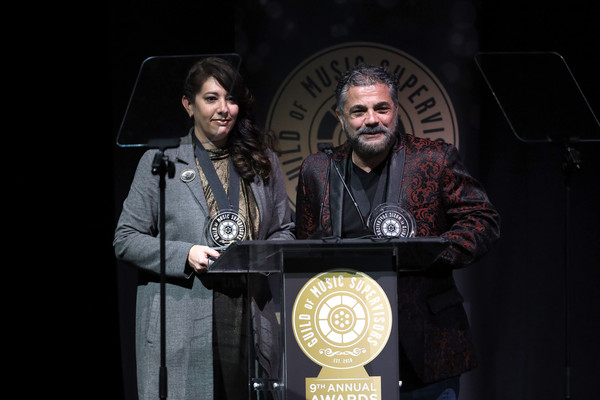
Aminé with fellow music supervisor Evyen Klean at the 9th annual Guild of Music Supervisors Awards / Photo provided
Izzi: Can you speak more to how you balance the creative and admin aspects of music supervision?
Aminé: The difference between being a music supervisor and just doing clearances is huge. If the role were only clearances, I don’t think I’d do it as a job, because what I really love is the creative side and the music itself.
That said, to be good creatively, you also have to be excellent at clearances. There’s no point pitching what you think is the perfect song to a director, only to later discover there’s an uncleared sample in it or that it’s completely out of budget. At that point, you’ve wasted everyone’s time.
So you really need to be strong at both sides of the job.
I tend to separate them mentally. Some days are creative — listening, searching, matching music to scenes — and other days are admin-focused — dealing with quote requests, negotiations, pricing, and rights clearances.
It genuinely feels like using two different parts of your brain.
Izzi: You’ve mentioned that you work closely with the director and editor, as well as keeping the producer in the loop. I’m curious about the specific working relationship with the composer.
Aminé: It’s really important that everyone is closely aligned.
You don’t want the composer going off and writing something that ends up competing with a song or vice versa. I’ve spent hours looking for the perfect track only to find out the composer is already covering that moment. Or the composer has spent days on a cue only to find out the director wanted a song. So communication is key between all the key creatives.
A big part of the process is deciding whether a scene should use a pre-existing track or an original score. That’s what happens in spotting sessions.
Once there’s a rough cut, the director, composer, and music supervisor should all sit down together and watch the film to make notes. I’ll be noting where I think music can come in, the composer is marking where the score should come on, and the director is shaping the overall vision. Then we compare notes, discuss ideas, and map out who is doing what.
At that stage, anything from the script or early temp work might still be in the cut, and that can be really useful. Sometimes it confirms what’s working and we move forward with it, and other times it becomes clear we need to change direction completely.
Spotting sessions are really about making sure everyone is on the same page before post-production moves forward. The director ultimately makes the final decisions, but the composer and music supervisor are working closely together throughout the process, so the creative and practical sides stay aligned.
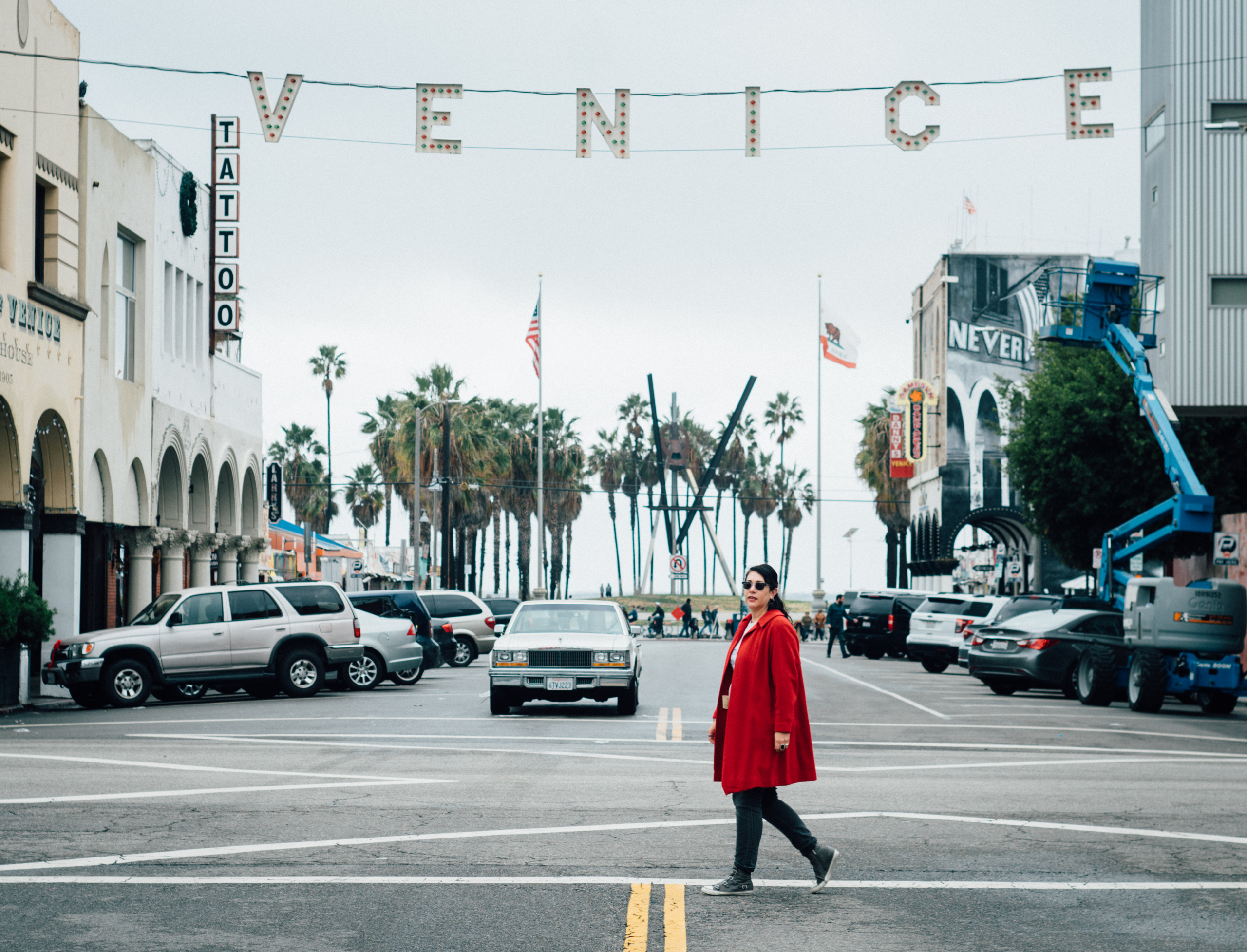
Aminé in Venice, where she lives for part of the year / Photo provided
Izzi: What’s something you wish collaborators knew when working with a Music Supervisor?
Aminé: A lot of it comes down to seeing the music supervisor as an integral part of the creative team.
With collaborators I’ve worked with for a long time, that understanding is already there, and things run smoothly. But when starting with someone new, they may not realise how different my role is compared to someone who just handles clearances.
Also, people often don’t see the amount of work involved. It’s long days, multiple conversations with rights holders, and the fact that only one song will ultimately be chosen while several others are cleared and then not used. I sometimes wish I could fully communicate the scale of that work, but part of my job is to manage it quietly and keep the process moving so the production isn’t overwhelmed by it.
The role is all-encompassing. As a key part of the music department, we’re involved in the creative process, not just getting prices. We have a wealth of musical knowledge and experience that we bring to the table to help facilitate the filmmaker’s vision. Ultimately, we’re there to make the work the best it can be.
This interview has been edited for brevity and clarity.
Last updated on 4 June 2026