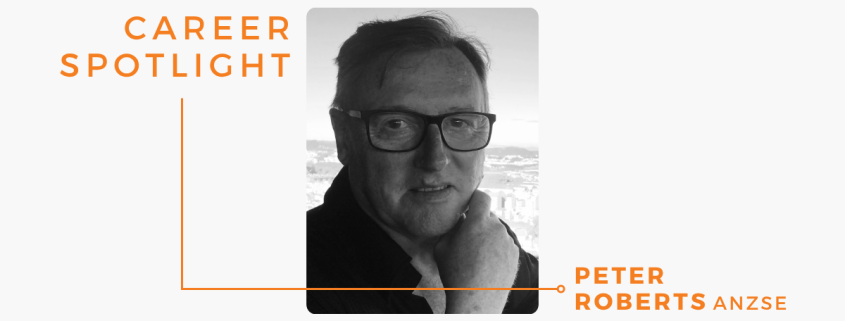
After half a century in the film and television industry, Peter has worked across drama, documentary, news, sport, music, commercials, corporates, theatricals, and broadcast. Despite all of the technical and exhibition changes over the years, he observes that the art of storytelling, at its core, remains the same. As an editor, Peter is committed to delivering a director’s vision and strongly believes in both the collaborative nature of filmmaking and that empathy is crucial to the creative act.
In his late teens, not enjoying his work as a soda jerk at Harrods, a girlfriend took Peter to meet her friend Vivien Kubrick at home, where Peter expressed his desire to be a director like her dad, Stanley. Mr Kubrick was between movies and said he couldn’t offer him anything but that it was best to start from the ground up as a gofer. A hundred or so letters to companies listed in the Yellow Pages—noting the great man as a reference—eventually secured Peter a runner’s job at Soho’s Picture Palace Productions. After helping out as a 99th assistant director, location hunter, and casting assistant, Peter realised that directing (or even being on set) wasn’t for him. He gravitated to the basement cutting room and soon found an editor to take him on as an assistant.
As a London freelance assistant and assembly editor, Peter worked on documentaries for Arena, Omnibus, Chronicle, and The South Bank Show, as well as commercials, children’s television, and some short drama. During this period, he learnt his craft from working with London editors, directors and producers, including Roy Baird, Franc Roddam, Alan Parker, Piers Haggard, Molly Dineen and Alan Yentob, among many others.
Peter later married a New Zealander and left the UK. Meanwhile, he travelled across the USA, Mexico, Japan, China, Scandinavia, Russia, Australia, and Aotearoa New Zealand, supporting himself through various odd jobs — photographing for music magazines and travel articles, editing trailers in LA, instructing students in the basics of sound editing at a Mexico City film school, and teaching English behind a bar in Japan.
In Australia, he spent a year cutting for the ABC’s Four Corners, Nationwide, and National News. He also took the opportunity to learn video skills at Sydney’s Channel 7 as the current affairs film editor for their last functioning film crew.
Peter eventually settled in Auckland in December 1985, uncertain whether there was even a film industry to work in. Not even a day later, Alison MacLean rang him and asked him to cut her first television drama, Rud’s Wife (1986). By the middle of 1986, Peter had been offered work with TVNZ as it amalgamated its film and video editing departments. His task was to work across all departments and help people understand that it was perfectly possible to be both a video and a film editor. As a result, he experienced almost every department, including Māori, children’s, sports, promos, drama, news, and documentary, as a kind of piggy-in-the-middle between the two editing groups.
In 1992, Peter co-founded Broadway Post with Bill Toepfer and VTR Ltd, becoming the first in Aotearoa to purchase the state-of-the-art Avid editing system. This marked the beginning of a prolific freelance career spanning documentary, television, and feature film. Early in his career, he collaborated extensively with director Robyn Scott-Vincent, working together on more than two dozen television documentaries.
One of his most notable early projects was Stewart Mains’ God, Sreenu and Me (2000). The documentary took an unconventional approach to storytelling, creating a fictionalised love story within the documentary. His work earned him the Best Non-Drama Editing Award at the 2002 TV Guide Television Awards.
Peter moved into feature film editing with 50 Ways of Saying Fabulous (2005), followed by projects including The Most Fun You Can Have Dying (2012), The Dark Horse (2014), and Hip Hop-eration (2014). His work on The Dark Horse, directed by James Napier Robertson, was particularly significant. After the original editor needed assistance with the large volume of footage, Peter joined the project and helped shape the film, which went on to win six Moa Awards and receive international recognition.
His career has continued across both drama and documentary, with credits including Harry (2013), Cleverman (2016), Jean (2016), Savage (2020), The Panthers (2021), Stylebender (2023), and Pike River (2025). In the late 90s, he co-founded the Auckland post-production company RPM Pictures Ltd, which operated until 2022. Across more than three decades, Peter has established himself as one of Aotearoa New Zealand’s experienced and versatile film and television editors.
Peter was one of the first editors to join DEGANZ back when it was still called the Screen Directors Guild and was first extending its membership to editors. He quickly joined the board and spent a decade taking turns as an editor representative, Treasurer, and was the first editor to serve as President. Peter recommends that all New Zealand editors join the guild to gain strength in numbers.
He has also served a key role in the establishment of DEGANZ’s Aotearoa New Zealand Screen Editors (ANZSE) Accreditation, continuing his advocacy for recognising editors’ mahi on an international scale. Peter is one of three currently accredited editors and serves on the ANZSE committee.