
What’s happened to the TVNZ – RNZ business case that Broadcasting Minister Kris Faafoi commissioned to be ready for mid-year, with presentation to Cabinet by the end of 2021?

You might have, like I did, missed the article about it in Stuff in early November.

It’s been delayed.

Sure, COVID has made it difficult for everyone to stay on track, including Government. However, Kevin Kendrick, the TVNZ CEO has now officially resigned, after a stellar performance taking TVNZ from a loss making entity with no dividend to Government, to an organisation making a profit. No mean feat in a streamer-challenged world.

Kedrick is certainly bailing at the right time for his career, leaving the task of navigating the difficult future to whoever gets the job next.

You’d hope that the TVNZ board is giving due consideration to whatever the new organisation will look like as they work through the job applicants. But do they actually know what’s coming right now? And how many of them will still be sitting on the board once the organisation gets rejigged anyway? They have been a corporate, profit-driven board for so long it’s hard to imagine most of them will retain their positions, or want to, even though TVNZ is supposedly going to maintain some elements of advertising revenue generation into the future.

The changes at Three have undoubtedly made things more complicated for our national broadcaster. Three has gone from being permanently on the edge of bankruptcy to being owned by the largest media organisation in the world, in Discovery. And in the process of setting up they’ve hired former General Manager of Digital Content at TVNZ, Juliet Peterson.

Peterson is now Senior Director, Programming (ANZ) at Discovery, while Vicky Keogh has gone from Commissioner Factual and Unscripted Comedy at TVNZ to the role of Executive Producer, Factual Lead, Discovery (ANZ).

The new TVNZ CEO will have a tougher playing field to square off on with two new free-to-air channels—sorta—in Gusto and Rush, Discovery’s existing digital channels already here, and the launch of streaming service Discovery+ next year.

TVNZ has already locked into its line-up for 2022, as has Three. Advertisers and the industry were given insights at both broadcasters’ programme launches in recent weeks. Reality featured strongly at TVNZ and Three, as did the emphasis on local content, although scripted was notably missing from Three’s presentation.

But it was the announcement from Kris Faafoi that I was more interested in, right now. What shape is TVNZ – RNZ going to take? What’s it going to mean for local content? And will it become a real public broadcaster? The answers are clearly not going to be in the Xmas sock this year.

Tui Ruwhiu
Executive Director
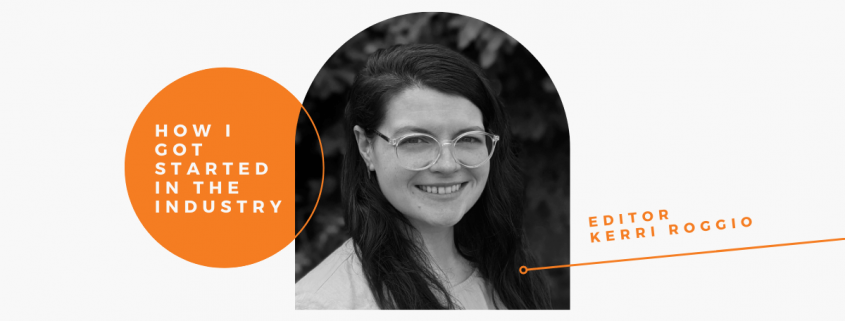
My first job right out of film school was to take over an overnight unpaid assistant editing job on a low budget feature… and I had no idea what I was doing.

Film school gave me friends in the same industry, and a good grasp on how to use Avid and what editing was about creatively, but at the time there was little instruction on the technical aspects that the assistant editor role required. I think we only had one day on how to assist!

I was given a short overview of the job by the previous assistant and was left to it. It was a little bit of a trial by fire but (thank goodness for the internet) I was able to google answers to just about everything I had questions for.

I communicated with the editor via a notepad, and he offered something amazing—if I wanted to cut some of the rushes, he would watch and give me feedback. So I spent half of the night importing, syncing and organising, and the other half cutting! It was an excellent learning experience and when we eventually met in person, he told me that he always offered that to his assistants, but nobody ever took him up on it! My next three projects were with the same editor, since at the time nobody else knew who I was.

My first job outside of my editing mentor came through Women in Film and Television (WIFT). I met a producer at a networking event who needed an assistant. My following job also came through attending a WIFT meeting, though kind of sideways… I had been offered a data wrangling job via email but the message went to my spam folder! Luckily the person who messaged me saw me at a WIFT event and asked me about it.

My first job, the unpaid overnight one, was in December 2009. The data wrangling job came in July 2010, and it allowed me to finally quit delivering pizza and move into the film industry full-time.

Kerri with her first editor carpark as an editor on The Brokenwood Mysteries / Photo: Supplied

My first bit of advice, and I know this may be super obvious, is to make sure you do your job reliably. You don’t have to go overboard, but producers and editors expect you to get your work done. Make sure you know what they need from you—and do it well. If you make their working life easier, they’ll call you again.

I assisted full-time from 2010 until 2016. During this period I cut as many side projects as possible in my spare time. At the beginning, most were unpaid (or lightly paid) passion projects from other creatives who were also in the early stages of their careers. It took a lot of energy, and it sucks that most of these early jobs are unpaid, but working on so many short films and music videos really honed my storytelling skills. I should also shout out the DEGANZ editing masterclasses! I had the opportunity to attend two of them and they were so valuable in helping me upskill.

Making the move from assistant to editor was really scary. I was at a point in my assisting career where I was very busy. I was also occasionally getting offers for small editing jobs that I had to turn down because I was already occupied by assistant work. You could make a great career out of assisting, but that’s not what I wanted, so I had to stop taking assistant work and focus on selling my skills as an editor. My first year exclusively editing was slow, and as a result I took a big pay cut. But I kept pushing and slowly built a good reputation as an editor and started getting return calls.

My advice for people entering the industry is to say yes to opportunities as often as you can without burning yourself out. Work hard, practise your craft, and be kind. Be comfortable turning down work that won’t take you where you want to be. And let the people you work with know what your goals are—you’d be surprised how much support you will find!

I’ll always be grateful for the willingness of New Zealand editors to be mentors, to give their time and to uplift anyone who wants to give it a go. I hope I can pay it forward!


About Kerri Roggio

Kerri is an Auckland-based editor. In the last few years, she has edited the comedy horror film DEAD; on TV series Mystic (season 2), My Life is Murder (season 2) and The Brokenwood Mysteries (seasons 4-7); as well as short films, documentaries and music videos.

kerriroggio.com

How I Got Started in the Industry is a new guest blog series from the Directors and Editors Guild of Aotearoa New Zealand (DEGANZ). Our members reflect on how they made their way into assistant editing, editing, and directing—with no two stories the same. They offer advice for those starting out. Get in touch with admin@deganz.co.nz if you’re a member and would like to share your story.

I normally go surfing and garden as my stress release mechanisms. Neither have been of much help with all the rain we are having (I live in the Waitakeres) and the West Coast of Auckland is offering up limited opportunities at this time. Thank goodness the dams are full, though.

Today, however, I went looking for a laugh because I thought it would be beneficial to have some light relief amongst the collective depression many of us are experiencing due to this latest lockdown.

There’s a lot of gallows humour out there about COVID. I certainly chuckled but it’s not ray-of-sunshine stuff, so passed on the idea of including anything I came across, copyright issues aside.

Something I have done in the past for LOL entertainment is to watch Live At The Apollo on YouTube. Britain’s comedic best never fails to get me going.

This lockdown around, I’ve been watching more YouTube videos for distraction and learning than ever before. I’ve also been surfing vicariously on it. My virtual holiday to Bali and the Mentawais in Indonesia every day gets me over the West Coast doldrums. I now understand why YouTube is up there with TV1 and Netflix as one of the most popular choices for Kiwis 15+.

I was talking to a director yesterday about another matter and they told me they’d taken up drawing as a means to combat the funk. This person isn’t the only one who’s said in recent times that their creative output for work has suffered. And I’m struggling myself to get excited about ideas that would normally have me fizzing and putting fingers to keyboard.

The frustration with our current situation is palpable. All you have to do is watch/read/listen to the news. I’m often reminded, though, how fortunate we continue to be in comparison to the US, the UK and even Australia. I listen to a number of international podcasts and the presenters have essentially been in lockdown and nowhere near their workplaces for the last two years. Granted, our lockdown is stricter… but still.

What I’m clearly talking about here is mental health and wellbeing. Mine, yours, everybody’s. The longer this goes on the greater the need for us to look after ourselves and others in ways that lift our mental, and our physical, states.

Laughter may not be the panacea for all our psychological ills, but it is good medicine. So find a way to bring a smile, have a chuckle, or get yourself rolling on the floor in paroxysms. You’ll feel better for it. For those who need real help, here is a list of resources on offer.

In the meantime… Knock, knock!

Best response wins a Do The Right Thing campaign bag from us and will go in the next newsletter.


Tui Ruwhiu
Executive Director

A couple of days ago on The Spinoff, South Pacific Pictures Managing Director Andrew Szusterman decried the loss of drama Head High from Discovery Three. Lead director and co-lead writer on the show is a DEGANZ member, Tim Worrall.

Szusterman pointed out the difficulty and cost of getting NZ drama funded and made. He said that without NZ On Air, there would be little drama produced at all because it provides the majority of the funding for such projects.

He went on to call for the Government to say, “It’s time” to streamers, such as Netflix, Amazon and the others, and to put money into New Zealand programme production. Szusterman quite rightly stated that New Zealand’s market is not big enough to warrant streamers voluntarily investing significantly in New Zealand content.

“None of these services have commissioned any New Zealand premium drama content directly for New Zealand audiences, and there is not a chance that they will unless change is forced upon them.”

I’m glad that Szusterman is adding his voice to SPADA’s recent activity in this space. SPADA has finally given up on saying, “We can’t levy the streamers because of GATT*”. I’ve been calling for levies on streamers in this column for years: Show Me the Money, Time for a Reset, An Answer to NZ’s Broadcasting Industry Dilemma? I point this out not because I want to say “I told you so.”, but to highlight that we have been mired in a time warp for too long while the Golden Age of TV drama sails on by.

I’m aware that there are a number of NZ producers who are pushing hard to crack the international door open for ‘high-end’ TV drama. But you need the budgets to do it. And you need the policies to make it easier. At the moment both are a barrier.

Good drama requires a lot of development funding. So does the production. When many of the shows appearing on the streamers are being made from an absolute low of US$2 million per episode to the stratospheric heights of The Crown or Ozark at US$13 – 14 million per episode, an NZ show at US$ 0.7 – 1.2 mil. per episode doesn’t cut it. As long as the Government keeps NZ On Air and NZFC funding at the levels it has for the last 10 years or so, we have to find money elsewhere to supplement the budgets. This is outlined in the Screen Sector Strategy 2030.

So where to get it from and what needs to change? It’s time to levy the streamers. They’re an obvious source. Even though our market isn’t big, it still provides incremental income for them, and they should pay to get it.

We also need to remove the block to going behind a paywall for NZ On Air funding, as is currently the case. And we need to allow, as I’ve said before, Drama and Factual to access both the New Zealand Screen Production Grant and NZ On Air funds, which is only allowed now for Children’s and Animation. The Premium Production Fund has been given a temporary reprieve concerning this. It’s time to make this permanent, and the Premium Fund, too. If we had to, we could accept a 30% NZSPG for behind paywalls instead of the 40% available now for free-to-air.

In the meantime, we wish Szusterman luck in finding a new home for Head High. It has a place on NZ screens.


The Spinoff article here.

*General Agreement on Tariffs and Trade


Tui Ruwhiu
Executive Director


I’ve been writing this blog for the DEGNZ newsletter for close to six years now. There have been a few times when I’ve been stuck for what to write about, but ultimately came through. But from memory there were two or three times when I couldn’t move from the blank page and we’ve had to delay the newsletter to the following week.

I listen to Jeff Goldsmith’s podcast The Q & A. One of the questions he always asks writers he interviews is what they do when they have writer’s block. Of course the answers vary from: I don’t have it, I go for a walk, I just write anything to get through it, and multiple other responses.

You perhaps have twigged that the above is what I am doing now to address what was the blank page staring me in the face. Moving on.

Something else I listen to on a regular basis is Standing Room Only on RNZ. Last Sunday it featured a Simon Morris interview with the new CEO of NZFC, David Strong. In it, Strong quoted the Jackson Court Report of 2010, in which Peter Jackson said, “Arguably, there might be no more than 25 or 30 truly talented screen writers and directors working in a country the size of New Zealand.”

Supposedly, in each round of EDF at NZFC now, there are 20 – 30 applications. There are five EDF rounds a year. I understand that around 50% of projects applying for EDF get it. They are either new projects or projects coming in again for another round of EDF.

EDF these days doesn’t mean that a script is in early development. The competition for EDF is so strong that if a project isn’t a good way along the development path when it first goes in, then it’s unlikely to get funded. In other words, a lot of blank page staring must be going on during spec writing to get a script in good enough shape to be seriously considered for funding.

Strong also outlined how scripts going through NZFC were selected to be made—EDF with internal and external assessors, and ADF where local and international assessors were used to decide whether or not the film would get greenlit for production funding.

NZFC production funds between 10 – 15 films per year, some of which are documentary features. The remainder are narratives.

With some unscientific number crunching looking forward, you could make a guesstimate that of the 150 or so films that apply for funding each year 75 get EDF, so the odds of getting EDF are 50%, or one in two.

If 75 films got EDF each year and 10 – 15 films are made, then the odds of a film getting EDF and getting made are 20% or one in five.

Another way of looking at it is that of the 150 films in any given year applying for EDF funding, only 10% or one in ten will get over the line and get made, perhaps substantiating Jackson’s view. Some, I’m sure, would dispute that the best scripts always go into production.

Morris also asked Strong what vision he pitched to the NZFC board to get the job. His response: he didn’t pitch an “agenda”. Rather he went on to speak of the dramatic change in the film business globally and the need to continue to attract international production to deliver economic and other benefits that will help to make the New Zealand film industry sustainable—his job he sees it is to create the environment to deliver that. I don’t believe that’s a message that going to resonate with New Zealand filmmakers, but one that will certainly make crew happy.

Coming into the Film Commission doesn’t give any new CEO a blank page. In this instance, Strong picked up on the more recent legacies of former CEOs Dave Gibson and Annabelle Sheehan.

But each CEO gets to decide the direction in which they will drive the organisation. As Morris pointed out, Gibson drove it towards commercial fare, Sheehan towards diverse. You could take from the interview that international production is a priority for Strong, even though he pointed out repeatedly the cultural remit of the organisation and the need to tell NZ stories on screen.

There is perhaps light at the end of the tunnel, though. Earlier in the piece he did state that the whole purpose of being a director or writer is to have their own voice… “Let the director have their voice because we go to cinemas to see great stories, and great stories have to be inspired by great writers and great directors.” If Strong can achieve this for New Zealand film while treading the path of attracting international production, then he will have made his own mark on the industry, and it will be considered a success by NZ creatives. Now if he would only stop calling films “shows”.

You can listen to the full interview here.

Tui Ruwhiu
Executive Director