Undoubtedly obvious to many of you who read this column regularly, but for those who don’t, I’ll point out that I monitor the happenings in the screen industry in Australia as one possible bellwether for New Zealand’s screen sector.

A trend there that has become blindingly clear from doing so is the incredible volume of commissioning going on in Australia by streamers. Unfortunately, this hasn’t been replicated in New Zealand.

So it was with interest that I read the story by screen ‘rag’ if.com.au about veteran screen journalist Sandy George’s Paper on the need for cultural value and Australianness to be the primary driver of screen funding for film and drama.

From the article:

“George argues if there is nothing recognisably Australian on the screen, it carries little cultural value. It is ‘Australianness’ that excites local viewers, and cultural value is the main reason why taxpayer funding underpins drama production.”

From George’s paper:

“It’s time to be very clear that Screen Australia is there for culture.”

“Depending on economics to deliver cultural value is arse about.”

One underlying reason for George’s issue-raising is the homogenising of ‘Australian content’ due to the foreign money, projects and commissioning flowing into the country—its Australian distinctiveness is being lost.

Another is the convenient obfuscation that lumps foreign production in Australia together with Australian production, and calling it all Australian production. This makes it look like the screen industry there is rosier than it actually is.

At a time when Nude Tuesday, Whina, the soon to be released Muru, Good Grief and Creamerie amongst others are putting a distinctive Aotearoa NZ stamp onto screen content, you’d think we wouldn’t have to worry about loss of our identity.

But then, we haven’t been getting the volumes of international projects and commissioning that our cuzzies across the Tassie have.

However, George’s statement that Screen Australia is there for culture is very pertinent for us. Some argue that the New Zealand Film Commission and the Government have been gradually losing their ways on this front, including depending on economics to deliver cultural value when it comes to screen. The Screen Sector Investment Review, now underway, which is focused very particularly on the New Zealand Screen Production Grant (NZ’s version of the Aussie Producer Offset) and whether or not it’s delivering for New Zealand and our creatives, is therefore very timely.

Another point George makes is how exceptional cultural value in projects delivers exceptional Australian talents, the likes of Baz Luhrmann and George Miller, who then go on to deliver exceptional economic value. In our case, the likes of Peter Jackson, Jane Campion and Taika Waititi. She questions what and how screen talent development is conducted and focused to ensure these kinds of people come along—something we ourselves could give more attention to.

The article here and George’s paper here make interesting reading. And food for thought about how we could be doing things better from here on in.


Tui Ruwhiu
Executive Director
It’s a shook-up screen world out there:

  • TVNZ – RNZ merger
  • Screen Sector Investment Review
  • Screen Industry Worker Bill
  • Reform of Vocational Education

Throw in:

  • Netflix losing 200k subscribers, forcing a change in direction.
  • European film funding bodies reviewing their roles as guardians of national culture and identity, whether or not film has a place in it still, and how best to utilise soft government money funds in the face of the streamer investment onslaught.
  • Theatrical box office making a comeback and a possible relook at a theatrical window before streaming release.
  • Sales agents and distributors becoming production entities and getting in on scripts at an early stage to help ensure their existence in the SVOD world.
  • The loss of IP, rights and secondary revenues in return for streamer commissions.
  • Production costs up 20 – 40% to deal with COVID.

As if all the above wasn’t enough, we have:

  • the Head of TVNZ News on gardening leave and an internal review of recruitment policies, processes and practices there after the Kamahl Santamaria fiasco.
  • And at NZFC, the CEO is also tending the veges while an independent review of conflict of interest policies and practices is underway in regard to the CEO role and board members.

All that said, there’s some positivity for us all:

  • Nude Tuesday and Whina are about to get their releases.
  • Kid Sister has brought a new perspective to NZ TV series.
  • There are close to 20 Premium Production Fund projects funded, the majority of which will come to screen in the next three years.
  • There are multiple projects underway with the usual NZ On Air and TMP funding.
  • Netflix has at least two projects shooting here at the moment.
  • Taika’s HBO Max Our Flag Means Death is announced to come our way for Season 2.
  • Power Rangers continues to bam and kapow.
  • A few other internationals are eyeing up the NZ scene.

One could be forgiven for thinking it’s all rosy. Commercials however have not recovered from the COVID hit, with few being shot here.

Meanwhile, we have the real estate market tanking (good news some say), inflation on the rise, food prices increasing, a possible recession on the way, a war with global impact in Ukraine and climate change hitting Fiji as well. No wonder post-apocalyptic films and shows are on the rise.

On TVNZ Breakfast this morning, refreshingly sans its over-effusive, regular team, one of the topics of discussion was the US Federal Reserve on Wednesday raising its benchmark interest rate by 75 basis points—marking its biggest rate hike in 28 years—and the impact it would have for NZ. TVNZ political reporter Katie Bradford, when prompted to give financial advice, suggested to be “careful with your money” (with a disclaimer to consult your financial advisor). Seemed like sound advice to me.

As far as our screen industry goes, I don’t have any wise words to offer. But I would say there’s definitely something in the air. Hopefully it’s the sweet smell of perfume rather than silage.


Tui Ruwhiu
Executive Director


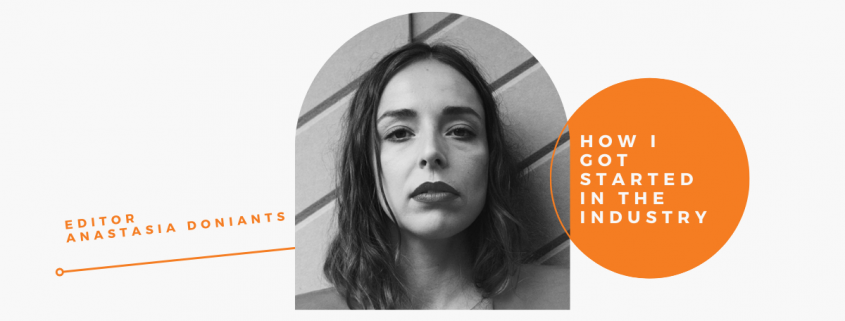
The Accidental Editor

It was 2009 and I’m working at Unity Books in Auckland, my specialty – children’s picture books and classics of literature. It’s been 2 years since I quit my career as an art director in advertising with no intention to ever step back into that world. I loved selling books and I still work at Unity from time to time, but in 2009 I was hoping to find a new path.

A friend mentioned a job going at TVNZ. They were looking for creative producers with an advertising background. A ‘creative producer’ makes 30-60 second promo videos for movies and shows; you write a script, edit the footage, direct the voice over talent, select music, SFX etc.

My only film editing experience was that once, I made a joke video on iMovie to amuse a friend, but I brazenly applied all the same.

To this day I’m still not quite sure how I was hired, it was a total accident, didn’t ask for it, fell on my lap. Perhaps a mix of luck and fate. TVNZ sent me on a two-day crash course to learn Avid Media Composer. The next day I started working. It was incredibly hard, I felt like a senior citizen learning computer skills, and back then there were no YouTube tutorials. The first few months I’d work late nights, I’d work weekends and study other people’s work, frame by frame. Why does one cut on a particular frame? What makes an elegant edit?

One day, my Creative Director pulled me aside and told me that he thought I had the right sense of timing to be a good editor. This encouragement drove me to want to be the best at TVNZ and I continued working late nights and weekends. The work projects became more complex and I was trusted to cut important campaigns, brand montages. I won international awards. In 2015 I became a freelancer. I worked for Sky TV and edited commercials with the ultimate goal in mind – to edit movies!

Sometime in 2016, I bumped into an old friend – director Florian Habicht. He’d recently returned from living overseas and told me he’d noticed my work. “One day we’ll work together,” he said. That comment encouraged me enormously. I was determined to make that happen, I just didn’t know how to make the switch from TV to film.

Editor Anastasia Doniants photographed by director Lula Cucchiara / Photo: Supplied

A personal connection helped. A friend of mine, director Jessica Sanderson, asked me to edit her NZFC funded short film, Ways to See. Again, luck was on my side, Annie Collins – the greatest editor in New Zealand – agreed to mentor me through this project. My fate was set there and then. Annie taught me everything about long-form: the workflow, the protocols, how to log, the assembly process. Annie also suggested that I trust my instinct, and this is something that can’t be taught, it must be in you as a person. Ways to See and my second short film, Ani by Josephine Stewart-Te Whiu, travelled the world with much success. This gave me confidence to continue to edit.

Educational institutes are not the only paths to knowledge, nowadays. I’m sure going to film school would have been of great help and, personally, I wouldn’t encourage anyone to follow my path. What helped me is that I was a movie mad kid. Movies and books took up most of my imagination growing up. My advice to young people – your hours of watching films are not wasted. Be curious. Be generous with your time as you’re investing in your future, if it means working for free – do it.

Most importantly, you have to love the magic and spectacle of film or else you’re in the wrong industry.

“Astonish me,” Sergei Diaghilev used to say to his dancers. “Astonish me,” I say to every person involved in the process of movie making.


About Anastasia Doniants

Anastasia is an award-winning editor based in Auckland. In the last few years, she has edited feature film documentary Fiona Clark: Unafraid, co-edited documentary James & Isey; as well as short films, documentaries and music videos.

How I Got Started in the Industry is a guest blog series from the Directors and Editors Guild of Aotearoa New Zealand (DEGANZ). Our members reflect on how they made their way into assistant editing, editing, and directing—with no two stories the same. They offer advice for those starting out. Get in touch with admin@deganz.co.nz if you’re a member and would like to share your story.

The biggest change ever to happen to the New Zealand screen industry is fast approaching. No, it’s not the merger of TVNZ and Radio NZ. It’s the Screen Industry Workers Bill (SIWB).

Before the end of the year, the SIWB is almost certain to become legislation.

Representative bodies for all workers in the screen industry, and DEGANZ is one of them, will engage with the Screen Production and Development Association (SPADA) and perhaps others once the Bill becomes an Act, to negotiate collective agreements that will set minimum terms and conditions under which contract screen workers will carry out their work.

Writers, Actors, Directors, DOPs, Production Designers, Editors, Visual Effects Artists, Sound Engineers, Composers, Grips, Gaffers, Makeup Artists, Wardrobe Designers—the list goes on to cover every contractor involved in making Film, TV, Games and Advertising, with a few exceptions.

Everybody in those roles being negotiated for will get a say in deciding the terms and conditions for their roles, if they want, through a democratic voting process that will cover members of guilds and non-members alike.

These agreements will be for both domestic productions, and international productions shooting here.

The agreements will be baseline agreements, meaning terms and conditions cannot be any less than what is negotiated. However, those terms and conditions can be improved upon through Enterprise (individual productions) and Individual Contracts. Where there are no Enterprise or Individual Contracts, the collective agreements will apply.

Most people in the New Zealand screen industry have never experienced collective agreements in their roles. The change the SIWB will bring about is perhaps the biggest to happen now and into the future for screen.

Misinformation and disinformation about the Bill could well play a part from here on in. So it behoves everybody in the screen industry to get the facts about the SIWB, because it is going to affect every one of you directly.

From here on in, guilds, associations and the Ministry of Business, Innovation and Employment (MBIE) will be running education programmes to not only inform screen workers but also the general public about what is happening.

A simple explainer is available here.

The detail of the Bill will shortly be finalised and will go back to the House for its Second Reading. Then amendments will be made through Supplementary Order Papers with the changes recommended by Minister Michael Wood before finally being passed into law with Third Reading.

Once the Bill is passed, there will be some work to ensure that everyone working in the screen industry has a contract in writing that sets out some mandatory conditions to deal with sexual harassment, bullying and discrimination and a clause dealing with fair termination. After that it will take some time before DEGANZ sits down with SPADA to negotiate the collective contract setting out the minimums for pay and working conditions for our occupational groups, but we need to start getting ready now.

I encourage all DEGANZ members to make the utmost effort to understand the SIWB because it will be vitally important to your futures.

Tui Ruwhiu
Executive Director

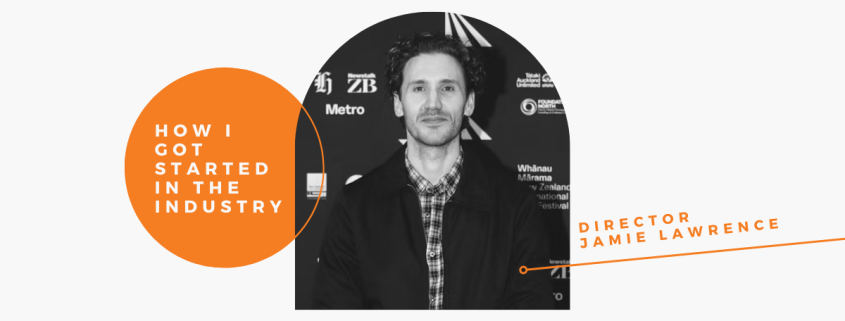
I’m 18, with frosted tips, earnest to a fault, about to graduate from South Seas Film & TV School. I post out my CV to every production company I can find: nobody bites. (Though, I did send it with a bar of soap wrapped in 16mm film and the opening line, “You don’t know me from a bar of soap…” *double cringe*).

Then one of my tutors puts me in touch with a graduate student who is working on The Lord of the Rings, shout out to Dan Story! Dan takes my CV to the production manager, Brigitte Yorke. While unimpressed with the soap, Brigitte, an alumnus of South Seas, appreciates my grades and hires me as a runner for two weeks. I martyr myself to the job. Changing lightbulbs, making coffee, spilling coffee, wearing my studio-issued ID like an Olympic medal. Two weeks turns into two months, and before I know it, I’m off to Wellywood, leaving behind my hometown in the Tron.

I quickly learn the magical business of show business can be a high-stakes, lawless place, and I’m sucked into the pressure, the hierarchy, the people. It’s intense, intoxicating, compulsive… a wild west of bullshit, politics, nepotism, sexism, slave drivers. And I bloody love it. Because when you finally see your name roll up in the credits, it’s suddenly all worth it. Addicted, I jumped from one film to the next… King Kong, The Water Horse, The Lovely Bones, Avatar, The Hobbit… going from runner to driver to cast PA. Watching. Learning. It wasn’t until I became James Cameron’s driver, 8 years after leaving film school, that I decided I had to tell my own stories. I quit James and made my first short film… and then the next one, and the one after that.

One day, producer Katie Millington saw my short Darryn Exists and took a punt hiring me, believing I could learn how to direct commercials. I moved to Auckland, but had nothing to show for myself, and advertising people want you to prove you can tell a story in 30 seconds or less. So I self-funded a couple of ‘spec ads’ to build a showreel for myself. This got me my first job directing a TV commercial. I guess things snowballed from there, but not without the loving mentorship I’ve received from great people and places along the way.

Director Jamie Lawrence on set / Photo: Supplied

Looking back, it really does feel like a collision of passion and opportunity that got me into (and keeps me in) the industry. Thank you, South Seas, thank you Dan, thank you Brigitte, thank you James, thank you Katie.

It can be a long road, so when it comes to weathering the storm, the things I tell myself:

Turn away from rejection, towards something you love. I’m quick to go on the offensive, taking shit personally. But actually, the truth is sometimes it’s them, not you. If I lose a job to another director, I reframe it in my mind like an actor who loses the role to somebody more “quirky looking” and “on brief”, while I must be too handsome for the part. Then I lock myself in my room and write my screenplay. This way, I not only ‘bounce back’ from the setback, but I also have something to ‘bounce to’.

Phone a friend. Nurture these relationships and connections because they are a wellspring to refuel from when you’re in the eye of the storm. Having a cup of tea/gin with a mate toughens/loosens me up every time.

You can say ‘no’. It’s human rights. Sometimes you can’t afford to turn down an opportunity. And sometimes you can’t afford not to. It’s okay to say ‘no’. For better or worse. It can be bad for business (ask my producer or my husband), but it also makes room for other important stuff. I’ve made a list of deal breakers that match my values – a way to measure a job and decide if it’s something I want to do. Yes… it’s idealistic, probably unsustainable, and sometimes I get a nosebleed on my high horse. But it’s not as bad as doing something I hate.

Good luck out there. Thanks for reading.


About Jamie Lawrence

Jamie Lawrence (he/him) is a queer Pākehā filmmaker based in Aotearoa New Zealand. His work has screened and won awards at NZIFF, MIFF, Festival des Antipodes, and Oscar-qualifying festivals including Show Me Shorts and Nashville. A scholarship graduate of NYFA and an alumnus of MIFF’s Accelerator Lab, Script to Screen’s FilmUp and Story Camp, Jamie’s recent short EARTHLINGS premiered at MIFF and was shortlisted for “NZ’s Best” at NZIFF. Having ranked among the country’s top commercial directors, he is now focused on his NZFC-supported feature slate: YA fantasy SKIN (Sweetshop Entertainment) and adventure biopic SOLO (Vendetta).

You can find out more about Jamie and his work on his website.

How I Got Started in the Industry is a guest blog series from the Directors and Editors Guild of Aotearoa New Zealand (DEGANZ). Our members reflect on how they made their way into assistant editing, editing, and directing—with no two stories the same. They offer advice for those starting out. Get in touch with admin@deganz.co.nz if you’re a member and would like to share your story.