I’ve been away on holiday for ten days, so have had the opportunity to push anything work-related out of my mind for a time.

Arriving back at my desk and engaging in work once more, however, I’m reminded of the considerable challenges facing the screen sector right now.

One of the more significant shifts going on is the coming together of TVNZ and RNZ as Aotearoa New Zealand Public Media, destined to come into being on 1 March 2023.

The reallocation of $42 million in contestable funding from NZ on Air to ANZPM has already occurred, which has meant that from July 1 2022 NZ On Air had a reduced pool of cash to fund content with.

To adjust to this significant change, NZ On Air is having to chart a new direction for the organisation. It has put out a strategic think piece, which you can read here.

The document is simple, straightforward and shows a clarity of thinking that’s encouraging. Essentially, in determining their strategic direction from here on in they are going to develop a model based around Laser Focused and Ideas Factory thinking, while longer term looking at Critical Mass to achieve greater effectiveness through partnerships. (Please follow the link for more detail on this.)

This bodes well I believe, while it is still upsetting that NZ On Air have had their funding reduced, with no planned increase in sight for them.

Another key element they identified to enable this possible new direction is a need for changes to the Broadcasting Act. The Act has governed NZ On Air’s direction since 1989, and just like the NZ Film Commission Act 1978, is past its use-by date.

The screen industry has changed globally and New Zealand is well behind the eight ball when it comes to keeping up. Rather than being proactive and outward looking we have been reactive and inward looking. Just look at what’s happening across the ditch.

Screen Australia’s 32nd annual Drama Report released last week reports that overall, $2.29 billion was spent across 162 drama screen productions that commenced production or post production in Australia in 2021/22 compared to $1.94 billion spent across 163 productions in 2020/21. The increase was driven by a record spend on Australian theatrical features ($786 million up from $495 million last year), as well as a record spend on Australian subscription TV and Subscription Video On Demand (SVOD) – for which number of titles, hours and budgets have tripled from 2020/21.

Netflix, Paramount+, Prime Video, Disney+, and Apple TV+ and local SVOD Stan are helping to drive this growth, with commissions flowing to local production companies, and not just for drama.

New Zealand? Not so.

Yes, Australia has got a larger market, a lot more bankable stars, and better writers. But still. We’re not helping ourselves.

Look at the mess that MCH and MBIE are proposing, for example, in their draft paper for the Screen Sector Investment Review. If that goes through we’ll be going backwards not forwards.

Back to NZ On Air. They’ve been a well-run and pretty effective organisation to now, most people would agree. Their thinking about their future direction is positive in a bad situation.

I’m hoping that the same king of sound thought exhibited by NZ On Air will guide the outcome of the legislation intended for ANZPM. But I’m not holding my breath. It’s a political football being rushed towards the election-year touchline.

It seems like New Zealand’s domestic production sector is under threat from multiple sides right now. And we don’t really have anybody to blame but ourselves.

I’m hoping that those shaping our destiny have a great Xmas break and come back refreshed, invigorated, and really take on board the feedback they are getting from us and everybody else.

We need pragmatic and positive changes that will grow our local talent and local IP, and increase local production, while keeping international productions coming here. Now that would be a late Xmas present worth waiting for.


Tui Ruwhiu
Executive Director
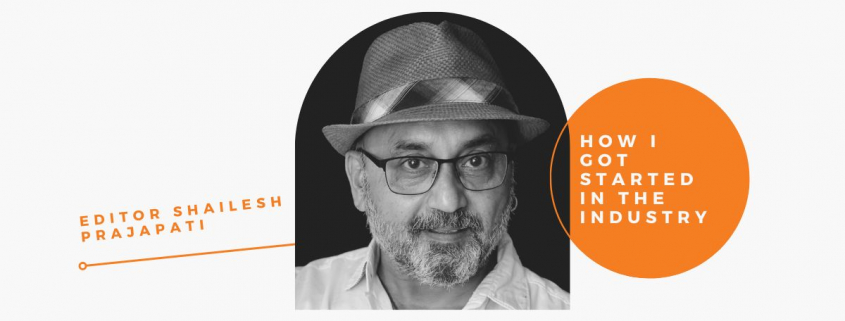
 

Go With The Flow

My journey in the film, television, and performing arts industries was unplanned. However, my instincts have worked towards goals and dreams with a “Go with the flow” attitude.

One day, I visited a dance academy called Darpana Academy in Ahmedabad, India. I’ve been a natural dancer since childhood and wanted to learn the Indian classical dance Bharat Natyam. It was the evening of 28th October 1982. I still remember it as it was the day I entered into the world of theatre as an “actor” instead of a dancer. From then, up until about 1989, I was crazy busy with acting jobs for theatre, television, and films. Also during that time, I got an opportunity to graduate in performing arts from the National School of Drama (NSD), in Delhi. But due to family commitments I had to say goodbye to my acting career, at least for the time being.

I did get a Government Job in 1989 in Doordarshan Kendra, India (State TV broadcaster) as a production assistant for television programmes in the Gujarati language. It was a great time to learn to edit, direct, and produce because of the staff shortages to create TV programmes for local audiences. I was lucky enough to get intense filmmaking training at the Film Institute of Pune (FTII), India, which is equivalent to the South Seas Film School in Aotearoa. I quit that job in 1993. I was missing acting and theatre due to that job, so I resigned and started my own production company named “Bermuda Telefilms” to produce films, television programmes for local tv stations, and stage plays/dramas in the Gujarati language.

From 1993 to 2003, before I migrated to NZ, I produced, directed, edited and acted in several stage plays/dramas, TV programmes, and films in India. I left India in 2003 to make Aotearoa, New Zealand, our second home to give our daughter a better life. My wife and I left all our loving jobs/work to settle in NZ with the same attitude “Go with the Flow”.

Editor Shailesh on set / Photo: IMDB

2003 to 2008, for five years, I tried hard to get work in the film and television industry and tried very hard to convince many producers and production houses so I could become a part of the NZ film and television industry. However, everything was a struggle with no money, no recognition, language difficulties, the colour of my skin, and my thick accent. I did odd jobs without losing hope and confidence.

I was lucky enough to have a good old friend in Auckland from my home town to rescue me by showing me the right path to get into the industry, DR. Shuchi Kothari (Thanks heaps, Shuchi). She asked me to do a post-graduate diploma in screen production from the University of Auckland, and I did it in 2007-2008 to develop an awareness of the NZ film and television industry. After my PG diploma, my first job in NZ was with The Walt Disney Company (New Zealand) Ltd for fantasy drama series The Legend of the Seeker season 1 & 2, as an assistant editor, recommended by Vanessa Alexander and Zane Homes (Thank you both).

I have worked as an assistant editor and editor, plus an actor (with Auckland Actors) in the NZ film and television industry, Since 2008. I have held myself back from directing and producing in New Zealand because of my lack of confidence with my english and racial biases in the film and television industry.

My love for my own Gujarati language pushed me to go back to India (after the graduation of my daughter) in February 2018, where:

  1. I acted in a Gujarati feature film Hellaro, which won the 66th National Film Award for Best Feature Film in 2018.
  2. I directed a Gujrati feature film Saheb, which was released successfully in February 2019. It’s available to stream on Amazon Prime. Saheb was critically acclaimed in regional cinema.

I returned home in August 2021, after 18 months, as I felt that Aotearoa New Zealand was my first home. Being stuck in lockdown due to the pandemic meant I couldn’t return to India in December 2021 for another feature film project. I did begin working in post-production again whilst in lockdown.

Now again, back in India due to the sad demise of my father in the last week of June 2022. I’ll start working on my next project once everything gets back to normal in my life.


About Shailesh Prajapati

Shailesh is an editor, director, and actor originally from India and now residing in Aotearoa New Zealand. He has worked on tv shows, films, and short films including award-winning short film Perianayaki, which won Best Short Film at NZIFF.

How I Got Started in the Industry is a guest blog series from the Directors and Editors Guild of Aotearoa New Zealand (DEGANZ). Our members reflect on how they made their way into assistant editing, editing, and directing—with no two stories the same. They offer advice for those starting out. Get in touch with admin@deganz.co.nz if you’re a member and would like to share your story.

The Governor General recently gave the Royal Assent to the Screen Industry Workers Bill, making it an Act that will come into force on 30 December 2022.

I know I’ve said it before, but I am going to say it again:

“This is the single biggest thing to happen to the New Zealand screen industry.”

It will affect a large part of professional screen production from marketing content, commercials, web series and short films to television and film production.

Every new contract presented to screen workers by producers/production companies from 30 December 2022 on must have the mandatory requirements of the Act. You can learn what they are in the blog I wrote here. For a simple 101 explainer on the Screen Industry Workers Bill, click here.

The Screen Production and Development Association (SPADA) is doing its best to educate producers before the Act comes into force—they will be required by the Act to conform.

For you as a screen production worker likely to be engaged by a producer/production company, here is what you should expect.

  • To receive a written contract with sufficient time before the contract starts for you to consider, take advice on and negotiate the terms and conditions presented to you.

In other words, no more getting contracts the day before you start, the day you start, after you start, or not at all.

This includes on low-budget short films, low-budget web series or other qualifying low-budget screen productions.

Any new contract from 30 December 2022 on will need to include:

  • A term saying parties will comply with the Health and Safety at Work Act, and Human Rights Act
  • Bullying, discrimination, and harassment processes
  • Dispute resolution processes
  • Termination notice periods and payments

We will issue a notice about the mandatory clauses that you can expect to see in your contract—all the guilds DEGANZ (directors, editors, assistant editors), NZWG (writers), Equity NZ (actors), SMSG (Screen Music and Sound), SIGANZ (Techos), VEPGNZ (Visual Effects) and MDGA (Motion Designers and Animators) are working with  SPADA (producers/production companies) to agree on these mandatory clauses.

One of the key rules for all parties (the contractor [worker] and the contracting entity [Engager]) with the new Act is:

  • Duty of Good Faith

This sounds like a benign term but it has an important meaning that everyone will need to understand and apply, on both sides (worker and engager):

Duties of good faith for parties in workplace relationship

(1)  Parties in a workplace relationship must not, whether directly or indirectly, do anything—

(a)  to mislead or deceive each other; or

(b)  that is likely to mislead or deceive each other.

The idea that you had to get the express permission of the producer or production company before you showed your contract to an advisor (guild, lawyer, professional advisor) has always been an unacceptable clause put forward under the guise of confidentiality.

If you are a Full member of DEGANZ, you will be able to come to the Guild to have your new contracts checked to ensure that they conform.

For those with existing contracts under which they are working, the producer/production company has 12 months from 30 December 2022 before they will be required to incorporate the mandatory terms of the Act.

DEGANZ collective bargaining will take some time to start and conclude. We expect to enter bargaining around the middle of next year.

It’s vitally important that we start preparing for this now, so that when we move to collective bargaining we are truly representative of all directors, editors and assistant editors. Everyone should have an opportunity to participate in the democratic process required for collective bargaining over the minimum payments, and terms and conditions of their work.

To this end we want all directors, editors and assistant editors to be covered by the Act as a Full member of DEGANZ.

For those of you reading this, please actively encourage everyone you know who is not a member of a guild to become a Full member.

The power of numbers will be very important as we all move forward from here. And it’s our Full members that DEGANZ will represent in any discussions with engagers over contracts, once collective agreements are in place.

A note here: Ngā Aho Whakaari (NAW), Pacific Island Screen Artists (PISA), Pan-Asian Screen Collective (PASC)  and Women In Film and Television NZ (WIFT) are not guilds representing workers under the recognised occupational groups of the Act. Members of these associations should also join the guild that best represents their occupation as a worker.


Tui Ruwhiu
Executive Director

Select committee oral submissions are underway on the Aotearoa New Zealand Public Media Bill, which will ultimately become the act for the new entity ANZPM, combining TVNZ and RNZ.

There were 892 written submissions on the Bill. It was introduced to the House on the 23rd of June this year. With the new entity ANZPM intended to be up and running on 1 March 2023, this effectively means that the Third Reading of the Bill needs to be done before the end of the year. Six months in total in the House. Hare speed for such a complex and crucial piece of legislation.

Tortoise speed defines the passage of the Screen Industry Workers Bill in comparison. It was introduced into the house on the 18th of February 2020. It had its Third Reading on the 27th of September this year. Which means it’s a done deal. Yay!

Granted, COVID sat within the two and a half year passage of the SIWB. But what it gave us was two years of Film Industry Working Group effort to work through the many issues of moving thoughts, ideas and good intentions onto paper, and then into a two and a half-year government process to become legislation.

From watching a number of the oral submissions for the ANZPM Bill, it’s pretty clear that while most support it, very few think a good job has been done in coming up with the current proposed legislation under consideration. There’s so much wrong with what’s been put up—or more pertinently what’s lacking/missing from what’s been proposed—that it’s clear that a lot more time and careful thought is required to get it right.

Problem is, the Government is on a seeming agenda to get it through in case they lose the election, hence the 1 March 2023 start date for the new entity. So much money, time and effort will have been spent getting it done that it won’t make sense for the Opposition to reverse it if they come into Government late 2023.

This approach doesn’t serve the wider New Zealand media industry, including us in the screen sector, all of whom are nervous or quaking at the thought of ANZPM as the behemoth it will become.

The attitude from Government seems to be: trust us and trust the new media entity. All will be okay. And TVNZ smiles and says it promises to play nicely and look after us all as it licks its chops at the thought of being able to go its merry commercial way as a bigger, richer beast.

The hare is definitely getting across the line first in this particular race. The tortoise… here’s hoping it doesn’t end up in the summer sun, wondering how it’s going to right itself while being picked over by vultures.

The only thing we can pray for now is that in the remaining months a significant effort goes into rewriting the current draft into something that’s going to work for public media service and the sustainability of the independent media sector.

A big ask.


Tui Ruwhiu
Executive Director

So much of directing is communication. What language do I use with actors? What words do I use to communicate my vision to cast and crew?

I think it’s safe to say that human beings, though, aren’t naturally good verbal communicators. We’re not born with language. Language has to be learnt. 

This extends to learning language for directing content that includes intimacy, nudity and simulated sex scenes.

How Language Makes a Difference

When DEGANZ was joined by NZ actor and intimacy coordinator Tandi Wright to talk about what intimacy coordinators do, she shared that actors more commonly have bad experiences “because communication and planning is often poor or non-existent.”

“Directors, actors and producers are often embarrassed to talk about the intimate material, which I know sounds ridiculous but that is true.”

Like stunts, intimate scenes have inherent safety risks – people can get hurt physically and psychologically. You’d never take a ‘she’ll be right’ attitude with stunts, so why would you with intimate scenes? When we shy away from talking with our team, it leaves each person to deal with stress, anxiety and even trauma on their own if they have a bad experience on set or have experienced sexual harm in their own lives.

A game changer has been the adoption of intimacy coordinators on a whole range of productions, big and small, here in Aotearoa within the space of four years, along with Equity NZ’s invaluable Intimacy Guidelines for Stage and Screen.

“Intimate scenes have seldom been creative spaces,” says Tandi. But they can be “robust and playful like any other scene.” Being really specific and detailed about what you want and what’s involved will make filming scenes a positive, collaborative experience where actors feel safe and respected. It’s just professional.

DEGANZ has been running Directing In the Intimate Zone, a one-day practical workshop introducing directors to intimacy best practices, tools and language, because awareness and education is still needed. Recently, we ran Directing In the Intimate Zone in Auckland tutored by actor/intimacy coordinator Jennifer Te Atamaira Ward-Lealand.

From observing that workshop, I thought I’d share a few gold nuggets from Jennifer on professional language that you can learn for directing intimate scenes.

Use Consent Language

In the workshop, Jennifer demonstrated the touch consent process with the actors, which a few directors in the class later practised in breakouts. If a director knows how, they could facilitate this process without an intimacy coordinator present for less demanding scenes. (Here’s a guide by Intimacy Coordinators Aotearoa on when to hire an IC.)


Actors using the touch consent process with Jennifer Ward-Lealand (left). / Photo: Tù Studios


Basically, the touch consent process has actors standing facing each other, fully-clothed, and taking it in turns to ask for the other’s consent to touch a specific body part – in relation to the context of the scene. The third party (the intimacy coordinator and/or director) guides the process.

For example: 

Jennifer: Laura, can you ask Sam if it’s okay with him if you can hold his hands?’

Laura (to Sam): Is it okay with you if I touch your hands?

Laura can indicate on her own body where she will be touching.

Once Sam has verbally agreed to the request, Laura will touch Sam’s hands, and then Jennifer will have Sam ask the same question of Laura.

The process is methodical and simple to follow, covering all areas of the body that will be touched during the choreography. It creates trust and sets clear boundaries for where each actor has agreed to be touched and where is off limits. Moreover, there is no expectation on the actor to divulge personal reasons for why they don’t like being touched in a certain area.

Note that Jennifer had the class use “Is it okay if I _____?” over “Can I touch your _____?” The difference may seem subtle but the latter is a more open request for consent.

Desexualise Language

Another key takeaway for the room that felt like a eureka moment for me was Jennifer’s lessons on desexualising the language around the work. One major way intimacy coordinators professionalise the filming of intimacy or sexual content is getting cast and crew to use anatomically-correct terms, like buttocks, breast and even gluteal cleft (that’s a butt crack, by the way!).

Such language is not emotionally loaded, but helps separate the professional from the personal. And is really important because actors should feel ‘personally safe’ to be ‘professionally open and vulnerable’, which is central to their craft.

Intimacy coordinators also use desexualised language for actions. For example, instead of a director saying, “You’re going to grab her arse”, they could say, “Okay, so this is when we’re looking for a firm squeezing of the buttock.”

During a rehearsal at the workshop, Jennifer also suggested using the words “Close the distance, one of you maintaining eye contact and the other avoiding eye contact every now and then” instead of “Move towards each other in a flirty way,” which in the end is a very generalised instruction and brings to mind certain obvious tropes.

If seeing directors pause in the workshop before specifying a body part or action is any indication, a bit of rewiring of the brain is likely required at first. But from her experience, Tandi Wright says the sense of professionalism is almost immediate. If you don’t know what term to use, don’t be embarrassed to ask your IC!

You might be thinking that desexualising intimate scene work might seem contradictory. But it felt incredibly liberating for the performers and directors in Directing In the Intimate Zone. Actions become technical choreography, like a dance or a stunt, and with your IC and actors, you can hone in on choreographing really specific beats and tell the story of the scene in a much more creative and deeper way.

Ask for Performance Level and Placeholders

During the process of choreographing the scenes, which involves repetition, actors don’t have to give 100% every time. You can ask them, “Are you okay to go with performance level kissing or would you prefer to use placeholders for now?”

A placeholder for a kiss might be touching hands or leaning in and turning heads away from each other.

So those are a few language tips for directing intimate scenes. If you want to go deeper into language, tools and processes with the helpful aid of seeing the work in action, we are holding Directing In the Intimate Zone, a workshop with Jennifer Te Atamira Ward-Lealand in Rotorua on October 16.


Tema Pua
Events & Marketing Manager