
Editing – Cutting a Path

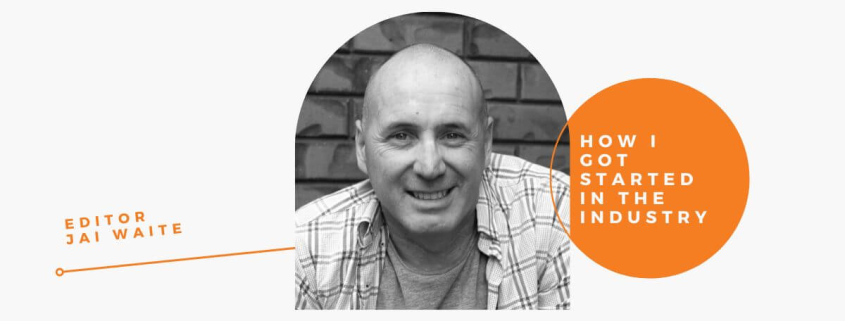
I’ve been an editor for 17 years – and the majority of that is in the documentary space. For those that don’t know me, I am also a wheelchair user – the result of an accident 22 years ago. That hasn’t burdened my career at all. In fact, as a wheelchair user, you have to become a problem solver and think outside the box – a handy skill when you’re trying to connect a scene or thought in a timeline.

Tuning Your Skills

My career began after the 2004 Athens Paralympics. I competed in Wheelchair Rugby, and after returning home with the shiny medal, I received a letter that allowed me financial help to study anything I wanted. I opted to complete a post-grad in film and television. Upon completing my course, I was lucky enough to step into an edit assist role at Attitude Pictures. Initially, my role was ingesting analogue tapes and shot listing. After about 6 months, I had started rough cutting some of the short stories that used to make up the magazine style programming – each roughly 5-6 minutes. The short length meant you had to get creative in transitioning from scenes and joining movement. Here I got to start online editing too. This really fine tunes your eye to any irregularities in shot.

Editor Jai (centre) at the 2004 Athen Paralympics / Photo: Supplied

After 3-4 years of cutting presenter led storytelling – the progression to longer form editing began. Here is where you start to think about story flow and what I like to call ‘riding the waves’ – taking the audience on a ride of emotions. This skill set isn’t something easily developed, and it takes time to know your craft and how to get the best out of the audio and vision. When doing jobs like this, it’s important to talk to your director or producer early on that you need time to work through the scenes. It gets quicker over time, but you need time to try things initially. There’s nothing wrong with kicking people out of the booth to try things on your own.

I feel you really start to trust your instincts by year 10. Again this comes back to how much leeway you’ve been given to tune your skills. It’s equally important to have snowballed all the skills from edit-assist to onlining to editing, so you understand the process and how best to do your job – and not make others’ difficult. You’ll get more work if you’re not costing producers extra $$$ after you’re finished.

Editor Jai at his editing desk / Photo: Supplied

In terms of software – I use it all. There’s no point limiting your potential work by being solely Avid or Premiere. Heck, I even edit in Davinci if I have to (great freeware, BTW).

My best advice is to be open to change and challenge yourself to do it differently.


About Jai Waite

Jai is an award-winning editor with an extensive background in documentary and factual projects, with a particular strength in storytelling. His accolades include two Apollo Awards for Best Editing in a Documentary/Factual film (2014 and 2016) and two Asian Academy Creative Awards for Best Editing (Australia/New Zealand 2018 and 2019). He currently works as a freelance editor and has a production company, Sweet Productions, with fellow member and long-term collaborator, Robyn Paterson.

How I Got Started in the Industry is a guest blog series from the Directors and Editors Guild of Aotearoa New Zealand (DEGANZ). Our members reflect on how they made their way into assistant editing, editing, and directing—with no two stories the same. They offer advice for those starting out. Get in touch with admin@deganz.co.nz if you’re a member and would like to share your story.
View from the Top banner

Our thoughts go out to everyone adversely affected by the recent weather. We have emailed all members with information that we hope will prove helpful if you are suffering from damage to your home or rental property, or you need assistance. Please check your Inbox if you haven’t already seen this.

Meanwhile, we remain in a state of flux with so many other things in the screen industry.

Although the Select Committee has come back with a revised Bill following submissions on Aotearoa New Zealand Public Media, we still do not know as of today what is happening with the proposed coming together of TVNZ and RNZ. An announcement is expected soon. You can read our submission here, and the revised Bill here. Little seems to have changed at first glance. Better Public Media NZ is doing its utmost best to prevent the whole thing being canned by Chris Hipkins. Even amongst many of its supporters—and certainly amongst its detractors—however, there is a general feeling that the Government hasn’t got it right, and that the best choice for now would be to take it off the agenda. One can only hope that if that were the case, the money taken from NZ On Air would go back, rather than go somewhere else.

Over at the New Zealand Film Commission, we understand that interviews have been held for a new CEO, but there is zero fact/rumour/gossip about any new appointment. The former CEO David Strong went on ‘special’ leave in April of 2022, so it’s now 10 months that the org. has been without a permanent head. Much hope was pinned on new NZFC Chair Alastair Carruthers to sort the mess out. I’d suggest he doesn’t have a lot of time left to right the boat before some in the industry start baying for his blood as well. There is, though, a new appointment to the NZFC board in lawyer, Jane Meares, who we understand will replace long-time legal beagle John McCay from Minter Ellison Rudd Watts, whose board term is coming to an end. You can read about Jane here.

Submissions have gone in to the Ministry of Business, Innovation and Employment/Ministry of Culture and Heritage on the Screen Sector Investment Review. Ours is here. Their proposals for changes prompted outright condemnation from most of the screen industry. Like the ANZPM plans, it’s now seen by many that staying with the status quo is a better outcome than anything that’s been put forward. There’s a sense of dread in some quarters about what MBIE/MCH come up with next. We should be finding out soon about this, too.

On a positive note, there is further movement on the Screen Industry Workers Act. MBIE announced today that registration is open for parties who wish to engage in collective bargaining. If you are interested in learning more go here. At the Guild we are now working on both education and feedback mechanisms on the Screen Industry Workers Act, so that you can understand and participate in shaping our approach to collective bargaining for directors, editors and assistant editors. More to come on this down the track.

In the meantime, we hope that from here on in, things improve for you all both personally and professionally. And remember, we are here to help members as much as we can, so do reach out if you need to.


Tui Ruwhiu
Executive Director

View from the Top banner

Welcome to 2023. It’s going to be a big one.

Why?

Because on 30 December 2022, the Screen Industry Workers Act (SIWA) came into force.

Under the Act, all new contracts from 31 December 2022 forward in the screen industry
must:

  • Be in writing
  • Have a term requiring compliance with the Health and Safety at Work Act 2015 and
    the Human Rights Act 1993.
  • Have plain language explanations of:
    • The process for making a complaint about bullying, discrimination, or harassment, and how the engager (production company/producer) will respond to the complaint. Individual contracts must also state that this complaint process will not prevent the worker from making a complaint about bullying, discrimination or harassment under any Act
    • the processes to resolve any dispute
  • in relation to termination of the individual contract, have:
    • a term stating whether parties need to give each other notice to terminate the contract, and if so, how much notice must be given
    • a term stating whether compensation is payable to a worker if the engager terminates the contract, and if so, what that compensation is.

Engagers (production company/producer) have 12 months before any existing contract is required to include the above.

AS A MEMBER, you can now bring to DEGANZ any new contract you receive for work to ensure that it complies with the new requirements, before you sign.

We will also offer ALL MEMBERS advice about the rates, and terms and conditions of their contracts prior to concluding any collective agreement.

And, we will represent ALL MEMBERS in any dispute over either an existing or new contract.


This year, DEGANZ will be seeking to negotiate collective agreements with the Screen Production and Development Association for directors, editors and assistant editors in feature film (documentary and narrative), TV drama, Factual and Entertainment, and Advertising and Marketing content (under five minutes)—all work covered under the Act.

In other words, we will be looking to set minimum rates of pay and terms and conditions for those roles across those genres of screen content.

And how will we know what to negotiate and whether or not you will be happy with the outcome?

That’s where you all come in.

And when I say all, I mean ALL OF YOU—every single, screen director, editor and assistant editor working in New Zealand as a contractor.

We need to know what you want and what you don’t want in regards to minimum rates and terms and conditions in your contract. And you need to help us to decide what to accept.

In other words, ALL OF YOU need to actively participate in the decision making that will be required to set the collective agreements because they are going to be locked in place for a minimum of three and a maximum of six years.

And the best way to do that is for every director, editor, and assistant editor in New Zealand to be a member of DEGANZ.

In this way, we can easily communicate with you, and you can easily communicate with us – throughout the whole process of preparing for negotiation, during negotiation, and after collective agreements are in place.

If you and your colleagues are not in our loop at DEGANZ, then you will be out of our loop, although we will do our best to promote widely everything we are doing. This is important to understand, especially when it comes to policing negotiated collective agreements.

You will not be alone anymore if you are a member of DEGANZ.

We will step in for you, and stand up for you—We are a membership organisation and union that will represent our members to the best of our ability.

Start to get a good understanding about the Screen Industry Workers Act (SIWA) by reading the info here from Employment New Zealand.

And stay tuned. There will be much more to come both online and with hui to inform you about SIWA and how you can get to have your say in the collective agreement process.

Tui Ruwhiu
Executive Director

View from the Top banner

I had a holiday in November but it seems such an age ago, having arrived back to the turbulence of the New Zealand screen industry.

But as we close out 2022, some good news for a change.

Avatar: the Way of Water is worth seeing, and it will transport you away from everyday life to, as film critic Mark Kermode puts it somewhat derisively, the world of the wet smurfs. Fortunate to have seen it yesterday prior to its NZ premiere today, I’m much more complimentary of the film than Mr. Kermode.

If you are into fantasy, this one is definitely for you. There were a couple of moments where my suspension of disbelief was interrupted, but I was soon transported back into the world by the film’s driving pace. It’s visually astounding, and to know that much of it has been made here in New Zealand is a source of pride, for me at least. Considering an estimated 2400 kiwis worked on the film, the credits went by surprising quickly—Seeing them on an Imax screen made them so much easier to read. Overall, a rollicking good time where good wins out over evil with some teary moments. Just what was needed.

Out my way in West Auckland, the official opening of the two new sound stages at Auckland Film Studios is a cause for celebration. Thankfully the damage from fire to one of them was not devastating. They’ve added an additional 44,000 sq ft of space to Auckland’s studio infrastructure, and already have bookings for 2023.

Meanwhile down South, UK-based Target3D has announced it will construct a multimillion-dollar digital studio in a $45 million Queenstown research and innovation facility. This, on top of the proposed massive Silverlight Studios to be built near Wanaka and the University of Canterbury’s Digital Screen Campus including a virtual production studio, is going to transform the South Island’s studio offering.

On the local production side, we are still seeing funding flowing into projects from the latest NZ On Air, NZFC and TMP funding decisions.  A special nod to the Guild’s illustrious President Robyn Paterson and DEGANZ member, editor and now Robyn’s business partner, Jai Waite. The two have secured funding for their new production entity Sweet Productions for their documentary series Wheel Blacks: Bodies on the Line. Swish! Further good news about other members’ efforts later in the newsletter.

As I recently wrote in an email to someone recently, 2022 has been a demanding year for us all. We certainly need a break and Christmas and New Year will hopefully give you all time to rest, recover, and get inspired and creative for 2023.

Ngā mihi o te Kirihimete me te Tau Hau

Tui Ruwhiu
Executive Director

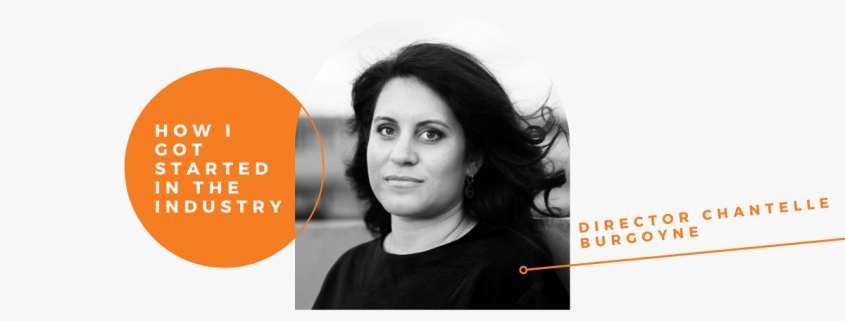
Growing up in Auckland in the late 80s and 90s, the idea that filmmaking was in my future seemed like an impossible dream.

On my mother’s side I come from an Afakasi German-Samoan family that migrated to NZ in 1965 and my father’s side a working-class Pākehā and Māori family from Auckland’s South-Eastern suburbs that my dad was adopted into. Neither side were creatives; my mum was a Policewoman and my dad’s lifelong love of Rugby League had led him to the Kiwis in the 70s, so whenever the question ‘what do you want to be when you grow up’ was asked my answer was usually very practical – a lawyer or doctor.

But I always remember the love of film being there. My parents split up when I was a baby, so my sister and I only saw our dad on Sundays, but I vividly remember him taking us to the movies and getting lost in another world. It wasn’t until I was a teenager seeing Jane Campion making films on the world stage that I secretly wondered if I could do that, but it felt out of reach.

I put the dream aside, went to uni to study law and ended up meandering through various courses while taking film theory papers on the side. When I finished, the flicker of that teenage dream remained, so I enrolled in an 18-week Film Production course and haven’t looked back since.

The course gave me the opportunity to write and direct my first short film Sunday’s Child, a far from perfect film that confirmed filmmaking was what I wanted to do. I then got into the MA programme in Screen Production at the University of Auckland where I was fortunate to be taught and mentored by Vanessa Alexander and Dr. Shuchi Kothari. I made more short films and mistakes, learnt many lessons, and made my thesis film Tatau which got into festivals in NZ and overseas and won a couple of awards.

Director Chantelle on set of her short film Tatau / Photo: Supplied

After I finished, I found myself in a position of not knowing what to do next whilst figuring out how to make a living, so I worked as a freelance editor and interned at DEGANZ before getting a one-year contract at the NZFC looking after Fresh Shorts working with Lisa Chatfield. It was a role that gave me insight into the NZFC and connected me with many filmmakers in the industry. One connection, Andrew Cochrane who had produced a Fresh Short, offered me a production role on the Crouching Tiger sequel shooting in Auckland. That job led to many more working on Hollywood Film and TV productions here in NZ giving me a first-hand view of what goes into making those types of productions which is incredibly valuable for me as a filmmaker. One of the most important roles I’ve had was as the executive assistant to Barrie Osborne who I learnt so much from in terms of his wealth of experience as a Producer navigating Hollywood and as a person.

I am grateful for the opportunities I’ve had working on these productions and the people I’ve met, but my filmmaking dream has never left me. I have continued to apply for funding and opportunities and have been lucky to get accepted into the DEGANZ Woman Filmmakers Incubator and Script to Screen’s Film Up programme and was mentored by Tusi Tamasese. I also received Fresh 30 funding for Sista which I directed and co-wrote with my sister Leilani under the mentorship of Dana Rotberg. Sista was a film that had many challenges, but one of the best and invaluable experiences I had was working with the wonderful Annie Collins as an editor.

Director Chantelle on the set of short film Sista / Photo: Supplied

Most recently, I directed part of the indigenous anthology We Are Still Here, a co-production between the NZFC and Screen Australia that opened the Sydney Film Festival and had its international premiere at TIFF. It was a film that faced many obstacles (not the least of which the global pandemic) but overall, it has been an incredible film to be a part of and I have really valued working with so many other indigenous filmmakers and creatives.

Director Chantelle on We Are Still Here set / Photo: Supplied

Looking back, my journey into and through the industry is one that has oftentimes felt circuitous with many ups and downs; but truthfully, I think the biggest obstacle I often face is myself and my own sense of confidence. Yet despite that I’ve kept forging ahead as there’s nowhere else I want to be.

So, I’m still holding on to that dream which no longer feels quite as out of reach.


About Chantelle Burgoyne

Chantelle is New Zealand-born filmmaker of mixed European and Samoan descent. She has directed award-winning short films Tatau and Sista. Chantelle was also one of the directors on feature anthology film We Are Still Here, which opened the Sydney Film Festival this year.

How I Got Started in the Industry is a guest blog series from the Directors and Editors Guild of Aotearoa New Zealand (DEGANZ). Our members reflect on how they made their way into assistant editing, editing, and directing—with no two stories the same. They offer advice for those starting out. Get in touch with admin@deganz.co.nz if you’re a member and would like to share your story.