View from the Top banner

“It’s bleak out there,” I’ve been saying to myself as I look out the office window each day at the weather… for weeks now. And frankly, the New Zealand screen industry at this point in time isn’t much better.

The interminable New Zealand Screen Production Rebate Review is still ongoing, no matter the announcement of minor changes to mollify discontent. Perhaps the NZ On Air funding announcements tomorrow will bring some cheer.

But the good news is that the New Zealand International Film Festival is back and in great shape, apart from the bugs that have been plaguing their website and ticketing. Hopefully, all will be sorted by the end of this week.

129 full-length films. Seven short film collections. Nine Aotearoa films having their world premiere. A lot of our members have films in there. There’s much of the best that this year’s Cannes had to offer. And a whole lot more. Going through the 2023 programme reminded me of pre-Covid selections—a wealth of the best arthouse films from around the world on offer—blessings to the late and great NZIFF festival director Bill Gosden. Which isn’t to say that Bill’s replacement Marten Rabarts didn’t make a good go of it. But he was unfortunately hit with the worst of times for cinema and film festivals—the pandemic years.

During COVID and even last year with its small programme, I was a little despondent about not having the winter thrill of sitting enthralled while tales of wonder, sorrow, drama, despair, and entertainment played out on the big screen, with audiences that collectively gasped, smiled, cried… or sometimes puzzled or were dismayed at what they were watching. That’s NZIFF for you. You’re never left unmoved by the choices they have curated.

We, too, are back with our involvement with NZIFF.

DEGANZ is working with the team at the festival on the Masterclass with Rolf de Heer and the panels for visiting directors. Check out Meet The Filmmakers, NZIFF Connect, and NZIFF Engage on page 83 of the programme.

We are also re-igniting our director hosting programme that we ran for many years prior to COVID, providing directorial collegiality and networking opportunities to those international directors accompanying their films here.

I encourage all of you to grab a programme, buy tickets and get your butts onto cinema seats while the festival is on. And don’t neglect those events we are involved with.

Welcome back, NZIFF! I have certainly missed you.


Tui Ruwhiu
Executive Director
View from the Top banner

Over the last two and a half months, we have been having educational evenings on the Screen Industry Workers Act (SIWA) across four sub-sectors:

  1. Advertising & Marketing Content
  2. Factual & Entertainment
  3. Scripted
  4. Film – Narrative & Documentary

Directors, editors, and assistant editors have been coming together to learn what the Act is about, how it affects them, what rights they have, don’t have, and could have, and what they can contribute to, allowing us to define the ‘claims’ (i.e. the minimum pay rates, terms, and conditions), which we will negotiate for in collective bargaining. Working groups are forming with four to six members in each, one for directors and one for editors, in each of the sub-sectors except for Film, which will have separate working groups for Narrative and Documentary. Each working group is led by a highly experienced practitioner in that sub-sector.

Up to the end of September, the working groups will be formulating thoughts, taking input, asking for feedback, and shaping potential claims, with the aim to put a draft set of claims in front of as many directors, editors, and assistant editors as possible within each of the sub-sectors. The feedback we receive on these draft claims we hope will allow us to settle on the final claims we will take into bargaining. We will also hold additional hui to update you on progress as we go.

We would like you to start interacting with the working group leaders/members in the sub-sectors that are relevant to you. We need to get as much input and feedback as possible to ensure that we are truly representing your interests and desires when it comes to helping determine the minimum pay rates, terms, and conditions that will govern your work once collective agreements are in place. Please contact me directly at the Guild to find out who is in the sub-sector that you wish to communicate with.

I would like to extend my thanks to the Australian Screen Directors Authorship Collecting Society for their financial support as we go through this entire process. ASDACS is a vital organisation that works with us to improve directors’ rights and remuneration and to administer the collection and disbursement of royalties due to directors for the screening of their work.


Tui Ruwhiu
Executive Director

I am a Film School dropout and my slow but steady trajectory from PA to Director/Producer is the classic example of working my way up from the bottom.

In the mid-eighties I was studying at one of the best TV/Film Schools in Toronto, Canada; an institution formally known as Ryerson. In my first year a Kiwi boy I’d met while traveling in the Middle East the year before turned up on my doorstep. He convinced me to take a year off (it was a 3-year programme) to come with him to NZ. I did, and I never went back.

In NZ I got a job as a production assistant at a company called Northern Television. Northern made TV commercials, broadcast programmes (drama/comedy/entertainment), and corporate videos. I was lucky to work across them all in a junior ‘do whatever is needed’ role. I worked with industry luminaries like Robin Scholes (producer), Andy Shaw (director/TV exec), John Cavill (DOP), and Brian Shaw (Editor). My boss was the extraordinary, smart, and slightly terrifying Linda (Tex) Milton. Sadly, Tex passed away a few years ago but she was a wonderful mentor who was generous with her knowledge and very supportive of my aspirations to learn as much as I could about production.

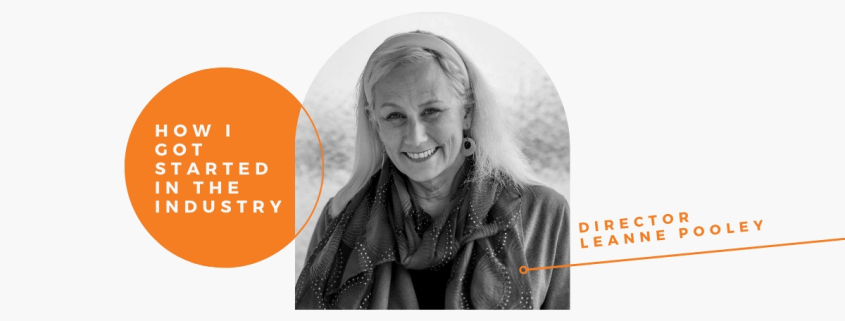
Director Leanne Pooley in Rome and Africa for BBC documentary ‘God’s Candidates’ in 1994 / Photo: Supplied

After Northern, I became a TPA (Television Producer’s Assistant) at TVNZ and spent four years there working on everything from sports to drama. I was then hired as a trainee director on a programme called First Hand; a series in which directors used new lightweight cameras (Hi-8) to make documentaries. First Hand storytellers filled all the production roles; camera, sound, editing, writing, and directing. We were the original one-person band. It was an amazing opportunity to learn under the tutelage of Richard Thomas and George Andrews; two stalwarts of the documentary genre. Doing every role meant the filmmakers came to appreciate all the components that go into a documentary. We were also faced with our own mistakes in the cutting room, a very steep learning curve indeed. First Hand was responsible for launching the careers of a number of highly successful broadcast professionals. Alan Erson went on to become Head of Documentaries at the ABC. David Ambler is a BAFTA-winning producer at the BBC, Mark McNeil runs the highly successful award-winning company Razor Films, and Peta Carey is a celebrated filmmaker and author. It was an incredible breeding ground for talent and I was very lucky to be part of the First Hand incubator.

Leanne on set for her 2013 documentary ‘Beyond the Edge’ / Photo: Supplied

In 1992 I moved to England where I was hired as a director/camera person on the acclaimed BBC series 40 Minutes helmed by the legendary documentarian Paul Watson. This was the first of many documentaries I made over the course of five years in Britain. I directed films for blue chip series including; Everyman, Omnibus, Frontline, Modern Times, and Eyewitness amongst others. My time in England solidified my position as a documentary filmmaker, I learned from the best in the business and when I returned to NZ to have my first child, I established my company SPACIFIC FILMS (25 years ago).

My trajectory has combined a little bit of study, a lot of luck, and some bloody hard work. It’s been a ride that’s for sure and I’m still with the boy who turned up in Toronto all those years ago.


About Leanne Pooley

A documentary filmmaker for over 25 years, Leanne has directed films all over the world and has won numerous awards (including Best Documentary at TIFF). Leanne is a New Zealand Arts Laureate, a member of The Academy of Motion Picture Arts and Sciences, and was named an “Officer of the New Zealand Order of Merit” for Services to Documentary Filmmaking in the 2017 New Year’s Honours List. Her work includes The Girl on the Bridge on suicide survivor and activist Jazz Thornton, We Need to Talk About A.I. for Universal Pictures and GFC, the animated feature documentary 25 April, and acclaimed local box office success Topp Twins: Untouchable Girls. Most recently, she produced Dame Valerie Adams: MORE THAN GOLD on the titular Olympic champion.

How I Got Started in the Industry is a guest blog series from the Directors and Editors Guild of Aotearoa New Zealand (DEGANZ). Our members reflect on how they made their way into assistant editing, editing, and directing—with no two stories the same. They offer advice for those starting out. Get in touch with admin@deganz.co.nz if you’re a member and would like to share your story.

When I was in primary school, I never knew I was Māori, or should I say I never understood what being Māori was. I always thought I was a little bit darker than a lot of the other kids, but that was ok. I was introduced to te reo Māori and kapa haka at primary school, and I felt like a gap was being filled. I carried on learning te reo Māori and doing kapa haka at college.

From a young age, I always thought I would be a teacher because I had some cool teachers, and I just thought I wanted to be like them when I grew up. Then in my senior years at Kapiti College, that changed as I found a love for Māori performing arts. Nearing my final year at college, I came across a one-year course in Film and Television at Whitireia Polytechnic in Porirua. What really caught my eye was that it incorporated Māori culture, and I thought if I didn’t like Film and Television, I could always go and do the Māori performing arts course. That one-year course set me on a path that changed my life, with a job offer in Auckland.

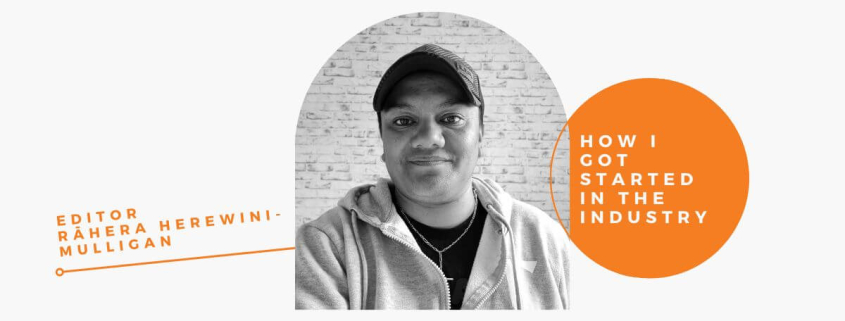
Editor Rāhera Herewini-Mulligan / Photo: @tuhoemaiden

At just 19 years old, I made the move to the big smoke, with no immediate family residing in Auckland. It was 1999, and my editing career had begun as an assistant editor on a new te reo Māori kids show known then as Tumeke. After one season, this was renamed Pūkana and is still in production today. I was fortunate to work with and learn from Francis Glenday, who taught me processes and structure, which I added to my editing foundations and still use and live by today. 

After just five months of being on the job, Francis fell ill, and I was asked if I would step up from assistant editor to editor. I must admit I was freaking out and had major doubts that I really wasn’t ready to step up. My director at the time, Hira Henderson, pulled me aside and said, “We will do this together,” and that gave me comfort that support would be there for me. So I asked myself, “Do you want to sink or swim?” and decided to swim.

That decision threw me into the longest week of my life as I worked as the show’s, now, only editor. But with the awesome support from my colleagues, I survived to tell the story and complete my first solo episode edit ever. And I was buggered! I continued work on the show into its 3rd series before moving on to TVNZ, where I would edit shows like Waka Huia, Marae, Mai Time, and Tagata Pasifika. This extended my editing knowledge base and introduced me to more Māori within the industry. After two years at TVNZ, I ventured out into the freelance world and haven’t looked back.

Sneak peeks into the Mokomoko Media editing suite, Rāhera’s editing team with her wife, Janice / Photos: @mokomokomedia

That’s my humble beginnings as an editor. Back then, I never realised I was part of a small group of Māori editors and an even smaller group that could kōrero Māori, which today I hope to help grow even more. I have worked with and alongside some of the best Māori in the Film and Television industry and am forever grateful for their teachings. One being we are a community that does this together.

‘Ehara taku toa i te toa takatini engari he toa takatini.’
My strength is not as an individual but as a collective.


About Rāhera Herewini-Mulligan

Rāhera is a field director and editor who is a fluent speaker of te reo Māori with 20+ years of experience in the television industry. As an editor, she has a wealth of experience across documentary, reality, children, and magazine-style genres from Police Ten 7 (TVNZ) to Moving Out with Kanoa (Three) and many shows for Māori Television. She is also passionate about Kapa haka and is an event/stage manager for Primary School, Secondary School (ASB Polyfest), and Senior Kapa Haka competitions across Tāmaki Makaurau.

How I Got Started in the Industry is a guest blog series from the Directors and Editors Guild of Aotearoa New Zealand (DEGANZ). Our members reflect on how they made their way into assistant editing, editing, and directing—with no two stories the same. They offer advice for those starting out. Get in touch with admin@deganz.co.nz if you’re a member and would like to share your story.

View from the Top banner

Here at DEGANZ, we are working through an educational and information campaign as part of our work around the Screen Industry Workers Act (SIWA).

One of the things we are asking editors, assistant editors, and directors to do for themselves is to look at the last ten jobs they did, the number of episodes and durations of the content, the platform it was for, what the total budget was, and then to write down the rate that they were paid to do those jobs. (You can often find the total budgets on the NZ on Air, NZFC, and TMP websites under funding decisions.)

Most people are required to work a 10-hour day, so it’s then a good idea to look at the hourly rate you got.

The current Minimum Wage is $22.70/hr; the current Living Wage is $23.65/hr. So if you do a 50-hour week that’s $1,135.00 Gross at the MW and $1,182.50 at the LW. By looking at your Gross weekly figure, you can see how you compare against the minimum and living wages.

But did you do a 50-week? Or did you do more hours and not get paid anymore for them? This will naturally decrease your hourly income. Why not average out your estimated hours per week and then see how well you did in comparison.

Directors, editors, and assistant editors don’t normally get paid overtime, but are required to work the same work day, being 10 hours, that crew on set work, who do get paid overtime.

The current Blue Book, which lays out the terms and conditions under which crew work, specifies that a standard crew day for a short-term engagement is 10 hours including paid lunch, with overtime at T1.5 for the 11th and 12th hours, and T2 for any time over that.

Most directors already understand that they are often the lowest paid person on set from the start for all key/HOD roles, and it just gets worse if they factor in the hours over 10 they do, while the pay to their key/HOD collaborators climbs with the overtime rates they receive.

All of the above and more will factor into our thinking when it comes to considering what minimum rates should be under SIWA for the various roles we represent in the sub-sectors the work is done—Factual and Entertainment, Scripted, Film – Narrative and Documentary, and Advertising and Marketing Content.

Then there are terms.

NZ crew as we know work hard, but as anyone will tell you, there are times when the crew isn’t working because they are waiting for talent, light, rehearsals, or myriad other things.

Editors and assistant editors however don’t have the luxury of downtime waiting for others. They are usually at it for all those hours of that 10-hour day. That’s significantly different in comparison to the crew. Who decided on the 10-hour day in the edit suite many are now starting to ask, not just because it affects their well-being but because it can affect the quality of the work.

We are having to weigh up many aspects of the current paradigm of work in the screen industry for directors, editors, and assistant editors before we settle on what we will negotiate for when it comes time to enter collective bargaining. What to do about public holidays, turn-around times, the working day, creative rights for directors and editors, and a host of other issues are all under discussion. And then of course we have to solidify our thoughts and come to you all to see whether or not you agree with where we have gotten to before we can start collective bargaining. If you don’t, then we will need to do more work.

Collective bargaining for us requires the employment of a democratic process designed to ensure that the majority are involved in the decision-making leading up to, during bargaining, and in settling on the final terms and conditions we will work under going forward.

There’s no better example of this in action than the screen guilds negotiations happening in the United States at the moment. The Writers Guild of America has kicked it off. The Directors Guild of America is about to start. And the US Screen Actors Guild will follow shortly.

A 98% majority vote by WGA members gave their board the endorsement to call a strike. And they eventually did after negotiations between the WGA and the Alliance of Motion Picture and Television Producers (AMPTP) reached an impasse. Democratic votes will be employed at various steps by all those guilds from here on in, in negotiations until they reach solutions.

We’ll be doing the same under the Screen Industry Workers Act, but in our own way, not following the US model.

And that’s why it’s so important right now for every screen worker to join the guild that best represents them: DEGANZ, NZWG, Equity NZ, SMSG, SIGANZ, VFX, Motion Designers and Animators, or the producers’ associations SPADA and APA (formerly NZAPG). These organisations will be negotiating on your behalf and they need your support to make it work for us all.


Tui Ruwhiu
Executive Director