

View from the Top banner

This week sees the marking of two significant days on the annual calendar: World Intellectual Property Day and World Day for Safety and Health at Work. Two things close to the heart of DEGANZ.

Copyright is an expression of Intellectual Property. Copyright. It’s something that directors do not have under the New Zealand Copyright Act. In the Act, the copyright in cinematographic film and audiovisual content is vested in “the person by whom the arrangements necessary for the making of the recording or film are undertaken.” This is interpreted as the producer. At the Guild, we have been pursuing copyright for directors for more than 20 years. In 2007, the Screen Directors Guild of NZ came close but ultimately lost out when Treasury determined that copyright for directors sat outside the terms of reference for the Copyright Act Review.

More recently in 2018, the Government again launched a review of the Copyright Act. We made considerable effort at this time to lobby for changes to the Act to recognise directors as authors and thereby gain copyright. In 2021, the Government decided that changes to the Act were going to be too hard and so dropped the review. We are still waiting for the review to come around again. All this said, we still celebrate and acknowledge the importance of intellectual property in the creative sector as it relates to visual artists, writers and composers, particularly in the face of threats on IP posed by digital content.

In our industry, we have been aware for decades of the high levels of stress and the impacts on physical, mental and psychological wellbeing that affects health at work and outside of it. Very little was done about this, however, until we were hit by the COVID global pandemic. In the first lockdown, DEGANZ and the other guilds and associations worked together to provide access to mental health help for screen workers. This came to an end in 2022, but the issue for us did not go away. Casting Director Miranda Rivers has launched a personal crusade to address wellbeing in the screen sector. ScreenSafe has taken up the baton on this as well and is working with Miranda to firstly conduct a survey to take the temperature on wellness amongst screen workers,  which will be conducted in the coming weeks. This will be a first step as part of a long process to improve and address health at work, amongst other personal safety issues we all face. DEGANZ board member and director Caroline Bell-Booth is leading DEGANZ’s efforts around this and will be a point of contact going  forward for both members and those working to address the issues.

A final comment in regard to the big announcement today about the retirement of COO Mladen Ivancic from the New Zealand Film Commission.

Mladen has been a rock at the NZFC in all the years I have had dealings with the organisation, both as a producer and as head of the Guild. In times when the organisation has been without a CEO, Mladen has kept the ship steady. He is universally liked, has been unfailingly polite and kind, done his job well, and will be sorely missed by all of us who knew and worked with him. We wish him well in his new endeavours.

Tui Ruwhiu
Executive Director
View from the Top banner

It was close to a year that the NZ Film Commission was without a permanent CEO. That was resolved when Head of Sky Originals Annie Murray was announced as the new CEO, replacing David Strong. The response from the industry has been overwhelmingly positive. Annie comes from a lengthy background in TV commissioning at Sky, Whakaata Māori and TVNZ. It will be interesting to see how she adapts to the very different world of film and what that means for the greenlighting of features going forward. Every NZFC CEO brings their own take to what gets funded. David Strong wasn’t around long enough for us to find out what his was. With Annabelle Sheehan, it was Māori and female-driven projects to the fore. With Dave Gibson, it was essentially genre. Graham Mason was a mix of auteur and commercial. Annie will most likely and rightly shepherd more Māori and indigenous films into existence—They are repeatedly proving themselves at the box office, after all, and there are Ti Tiriti obligations. But it will be interesting to see what else gets across the line.

Another major hindrance for the screen industry was the lack of information about what was going to happen with the funding taken from NZ On Air and given to the cancelled ANZPM (TVNZ – RNZ) entity. Prime Minister Chris Hipkins’ statement that more would go to public media funding when the merger was called off was decidedly opaque. Broadcasting Minister Willie Jackson didn’t provide any further clarity at the recent Ngā Aho Whakaari hui when he told everyone there that RNZ funding would be dealt with first and NZ On Air funding would become clear by June. Thankfully, last Thursday, Jackson revealed the funding for both entities, with NZ on Air getting all its funding back, plus a $10m increase for 2023/24 which will focus on reaching new audiences. NZ On Air has revised the strategy it put out when the money was taken away, but it’s still very much targeted to minority communities and under-represented voices. (New investment strategy here.) There was a collective sigh of relief, but frankly, we are only back to where we were before, but with a different strategy. We are still way behind the eight ball when it comes to the opportunities in the global screen industry. The golden age of TV drama has now reached its peak and is retracting, and NZ is still not participating in it while Australia is going great guns. Strategically in this area, we are either an ostrich with our head down a hole or a chicken running around headless.

The one ray of possible sunshine in the whole mess is the outcome of the New Zealand Screen Production Grant (NZSPG) review, which has also been going on for close to a year. The Hollywood studio lobbying group, the Australia-New Zealand Screen Association, put its best foot forward last week with the Sweet Tooth roadshow in Wellington, touting the positive economic impact of the production on the New Zealand screen industry. (See the report here.) This is another clear example of the benefit international production brings to New Zealand and the need for the international rebate to continue. However, what continues to be ignored is the opportunity to grow New Zealand talent, IP, and exports of it to global markets. Shows such as SPP’s Brokenwood Mysteries and a number of others from other production houses do find markets overseas, but the Government, their ministries, and our funding bodies aren’t doing enough to stimulate what is potentially a good revenue earner and a great cultural export. The SPG review, with the right outcome, could help change that. However, the industry’s collective voice on this seems to have fallen on deaf ears. I only hope that my pessimism about this is crushed by jubilant celebration when the review outcome is announced. Whenever the hell that is.


Tui Ruwhiu
Executive Director

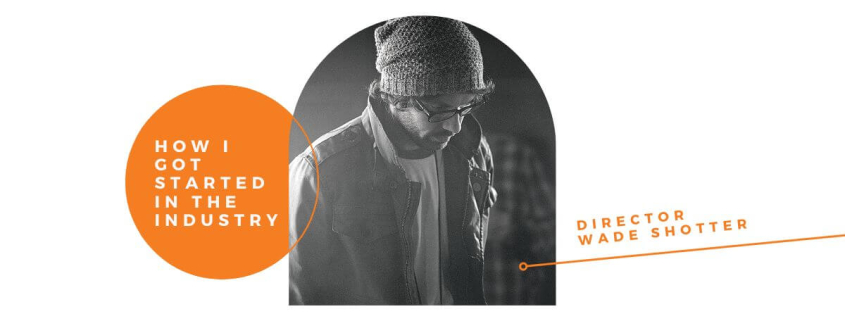
I was born curious and enjoy figuring out how things work, which is essentially what I still do today as a director.

I drew a lot as a kid and wrote and illustrated comics at school. Art was always my focus, so it seemed like a natural progression to go to art school. I did a first-year foundation course and hated it, so I continued illustrating and started a freelance career to make money doing what I loved. I tried a few other things along the way, like animation, which seemed like another logical step (taking still images and making them move).

While looking for illustration work in advertising, I was offered a trial as a junior creative. I was curious, so I accepted and was hired after three months. I didn’t realise how lucky I was at the time. This job was a turning point for me creatively – advertising taught me to interrogate my ideas, and I started working with directors. I’d write a script and was able to observe them make it, which I found fascinating. I thought directing was something else I wanted to try, and I asked a director I connected with if I could help them out in any way to learn more. They said, “If you really want to direct – then direct”.

I wasn’t sure how to take that first step, but when a band I was playing in received an NZ on Air video grant, I put my hand up to make it. I instantly fell in love with the process of taking an idea from my head to the screen. This is what I wanted to do for the rest of my life (a fortunate realisation at the age of 22). The music video was nominated for an award, and I quit advertising (my first and last full-time job). I went back to the freelance world – this time as a director.

The next few videos I made all involved aspects of animation, but eventually, I fell in love with the immediacy of film. I was repped by Fish n’ Clips, a division of Flying Fish films. I wanted to make a living from music videos, but the NZ scene had never been sustainable. Through the music videos I’d made, my advertising connections, and the help of Flying Fish, I started making commercials to save for a trip to London.

Director Wade Shotter on set for Mint Chicks music video ‘Post No Bills’ / Photos: provided

In the five years I worked in London, the bottom fell out of the industry (they blamed downloading). But due to the work I’d done there, I was lucky enough to win some great NZ commercial work, which kickstarted my commercial career worldwide.

I moved back to NZ and eventually joined FINCH, an inspiring Australian-owned film production company. Making commercials has supported me in branching out into other realms, like shorts and a tv series I’m developing. I’m still trying new things, ticking boxes, and having realisations.

Wade on set of his short film ‘I Will Not Write Unless I am Swaddled in Furs’ / Photographer: Thian Benton-Fieulaine

Being a director is a constant challenge. In an over-saturated industry, there’s a never-ending balance between being true to yourself and being relevant. I’ve sacrificed a lot, and there were several stretches of unemployment. But there have also been some amazing rewards that made it all worthwhile.

There’s no ‘right’ way to become a director. You can come at it from any angle, and you will succeed if you’re passionate enough and stick at it. I never went to film school, although when I think back – I’ve always had a deep love of film that was omnipresent throughout my life. I’d forgotten that I used to animate flip book stick men, make Lego-men films with my friend on his dad’s Betacam, and although I almost failed art school, I got an A+ in the subsidiary filmmaking course. For me, everything was pointing towards filmmaking.

Wade’s Self Portrait / Photo: provided

Everything you experience will make you the director you are. I developed an eye for composition and light through illustration, a sense of tone, emotion, pacing and energy through composing and performing music, and learned to hone my ideas and storytelling through advertising.

Nobody will make your project for you. You must take the first step and the last. But it’s also never been easier to make something and put it out there. So be a sponge, find collaborators, never get too comfortable, and stay curious.


About Wade Shotter

Wade Shotter’s origins are in illustration, where he worked on children’s books and created eight comics. From pen and paper, he moved to animation, where he worked with Disney for a stint in traditional 2D animation. Since shifting gears to film, he has directed his short film, music videos for various bands, and commercials for clients such as Fire & Emergency NZ, BNZ, Uber, Qantas, and more. He continues to play with form through his work and is drawn to deeply cinematic and visually expressive styles that engage and surprise. Currently, he is developing a pilot script for a television series.

How I Got Started in the Industry is a guest blog series from the Directors and Editors Guild of Aotearoa New Zealand (DEGANZ). Our members reflect on how they made their way into assistant editing, editing, and directing—with no two stories the same. They offer advice for those starting out. Get in touch with admin@deganz.co.nz if you’re a member and would like to share your story.

View from the Top banner

I was fortunate to attend the Māoriland Film Festival on its 10th anniversary yesterday.

There were around 200 of us there for the powhiri, including indigenous filmmakers from New Zealand, Australia, Canada, Hawaii and the Pacific Islands, a solid turnout of staff from NZFC, reps from the immagiNATIVE Film Festival in Toronto, and someone from Diversity & Inclusion from the European Film Market at the Berlin International Film Festival. We all got a chance, both formally and informally, to share about ourselves, our organisations, and our thoughts about film.

Film festivals, first and foremost, though, are always a celebration of film. The excitement of the film makers to have their films on screen at a recognised film fest—and Māoriland certainly is one in the indigenous film world—was palpable.

Māoriland had humble beginnings, but in its ten years, it has grown to become a significant event on the New Zealand film calendar. There’s a special wairua that permeates the fest, which sets it apart from any other film fests I’ve been to, including those of Berlin and Cannes, and even immagiNATIVE in Toronto. It’s very inclusive, there are a lot of youth involved, and it lacks the hard business edge so common at others, which in this case is a good thing. And, of course, it’s driven by Te Ao Māori, Te Reo, and Tikanga, which makes it so very special to us.

I was fortunate to run into two filmmakers from Hawaii who I had met previously when I was asked to speak at the University of Hawaii by a film lecturer there about a short I had produced that had gotten into the Hawaii International Film Festival. They have come a long way with their work, and it was good to both reminisce and learn what the other had been up to in the ensuing years—networking and connections are another big plus to come out of such events.

But it’s the films everyone is ultimately there for, and the opening night film and its filmmaker, Etienne Aurelius, reminded us all of the power of the indigenous filmmaking voice.

Aurelius’ film Ka Pō is a raw film that overcomes its limitations by exhibiting elements that make the indigenous perspective unique, with spectacularly cinematic locations, framing, and metaphor. Aurelius said that he shot it with a crew of five, with the majority of cast non-actors, and with the production spread out across a long production period interrupted by the COVID pandemic. Māori producer Chelsea Winstanley helped him craft it into the distinctive debut feature that it is.

Here in New Zealand, we know that films with Māori stories, content, and characters set us apart and help to make these films often critically and commercially successful, as exhibited most recently by Paula Whetu Jones and James Napier Robertson’s Whina and Tearepa Kahi’s Muru. Australia has just as much success with their first nations films, the likes of Warwick Thornton’s Sweet Country and Leah Purcell’s The Drover’s Wife: The Legend of Molly Johnson.

The success of New Zealand and Australian indigenous filmmakers provide a shining light to those from other countries around the globe, which Aurelius paid tribute to in the Q & A following the showing of his film. But indigenous filmmakers from elsewhere are now making their own marks with their own films, and this is fantastic to see. I look forward in the future to seeing a film from Aurelius that has a decent budget, as I’m confident this Hawaiian filmmaker from Kauai is someone we’ll be hearing a lot more from.


Tui Ruwhiu
Executive Director

View from the Top banner

If Queen Elisabeth were still alive, she’d be telling us what an annus of a time it’s been so far for Aotearoa New Zealand.

Our thoughts at DEGANZ go out to those of our members and all others impacted by the weather events we have experienced in recent times. For many, it’s been devastating. There have, though, been some rays of sunshine for the screen sector in what’s been a truly miserable summer to date.

While the Guild supported the idea of bringing RNZ and TVNZ together in a merged entity, we expressed our serious concerns about the manner in which it was being done, with little real detail provided as to what exactly was going to happen and what it meant for us all in the screen industry. It was with some relief, therefore, on my part at least, that Aotearoa New Zealand Public Media was canned. However, while the Prime Minster did say that:

  • RNZ will receive additional funding to strengthen its public media role,
  • New Zealand on Air will also receive more funding to support public media content,
  • funding will be available to a wider range of broadcasters, and that
  • remaining funding will be redirected to other Government priorities,

it’s still decidedly unclear as to what ‘public media content’ actually is. Is it News and Current Affairs? Documentary? Scripted Comedy? Drama? Reality? Other? Our screen industry is still operating in a vacuum at this point.

NZ On Air’s recently released commentary in its Shorts Newsletter doesn’t engender much positivity either: “We remain very energised by the strategic shift we had articulated in the Transitional strategy and feel this is still a valid direction, albeit with more funding than was going to be available.” For those of you who haven’t read their Transitional Strategy, you can find it here.

On a more positive note, we now have the Screen Industry Workers Act (SIWA) in place, although you wouldn’t think so based on the contracts I’ve seen so far this year from producers—elements required by law have been missing. You can learn what needs to be in contracts now and a great deal more in the comprehensive resource on our website about SIWA—thanks to the Screen Industry Guild of Aotearoa New Zealand, who provided us with much of the information. You can access it here. You will be hearing from us frequently from here on in about SIWA as we move forward with education, training and preparations for collective bargaining.

And then, of course, there was Te Matatini. What a fabulous event it was, although TVNZ’s coverage could have been better. That teams from cyclone-hit regions were there to compete was a testament to the desire of many to lift the spirits of Māoridom and the whole country after such a trying time. The call for greater financial support from the Government for this exceedingly popular showcase of artistic talent is fully justified.


Tui Ruwhiu
Executive Director