View from the Top banner

I’ve just come off a Zoom with a bunch of articulate and intelligent students pursuing careers in the screen industry.

It prompted me to write about the ongoing work happening around the reform of vocational education that DEGANZ is engaged in.

Board member and editor Annie Collins has been driving a small group of individuals from some other screen sector organisations, our ongoing engagement with the Workforce Development Council Toi Mai, whose remit includes the screen industry. This group operates under the name of the Interim Screen Training Advisory Roopu or STAR.

At present, the focus of STAR and Toi Mai is on Below-The-Line roles—The crew shortages that occur when there are multiple domestic and international productions happening at the same time are a major issue. We need more people, better trained, so that there is good depth in trained crew and more of them when the need arises.

While Above-The-Line vocational training is also necessary, it’s not a priority at the present time. That will come.

The recent review of the New Zealand Screen Production Grant (NZSPG), now renamed the NZSP Rebate (NZSPR), also puts emphasis on vocational training with international productions, through the five per cent uplift available. The final criteria for International NZSPR is expected by November.

I emphasised to the students I was talking to, the need for ongoing upskilling of their craft once they get working. For directors and editors, this is available through the extensive professional development programme we offer. However, a lot of the work that STAR is doing with Toi Mai is focused on the content taught at the vocational education providers, before people enter the workforce. That content is tied into qualifications that are certified by the Tertiary Education Commission (TEC).

After a bumpy start more than two years ago, STAR (and its previous incarnation) has made some good progress now that Toi Mai is up and running. Toi Mai is doing a great job, and it’s become easier for the industry to feed into vocational education through them.

There’s still a lot more to do and there are many obstacles to overcome. Thankfully, we have strong screen industry experience on the Toi Mai board in Alice Shearman, Rhonda Kite and Victoria Spackman. They provide valuable insight and direction that helps Toi Mai do its work.

The micro-credential that Toi Mai is asking for feedback on (included in this newsletter) was in large part developed by STAR together with Toi Mai, with input from some other entities. It’s the first really visible example of the industry expressing its need and Toi Mai responding. If you could take the time to give your thoughts, it will help us to get that important introductory micro-credential up and running at vocational institutions, and allow us to move on to other important work.


Tui Ruwhiu
Executive Director 

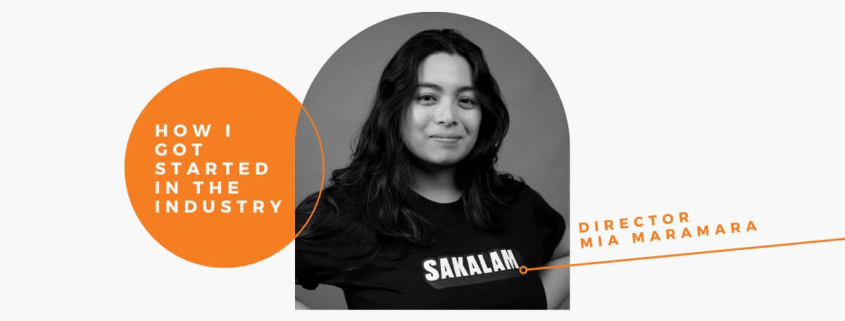
Looking back, I would say that my life’s theme is, “There are no wasted moments.”

It’s a lesson I have clung to working in the film industry, where there are all sorts of twisty roads lined with the bloated corpses of dead passion projects and empty promises of paid work. In film and in life, I’ve learned that the people you meet in year one might just be the same people who come back and change your life in year twelve.

Born and raised in the Philippines, my favourite childhood memories were of days spent at the cinema watching back-to-back screenings of the most random movies available. It was a lawless time, back when a 10-year-old girl could watch The Sixth Sense at the theaters, and it was glorious and revelatory.

I originally thought I was going to be a comic book artist and author, some kind of 5ft tall Filipino Alan Moore. I loved film but the thought of becoming a filmmaker felt sacred and untouchable. Unable to shake the urge to try, I wrangled a job at an advertising company earning what would now amount to NZD450 a month. I had a short stint working on Filipino independent films doing random odd jobs before moving to New Zealand, where I did a year at film school.

Being an immigrant in the film industry is harrowing, especially when you have a less desirable passport, as I did. I’m the only international student from my year who managed to find work and, subsequently, a visa that allowed me to stay. I traded four years of my life for a chance at a resident visa, meanwhile, unable to apply to any local film programs or get paid for any creative work.

But – there are no wasted moments.

While I was treading water, I networked and volunteered to get on set whenever I could. I worked on music videos and passion projects, hopping into any role that would have me, trying and testing and learning my own strengths and weaknesses. I learned that I loved being on set and that I could thrive in the vicious ups and downs of late nights and cheap pizza.

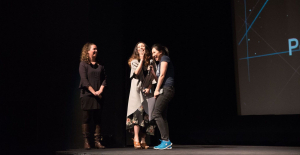
Director Mia Maramara and longtime collaborator Hweiling Ow at 48 Hours / Photo: Provided

Most importantly, I made contacts — and friends. I saved up enough money to cobble together my first short film, a zombie movie called Bites, which got into Tropfest that year. There’s something to be said about the blind confidence of your early years, where a good attitude and some stamina can net you a zombie movie for NZD2,000.

I did Foodie as part of the Someday Stories program and participated in 48 Hours for a few years, where one film became a Grand Finalist and won me Best Female Director.

Along the way, I met my longtime collaborator, Hweiling Ow, who won me over with a bucket of vomit. We won awards and money, which gave us the opportunity to keep on trying to win more awards and money. We co-wrote a feature film, Grafted, which finished filming this year and is being distributed through international channels.

Hweiling and I co-founded MHM Productions, a genre-oriented production company, with fellow horror fiend Morgan Leigh Stewart. Through MHM, I wrote and directed a TV episode called Albularyo that, as far as I’m aware, made me the first Filipino director to helm a slot on New Zealand TV.

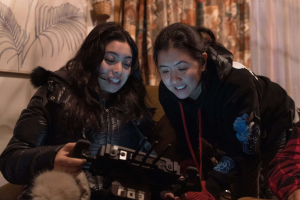
Mia and Hweiling on set of ‘Albularyo’ / Photo: Provided

Other key career highs include writing Candy for anthology feature film Kāinga, the third in the portmanteau trilogy that includes critically acclaimed films Waru and Vai. Another personal highlight was working with the writing team of Power Rangers, where I fulfilled my childhood dream of pretending to be the Pink Ranger.

My career careens wildly about due to the fact that most of my work is self-generated. It involves a lot of quiet, tortured nights hunched over a keyboard, trying to write something good before my bank account hits zero. But it’s a fulfilling way to make use of my personal talents, and I’ve never lost sight of what a privilege it is to be in my position.

I haven’t yet cracked into my dream of being a full-time features director, but I’m taking my time and enjoying the journey. After all, there are no wasted moments.


About Mia Maramara

Mia Maramara is a Filipino-born filmmaker with work that has been screened both locally and internationally. Her passion for authentic, trailblazing stories has led her to wear different hats in the industry, most notably as a writer and director. In the Philippines, she participated in Philippine National Artist Ricky Lee’s Cinemalaya Masterclass. In New Zealand, she won the SPADA New Filmmaker of the Year award in 2021 and participated in DEGANZ’s Emmerging Women Filmmaker Incubator in 2022. She is currently one-third of MHM, a collaborative production company between her and fellow creatives Hweiling Ow and Morgan Leigh Stewart.

How I Got Started in the Industry is a guest blog series from the Directors and Editors Guild of Aotearoa New Zealand (DEGANZ). Our members reflect on how they made their way into assistant editing, editing, and directing—with no two stories the same. They offer advice for those starting out. Get in touch with admin@deganz.co.nz if you’re a member and would like to share your story.

View from the Top banner

I went to a Screen Industry Guild of Aotearoa New Zealand (SIGANZ) membership drive event last night. And this morning I read a blog post out of the US about the effort to establish an independent producers union.

SIGANZ, like DEGANZ and other membership organisations that work to represent their members’ interests, and the efforts that the producers in the US are making to establish a union to represent their potential members’ interests, are faced with the same issues—the incredible apathy of many of the people they are seeking to represent.

SIGANZ has a membership of about 6 – 700 of the possible 5 – 10,000 below-the-line people in the NZ screen industry who could be a member of that guild. We have just over three hundred members of the possible 1,000 – 1,500 working directors and editors in New Zealand.

In the US article, many reasons were given for why they weren’t getting the support from the producers they needed to establish a truly representative organisation. One paragraph from that blog stood out:

“There was also a large group of producers who were sceptical of our efforts and whether or not being involved would be detrimental to their relationships with financiers and studios. Then there was another type of producer who couldn’t see the bigger picture. For example, in one town hall, I had a very prominent producer ask, “But how does this benefit me?” While I understand this question, I explained that it’s not just about one producer. The work we were doing is also about the next generation and ensuring that they aren’t exploited in the same ways we have been. It’s about preserving the role of the producer in the future.”

You could substitute the word ‘producer’ with the word ‘director,’ ‘editor,’ or ‘techo,’ and it would have the same relevance for us.

Having worked in this job for close to seven years now, I’ve been faced with the same difficulty those seeking to set up the producers union in the US faced—getting directors and editors who aren’t members to understand that the work we do is more than just about the immediate benefit to the individual, i.e., it’s also about the bigger picture work.

I have multiple big-picture meetings each week with some or all of the EDs and GMs of the other guilds and associations, together with funding bodies, government ministries, and others involved in whatever discussion we are having. Recent examples are the Reform of Vocational Education, The NZ Screen Sector Investment Review, the Screen Industry Workers Act (SIWA), and the proposed merger of RNZ and TVNZ. In the past, it’s been the Copyright Act Review, the NZFC CEO conflict of interest situation around David Strong, and input into the NZ On Air and NZFC strategies. There are others. Some of those went on for years.

The Film Industry Working Group meetings that DEGANZ and many of the other screen industry bodies participated in took place regularly over four long years and resulted in SIWA. All of these things are somewhat abstract when it comes to answering the individual question: How does this benefit me?

A lot of the work that DEGANZ and all the other NZ guilds and associations do is not just about the ‘you’. It’s about the ‘you’ and who comes after ‘you’. Thankfully we all have members and board members who understand this. There just aren’t enough of them. But there could be.

Last night SIGANZ took a different tack by serving up a partnership programme that helps to answer the “what’s the benefit for me” question for them—something they are well positioned to do as representatives of the below-the-line Art Department where the business partner they’ve found could have a significant bottom-line benefit. Not so easy for others of us with small memberships and little buying power.

Every guild and association in New Zealand could significantly grow its membership if a lot of those non-members who could afford it joined the guild or association that best represents them, understanding that we work on their behalf as well as on behalf of future generations of screen workers.

This is a call out for you to encourage those you know to join a guild, whether it’s DEGANZ, SIGANZ, NZWG, Equity NZ, SMSG, VFXPNZ, MDGNZ, or SPADA. We will be more representative, financially independent, and better able to do the work we do now and into the future. There is a significant benefit in that for us all.


Tui Ruwhiu
Executive Director

View from the Top banner

For those of us in the industry we can’t help but be aware of the writers’ and actors’ strikes in the US, not only because of the impact it’s having on international productions coming into New Zealand but also because of the issues being raised, particularly when they relate to having a sustainable career.

Of the 160,000 SAG-AFTRA members on strike for three weeks now, only 10 percent of them are the actors you see working the red carpets and earning massive fees for their performances. 86 percent of their membership (136,600 members) don’t earn the US$26,000 per year required to qualify them for the guild’s health insurance. In 2022, the US Bureau of Statistics reported that the average pay for an actor in California was US$27.73/hr.

In the gig economy of the screen industry in the US where most screen workers are considered independent contractors, the residual* payments that actors used to receive prior to streaming could help them to ride through the choppy waters of no paid acting work between jobs. There’s an article showing supposedly successful actors on highly successful streaming shows and the residuals they received—cents, or sometimes a few dollars. See it here.

The 11,000 WGA members are coming up to 90 days on strike. Like SAG members, WGA members have base minimums that they cannot be paid below for the work they do. The WGA also negotiated residuals for their members. However, over time and particularly with the advent of streaming, what the majority of writers have been paid has dropped towards or onto the minimums, which were negotiated three years ago. At the same time, streaming has continued to grow and the residuals from streaming are measly, unlike what used to be earned as residuals from broadcast, cable, etc. The studios are also trying to use fewer writers to do the work required, amongst a number of other issues for the WGA.

Both guilds are also concerned about how the studios will use Artificial Intelligence to replace humans in the execution of writing and acting work.

The Directors Guild of America was able to reach a settlement that addressed their issues with streamer residuals and AI, and other claims—The reason they aren’t on strike with the writers and actors.

Sitting here in li’l ol’ New Zealand, we can only marvel at the fact that these US guilds have collective agreements in place that offer base minimums, healthcare, superannuation, and residuals amongst other benefits.

Of course, New Zealand is different from the US. We have a public health service (no matter that it’s getting worse by the year). We have accident compensation (ACC). We have a government retirement scheme, which we call ‘super’ or ‘the pension’. And we have Kiwisaver.

But if we look a little closer to home to Australia, where screen workers are generally treated like employees rather than contractors—because most screen workers don’t have the freedom of executing their work how and when they want to—we can see that ‘Fringes’, i.e. holiday pay, superannuation (our Kiwisaver), and workers compensation (our ACC) are built into production budgets and paid accordingly by the production company.

In New Zealand in the screen industry, pretty much everybody is an independent contractor, even though you are required to turn up at specific times, on specific days, just as employees are required to do.

You, the independent contractor, are required to pay your own taxes, ACC, Kiwisaver, and GST if applicable.
You have no base minimums, meaning you can be paid less than the minimum wage set for employees.

Most below-the-line crew get paid overtime, which stops their pay going below the minimum wage. That’s not the case for writers, directors (and producers), who often do unpaid or low-rate work to create the shows that crew then get hired to work on. This contributes to driving their pay rates below the minimum wage. Take a look at the just released WIFTNZ Screen Industry Gender Pay Survey here. It states that according to the census, approximately 40% of women and 28% of men in the screen industry earn less than the minimum wage.

While crew get to work on international projects where they can charge higher rates and still get their overtime payments if required to work it, it’s almost impossible for NZ above-the-liners to get onto them, apart from actors who might be able to secure supporting or minor roles—domestic production is pretty much all there is.

In New Zealand at this point, there is no established residual system that allows above-the-line creatives to earn some income from their work beyond their fees, to help get them through those times of no or unpaid work. There is, though, a mechanism for producers to gain potential additional income through being gifted equity in a production, either from the NZFC through the ‘producer corridor’ for non-NZ Screen Production Rebate (formerly NZSPG) projects, or through the 40% producer equity gifted to the producer for NZ Screen Production Rebate projects. It’s at the discretion of the producer as to whether or not they will share this equity with anybody else.

Which brings me to the Screen Industry Workers Act, of course. It’s the means by which the guilds and unions in New Zealand hope to address the pay rates, terms, and conditions for New Zealand screen workers to help them have sustainable careers—Something the US guilds have sought and continue to do for their members through decades of negotiation and collective agreements.

We at DEGANZ are preparing for our first negotiation of a collective agreement, which is likely to take place in the first half of 2024.

You can see from the picket lines of SAG-AFTRA and the WGA a visible expression of “it’s better together” not only with each guild’s members supporting their guild but with the separate guilds supporting each other.

We are going to need all your support in the preparation and negotiation ahead. So get behind us and the other guilds, too, to make it better for everyone.

*Residuals are long-term payments to those who worked on films and television shows, negotiated by unions, for reruns and other airings after the initial release.

Tui Ruwhiu
Executive Director

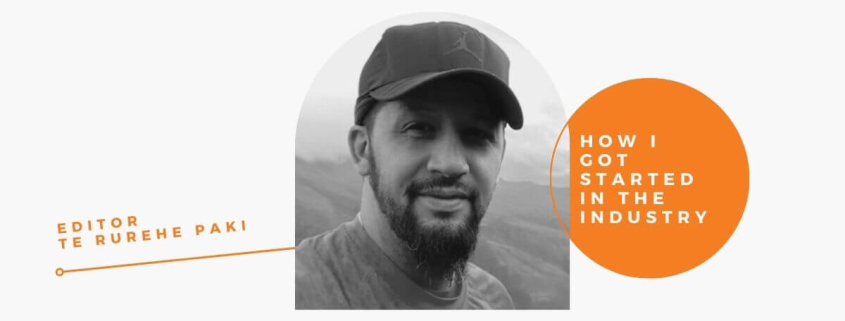
I’ve always been a tinkerer.

Growing up, I spent most of my time drawing, carving, and making things. I would pick up the tools and teach myself by doing, feeling my way through it. As an editor, it’s something I still do to this day.

My career started with my whānau in Tūrangi. My uncle hired me to be his graphic artist and edit a tamariki show he was producing in preparation for the launch of Whakaata Māori. It was an opportunity to ‘learn while you earn’, and I found huge satisfaction in crafting images with sound. I equally enjoyed learning about the tools.

By day, I was cutting. By night, I was researching components.

Soon after, I met a DOP named Mike Jonathan. I moved to Rotorua and started cutting shows with him and Hula Haka Productions. I got to cut a range of genres and work with different directors and producers. They gave me the freedom to try new things, which was important groundwork for figuring out my style as an editor.

Editor Te Rurehe with his daughter while working on ‘Ka Haku Au’ in 2008

Like many, I was drawn to the creative energy of Wellington. From musicians to writers to animators, the city was bursting with expression. It was infectious. I hit the streets, knocking on doors and saying yes to anything from cutting news and current affairs to adverts, web series to new series. By default, I set myself up as a business, which made it easier to freelance around town. In my downtime, I sharpened my tools, kept up to date with new tech and software programmes, bought new (and second-hand) computer parts, and started designing systems. I trained myself to use everything; the industry demands relentless evolution. It pushed me to broaden my skills from the basic NewTek system to Adobe Suite, Avid, DaVinci Resolve, Blender, Premiere Pro, After Effects, Photoshop, and many others that came and went. I honed my craft, learning from incredible storytellers like Annie Collins, Tainui Stephens, Fiona Kupenga, Tina Wickliffe, Ngahuia Wade, and Maramena Roderick (my now mother-in-law). It was years of hustling, layers of grunt work, and a special time with incredible people.

Editor Te Rurehe at Fifo Film Festival in 2019 after ‘Making Good Men’ won Best Documentary the previous year

A few years ago, I moved to Auckland, ready to do something different. Off the back of some of my long-form factual work, I’ve had the opportunity to work in scripted drama and films. It’s broadened my relationships with Māori creatives, challenged my limitations, and deepened my craft as an artist.

Right now, I am again cutting with Mike Jonathan, this time on his first feature as a director. It’s taken us twenty years of patience and perseverance. Maybe it’s serendipitous. Maybe it’s planned. Maybe it’s whakapapa.

I still love tech. I still love learning new things. I still love to tinker.

Through the grace of many who’ve supported me, I’ve built a career that is all three.

I’m a Māori boy from Tūrangi with no qualifications or formal training who never spoke English until he was 16. It sounds cliche, but it’s true. If I can do it, so can you.


About Te Rurehe Paki

‘Ko te ahi whakakakā, ko te ahi whakahikahika, ko te ahi whakakihihī, hei whakahoro kakā i te manawa. Ka tuu ki te mura o te ahi, pae tu, pae hinga, karawhiua ki ngā pari karangaranga, whakapaohotia atu rā, kia haruru ki te rangi, kia rū ki te nuku, ko Te Rurehe tēnei, e tau nei e.’

Te Rurehe is a video editor and owner of The Suite Limited, the post-production facility that has shaped numerous television series and films including, 2021 NZIFF Jury Award Winner Washday, 2019 Victoria Film Festival Winner Merata: How Mum Decolonised the Screen, and the 2018 Fifo Film Festival Winner Making Good Men. As an editor, he focuses on the narrative and pace of a story, following his intuition that he has honed from working on various formats and genres throughout his career. He approaches each project with a fresh perspective, applying his skill as a storyteller with his passion for computers and technology. He promotes opportunities to do this in his first language, te reo Māori, and share with audiences what was nurtured in him – a unique Māori worldview.

How I Got Started in the Industry is a guest blog series from the Directors and Editors Guild of Aotearoa New Zealand (DEGANZ). Our members reflect on how they made their way into assistant editing, editing, and directing—with no two stories the same. They offer advice for those starting out. Get in touch with admin@deganz.co.nz if you’re a member and would like to share your story.