Tuesday 17th May 2022

The ScreenSafe COVID-19 Protocols have now been updated. New Zealand has been through the peak of the Omicron outbreak, the Government has eased many restrictions and the borders are now opening up to the outside world.

While the easing of restrictions will come as a huge relief to everyone, please note that new future variants may result in restrictions being brought back. Being careful and practicing good hygiene measures, both at home and at work, is our best chance at reducing new outbreaks.

ScreenSafe COVID-19 Updated Protocols

ScreenSafe COVID-19 Traffic Light Guidance

The key updates are:


No Requirement to Use QR Codes or to Contact Trace

Businesses no longer have to display a QR Code poster, although some businesses may still choose to use them. Productions are still encouraged to have contact tracing of some sort in place to prevent a wider production outbreak, but it is no longer a Government requirement.

No Requirement to Use My Vaccine Pass

There is no longer a requirement to use My Vaccine Pass. The Non-Vaccination Passport sections of the Protocols have now been removed and all productions will work under the same regulations.

If a productions choose to use vaccination passports, they must undertake a health and safety risk assessment, along with any other relevant legal assessment, to ensure they are not unlawfully discriminating against workers within the workplace. A production must undertake a COVID-19 health and safety risk assessment to ascertain if there are any roles within production that require vaccination. A risk assessment might identify that some work can only be undertaken by a vaccinated employee for work health and safety purposes – for example, where the risk of contracting and transmitting COVID-19 at work is higher than it is in the community. Productions should follow WorkSafe’s advice and guidance in respect of how to conduct a health and safety risk assessment, and may also wish to seek independent legal advice.

Updated Testing & Isolation Requirements

Updated as per current Government guidelines. The self-isolation period is now only 7 days. This applies to Household Contacts, but not Close Contacts. Close Contacts should monitor for symptoms for 10 days.

Long COVID & COVID-19 in the Workplace

Updates on managing an outbreak in the production, including information about Long COVID and its potential impact on a workforce.

My Vaccine Pass To Be Replaced

In early June the Government will roll out a new vaccination verification system, replacing the current My Vaccine Pass. We will send out additional information when this becomes available.

Immigration, International and Domestic Travel

New Zealand is re-opening its borders to the outside world. These sections of the protocols have been almost completely rewritten, but we urge you to also seek out the latest Government information. Things are constantly changing in regards to immigration and international travel requirements.

Mask Wearing is Still Crucial

Although use of QR Codes and Vaccination Passports are being phased out, it is worth noting that proper use of face masks is one of our best tools for fighting this virus.

While some productions will choose not to use QR Codes and Vaccination Passports, please note that our key tools will still remain: good mask wearing, physical distancing, good hygiene and good ventilation. And as always – DO NOT come to work if you have COVID-19 symptoms.

Click here for full release.

Sincerely,

The ScreenSafe COVID-19 Group
Email: info@screensafe.co.nz
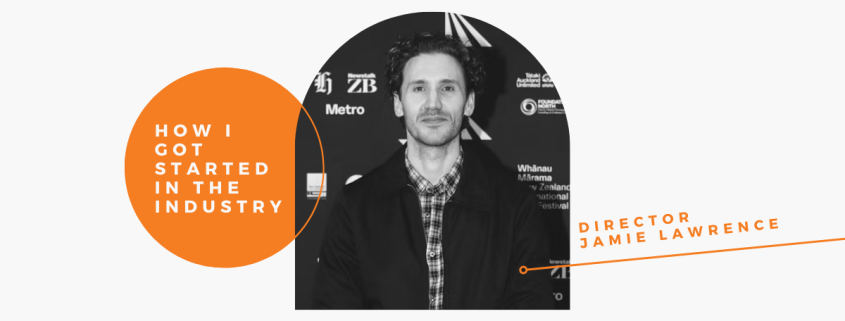
I’m 18, with frosted tips, earnest to a fault, about to graduate from South Seas Film & TV School. I post out my CV to every production company I can find: nobody bites. (Though, I did send it with a bar of soap wrapped in 16mm film and the opening line, “You don’t know me from a bar of soap…” *double cringe*).

Then one of my tutors puts me in touch with a graduate student who is working on The Lord of the Rings, shout out to Dan Story! Dan takes my CV to the production manager, Brigitte Yorke. While unimpressed with the soap, Brigitte, an alumnus of South Seas, appreciates my grades and hires me as a runner for two weeks. I martyr myself to the job. Changing lightbulbs, making coffee, spilling coffee, wearing my studio-issued ID like an Olympic medal. Two weeks turns into two months, and before I know it, I’m off to Wellywood, leaving behind my hometown in the Tron.

I quickly learn the magical business of show business can be a high-stakes, lawless place, and I’m sucked into the pressure, the hierarchy, the people. It’s intense, intoxicating, compulsive… a wild west of bullshit, politics, nepotism, sexism, slave drivers. And I bloody love it. Because when you finally see your name roll up in the credits, it’s suddenly all worth it. Addicted, I jumped from one film to the next… King Kong, The Water Horse, The Lovely Bones, Avatar, The Hobbit… going from runner to driver to cast PA. Watching. Learning. It wasn’t until I became James Cameron’s driver, 8 years after leaving film school, that I decided I had to tell my own stories. I quit James and made my first short film… and then the next one, and the one after that.

One day, producer Katie Millington saw my short Darryn Exists and took a punt hiring me, believing I could learn how to direct commercials. I moved to Auckland, but had nothing to show for myself, and advertising people want you to prove you can tell a story in 30 seconds or less. So I self-funded a couple of ‘spec ads’ to build a showreel for myself. This got me my first job directing a TV commercial. I guess things snowballed from there, but not without the loving mentorship I’ve received from great people and places along the way.

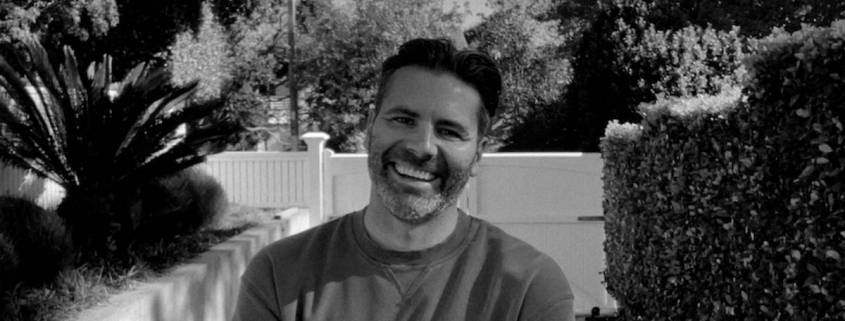
Director Jamie Lawrence on set / Photo: Supplied

Looking back, it really does feel like a collision of passion and opportunity that got me into (and keeps me in) the industry. Thank you, South Seas, thank you Dan, thank you Brigitte, thank you James, thank you Katie.

It can be a long road, so when it comes to weathering the storm, the things I tell myself:

Turn away from rejection, towards something you love. I’m quick to go on the offensive, taking shit personally. But actually, the truth is sometimes it’s them, not you. If I lose a job to another director, I reframe it in my mind like an actor who loses the role to somebody more “quirky looking” and “on brief”, while I must be too handsome for the part. Then I lock myself in my room and write my screenplay. This way, I not only ‘bounce back’ from the setback, but I also have something to ‘bounce to’.

Phone a friend. Nurture these relationships and connections because they are a wellspring to refuel from when you’re in the eye of the storm. Having a cup of tea/gin with a mate toughens/loosens me up every time.

You can say ‘no’. It’s human rights. Sometimes you can’t afford to turn down an opportunity. And sometimes you can’t afford not to. It’s okay to say ‘no’. For better or worse. It can be bad for business (ask my producer or my husband), but it also makes room for other important stuff. I’ve made a list of deal breakers that match my values – a way to measure a job and decide if it’s something I want to do. Yes… it’s idealistic, probably unsustainable, and sometimes I get a nosebleed on my high horse. But it’s not as bad as doing something I hate.

Good luck out there. Thanks for reading.


About Jamie Lawrence

Jamie Lawrence (he/him) is a queer Pākehā filmmaker based in Aotearoa New Zealand. His work has screened and won awards at NZIFF, MIFF, Festival des Antipodes, and Oscar-qualifying festivals including Show Me Shorts and Nashville. A scholarship graduate of NYFA and an alumnus of MIFF’s Accelerator Lab, Script to Screen’s FilmUp and Story Camp, Jamie’s recent short EARTHLINGS premiered at MIFF and was shortlisted for “NZ’s Best” at NZIFF. Having ranked among the country’s top commercial directors, he is now focused on his NZFC-supported feature slate: YA fantasy SKIN (Sweetshop Entertainment) and adventure biopic SOLO (Vendetta).

You can find out more about Jamie and his work on his website.

How I Got Started in the Industry is a guest blog series from the Directors and Editors Guild of Aotearoa New Zealand (DEGANZ). Our members reflect on how they made their way into assistant editing, editing, and directing—with no two stories the same. They offer advice for those starting out. Get in touch with admin@deganz.co.nz if you’re a member and would like to share your story.

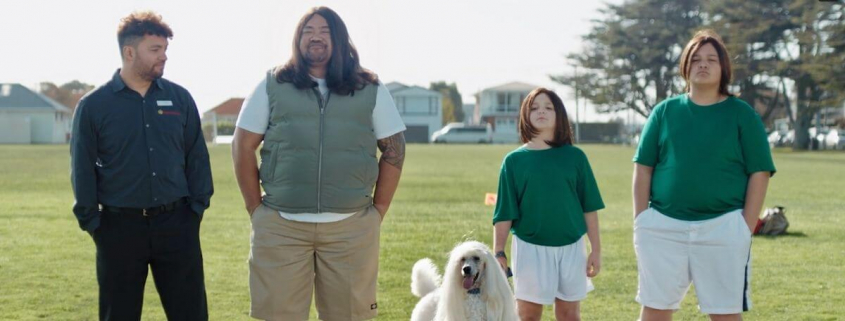
It’s Mother’s Day this Sunday! In the lead up to Mother’s Day, Noel Leeming’s campaign is making the rounds on TV, digital, and social platforms. The offline edit for the 30-second spot was done by our member Ben Chesters.

Created by TBWA\NZ, the campaign aims to continue to build on the ‘Always happy to help’ brand Noel Leeming has been pushing.

The commercial spot joins Ben’s large portfolio of advertising work, including the recent Lotto NZ Imagine On Ice campaign.

Read more

Award-winning editor and DEGANZ member Luke Haigh has joined ARC EDIT, a boutique post-production company, for Australian representation.

Luke joins a diverse roster of editors at ARC. His editorial range in film, TV and commercial work makes him a “perfect addition” according to Peter Sciberras, a fellow editor on the roster.

The easing of border restrictions between Aotearoa and Australia has allowed Luke, who is based out of Auckland, the availability to work from ARC’s Australian studios in Sydney or Melbourne as well as remotely.

Congratulations to Luke and the team at ARC, it will be exciting to see your future work and collaborations. You can view Luke’s previous work here.

The Boosted crowdfunding campaign for Bottle Money is well underway with just under a month to go! Writer/director Rebekah Tyler (DEGANZ) is at the heart of the project, seeking $15,000 to help cover production costs.

Bottle Money takes the viewer inside the world of Nelson, a young man forced to care for siblings Leroy and Ramona, due to the erratic behaviour of their alcoholic mother. The short drama, based in the kitchen-sink realism style, will be a realistic ‘slice of life’ with sensitive themes. Yet, at its heart will reflect the idea that love is the most important element of a child’s well-being.

After being in development for three years–narrowly missing out on funding for the 2021 NZFC Fresh Shorts programme–the Bottle Money team is committed to telling this story. Donations gained will go towards production costs during the shoot as well as post-production.

Set to be a strong contender for multiple international film festivals, your support is needed to help get Bottle Money made. To donate, visit the boosted website.

Good luck to Rebekah and the rest of the Bottle Money team!