I should preface by saying that I never planned to be working in the film and television industry. The honest truth is that when I finished school and decided to go to university, Film and Television papers seemed like a fun choice in amongst English, Sociology, Philosophy, and Art History. As it turned out, the Film and Television papers were the most engaging and fun, and that drove me into doing a Masters in Creative and Performing Arts, specialising in writing and directing for film. After graduation, my first paying gig in the industry was a small assistant editor role through one of my tutors. She connected me with a post-production supervisor who was helping facilitate a short film cutting from his house. It was exciting to be working on something film-related and I got paid a sweet $100.

Meanwhile, another contact through the same tutor, got in touch looking for an assistant editor on a children’s television drama. This would be my first dip into a longer form of drama, as well as a show that had quite a few VFX to contend with. It was at this point that I really began to get hooked into post-production. Even though pickings can sometimes be slim in our industry, I made the conscious decision to only do drama work which is where my passion lay. I was in a position in my life where I had very little financial out-goings and personal commitments so I let myself be open to opportunities, even if they weren’t my original plan. I was in no hurry to make the leap into editing and was hungry to get as much experience as I could.

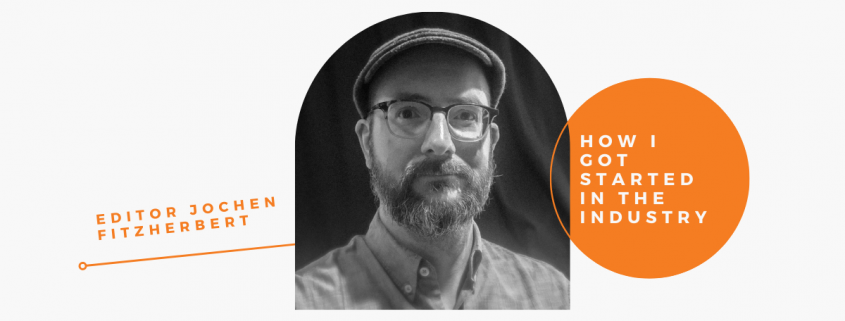
Editor Jochen FitzHerbert editing Emmy Award-winning series ‘INSiDE’ from his home / Photo: Supplied

It was about five years of assisting work before my break into editing happened. I had assisted on a couple seasons of Power Rangers and one of the regular editors was starting back late due to a scheduling conflict. The returning producer offered me those blocks and I made the quick decision to make the official move to being an editor. Power Rangers was a great first show to cut as I was familiar with it from my assisting time there, but also it had the resources to have a big post team and manageable schedule.

The jump from assistant to editor is one of the trickiest things to manoeuvre. You forge a career as an assistant and work with a bunch of people around town, building a reputation only to have to turn on that and say that you are not that thing any more. Work can be slow in this transitional period but if you dig around enough there are little jobs you can flex your muscles on like low-budget web series or assemble editing.

As the Power Rangers season was finishing, Spartacus started shooting in Auckland. No, I did not get hired for Spartacus, but a lot of great local editors did which meant there was a gap in the industry. It was a perfect storm where the industry was booming and everyone was busy so there was room for people to step up. One of the directors I had just worked with on Power Rangers was going onto one of the said local dramas and he thankfully took me with him. From here, I felt I had my foot in the door.

My advice to anyone starting out now is don’t feel like you have to hurry. Make every job a learning experience and forge lasting connections with people you work with. You never know where or who your next job might come from.


About Jochen FitzHerbert

Jochen is an award-winning film and television editor with a long list of credits including Creamerie, Mystic, Power Rangers and The Gulf, for which he won an NZTV Award for Best Editing in a Drama in 2020. He also edited the international Emmy winning series INSiDE, which also won him a Webfest Award for Best Editing.

jochenfitzherbert.com

How I Got Started in the Industry is a guest blog series from the Directors and Editors Guild of Aotearoa New Zealand (DEGANZ). Our members reflect on how they made their way into assistant editing, editing, and directing—with no two stories the same. They offer advice for those starting out. Get in touch with admin@deganz.co.nz if you’re a member and would like to share your story.
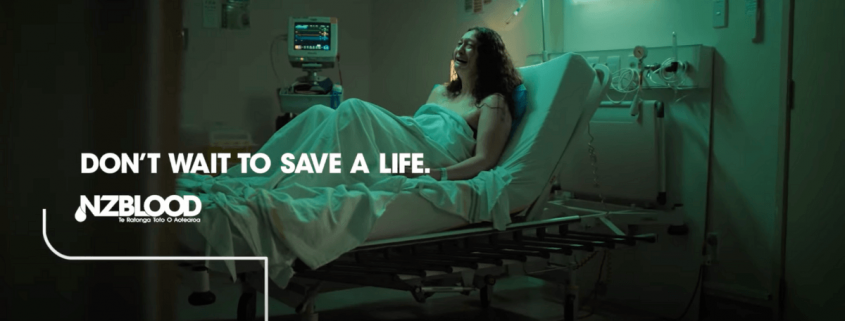

Film Construction’s Perry Bradley (DEGANZ) has been nominated for the Best Direction category at Australia’s 43rd AWARD Awards.

The nomination is for his work on NZ Blood campaign Unseen Emergencies, which details the need for blood supply and the importance of donating. New Zealander Alex O’Shaughnessy is also a finalist for Best Editing on the campaign. 

The AWARD Awards attract over 2,000 entries in the following categories: Advertising, Design, Craft, Film & Entertainment, Purpose, Innovation, Media & Planning. The Australasian Writers and Art Directors Association hosts the annual ceremony to celebrate and support the creative industries. It will take place in Sydney on May 20th.

Here is the complete list of finalists. All the best to Perry and the other Kiwi nominees.

Charming local drama Poppy has been awarded Best Narrative Feature at the Socially Relevant Film Festival in New York. DEGANZ member Jonno Woodford-Robinson edited the feature and worked with Amanda Mulderry (DEGANZ), who was first assistant editor.

Released in New Zealand in 2021, Poppy tells a story of a Kapiti teenager who is eager for independence and a chance at love. It’s the first Kiwi feature to cast an actor with Down syndrome in a leading role.

The Socially Relevant Film Festival focuses on socially relevant content that promotes human stories and raises awareness of social problems. Through the medium of cinema, SRFF aims to expand knowledge about diversity and create a world free of violence, crime and hate.

Congratulations to Jonno, Amanda and the rest of the Poppy team!

Dive into the process, craft and career of a director.

PISA and DEGANZ welcome new and emerging Pacific Islands directors to apply for this two-day practical guide, taught by director Chris Dudman.

Chris will explore the directing process from his own personal experience on a variety of directing assignments, which includes commercials, long-form documentary, short film and TV drama. He will discuss with participants the way he prepares (analyses scripts, casts, rehearses actors, storyboards), the way he directs actors and camera, and the way he works with editors and composers during post-production.

Taking a warts and all approach, he will use highlights and low-points as examples, showing how he adapts this process to the various forms of work he’s directing. In doing so, he’ll touch on:

  • the differences between being a gun for hire and working on projects he’s instigated
  • collaboration and compromise
  • the director/producer relationship
  • making decisions under pressure
  • avoiding pitfalls
  • the role of chance and luck…

His intention is to create a dialogue in the workshop – about process and what is really involved in directing as a career. And, most importantly, why it has been worth it.

Workshop Details

When:
Saturday 14 May 2022, 9:30am – 5pm
Sunday 15 May 2022, 9:30am – 4pm

Where: Hawke Sea Scouts, 55 West End Road, Herne Bay, Auckland

Cost: Free – Includes tea/coffee and lunch

Our Cancellation Policy

COVID-19 Safety: For the safety of yourself and others:

  • Do not attend if you are sick with COVID-19, cold or flu symptoms or have been asked to self-isolate.
  • Face masks must be worn.
  • Please observe 1 metre physical distancing.
  • We may organise Rapid Antigen Testing on the first day.

About Chris Dudman

Chris’ career has involved writing and directing short films, commercials, feature and series documentary and series TV drama. He directed short film successes The Graffiti of Mr Tupaia and Choice Night, and later co-wrote and directed Harry, the gritty crime drama series starring Oscar Kightley and Sam Neill. He wrote and directed The Day that Changed My Life, the multi-award winning documentary about Christchurch’s devastating earthquake, and directed two stand-alone episodes of James Patterson’s true crime anthology series Murder is Forever for U.S. company Stephen David Entertainment. Chris was also a founding partner of and director at Auckland TV commercials production company Robber’s Dog Films.

Chris Dudman

To Apply

Applications Close: Tue 3 May, 10AM

This workshop is open to directors of Pacific Islands descent who are members of either PISA or DEGANZ.

Please complete the application form below and email your CV to tema@deganz.co.nz. Your CV should clearly list your credits and include relevant details, such as year of release, format, festival selection, commissioners and/or platforms where your work has been publicly screened.

Places are limited – PISA will select based on applications and email you to confirm.

Application Form

Loading…

Made possible with the financial support of the New Zealand Film Commission

NZFC

This workshop is part of a Directors and Editors Guild of Aotearoa New Zealand initiative aimed at supporting the development of emerging Pan-Asian, Pasifika and Māori directors

Presented in association with Pacific Islands Screen Artists

Friday 1st April 2022

The following changes were announced by the Prime Minister on 23rd March 2022. The Omicron outbreak has now peaked, or is about to peak, in most of the country. This, combined with high vaccination rates and reduced risk of reinfection for those who have recently recovered from COVID-19, means that the government is easing some COVID-19 restrictions over the next few weeks.

ScreenSafe anticipates a wider revision of the COVID-19 Protocols, with the next review of the traffic light settings scheduled for 4th April 2022.  However, for the time being, please note the below changes.

The key changes are:


No Requirement to Use QR Codes

From 11.59pm on Friday 25th March, the requirement to scan a QR Code before entering a business ended. From this time, businesses were freed of their obligation to display a QR Code poster (although businesses may still display a QR Code if they wish to do so). People are encouraged not to remove the COVID-19 tracer app from their phone just yet in case it’s needed in the future.

No Requirement to Use My Vaccine Pass

From 11.59pm on Monday 4th April, there will be no requirement to use My Vaccine Pass.

  • The Vaccination Passport sections of the Protocols will no longer be relevant. If any productions choose to use any sections of it, they must undertake a health and safety risk assessment, along with any other relevant legal assessment, to ensure they are not unlawfully discriminating against workers within the workplace.
  • A Production must undertake a Covid-19 health and safety risk assessment to ascertain if there are any roles within production that require vaccination.  A risk assessment might identify that some work can only be undertaken by a vaccinated employee for work health and safety purposes – for example, where the risk of contracting and transmitting COVID-19 at work is higher than it is in the community,  You should follow WorkSafe’s advice and guidance in respect of how to conduct a health and safety risk assessment, and may also wish to seek independent legal advice.

Worker Vaccine Mandates

From 11.59pm on Monday 4th April, vaccine mandates will be removed from the education sector, police and defence force. For the time being it will still be in place for health & disability workers, aged care workers, corrections workers and border/MIQ workers.

Note: After a robust health and safety risk assessment and worker consultation, businesses may be able to voluntarily introduce workforce vaccination requirements but it must be appropriate to the workforce. As above, for guidance on how to conduct a health and safety risk assessment, WorkSafe’s website is a good place to start.

Mask Wearing is Still Crucial

Although use of QR Codes and Vaccination Passports are being phased out, it is worth noting that proper use of face masks is one of our best tools for fighting this virus.

Overview of current Traffic Light Settings


Review of Traffic Light Settings

All of New Zealand is currently in the RED setting. The next review of the traffic light settings is on 4th April. It will review what ‘colour’ (or setting) each area of New Zealand sits in.

Changes to RED Traffic Light Settings

From 11.59pm on Friday 25th March the following changes came into effect:

  • No limit for outdoor gatherings (in terms of the amount of people that can attend).
  • 200-person limit for indoor gatherings and events (with such capacity limits excluding workers).
  • No requirement to wear face masks outdoors (although productions should make their own decision based on a health and safety risk assessment).
  • Other face mask rules remain unchanged — face masks are still required in most indoor settings.
  • No requirement to scan in or for a business to display a QR code poster or maintain some other form of attendance record-keeping.

Changes to ORANGE Traffic Light Settings

From 11.59pm on Friday 25th March the following changes came into effect (noting that all of New Zealand is currently at the Red setting, so these changes are simply indicative of what can be expected if and when there is a shift in settings):

  • No limit for outdoor or indoor gatherings (in terms of the amount of people that can attend).
  • No requirement to wear a face mask outdoors (although productions should make their own decision based on a risk assessment).
  • Other face mask rules remain unchanged.
  • No requirement to scan in or for a business to display a QR code poster or maintain some other form of attendance record-keeping.

Changes to GREEN Traffic Light Settings

No changes of note.

We anticipate many productions will choose not to use QR Codes and Vaccination Passports, but note that our key tools will still remain: good mask wearing, physical distancing, good hygiene and good ventilation. And as always – DO NOT come to work if you are unwell!

Thank you to NZ Film Commission and NZ on Air for funding the ScreenSafe COVID reviews.

Sincerely,
The ScreenSafe COVID-19 Group
Email: info@screensafe.co.nz