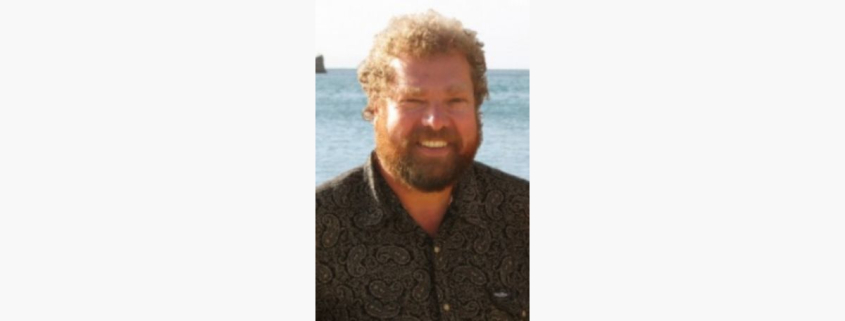
It is with sadness that we record the death of long-time Guild member Grant Campbell from cancer at 64. Grant was a Guild stalwart, a board member from 2000 to 2016, and an outspoken critic of the imperfections in the New Zealand screen industry. In the days when the Guild had its own magazine, Take, Grant could be relied on to provide penetrating analysis expressed in his own no-holds-barred, salty vernacular. 

His funeral at the Wainuiomata Golf Club will be fitting. He’d played golf from 14 to 20 and was, according to brother Bryce, quite good. He was also a good tennis player. Grant and Bryce were tight all their lives. They were a co-writing team and worked on many projects together.

The brothers became interested in film from about the age of 10. After a double degree in Maths and English, Grant started selling himself round production companies. Sue May decided he would either be a good worker or a good drinker and gave him a job as an assistant chippie. He turned out to be both. After working in film construction for a while he moved into special effects. Gibsons took him to Aitutaki for eight months to shoot the feature Silent One. It was formative – learning about another culture. He developed a love for the islands and the people. Bryce says it opened up his eyes to the possibilities of life. He also learned a lot about film-making. However it almost killed him – he got severe blood poisoning.

On his return he specialized in special effects, working on major Hollywood productions alongside humbler New Zealand fare. It was during this time that his philosophy formed. Seeing the waste and glacial pace of production on the former, he came to truly embrace the latter, taking pride in the Kiwi ethos of everyone mucking in, working ridiculously long hours, being under-resourced and running on pure adrenalin. He came to see the magic that a small team of like-minded Kiwis could achieve where a small budget was not an impediment to making a great film.

He ended up working in most departments on features, television productions and commercials, always in the freelance industry, of which he was immensely proud.

His ambition was always to direct. Based on this same low-budget kiwi ethos Grant cadged gear and called in favours to make music videos. Harry Sinclair and Don McGlashan of theatre group Front Lawn noticed and asked him to make one for them. They had such a good experience they asked Grant to be their manager and also make films for them. He produced Linda’s Body, a short film with Harry, Don and Jennifer Ward-Lealand, and The Lounge Bar. As manager he organised overseas tours – the States, London and Edinburgh.

Harry remembers Grant as “an incredibly fun person to be around, always positive, never complaining about anything. He liked to sleep on the floor so we didn’t need a bed for him. It saved the budget! We had a lot of laughs. An incisive thinker, he always had a slightly different take on things from everybody else.”

Then, under the auspices of Wingnut Films, Grant directed and co-wrote (with Fran Walsh) Dirty Creature, a short film which screened at the Clairmont-Ferrand Film Festival.

He produced a lot of documentaries with Vincent Burke and Topshelf. The standouts were Sam Neil and Judy Rymer’s Cinema of Unease, and the brothers’ Shadow of Vietnam on New Zealand soldiers’ experiences in Vietnam. This documentary led to the next phase of his career. Grant and Bryce were so moved by the stories they uncovered that they thought they deserved a bigger canvas – a feature film about a young Kiwi soldier going off to fight. But with few writers around, Grant reinvented himself once more, this time as a writer.

They worked with producer Sue Rogers on a number of screenplays and and came close with the Vietnam feature. They raised 2 and a half million but needed a million more. However they couldn’t pull it off.

Not daunted, Grant focused on self-funding his own feature. With the new technologies becoming available, not having to deal with funding bodies became a liberating concept. To build up their skillset they started filming concerts at Wellington’s Bodega nightclub – groups like the Muttonbirds and the Chills. Unfortunately soon after this Grant became ill.

As we know, good things take time. When the brothers were about 15 they acquired a super 8 camera and started shooting a short film on their grandmother. Born on the South Island’s West Coast, she’d started treading the boards when she was 13 and travelled to the States where she was a vaudeville performer. Half a century later the documentary is almost finished. Bryce is hopeful it will finally hit the screen next year.

Grant will be missed by Bryce, ex-partner Gail, son Sergio and daughter Thalia.

 

View from the Top banner

House Stark could just as well have been referring to the long, cold chill settling on the domestic New Zealand screen industry right now, even though the Minister is single-handedly about to save Shortland Street, no doubt due to some serious prodding. But there’s a ray of sunshine that comes every winter in New Zealand, and that’s the NZ International Film Festival.

Festival Artistic Director Paolo Bertilin ruffled a few feathers when he arrived. He has, though, with his programming of 86 features and 19 shorts, kept the tradition of the best of contemporary cinema from New Zealand and the world alive, which was so firmly set in place by the long-serving previous director, Bill Gosden.

As is often the case, a good number of the films at NZIFF won’t get NZ releases, which is why I always make the most of it. Arthouse films just don’t get the support they used to with disruption by the streamers and Hollywood doing its best to beat us to death with franchises and killing off even the US mid-budget indie dramas.

There’s a good range of New Zealand films on offer, too, showcasing the talent we have in this country, both in features and in shorts. It’s extremely gratifying to see so many DEGANZ members names attached to films this year, with some involved with more than one.

We get to see 30 years after its first release the film that cemented Sir Peter Jackson’s directing career. Heavenly Creatures also highlights his eye for acting talent, with outstanding performances from the little-known at the time Kate Winslet and the unknown Melanie Lynskey.

DEGANZ will as usual be supporting NZIFF, with involvement in the masterclasses by visiting animation director Gints Zilbalodos. If you can’t get along to one of the masterclasses, do make an effort to see his film Flow. You’ll be well rewarded.

The Civic continues as the spiritual and literal heart of the festival in Auckland, but as usual you’ll have to put up with the loooong rows and uncomfortable chairs. It’s always worth it, though, and I never tire of looking up to watch the shooting star across the ceiling before the screening starts.

I do miss the between-movie shawarmas of Sjoerd and Marjan Rustenhoven at what was the iconic Middle East Café on Wellesley St West. They were great food for the stomach to accompany the great films for the mind and the soul that I have always found in the NZIFF programme.

It may be literally and figuratively chilly at the moment for a good many of us, but winter is the perfect time for NZIFF. Enjoy your film-watching this year and I’ll see you on the other side.

On a different note, I want to make personal mention on the passing of director Grant Campbell on Tuesday morning. Grant was on the DEGANZ board when I stepped into the role as ED. He made great contributions to the guild behind the scenes across decades, even after he stepped off the board due to his illness, by taking up a position on the ASDACS board as NZ representative for a number of years. He was full of life, full of fun and full of laughter. I will miss him. And so will many others.

Kua hinga he totara i te wao nui a Tane

Tui Ruwhiu
Executive Director

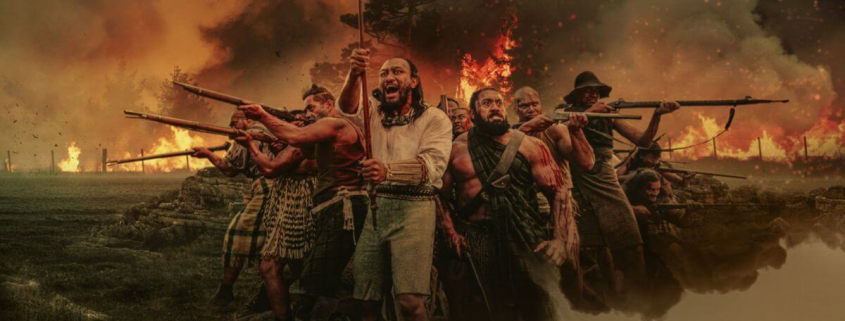
The highly anticipated Ka Whawhai Tonu – Struggle Without End is out now in cinemas nationwide! DEGANZ member Tim Worrall wrote the screenplay while current board member Te Rurehe Paki and fellow member Martin Brinkler ACE edited the film.

The action feature recreates the historical battle of O-Rākau, told from the Māori point of view for the first time on screen. Set in 1864 in Waikato, the film tells the story of a pivotal battle in the first land wars between Māori and Colonial forces through the eyes of two teenagers. Amidst the chaos and violence of the conflict, the two forge an unlikely friendship and take control of their destiny.

In an article with Stuff, director Mike Jonathan comments,

Making films about our past and especially the battles that happened, it’s about honouring those of the past and how else can you do it than making a movie to immortalise our tīpuna? […] It’s all about ‘ka whawhai tonu’ – to keep fighting, and we do that every day.”

Congratulations to Tim, Te Rurehe, Martin, and the rest of the team on the successful premiere!

You can catch Ka Whawhai Tonu at a cinema near you.

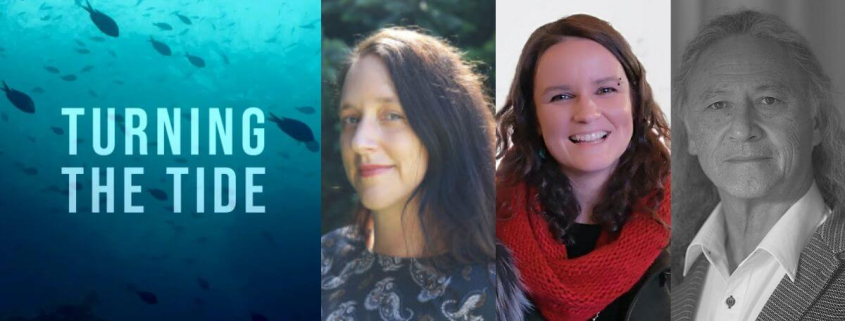
Turning the Tide is a new docu-series directed by Magnolia Lowe (DEGANZ), edited by fellow member Amanda Mulderry, and produced by DEGANZ’s own Tui Ruwhiu.

The six-part series examines the increasing stressors of human activity on the marine environment while highlighting the work of researchers, kaitiaki, and community members working to improve the health of Aotearoa’s seas. Each episode takes viewers to different parts of the country to discuss the current state of the ocean and what can be done to improve it. From research at local universities to discussing the importance of collaboration between Māori, government agencies, and other enterprises, the series underscores the collective effort required to protect our coastal marine systems for future generations.

RNZ’s Commissioning Manager Tim Burnell commented on the series:

Tauihu Media have done a wonderful job of bringing together a broad range of experts and by combining their knowledge with stunning visuals they help make the information easy to take in.”

All episodes of Turning the Tide are available to watch on RNZ now.

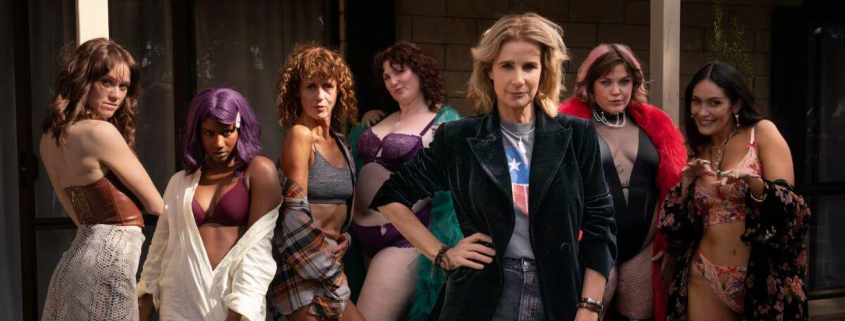
The new series Madam, edited by DEGANZ member Martin Brinkler ACE, won the Golden Nymph for Best Creation at the 63rd Festival de Television de Monte-Carlo leading up to the series premiere.

This marks the 63rd festival hosted by the Principality of Monaco to celebrate international television series. Studios, broadcast networks, digital platforms, and talent gather to promote their series and compete for the Golden Nymph Awards during the festival. The show’s Executive Producers Nua Finau and Marci Wiseman attended the awards ceremony alongside the show’s lead actor Rachel Griffiths.

After opening an ethical brothel in small-town Aotearoa to provide for her family, Mack (played by Griffiths) discovers her husband’s mountain of debt. She puts a new spin on sex work, bringing it out of the shadows and giving more agency to the women working at the brothel.

The series is based on the unpublished memoir of Antonia Murphy, who founded an escort agency built on the philosophy of protecting women’s legal rights, emotional well-being, and financial independence.

Madam is out now on Three NOW.