
So much of directing is communication. What language do I use with actors? What words do I use to communicate my vision to cast and crew?

I think it’s safe to say that human beings, though, aren’t naturally good verbal communicators. We’re not born with language. Language has to be learnt.ย 

This extends to learning language for directing content that includes intimacy, nudity and simulated sex scenes.

How Language Makes a Difference

When DEGANZ was joined by NZ actor and intimacy coordinator Tandi Wright to talk about what intimacy coordinators do, she shared that actors more commonly have bad experiences “because communication and planning is often poor or non-existent.”

“Directors, actors and producers are often embarrassed to talk about the intimate material, which I know sounds ridiculous but that is true.โ€

Like stunts, intimate scenes have inherent safety risks โ€“ people can get hurt physically and psychologically. Youโ€™d never take a โ€˜sheโ€™ll be rightโ€™ attitude with stunts, so why would you with intimate scenes? When we shy away from talking with our team, it leaves each person to deal with stress, anxiety and even trauma on their own if they have a bad experience on set or have experienced sexual harm in their own lives.

A game changer has been the adoption of intimacy coordinators on a whole range of productions, big and small, here in Aotearoa within the space of four years, along with Equity NZโ€™s invaluable Intimacy Guidelines for Stage and Screen.

โ€œIntimate scenes have seldom been creative spaces,” says Tandi. But they can be โ€œrobust and playful like any other scene.” Being really specific and detailed about what you want and whatโ€™s involved will make filming scenes a positive, collaborative experience where actors feel safe and respected. Itโ€™s just professional.

DEGANZ has been running Directing In the Intimate Zone, a one-day practical workshop introducing directors to intimacy best practices, tools and language, because awareness and education is still needed. Recently, we ran Directing In the Intimate Zone in Auckland tutored by actor/intimacy coordinator Jennifer Te Atamaira Ward-Lealand.

From observing that workshop, I thought I’d share a few gold nuggets from Jennifer on professional language that you can learn for directing intimate scenes.

Use Consent Language

In the workshop, Jennifer demonstrated the touch consent process with the actors, which a few directors in the class later practised in breakouts. If a director knows how, they could facilitate this process without an intimacy coordinator present for less demanding scenes. (Hereโ€™s a guide by Intimacy Coordinators Aotearoa on when to hire an IC.)


Actors using the touch consent process with Jennifer Ward-Lealand (left). / Photo: Tรน Studios


Basically, the touch consent process has actors standing facing each other, fully-clothed, and taking it in turns to ask for the other’s consent to touch a specific body part – in relation to the context of the scene.ย The third party (the intimacy coordinator and/or director) guides the process.

For example:ย 

Jennifer: Laura, can you ask Sam if it’s okay with him if you can hold his hands?โ€™

Laura (to Sam): Is it okay with you if I touch your hands?

Laura can indicate on her own body where she will be touching.

Once Sam has verbally agreed to the request, Laura will touch Sam’s hands, and then Jennifer will have Sam ask the same question of Laura.

The process is methodical and simple to follow, covering all areas of the body that will be touched during the choreography. It creates trust and sets clear boundaries for where each actor has agreed to be touched and where is off limits. Moreover, there is no expectation on the actor to divulge personal reasons for why they don’t like being touched in a certain area.

Note that Jennifer had the class use “Is it okay if I _____?” over “Can I touch your _____?” The difference may seem subtle but the latter is a more open request for consent.

Desexualise Language

Another key takeaway for the room that felt like a eureka moment for me was Jennifer’s lessons on desexualising the language around the work. One major way intimacy coordinators professionalise the filming of intimacy or sexual content is getting cast and crew to use anatomically-correct terms, like buttocks, breast and even gluteal cleft (that’s a butt crack, by the way!).

Such language is not emotionally loaded, but helps separate the professional from the personal. And is really important because actors should feel โ€˜personally safeโ€™ to be โ€˜professionally open and vulnerableโ€™, which is central to their craft.

Intimacy coordinators also use desexualised language for actions. For example, instead of a director saying, “You’re going to grab her arse”, they could say, “Okay, so this is when weโ€™re looking for a firm squeezing of the buttock.”

During a rehearsal at the workshop, Jennifer also suggested using the words “Close the distance, one of you maintaining eye contact and the other avoiding eye contact every now and then” instead of “Move towards each other in a flirty way,โ€ which in the end is a very generalised instruction and brings to mind certain obvious tropes.

If seeing directors pause in the workshop before specifying a body part or action is any indication, a bit of rewiring of the brain is likely required at first. But from her experience, Tandi Wright says the sense of professionalism is almost immediate. If you don’t know what term to use, don’t be embarrassed to ask your IC!

You might be thinking that desexualising intimate scene work might seem contradictory. But it felt incredibly liberating for the performers and directors in Directing In the Intimate Zone. Actions become technical choreography, like a dance or a stunt, and with your IC and actors, you can hone in on choreographing really specific beats and tell the story of the scene in a much more creative and deeper way.

Ask for Performance Level and Placeholders

During the process of choreographing the scenes, which involves repetition, actors donโ€™t have to give 100% every time. You can ask them, “Are you okay to go with performance level kissing or would you prefer to use placeholders for now?”

A placeholder for a kiss might be touching hands or leaning in and turning heads away from each other.

So those are a few language tips for directing intimate scenes. If you want to go deeper into language, tools and processes with the helpful aid of seeing the work in action, we are holding Directing In the Intimate Zone, a workshop with Jennifer Te Atamira Ward-Lealand in Rotorua on October 16.


Tema Pua
Events & Marketing Manager

Last updated on 30 September 2022
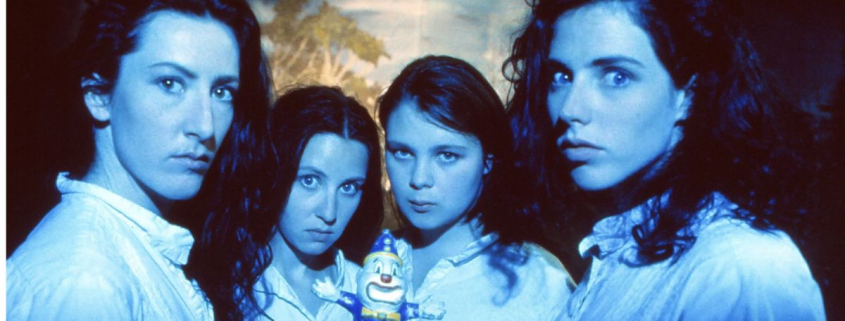
A restored 4K version of DEGANZ member Garth Maxwellโ€™s 1993 film Jack Be Nimble is now available for download, rental or purchase, from the NZ Film On Demand platform.

Hailed by the Museum of Modern Art this year as โ€œA lost classic in the canon of gendered horrorโ€, Jack Be Nimble follows Jack and Dora, abandoned by their parents as babies, who are desperate to find each other after years of adoption. Jackโ€™s young life has been spent with a sadistic family. Dora, whose life has been somewhat better, has developed extra-sensory powers which tell her that Jackโ€™s in danger and drives her to search for him.

The film stars American actor Alexis Arquette and New Zealand actor Sarah Smuts-Kennedy. It includes one of the final movie appearances of the legendary British/New Zealand actor and musician Bruno Lawrence.

In addition to the restored 4K version on the NZ Film On Demand website, people can watch an interview with Garth and film critic Dominic Corry as they discuss the genesis and evolution of the film. A twenty minute clip of Garth talking about art, influences and how the digitisation of Jack Be Nimble came to fruition is also available to watch.

Last updated on 30 September 2022

The Directors and Editors Guild of Aotearoa New Zealand seeks an Events & Marketing person in Auckland for 30 hours per week, which can include weekends from time to time. The ideal candidate will be a pro-active, self-starter who:

โ€ข has strong written/communication skills
โ€ข is a highly organised planner
โ€ข has competency in marketing, including with social media channels
โ€ข knows Word, Excel and online software, such as Dropbox and OneDrive
โ€ข possesses financial management skills
โ€ข has basic design skills

Screen sector knowledge is a positive.

Responsibilities include the planning, marketing and implementation of our professional development events programme, newsletter publishing, and general and membership administration duties.

This position suits someone seeking income and flexibility in a stimulating and exciting industry. To apply, please forward a letter and CV by 14 October to tui@deganz.co.nz.

Last updated on 6 October 2022

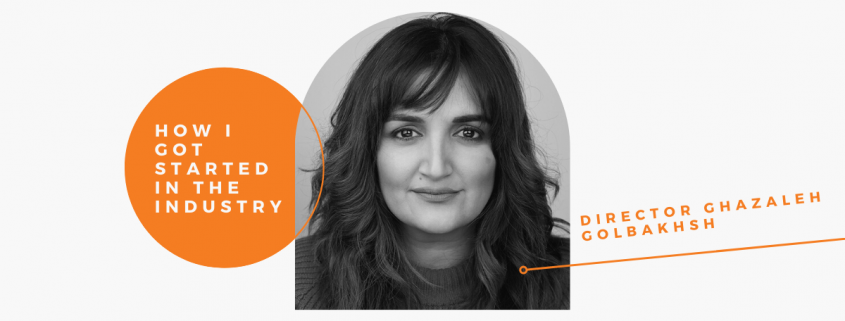
My family and I fled Iran for Aotearoa in the late 1980s due to war and an oppressive regime. As a six year old I was yelled at by teachers for not understanding English, so I set about reading and writing as much as I could to learn the language. This was aided by a family love of film. I feel like the two have become intertwined and I now have the privilege of working as a writer and filmmaker.

Being a creative means constant rejection – whether itโ€™s work opportunities, funding or criticisms of your work. Early in my career, I wanted to become an actor so this sense of persisting despite the setbacks became ingrained in me. I also became disappointed with the lack of roles for women, particularly women of colour. So I started writing those very roles that I would have wanted myself and soon I began directing them too. At one point, I dropped out of a certain film school, bought a one way ticket to London and set about working as a runner – often for free – but loving the freedom and people I met along the way. I remember literally door-knocking around all of Soho until someone finally let me in for an interview. What I wasnโ€™t prepared for was the bullshit sexism, racism, classism and self-indulgent nonsense that the industry was awash in. It is changing, slowly, but itโ€™s changing.

When I returned to Aotearoa, I decided to go through the University route by completing a BA in Film, TV and Media Studies at the University of Auckland then a Masters in Documentary under Annie Goldson. It was here I serendipitously met a Fulbright advisor and randomly decided to apply for the University of Southern California. The year in Los Angeles was fundamental to me learning how to write for film as we were writing constantly. It was also an introduction to the US system which is its own beast. USC was not just a film school (what we learn here is just as good) but their resources and connections make it more like a country club for Hollywood wannabes. However, I got to work in the documentary department at the Sundance Institute – a relationship I am keen to continue fostering as I thoroughly support their mantra on supporting independent filmmaking.

Director Ghazaleh and the all female crew of This is Us (for RNZ/NZ on Air) photographed by Ainsley Duyvestyn Smith / Photo: Supplied

For me, much of my work came through the connections I made through University, including the formidable producer and writer Shuchi Kothari, plus constantly applying for funding, workshops and programs that our hard working guilds here run such as the Womenโ€™s Incubator and filmmaker workshops through DEGANZ. These events are great to meet people. It was at an early Story Camp run by Script to Screen where over a sneaky wine, I met the incredible Ainsley Gardiner, who is now producing my first solo feature with Georgina Conder and Miss Conception Films. The best way to network is to be yourself.

I am currently directing on Shortland Street. Learning to work within a multi-camera, fast turnaround format is an invaluable experience and the perfect place to hone your directing skills as you get to direct regularly. Iโ€™m also really proud of what Oliver Driver and the team at Shorty are doing with actively supporting and encouraging more representation behind and, in front of the camera.

One of my favourite speeches comes from actor and musician Riz Ahmed. Regarding representation he notes that being represented means being a part of the story. If we are absent from that story, then we feel that we do not matter. It is not enough to just put different faces on screen (as great as that is) but it is also vital to have the right people tell those stories and make the decisions behind the screen too. In my career I’ve been lucky to have had other POC women leaders as mentors who have not only helped me with work but also helped me see myself in that leadership role one day.


About Ghazaleh Golbakhsh

Ghazaleh is an Iranian-New Zealand award-winning writer and director. She has directed award-winning short films including This is Us, Iran in Transit and The Waiting Room. Ghazaleh was also one of the writer/directors on feature anthology film Kฤinga, which premiered at NZIFF and the Melbourne International Film Festival this year. She is currently working on her debut feature as well as directing on Shortland Street.

ghazalehgolbakhsh.com

How I Got Started in the Industryย is a guest blog series from the Directors and Editors Guild of Aotearoa New Zealand (DEGANZ). Our members reflect on how they made their way into assistant editing, editing, and directingโ€”with no two stories the same. They offer advice for those starting out. Get in touch with admin@deganz.co.nz if youโ€™re a member and would like to share your story.

Last updated on 22 September 2022

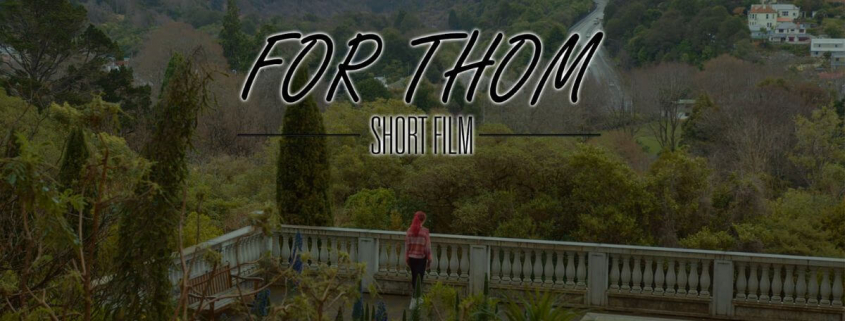
DEGANZ member Rafa Yam is passionate about helping raise awareness on Aotearoa’s youth suicide rate, one of the highest in the world, through his short film, For Thom. While he and his team acknowledge the topic can be confronting, the short is ultimately about hope with light at the end of the tunnel.

“I want to make this film so others don’t have to resort to what my friends did, and so no one has to feel the grief and guilt I felt for not being there for them sooner,” writes Rafa. “This film is about the value of checking up on the people you love most in this world and how no one is every truly alone.”

The young writer/director originally from the Philippines is currently crowdfunding for post production on Kickstarter. While budget is a challenge, Rafa has a great team surrounding him. This includes the likes of Catherine Fitzgerald (Executive Producer), Prashanth Gunasekaran (Producer), Kelly Chen (DOP) and fellow DEGANZ member Guillaume Arnoulet (Editor). The funds raised will allow them to collaborate and develop an ongoing relationship with post house POW Studios in Wellington.

For Thom is about a lonely teenage girl who tries reconnecting with her best friend in an attempt to repair her fragile mental state. This is the second short film Rafa is working on based on a feature script that he hopes to make one day. His first short film, Last Call, was a 5-minute winning entry for The Someday Challenge.

The team is filming from September 30 to October 2. Their Kickstarter campaign runs until October 16.

Kickstarter Campaign

For Thom Instagram

Last updated on 22 September 2022